Please Define: Non-Fiction

My father doesn’t understand non-fiction.

“What does it mean, exactly,” he asks, “This ‘non-fiction.'”

“I write stories that are true.”

“About what?”

“You, me, our family. People I meet. Things I see and think about.”

He looks at me, confused. Something is terribly wrong. “Why,” he says, “Why would anyone want to read about that? Who cares about you or me or our family?”

My father is not being rude, at least I don’t see it this way – he is genuinely curious as to what in the world makes me think this is a good career option.

“I don’t know dad,” I shrug, because I honestly do not, “This is a risk you take when you write. You write what you know and hopefully people want to read it.”

“And if they don’t?”

“Then…I get a day job and do something else in addition to write.”

My father is not satisfied. He’s about to pay a lot of tuition money. He’s a businessman, born to a woman who counted every penny and invested heavily in two things: land and her three sons’ educations. The former so that her sons could pursue careers in real estate development and the latter just in case they bungled it all away.

“Money must be spent on the knife’s sharpest edge,” she liked to say, and even though she passed away long before I was born, her words are from time to time echoed to my cousins and I via our fathers. The sharpest edge would be studying something like Electrical Engineering or becoming a doctor or, as my father had hoped for me early on, plunging into the world of accounting and economics (his eyes were always pretty open to my other faults, but for some reason my ineptitude at math eluded his gaze). Most of my cousins have landed right on the blade. I seem to hover somewhere near the hilt.

“I don’t understand why you won’t write fiction,” my father continues, “What about something like Harry Potter? That woman made a lot of money.”

Ah. The old Harry Potter comparison. As if I could ever in a million years do what Rowling did.

“Dad,” I say, irritation seeping into my voice, “I can’t just sit down and write some seven volume fantasy series. That takes…”

“What does it take? You know I saw a TV special about her – she was homeless! She didn’t even have pens and papers! You have everything! You don’t even have to work and you can’t do what she did?”

I look at him, eyebrows raised and mouth slightly open to say something that would emphasize my exasperation, but nothing comes out. I close my mouth, lower my eyebrows. Dim my eyes.

“Dad, I don’t want to write about things I don’t know or don’t have interest in.”

“Didn’t you like Harry Potter? You have all her books.”

“Yes! But reading something you like is totally different from wanting to write. I like reading about a lot of things, but I don’t necessarily want to write about those same things.”

“Why not?”

“Because it wouldn’t be the same or as good as the other people who write it. Everyone writes what they know, and if they don’t know, they do a lot of research, but normally when they are willing to do the research they’re interested in the subject. I like writing about our family and whatever else I’m interested in.”

My father leans back, “I don’t understand,” then looking up, he sees the look on my face. Not a sad look, just tired. The one I get right before I tell him that it’s better that we live far away from each other so I don’t murder him in his sleep. Time to change the approach.

“Okay,” he says, “just explain to me what non-fiction is. You say you write about family but I don’t understand why people would want to read about that. Show me some examples of people who write the kind of non-fiction you want to write and maybe I can understand.”

I think about David Sedaris, Adam Gopnik, and Anthony Bourdain, and how my father would not understand their appeal, even though all their books are bestsellers. Better to use a Chinese example, but I can’t think of any.

“Gun Germs and Steel!” my father says before I come up with anything, “That’s non-fiction, right? That’s a very good book.”

“Yes, it was,” I say, “I liked it too -“

“You could write something like that!”

“I could, but again, not my thing. That’s like history and social science…not really creative non-fiction.”

“Ohhh,” my father leans back, nods slowly. Is he starting to get it? “So you write more creatively.”

I nod, “I tell true stories from my perspective,” I pause. That sounds like a euphemism for lying, but then again, that’s a whole other bag of worms I don’t want to open. “It’s not research,” I say, “Well, there could be research involved, but that’s to add to the story rather than the story itself.”

My father is silent for a while. I’m not sure what he is thinking, just as he is not sure what I am thinking.    I’m thinking that I need to find a better way to explain this to my father, whose friends nod fervently when he tells them, when they ask, “How are your kids doing?”

But he knows that look. “Your daughter wants to be a writer! That’s fantastic!” they say, clapping him on the back, but inwardly they breath a sigh of relief, “Better your daughter than mine.”

“True stories,” he says, leaning forward now.

“Yes. True stories.”

“But what’s so creative about telling the truth?”

He has me there. I’m not sure, actually, and I tell him so. I don’t make things up – at least not now. I tell it like it is, but hopefully there’s something beyond that. Maybe in the future, I may have to start making things up, to protect people I love or fill in the blanks or satisfy some deep-rooted craving for fantasy or whatever other reasons some writers become novelists and others essayists or biographers.

I turn to go and my father doesn’t ask me any more questions.

“Hm,” he says simply.

It bothers me that I can’t explain it better. But then again, that’s not the kind of writing I do.

——– 

“Good writers define reality; bad ones merely restate it. A good writer turns fact into truth; a bad writer will, more often than not, accomplish the opposite.”  – Edward Albee

“Exploit the things you’re good at.”  – Jason Lee

Practical Advice: Father Knows Best

Two years ago around this same time, I found myself back in California looking for a job. I had just returned from a long weekend trip in Carmel, celebrating my Uncle Louis’s second, for-real retirement (at the eyebrow-raising age of 70) from an aerospace company. Before Carmel I’d been in Asia for a two month-long “waiting” period in much the same vein as I now await graduate school admissions decisions (more on that later) though back then it was for a Fulbright. The Fulbright didn’t come through and I went home to celebrate my uncle’s retirement and mourn my own entry into corporate America, hoping companies wouldn’t ask what I did immediately out of college.


“Well, I was banking on getting this scholarship thingy that would allow me to continue dicking around Asia.” 

“Please leave.” 
I clawed at my face, “What does this mean?” I asked my friends, most of whom were well into graduate studies or about to be or had been working full time for a while. 
“Get a job,” my friends said, “Get real.” 
I didn’t panic, but rather listlessly sent my resume out to random, underpaid Craigslist listings with job titles all containing the word and or variations of ‘assistant’ which I have now come to recognize as a synonym for ‘underpaid, sometimes severely.’ For a few weeks, nobody called. My parents knew the hunt was hard – it was hard for their friends’ children, most of whom were more accomplished and goal-oriented than their daughter – so it was perhaps wisest to inquire politely from time to time and give me no further pressure unless I started looking at plane tickets again. 
One evening, having sent out two dozen or so resumes and cover letters (do people even read those things) to companies that I knew vaguely about, I shut my computer down and went to the living room where my father sat with his feet up on the round glass coffee table, watching the Taiwanese news. He did this every night and mostly did not like it when I tried to speak to him over the pretty news anchor with the light but forceful, staccato voice. I needed an ego boost, something my father, he of the “you could stand to lose about ten pounds,” or “don’t stand like such a man,” or “girls who roll their eyes at their fathers usually stay single forever,” was unlikely to provide, but he was a working man and more importantly he supported me with his work. As of late, having sent more than a hundred resumes out into cold black cyberspace and hearing only radio silence, I realized the possibility that he’d need to do so for a few years more. I needed to know that my father would be okay if I were to be unemployed forever. 
“What,” he said, not bothering to look up from the TV screen.
“The job hunt.” 
He looked up, and kudos to him, read my face, “Not going well?”
“Not at all.” 
He sighed, “I’ve been telling you and telling you. Nothing in this world is easy. You’re the only idiot your age who didn’t rush into the job hunt out of college. You should have started looking in school.” 
“I was applying for a Fulbright!” I sputtered, incredulous though not deservedly so, (applying for a Fulbright is quite different from completing a Fulbright or discovering a cure for Lupus), “I didn’t want to get the job and then get the Fulbright and have to be like, ‘Oh sorry, psych! I have to go and be a Fulbright Scholar now, ha ha.'” 
My father shook his head, “Who cares? It’s always easier to say ‘no’ to a job offer than say ‘yes’ to nothing. You should have started looking a long time ago.” 
This was not the ego boost I was looking for. I did not want the conversation to continue down this particular path, nor did I want to go back to my room to continue the job hunt, but to do anything else would have seemed frivolous. Apparently I should have been making up for lost time and been trolling job postings 24/7, but at that moment, I wanted my dad to make me feel better. Mostly because my mother wasn’t home. She was playing badminton. If anything, I could have used a pep talk and decided to prompt one. 
“Sometimes,” I said grandly and with as serious a look as I could muster – so serious that it was borderline comical, “Sometimes I just want to marry a rich man.” 
My father looked up at me with a sudden, grave interest. He leaned forward and turned off the TV, something he almost never did unless we were arguing and I yelled at him to turn it off. I was mildly surprised and I thought, “Here we go, here’s where Dad goes, ‘Hell no my daughter won’t think like that. I raised her to be a smart, independent woman who will work hard and not have to rely on anyone else to take care of her.” I braced myself, it was a fatherly monologue I needed to hear. 
Instead, over the barely audible buzz of the darkened TV cathodes, my father nodded and say, “That’s okay too.” 
Excuse me. 
My father nodded at me, “I said, that’s okay too.” 
“Dad!” I looked at him with a confused grimace and he at me with eyebrows raised and eyes wide, a strange, hopeful smile on his face as though I had just presented him the solution to the world’s oldest riddle. 
“No, I’m not joking,” he said, “some girls don’t aspire to much, at least career wise.”
“I have aspirations!” I said. 
“You say you want to write! You’ve said that forever! But I don’t see you writing!” 
“I do!” though in fact at that point, I hadn’t, not very much, and not very seriously. I was saving my creative juices for the Fulbright, though in fact I just needed an excuse to not do anything at all for a while. 
My father shook his head, “Look, that’s beside the point. I know you don’t have huge career aspirations. But Jesus, look at you, you don’t even have huge feminine aspirations! You want to marry a rich man but where are you going to find him? And how are you going to find him looking like that?”
He waved at my person, tsk-tsking at my limp hair and pajamas (uniform of the unemployed), sallow, uncared for skin, and just general lack of feminine mystique. I didn’t know whether to laugh or cry, but then again, I am my father’s daughter and it seemed more appropriate to laugh.
“What are you talking about?” I said. 
“Invest in yourself if you don’t see yourself investing too much in a career,” my father said, “Go buy some makeup! Lose some weight and get some new clothes!”
“Dad,” I said, “You’d have to pay for the makeup and clothes.” 
“Okay!” he said, getting more worked up as he spoke, “It’ll be an investment! Make yourself pretty and for God’s sake go out more with your friends to where young people go. All you do is sit around at home and eat and tell me not to eat. You think you’ll meet a rich man loafing at home all day in your pajamas nagging your dad?”
I did not, but I was also still stunned by the conversation in general. What had happened to all that talk before about hard work and self-reliance? Did something change in me or in him? Did my father see (or not see, perhaps) something in me that made him think “investing” in my physical appearance would somehow lead to a more secure future? 
“Do you think I’m incapable of supporting myself?” I wasn’t angry, just curious to know. If my father was anything he was honest. 
He leaned back into the couch and turned the TV on, though kept the volume low. 
“I don’t think you’re incapable,” he said, already beginning to tune out, “My daughter was born capable. But I’m saying you need to set some goals and work towards them. Don’t waffle. Don’t wait. Act. Act now, act fast. You want a job, you prepare for it, right? You want a rich husband? Well, there are preparations for that too.” 
I lay on the couch and watched the news but didn’t listen or register any of it. I was thinking. Slowly, the volume crept back up and five minutes later looked at my father’s face; his eyes were back at their usual after-dinner diameter. 
I pushed myself up, and looked back down at my father and smiled. He smiled back. 
“Thanks Dad,” I said, “I’ll go invest in myself now.” 
“Good. You made a decision.” 
I did, but not fully the one that was implied. As my father began to nod off, I walked away smiling to myself with the memory of the time in the sixth grade, when all the cool girls were wearing Lucky Brand jeans that cost $60, an obscene amount of money to spend on jeans, especially when most of my clothes were hand-me-downs. 
“I’d really really really like a pair of these jeans that everyone at school has,” I had said to my dad, whose clothes are almost exclusively from Costco (polo shirts) or JC Penney (trousers and Hush Puppies), “But they’re kind of expensive.” 
“That’s okay,” my father said, taking out his wallet, “Go buy yourself a pair. How expensive can they be?”
Before I could respond, he took out a twenty dollar bill and pushed it into my hand with the self-satisfaction won from being a father who knows he can always provide for his daughter, “That should do it, no?” 
Back in my room the computer stayed off. The job hunt would continue, that was for sure – better to invest with my own funds than shock my father with the brutal truth of what beauty and its upkeep cost – but for now, I needed my beauty rest. That was free. 

The Fragrant Harbor: Hong Kong Photo Diary

Not supposed to take photos inside Bloomberg Hong Kong, but I did anyway.

In 2011 I spent a day in Hong Kong, walking around Lantau Island and then Central to kill time while waiting for my Chinese Visa to be processed. It definitely wasn’t enough time and I left wondering when I’d get the chance to go back. This year, I jumped at the chance to visit again with E and C, two friends from college whose first stop was Taipei, Taiwan.

Continue reading “The Fragrant Harbor: Hong Kong Photo Diary”

The Eyes Have It

When my grandfather was eighty-six, the spots in his left eye began to impede his vision.

Cataracts, the doctor said, treatable with surgery.

“I’d like to have the surgery,” my grandfather said.

The doctor appraised the octogenarian who appeared much younger than his age. He had bright shining skin, a full head of hair and had walked into the exam room with a sureness of foot that he, the doctor, himself a relatively young fifty-five, rarely saw in men this age. Still, the doctor had over the years seen countless seemingly healthy geriatric patients who were suddenly diagnosed with this or that or who, though healthy this year, experienced a rapid decline into senile decrepitness the next.

Age was a volatile thing. He was also a reasonable doctor, not in it for the money. He operated only when he deemed necessary and in my grandfather’s case, the doctor felt it was not. The patient said that he could see and read through the dingy yellow tint of the cataracts, but that sometimes the left eye was a bit cloudy. This was bothersome.

“Your eyes will serve you well for another ten years,” the doctor said assuringly, though to himself he said, “Though you will likely only need them another five at most.” “If the cataracts are worse by then,” he said to my grandfather, “come back and see me. Then we will remove them.”

My grandfather, not one to take a doctor’s words lightly, nodded and went on his way.

Ten years flew by during which my grandfather read the newspaper each day with yellow tinted eyeballs. The eye doctor continued his practice, advising elderly patients to forgo cataract surgery. He turned sixty-five and some nights, when he was particularly exhausted or not feeling well, he wondered how much longer he had. Twenty years, he hoped, twenty years at least.

The doctor forgot about the eighty-six year old man he saw ten years ago until one day, the man, now ninety-six appeared in his exam room.

“It’s been ten years,” the elderly gentleman said.

The doctor blinked. The man seemed to have aged little. His back was slightly more curved, his skin a few degrees more papery and his eyelids a smidge droopier, but the skin still shone and the walk, though slower, was still steady.

“It has been ten years,” the doctor said, “And the cataracts…”

“I want them out,” said the patient.

The doctor felt a sudden roil of regret in his gut – he had denied this man ten years of better vision. But surely now the gentleman did not have much longer. However, it would be rude too, to say, “Wait ten years more.”

The doctor nodded and, because he was a man of his word said, “We will remove them.” He excused himself to arrange his calendar with the nurse and thought, as he closed the door, you just never know.

A few days later my grandfather opened his eyes.

Grandpa at ninety-nine, three years after his cataract surgery. Wearing a tie that is too long.

His wife and sons and their wives crowded around him.

“How do you feel? What do you see?”

My grandfather blinked and smiled a newborn’s smile, gazing beyond their concerned faces.

“The walls,” he said, pointing at the walls that had always been there, a small, wondering smile on his lips, “The walls are white.”

Monday Night Blather: Large Chinese Family Edition

Lately, I don’t feel like writing much. I also don’t feel like reading much, and this may or may not have something to do with the fact that this trip to Taipei, I’m living on the 7th floor instead of the 6th, where my aunt, uncle, and cousins live. My aunt has a key so she comes in whenever, often when I’m in the middle of doing yoga (in the morning) or on the computer (in the evening), and I go down to the 6th floor for my meals when I don’t eat out.

Anyway. I was afraid of this (but I doubt it can be remedied now), the brain drain I lamented in the States shortly before coming here. Two years ago I stayed in Taipei and stood at some sort of existential crossroads. I was waiting for a Fulbright and rationalized that I could dick around for a while before the die was cast. I mean, I wasn’t going to go through the hassle of finding a job and then have to quit just in case I got the Fulbright, right?

Well, it’s kind of similar this time, except I harbor a (not so secret anymore) fear that God’s like, “Dude, you’re having way too much fun because you think you’ll get into grad school.”

“Well God,” I say back, “Won’t I?”

He shrugs, “Perhaps.”

I try to write every day, to be productive by my productivity standards, which are already low by any means. Please don’t compare your life with mine because you can bet your butt I don’t compare my anything with yours – yeah, you there, with the job, the doting boyfriend/fiance, the master’s or imminent doctorate. I’m keeping my eyes and ears open and trying to remember everything I’m seeing and hearing and thinking, but there’s a lot going on – almost too much, in fact, in and around my family and my internal organs (mostly my brain). That kind of means I should be writing all of it down, but instead I sit in front of the computer or my diary and am frozen.

I don’t want to do anything but look at pretty pictures on other people’s consistently updated blogs, or read fluffy articles in the NYTimes (yes, they have fluffy articles). Oddly, I love reading about longevity and how to achieve it, even though my life is looking pretty murky right now. What’s the point of living as long as my grandfather did if sometimes all I want to do is watch “Transformers 3” again? It is without a doubt that Shia LaBeouf and his shiny robot friends will save earth yet again, though I’m not too sure what I’ll feel like at the end of the week. I’m not talking about the doubt that comes with thirteen grad school applications in a field that is more subjective than your take on Damien Hirst’s latest piece, but the doubt that seems to plague my generation (and probably future generations as well – but not my kids, hell no) in general.

Like… what….am….I…..doing? Not just today, but tomorrow and the day after and the day after that?

Well.

I’ll tell you a little story that may have colored my worldview today. Who knows – tomorrow I may write something entirely different and say, “Wow! Look at the colors of the sky! Look at the rain! How fresh and fragrant! The banyan trees lining DunHua South Road – so romantic, those aging silvan soldiers!”

My aunt caught up with me today as I was heading home from a long walk in the XinYi district. She had rushed to the organic produce store around the corner to get two little plastic trays of basil and cilantro – she was going to stir fry some clams for dinner, and the herbs complete the dish.

“Do you remember your San Gu Gu’s husband?”

I nodded. San Gu Gu is Third Aunt, my dad’s half-sister from my grandfather’s second marriage. She is about seventy-seven or so. We saw her and her family about every three or four years as she lived in Shanghai. I do not like San Gu Gu – she seems fake and has a reputation for asking my dad and uncles for money one too many times, even though she’s done quite well for herself as a doctor in Shanghai. I do however, like her husband very much. He’s a simple guy with simple tastes. He and his highly educated wife had three rather spoiled, lackluster children, one of who is slow and has stayed home all his life, and two others who went to expensive colleges in Japan (it was apparently the “vogue” thing to do for upper class Shanghai folks back in the 80’s) before moving to the States, where the daughter quickly married a lackluster guy and their son, Cheng, had his own spoiled, lackluster son named Jimmy with his wife, whom he met and married in Japan. They usually come over for Christmas and everyone shakes their head at Jimmy’s stunted emotional development and limited palate and widening girth – apparently Jimmy is a picky eater who really, according to his mother, “can only eat MacDonald’s so what can I do?” Well, don’t bring it to his room on a silver platter so that he can stuff his face without interrupting his video games, for one… but then again, he’s not my kid.

They didn’t come to Christmas this year because Jimmy’s mom, my cousin-in-law, I guess, if we’re going to get technical with family terms, was diagnosed with stage four pancreatic cancer and is now dying in a hospital in Downtown LA. Cheng put his job as a LA Area Chinese tour guide on hold to take care of his wife and Jimmy dropped out of school. I can’t imagine what Jimmy’s going through right now, but my impression of that kid is so poor I think he’s relieved to be able to sleep in this semester. It’s a terrible way to think because god knows I’d drop out of school ten times over if anything happened to my parents, so I shouldn’t judge a thirteen year old kid, but god he was spoiled. I can’t even begin to fathom how Cheng is doing.

“San Gu Zhang, your cousin Cheng’s dad, passed away last night at midnight,” my aunt said, “He had a stroke a few months ago and then I guess he just didn’t make it.”

My aunt opened the fridge to take out the clams. I noticed in the sink that she had broccoli stalks soaking in a large plastic bowl. My aunt was pretty paranoid about pesticides (as most people who cook for their families should be, I suppose), and always insisted on soaking and resoaking and rinsing the vegetables thoroughly.

“Was anyone there with him?” I asked.

I asked because Cheng, his wife and kid were all in the States, and San Gu Gu had fallen last month on her way home from the hospital. A particularly harsh cold front hit Shanghai just as her husband was hospitalized, and she had slipped on the ice that’d formed on the hospital steps. She broke her hip and was herself hospitalized and then confined to bedrest, far too incapacitated to visit her husband everyday as she’d hoped.

“No,” my aunt replied, “he died alone. The hospital called San Gu Gu who had to arrange a nurse friend of hers to take their youngest son, the slow one, to the hospital to see his dad one last time. Your San Gu Gu arranged to have her husband’s body donated to science.”

I thought about how sad it is to die alone in a cold hospital room, especially during a Shanghai winter. I hoped his room at a window at least.

“The strange thing is, your San Gu Gu knew she would never see him again after she fell.”

A few weeks earlier, when she’d first fallen, she had called my aunt, “My blasted hip,” she said, “I don’t think my husband and I have the karma to be together when either of us departs this earth. Of course, he will probably leave first – I don’t think I will ever see him again.”

This she said in a bed less than a few miles from her husband’s.

“It was such a cold cold thing to say,” my aunt said, slicing the broccoli. A small pot of water was boiling and I could smell the ginger and wine my aunt had tossed in with the clams, “But in the end, she was right. She knew it, somehow.”

I watched my aunt assemble the night’s dinner in silence. The clams simmered and slowly opened. The ginger puffed up with water and the small chili pepper my aunt sliced in cut through fragrant steam emanating from the wok. The broccoli bubbled and turned over and over – my aunt fished each stalk out with chopsticks. The rice steamer clicked. I set the table – just three spots tonight: me, my aunt and my uncle – all in relative good health. My cousins stayed late at work.

My aunt sighed as she carried out the last dish, a spicy minced pork. A Thai dish that she’d bought ready made at a gourmet grocery store in the basement of our favorite department store. My aunt is all about trying new things.

“Your cousin Cheng is probably having the worst year of his life. And it’s only February. First his dad, and now his wife…”

I nodded, but wondered if Cheng had the strength to tell himself that things could only get better from this point, well, some future point, not too far off. His wife is still here, not exactly fighting the cancer but not exactly giving up. I did not know her that well, but she wide-eyed and kind. The kind of person you describe blandly as, “wouldn’t hurt a fly,” and “simple-minded” who ended up being a bad mother because she was only trying to be the best mother possible, never saying no to her kid.

When my parents went to visit her at the hospital, I did not go. I didn’t want to.

The last bit I heard about her: her lungs too, like my grandmother’s, are filling with water. She was so skeletal my mother had a hard time staying in the room, because all she wanted to do was cry with pity.

“Pity is useless,” my father says, but even he was oddly quiet after he returned from the hospital.

At the dinner table my aunt and uncle shook their heads, thinking about all the older relatives we’ve lost these past few years. They rattled off their names like lottery numbers, and I was startled to realize that there had been so many deaths. I knew them all, varying degrees of vagueness. They touched my face at some point, told me I looked like my mother or my father, held my soft young hands in their old papery ones and said, each of them I’m sure, “How good it is to be young!”

“Tell your mother not to work so hard anymore,” my aunt said suddenly, chopsticks pointing at me.

“Why?”

“Life is so short, you see? She needs to enjoy it now, while she can. Go to the places she wants to go. Spend time with the people she wants to spend time with.”

I nodded, but inside, was shaking my head. When you’re a twenty-six year old kid like me, your parents are still the same parents who used to spank you and make you practice piano for an hour each day. They age, sure, but it’s like a flash. You go away somewhere for a little bit, and come back a few months later and notice that while your room is exactly the same and the sun still lands in the same spots on the carpet, your father has a lot of grey hair and your mom moves at a glacial pace. She’s always moved at a glacial pace, but Jesus now she’s really slow. Her back used to be so straight and now she’s slightly hunched. You wonder about your dad’s blood pressure.

“Mom enjoys teaching,” I say, “But I know what you mean.”

My uncle, ever the optimist, pushes back his plate – filled with empty clam shells – and smiles at me. Life is short, the eyes say, handle what you can handle.

“Me?” he asks, as though I’ve asked him, though I guess my look is searching. He gets up to get fruit from the fridge and brings it back with a flourish, “I’d like to live forever.”

“Don’t we all.” My aunt rolls her eyes, motioning with her chopsticks for me and her to finish off the last four clams.

I oblige then take a chunk of honeydew with slightly salty chopsticks. The cold juice floods my mouth and I wince. It’s too sweet for me.

To Market, To Market, Again

It’s funny the images we’re destined to take over and over again. My brother likes taking photos of scenery – I do too, but above all I prefer people. People at work, especially in Asia, since in the States I’m too afraid of being chased down and sued. I love my street vendors and sweepers, my old men playing chess, and butchers hacking away at curious animal parts on thick wooden blocks. Two years ago I accompanied my aunt to the market right before Chinese New Year and posted about it here, and this year, I did the same, taking very similar photos. I didn’t mean to, but it was just the same images that I felt worth sharing.

Faces have changed – who knows what happened to the pink ladies I shot on my first visit to the market – but the roles and the loud voices, the bustle and the atmosphere have not. The world, the photographs say, changes yet does not change.

All photos taken with iPhone and enhanced with Camera+ app. 

The Pink Ladies. Famous ready made eats. 

Tired Pink Ladies (and a man!) taking an extremely late lunch break (3PM). 

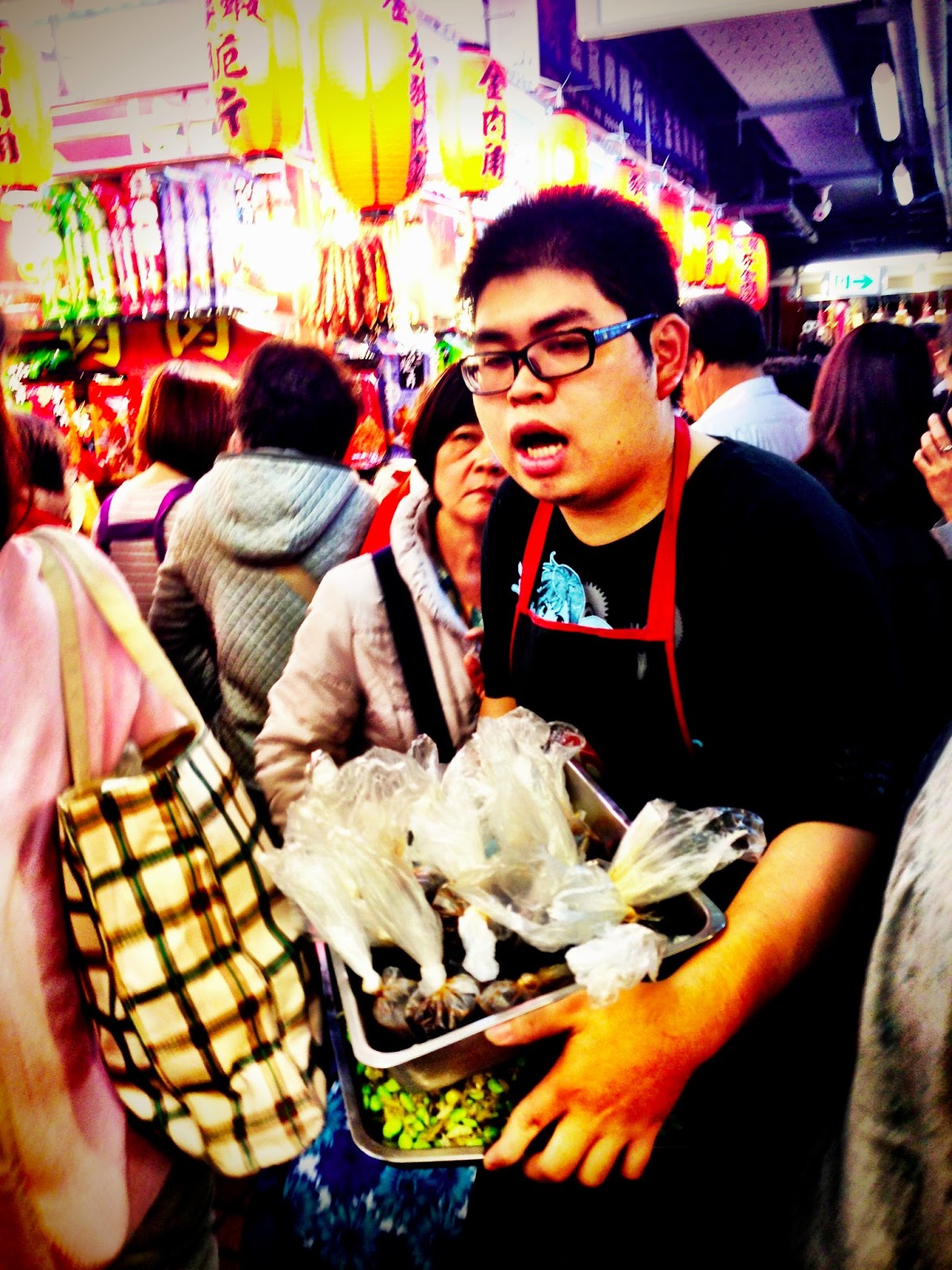
“Extremely extremely hot,” the young man calls out, “Please make way!”

A patient fish monger explains to my aunt how best to cook the fish skin. 

A young man wonders why he did not study harder in school, but what can he do now it’s  nearly
Chinese New Year and his mother needs an extra hand at her vegetable stand and look, there is a
strange girl taking a photo of him with her iPhone. Damned tourist who knows nothing of hard work. 

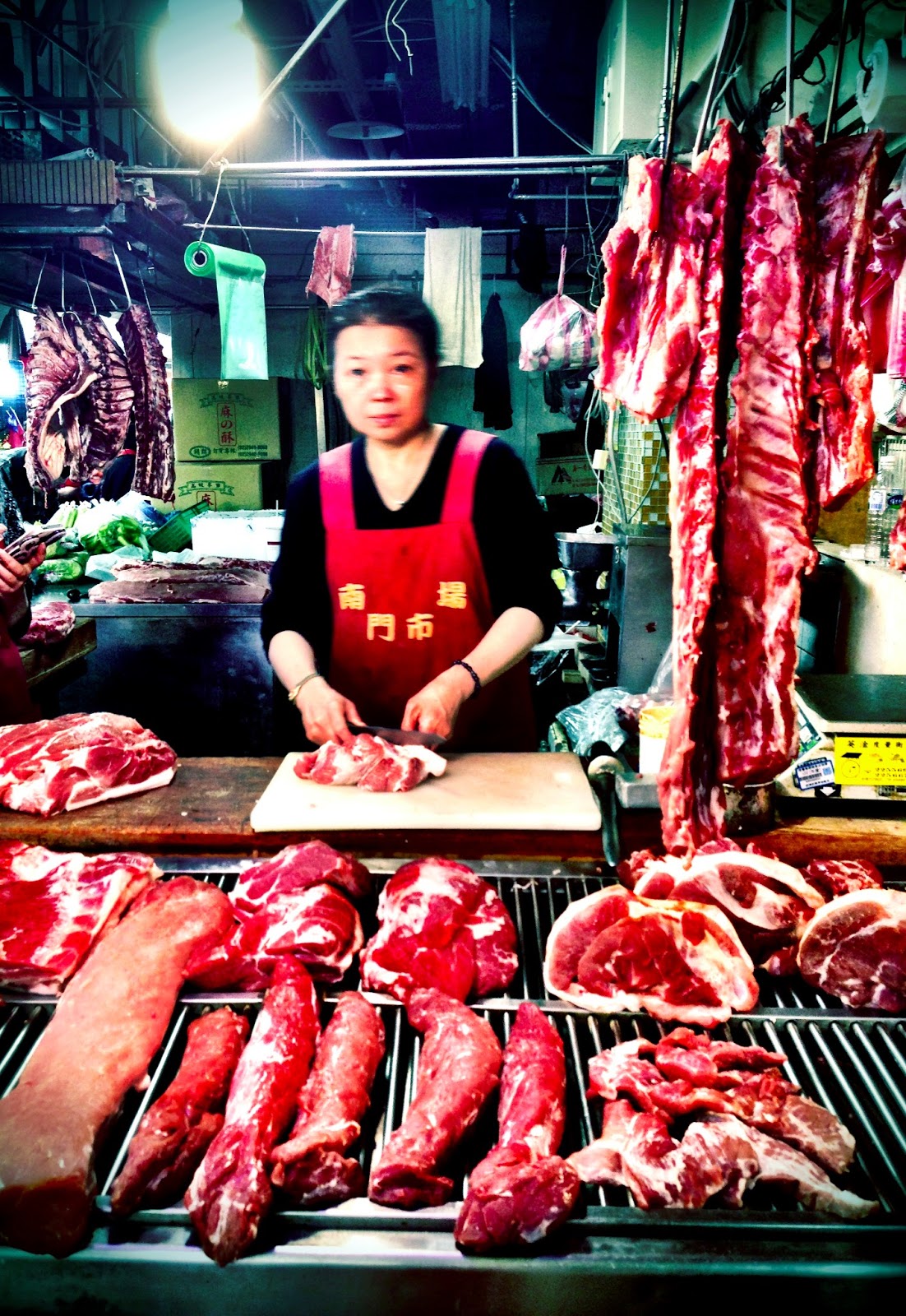
After seeing stalls like this, I vow to become vegetarian, which lasts for about two hours. 

I liked my first caption on Instagram so much I shall employ it again: Like a boss. 

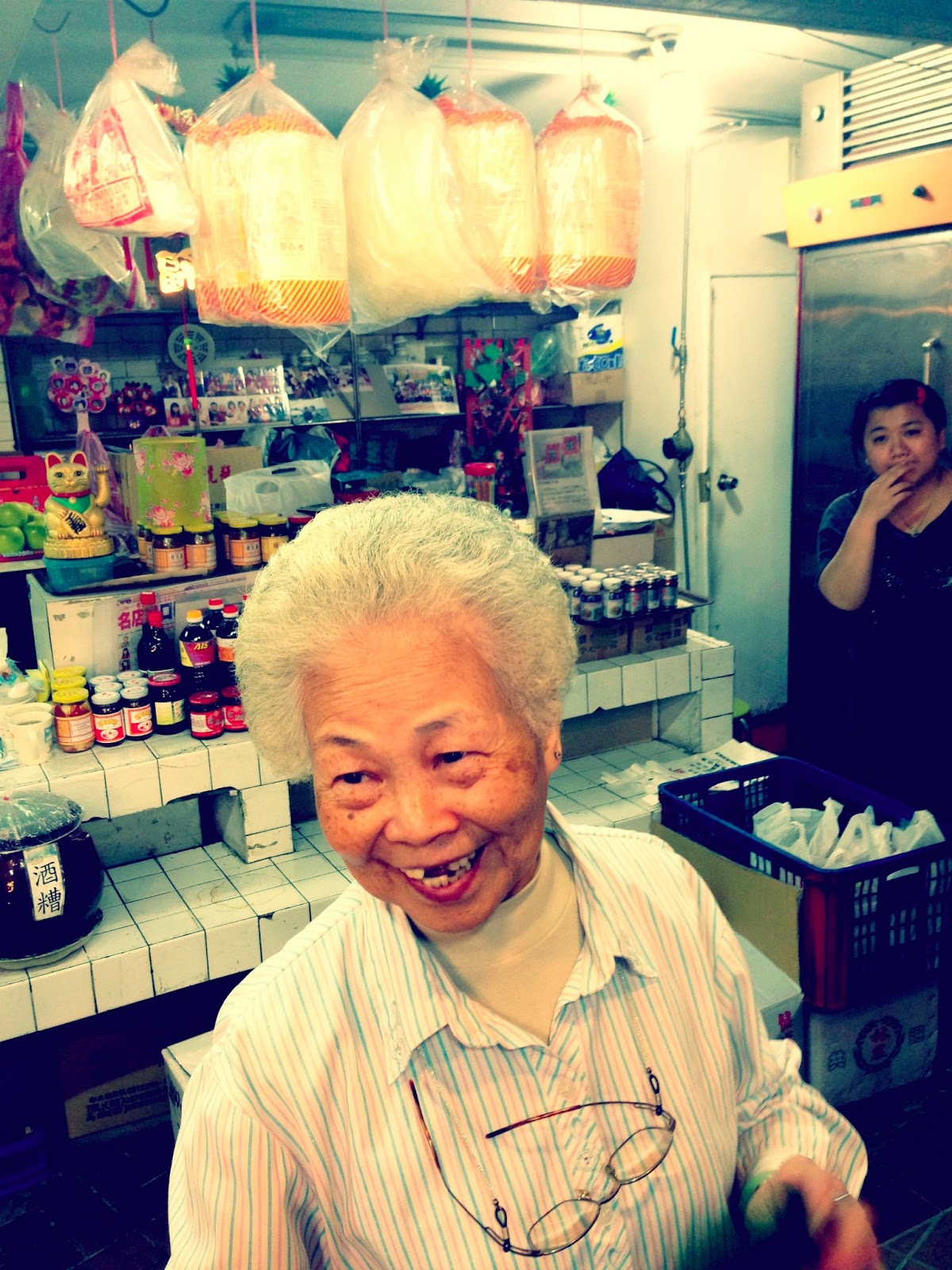
Happy Grandma. Who needs teeth? She sells soft little wontons. 

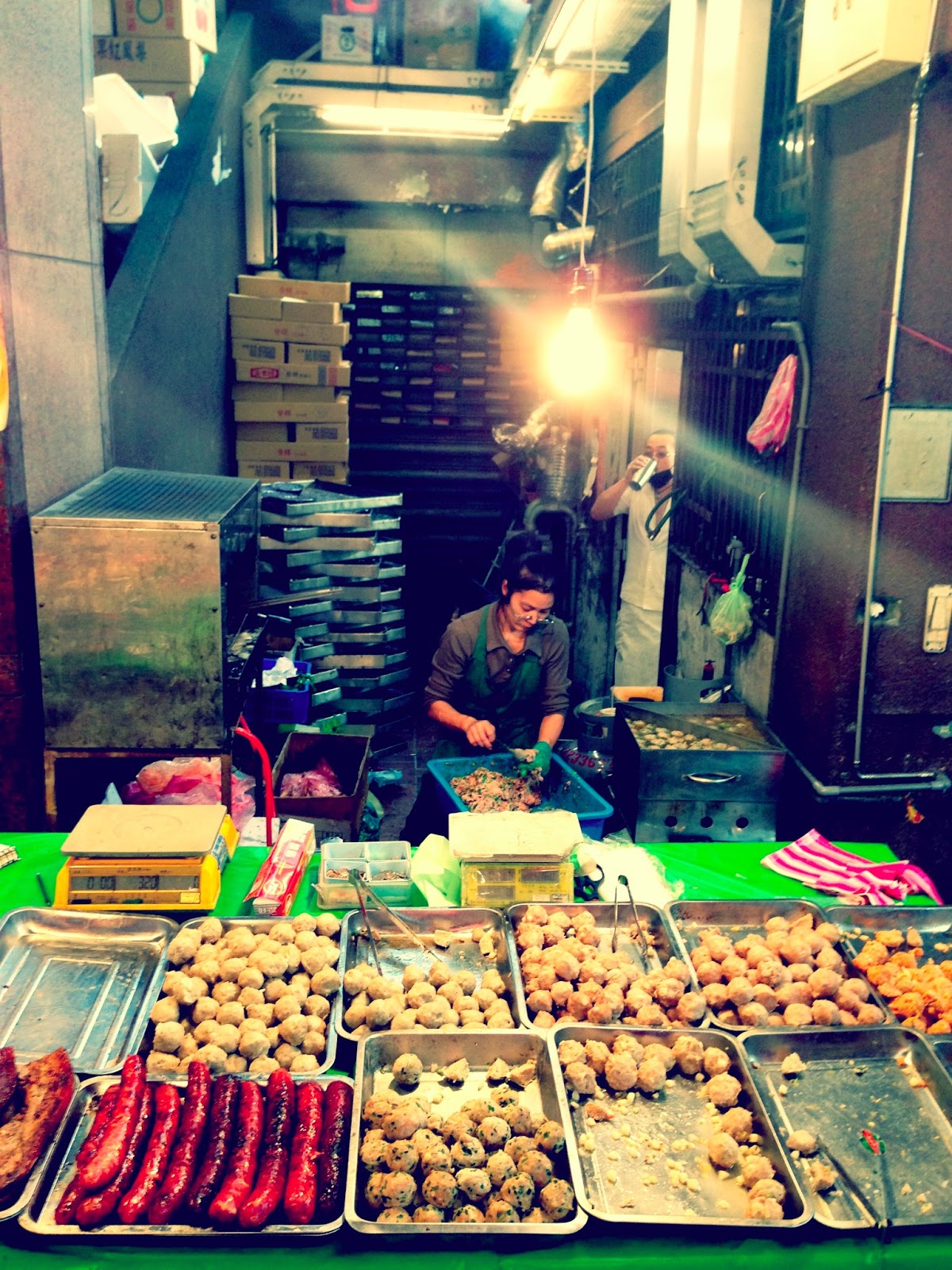
A sausage and fish ball vendor. As you can tell, some flavors of fish do better than others.
My aunt, hauling the day’s haul up the stairs, out of the market. 

Little New Year charms vendor. 

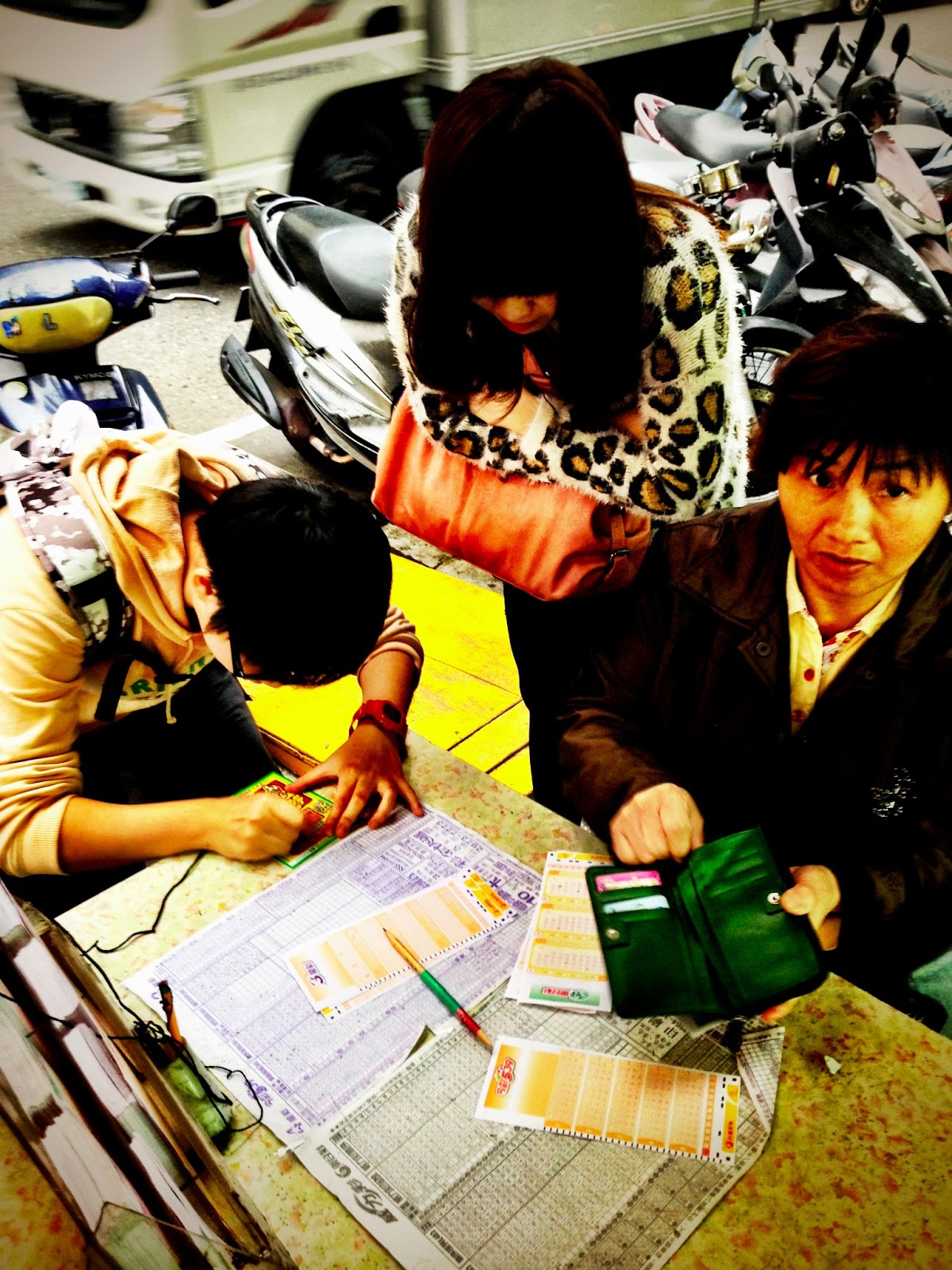
And it’s not Chinese New Year until your entire family spends more money than necessary buying lottery tickets for a lottery you will never win. 

For those of you planning to visit Nanmen (South Gate) Market 南門市場 check out this link.

That Certain Familiarity

Last night my cousin and I paid a visit to the Chengs, family friends with whom we’ve grown up and whose kids now have kids. Mr. and Mrs. Chengs are an exceptional older Asian couple, meaning they openly show their affection for one another, as though it were the most normal and obvious thing to do. We sat around their dining table, the lazy susan upon which had still not been cleared of their abundant dinner – fried prawns and fish and new year’s cake, all of which seemed to have hardly been touched- and discussed their upcoming trip to Japan. There were eight of us in all, including Geoff – the Cheng’s eldest son, his wife Jenny, her parents and sister, and my cousin and I. Geoff’s one year old baby daughter played with tattered red envelope from some generous relative. A few 1000NTD bills lay about her high chair. We talked about the rising cost of airplane tickets (though the Chengs, having made a sizable fortune from window treatments, could hardly be discouraged from traveling even if tickets were absurdly expensive – though “absurdly” is also relative).

Geoff sat to my right, slouched down low in his chair with his belly stuck out. I tried hard to remember him as a teenager, a shrimpy, scowly boy with a terrible temper. He had softened both emotionally and physically as he grew older and now at thirty-two was a father, married to Jenny, a beautiful petite young woman from the south who, when people first met her and knew that she was engaged to Geoff, made them scratch their heads, “How the hell did he get her?”

She was just a year older than I and had a soft, pleasant smile, a sweet, tuneful voice, and powdery pale skin with the slightest touch of pink – a complexion comparable, I thought, to her baby daughter’s. All of this was emphasized by her dark eyes and thick brows. Her corners of her small, rosebud mouth seemed always to be turned up, so that a soft smile constantly played on her face. On top of this she was well-educated, polite, exceedingly agreeable and fertile; in short, every (Asian) mother’s dream daughter-in-law. She met Geoff shortly after turning twenty-five and put up history’s weakest struggle – after all, Geoff was neither a looker nor very charming – until she gave in to the package that men like Geoff are lucky enough to be borne into and that makes them attractive rather than atrocious marriage prospects: despite his outwardly prickly demeanor, Geoff was a good guy with a steady job working in sales at his father’s company. He came from a tight-knit and wealthy family helmed by pleasant, generous parents.

“Still,” I said, when I saw photos of the happy couple, “The ten is marrying a…five. (I factored in Geoff’s unsightly weight gain which could not be evenly distributed across his small frame) Or a four.”

My aunt said that in Chinese, this was called, “A flower stuck on a pile of horse shit.”

Within a year of their engagement she was pregnant and I was now sitting across from her and her one-year old baby girl. I looked at Geoff and then back at his young wife – Goeff seemed disgruntled, perhaps he was too full – but then again, he always seemed like that. Jenny played happily with her daughter as though all her childhood dreams had been fulfilled.

Geoff’s sister in law was a year older than his wife but, judging by the fact that she’d just returned from a trip with just her mother and now sat in the Cheng’s dining room fussing with the baby, I gathered she was still years away from the life her younger sister lived now. I can’t explain it. Perhaps I’m wrong, but I was exercising my single girl radar – like gaydar but equipped with more assumptions, more judgement – and gathered that she was single and struggling to find a husband like most plain-faced, big-boned girls my age in Taipei and in big cities across Asia where small frames, small faces, and perfect skin tend to be physical requisites for wifely material.

The young woman had a plain name and pimples, to which Geoff’s mother-in-law deemed fit to turn the conversation.

“I just don’t know what to do about her face anymore,” she said, and the girl looked awkwardly down on her plate and shrugged.

“What do you use?” Mrs. Cheng asked. Ten minutes before Mrs. Cheng had come downstairs in a tangerine colored silk vest – not designed exactly to hide her round figure, but certainly made her appear the wealthy and well-fed matriarch of such a clan. My aunt often reminds me that in her youth, Mrs. Cheng was a very great beauty, so much so that when Mr. Cheng first set eyes on her he said to himself, “Now there, she will be my wife.”

Mrs. Cheng was no longer beautiful, but one could hardly call her ugly. She had blown up, for lack of a better phrase, from the nutrients of too many shark’s fin soups, abalone congees and swallow’s nests desserts, but her eyes were bright and her skin shiny and supple. For all the years I’ve known her, she maintained the same haircut – a blunt helmet-like bob, with a row of short, heavy bangs, beneath which  her face grew rounder with each passing year. Mrs. Cheng’s sister had always been her harshest critic and said years ago, when the weight began to creep on, that Mrs. Cheng’s hair was like a bowl and her pale face like white rice that was beginning to overflow. Regardless, Mrs. Cheng carried herself with an enviable grace and confidence and never seemed to stop glowing with the pride borne from having a good husband and from knowing that they had built a good life together.

Geoff’s sister in law pursed her lips. She was thinking of reasons as to why her skin was so bad. “I don’t use many products at all,” she said, “I used to try and cover it up all the time, but it seemed to just make the problem worse. So now I just try to keep it clean and use a little bit of moisturizer.”

“It just takes time,” Mrs. Cheng said assuringly, though one could tell that Mrs. Cheng had never had a bad skin day in her life.

As though reading my thoughts, Mr. Cheng chimed in.

“Mrs. Cheng’s skin has always been perfect,” he said, “She doesn’t use anything. She has always had wonderful skin.”

To emphasize his wonderful opinion of his glowing wife, he reached up to stroke the back of her head. I gave a sidelong glance to my cousin Karen. We both thought, “Hm.”

“It’s true,” Mrs. Cheng said, “I don’t use much. Just this cheap pharmacy brand from Japan,” (here Karen and I exchanged glances again – we knew the brand and it was cheap and we were about to be very impressed until Mrs. Cheng continued), “And one drop of that gold bottle from Chanel. You know that bottle? Just one drop. That’s it!” Later, my aunt would say that the gold bottle cost three hundred dollars and Mrs. Cheng had given her a bottle, claiming that one drop performed skin miracles.

And did it?

“I need about five or six drops,” my aunt had said wryly.

Mr. Cheng leaned forward and nodded at us nodding along to his wife’s words, and I did not know whether to laugh or keep nodding. It was a small thing, this talk about skincare, but this little motion of his, and his affirmation of his wife’s beauty which to him had faded not a whit, was marvelous to me in an anthropological sense.

Later, I asked Mr. Cheng if he planned on retiring anytime soon.

“From the company, yes,” he said, “but not from my charities. My charities still require a lot of work.”

Mr. Cheng’s charities – a hospital, childcare center, senior citizen center and a civic education center, to name but a few – are funded by the alms donated by hundreds of thousands of devout Buddhist Taiwanese citizens to three popular and venerated temples established by Mr. Cheng’s late father in the 1970’s.

“But these centers,” Mr. Cheng said, “were not my father’s vision but my wife’s vision. Everything is her vision. She has so many ideas, so many great and wonderful ideas on how to benefit society, and I, I,” he tapped the brochures he had run upstairs like a young man to retrieve and show me, “I make it my work. I love this work. I cannot stop, not quite yet.”

He looked at the brochures in his hands as I turned to look at his wife. She was plump and happy as the granddaughter she held now in her lap. The baby clapped and smiled. So did she, so full of life and humor. I had secretly accused her senses of being dulled by money and an easy life, but having heard enough stories of her impoverished childhood from my aunt and now attaching these stories to what appeared to be Mr. Cheng’s motivation for adding such legacies to his existing charities, I saw my accusations were unfounded. Mr. Cheng was a devout Buddhist and in his wife he had found his personal Bodhisattva – a woman full of light and who, in her own right, had made the right choice as well.

Every evening they strolled in the park across from their sprawling Taipei home, and every evening Mr. Cheng smiled adoringly at Mrs. Cheng regardless of how bright the lamplights shone. Once, their group of friends asked the men for whom they made so much money and one after another the men answered, “For my children, for my children,” until the question fell upon Mr. Cheng who replied without pause, “For my wife. All for my wife.”

Lovers 
Pal Szinyei Merse Lovers  (1845-1930). Oil on Canvas  

Later that night, Karen and I readied for bed like an old lesbian couple.

“I don’t know if I’m the type of woman to strike a man like that,” I said, “Actually, I know I’m not the type. That just seems so strange to me. The one arrow to the heart sort of thing.”

“Me neither,” Karen said, “It’s written in some people’s lives, but perhaps not ours.” It seemed very one-sided to us, and feeling slightly slighted by fate and/or genetics, we fell asleep, dreaming of one-sided love stories. The kind we seemed to know best.

But in the morning as we relayed the night’s events to my aunt, my aunt shook her head at me. The best and most sustainable romances are not those where the man chases tirelessly, blindly after a beautiful woman who cannot be made happy because she does not see in the man what he sees in her.

“Mrs. Cheng truly was stunning,” my aunt said, “She truly did have her pick of suitors, some of whom were much more handsome and much wealthier than Mr. Cheng.”

“Then why did she settle for Mr. Cheng?” I think even before my aunt replied I knew the answer and that to use the word “settle” (even though there is no true Chinese equivalent for it, “settle” was implied by my tone) was incorrect.

“She did not settle,” my aunt said, “she felt a certain familiarity. They had never met, not ever, but there was something comforting about him as though they’d met before, like they were old friends.”

I thought of that Rihanna song, and that Michael Buble song, and that old lady Fate, who ran in circles from that life to this one and will sprint on to the next and the next. I thought of the people who are destined, one way or other, to meet. When they do, the feeling is just how Mrs. Cheng described: like meeting an old friend, or rereading a favorite tattered book. Like coming home.

The Family Way …or Why I Have a Thick Skin (But Am Crying Inside)

My aunt busies herself in the kitchen, chopping vegetables, rinsing pots and pans, ready to make soup for dinner, among other dishes. She comes out to wipe the table for what seems like the fourth time in an hour. Something on her mind? Since I’ve arrived I feel as though there’s been some question or statement playing on her lips. My aunt is a straight shooter who considers herself tactful, which means whatever she wants to say will eventually be said, sometimes sooner than you think.

I’m lying on the carpet reading a Taiwanese beauty magazine, aware of enormous discrepancies between the way the models look and the way I look on a day-to-day basis.

“Betty,” my aunt says, wiping vigorously at someone’s sticky fingerprints. Probably my cousin Larry’s. He’s a slob. Not yet thirty but balding, paunchy, bow-legged. He’s got a master’s degree from Purdue, which in French means “lost” because when the French who and who first arrived and saw nothing but cornfields that’s how they felt. Larry has a Master’s degree in Finance or something about as interesting from the University of Lost. Larry works 9 to 6 then comes home, eats dinner, showers, plays video games on his phone or checks stock prices on his computer. Sometimes he will chat with his father, who is like an older, more put together, more religious version of Larry. The elder is in bed by 10PM. They are both about as exciting as vegetarian compost. Larry also has a girlfriend who is much more attractive (not even on a sliding scale), and who is two years older than I am, and who, you can see it in her eyes, is ready to get married. To Larry.

“Hm,” I reply. Interesting liquid eyeliner technique.

“Betty,” my aunt says again, and this time she stops wiping and looks at me, “I’ve been thinking.”

“What?” I look up. I don’t think I will ever perfect this liquid eyeliner technique. For one thing, I do not possess liquid eyeliner.

“I can’t stand it anymore,” she throws the rag down on the table, “You and Karen really need to find boyfriends soon. Neither of you are getting any younger. I worry every night that you two won’t get married.”

I look at her. The eyeliner technique now seems crucial.

“Don’t…worry,” I say.

“But I do!” My aunt picks up the rag again and starts to wipe down the chairs, which are of lacquered wood. Fingerprints show up easily there too, “You know back in my day women your age would not only be married, they’d have one or two kids by now.”

“Well, it’s kind of different now.”

“Yes, I know, but still, time is running out. You are ladies now, not girls. Time to make yourself pretty and concentrate on the few fish still left in the pond.”

Jesus. I look at the magazine filled with pretty young girls with perfect makeup and hair, probably only twenty one or something, with hoards of guys chasing after them. I think about Larry, who most likely does not even know that his girlfriend takes a half hour if not more to apply her makeup and do her hair, or that she even wears makeup or does her hair – he probably thinks she just looks like that…naturally. I think about Larry’s long singledom which I thought for sure might be permanent and then my surprise when he brought home a very pretty girl with absolutely nothing wrong with her except her curious taste in men and remember, Oh, right. Larry has a good education, a decent steady job…and right, and Larry is a man. I look at my aunt, who though with my uncle is hardly a billboard for storybook romance, is still somehow an advertisement for a happily married woman with purpose and a sense of pride and achievement. All good things, completely and utterly fine to have been gained from a strong marriage. And instead of looking at the blank television screen where my reflection would only stare dully back, I reach for the remote and turn it on. HBO. When in need of tuning out, HBO.

A new movie is just about to start – and as the opening credits begin to run with familiar names laughing snowball from hell: “Bride Wars.”

A Short Talk

The girl, expectedly, was not happy.

“I don’t want to move to the beautiful country,” she spat the Chinese name of America, “You can’t just uproot me and move me halfway across the world without talking to me about it.”

“I’m talking to you now,” her mother said as a matter-of-factly, aware of her use of the singular. Even though her husband sat right next to her, he said nothing. Fine with her. Mothers are expected to deliver the bad news that would change their children’s lives for the better.

The girl was nearly speechless with anger, but she saw on her mother’s face the expression she had come to hate: the one of resolute, immovable decision. In it was etched the selfishness and the stubborn pride she had come to associate with her mother and everything wrong in general with old-fashioned, conservative mothers. It was like a disease, that expression. The girl saw it in the parents of some of her friends as well – the flashing but strangely dead eyes that signalled a challenge almost to their offspring. Fight me, the eyes said, but you will lose. In the future, when the girl’s English improved she learned the phrase “my way or the highway,” and often thought of it when she fought with her mother. As afflictions went, the girl felt her mother had an almost terminal case of it. Saving face, saving face – this was what her mother lived by so that it seemed she had only one face, one expression – her mother seemed like a statue to her then, but oddly, the girl did not see the strength of stone, but weak plaster wanting desperately to represent something it was not. Regardless, the die had been cast by her mother’s stiff hand and her father, though far from a pushover, was only slightly more alive and would not do anything to reverse it.

“We will come back during the summers, unless you need summer school,” her mother continued, “some kids who don’t study hard during the school year need to stay and take extra courses during the summer, but,” the woman looked at her daughter, “hopefully you won’t need it.”

“And dad?” the girl turned to her father. She loved him more than she loved her mother, but she felt a growing rift. In her gut she knew he had very little to do with this decision.

The woman looked at her husband. He leaned forward and rubbed his face. He did not know, precisely, what it was he felt at the moment except that his family seemed very far from him even though they were, at present, sitting right in front of him.

“Your father will stay here and work,” the woman said simply, and as though to reinforce her words she rubbed his back, which instinctively stiffened to her touch. Whether the woman felt this he did not know or care. “Your father works very hard, as you know, and his work is here. He can come visit us whenever he wants, and we will come back for all your breaks. Unless you have summer school.”

The man finally spoke.

“Your mother and I discussed this at length. You’re not doing well here. We think you will do better in the American school system. You have more freedom there.”

The girl leaned back. What a robot. She was disgusted, but mostly she was sad. She had not the words to describe this sadness, not at that age when one’s world is small and narrow, but only that whatever family life she had was slowly being chipped away and deemed unimportant.

“We need to think about your future,” the man said, “Education comes first.”

Of course it does. But this freedom her father referred to. Did he know his wife at all?

She was barely fourteen, had not yet begun to develop an appetite for the world but still, she knew a thing or two about freedom and how certain environments could help expand or limit already limited freedom. At least in Taipei she could go out on her own, could walk around the city or hide out in cafes and bookstores. She’d gone to the US before to visit cousins who liked her enough but were clearly different. They spoke such rapid English, for one thing, and didn’t understand half of the words she used in Chinese, but what’s more, they relied on their parents to take them anywhere. This took some getting used to. She had done the requisite visits to Disneyland, Sea World, all fun places but inaccessible without a car. And what of her beloved hiding spots? Would she find new ones in the new world? She could not even begin to imagine life in California and she did not want to.

“Get yourself ready,” her mother said, “tell your friends you will come back and that they can come visit us anytime.”

She would not say anything to her friends, the girl decided. It was much easier to disappear off the face of the earth and let everyone wonder.

The girl did not cry when her mother stood up to go. Her father stayed behind with her on the couch. She was silent and sat staring out the window – the sky had gone dark since they’d first sat down, and it felt like years ago when really, the whole disruption of her present life had taken less than fifteen minutes. She thought it had begun to rain but turned to find that her father had turned the TV on to the weather channel. It was raining elsewhere, not in Taipei. But it didn’t matter. The weather in Taipei would not affect the girl at all, not in a few months, and after a moment her father got up and left too.