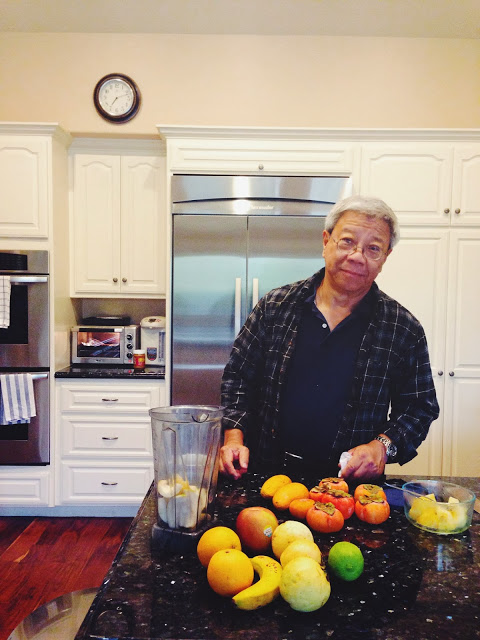
I mistakenly assumed that on my last day at home, my parents would act accordingly (like parents) and see me off to the airport. Continue reading “Departures”
I mistakenly assumed that on my last day at home, my parents would act accordingly (like parents) and see me off to the airport. Continue reading “Departures”
My mother told me two jokes yesterday. I was eating breakfast in the kitchen and she was using the computer in the dining room, which she has rechristened as her office. She sits at one corner of our long table where she uses her computer, corrects homework assignments, and Skypes with my brother. For anyone else it would seem a massive, lonely work space, but my mother manages to cover most of it with papers, Chinese workbooks, random notes and the occasional bowl of half-eaten oatmeal with an egg cracked over it (not very appetizing, if you ask me). This is also where she gets most of her information from the outside world, in the form of long-winded mass emails forwarded from friends and my father.
She knows better than to pass this cyber trash onto me. I have long since exiled emails from my father to a separate folder titled “Dad” but which could also aptly be called “Horrendously Time-Consuming Bi-lingual Junk Mail,” because for Dad, that’s the purpose of email. He still uses AOL, which is the digital equivalent of the Pony Express. He takes each email very seriously, as though it were a hand-written letter from a relative in China. Before, when he asked me, “Did you see that slideshow/essay/lengthy health report/etc. I sent you yesterday?” I would shake my head and say, “No Dad, stop sending that crap to me,” to which he would respond with an expression of hurt and indignation.
“I only send you the very best emails,” he would say, “They’re always informative or thought-provoking. You should take the time to read them if I’m taking the time to send them.”
I would tell him that I had better things to do. My father would become angry and petulant.
“Well I have better things to do too, than come home and make dinner for you” (if he came home to make dinner that day). And I would give him an odd look, because really. Really?
But I became tired of these arguments and sought to eliminate them from my days. I set up a separate folder: a small, Gmail Siberia reserved expressly for my father, and began to lie to his face. Now I always nod and say, “Yes yes, it was very interesting,” when in fact I haven’t the faintest idea what he’s referring to. It’s okay though, my father invariably provides clues. If it was a slideshow, he will say, “Those were some great photos right?” and I will nod, “So great.” If it was a report of some sort (usually warnings regarding the latest gang tactics – Asian parents love passing these around, even though they and most of their friends live in Newport Beach, Irvine, Cerritos or some other sterile, virtually crime-free city where their Benzes and Bimmers are more likely to be crashed by their Asian wives than vandalized by gangs) he will say, “Did you know that the gangs do this?” To which I will widen my eyes and say, “No! But now I do. Thank you.”
My dad never wants to discuss any of the emails at length. He just wants to make sure I see them. Hearing my response he will smile and nod, satisfied that he contributed somewhat to my daily intellectual digest. And saftey.
“See? I only send you the very best emails.”
At the end of the week I open the folder, give it a quick scan to see if dad sent messages specifically to me (there almost never are; if he has something really important to ask or tell me, he will call) and click “Delete All.” It gives my de-cluttering tendencies the slightest satisfaction.
My mother however, operates differently. She also takes those emails very seriously but rather than bombard my inbox, will call me into the dining room, disguising her intent with the same tone she uses when there is something wrong with the computer.
“Betty! Come quick!”
I usually put down whatever I’m doing and rush to the corner of the dining table. My mother is quite impatient when things don’t work (“Everything is doomed,” she likes to say, when really Gmail just needs refreshing).
But more often than not, the urgency of her call doesn’t match the urgency of what she wants me to see.
“Look at this adorable monkey!” (it was a slideshow of cute baby animals dressed up like human babies).
or:
“Look at this woman in China with no arms and four children! Look at her wash her face! Look at her gather vegetables from her field and wash and cook them!”
She will lean back, click to the next slide and sigh in wonderment, “Isn’t the human spirit amazing.” And there, the next slide will say in Chinese. “The Human Spirit is Amazing.”
As I am already there, at the corner, I can only nod and say, “Yes…” and wonder what it is that prevents me from taking the time to sit through these slideshows while my parents can raptly digest dozens a day. Is it a generational thing?
Sometimes though – and I’m learning to do this more often than to simply rush over like the idiot who believed the boy who cried wolf more than twice – I’ll simply pause what I’m doing, tilt my head and call back, “What is it?”
And my mother, knowing that what she wants to show me is not very urgent but if she doesn’t show me now, she’ll forget it and her daughter will somehow be at a unforgivable disadvantage, will say nothing.
I’ll say, “Mom? Mom?” And start to rise from my chair when voila, there she will be, in the doorway.
It won’t matter if she broke my train of thought – it’s more important that she keep hers. She’ll walk toward me and say, “I just now read a wonderful email…” and I’ll know that it’s story time. Forwarded email story time.
I spent the better part of the morning getting quotes on hypothetical cardboard boxes filled with clothes purchased over the years from Forever 21, Zara and H&M. By the United States Postal Service and FedEx, shipping would cost more than my entire wardrobe. By UPS, it is slightly less expensive, but only slightly.
“What would the value of the items be, per box?” asked the Indian man over the phone. He owned the UPS down the street from my house.
I did a quick calculation, estimating that the average cost of each item to be around $15. Subtract things like the changing of the seasons and the fact that no one ever buys “Vintage” fast fashion, I realized my clothes were probably worth less than a UPS cardboard box, which costs $8.50. I could basically put one hundred cheap polyester tops in each box and…
“About $200 dollars,” I said with as much resolution as I could muster. I felt then rather tender and generous towards my belongings.
I saw, via landline, the Indian man raise his eyebrows.
“That…is….” he wondered how to say it nicely, “Well UPS declared value can reimburse you up to $100 if anything happens to your packages.”
“That’s fine,” I said quickly. I wondered how severe the pangs of loss I’d feel if anything were to happen to my boxes. I imagined a small gang of bandits, each holding a medium sized U-Haul box, howling with glee and racing towards their appointed meeting place. Some misty bank underneath the Brooklyn Bridge. They would tear open the boxes, see bundles of brightly colored fabric and hoot – because you know, sometimes polyester looks like silk. They could make a killing on E-bay. One of them would beam a flashlight on the tags and they would all be crestfallen.
“Who the hell spends over $300 shipping Forever 21 crap across the country?”
After I’d bought the boxes (from U-Haul, because UPS is certainly a rip-off) I slid open my closet doors and was myself crestfallen. My studio in New York is sunny and bright. It has four windows, which is three more than in the other units I saw. It has a full kitchen with space for a small dining table and a standard refrigerator for the giant tubs of greek yogurt I will stockpile. It has a bathroom with a triangular tub, checkered black and white tile and a sparkling white sink. There is not much room to dance around in (something I like to do in my home bathroom), but it has a window through which lots of light can stream along with the gazes of other tenants, for whom, one Halloween, I shall prepare some “Rear Window” action. It has hardwood floors, high ceilings, soft, cream-colored walls and it sits atop five flights of long, narrow stairs. There is no elevator in the building, but exceedingly sturdy legs is a small price to pay for sunlight, quiet, and other things that keep you alive in the big city.
My studio also has the smallest closet known to man.
It is smaller than Harry Potter’s broom cupboard, smaller than the closets found on Lilliput. Smaller probably, than the island of Lilliput itself. It is, to quote a million people before me, a crying shame. My closet at home is already not enormous, but my father, when he remodeled the house, had shelves and drawers built in to maximize the space, which I maximized to the point of it being maxed out. I also have an enormous dresser and ample space under my bed. I don’t think I qualify as a shopaholic, but I have a lot of stuff. Some of it, my friends chide, for a life I don’t live. I don’t have plans to reinvent myself in New York, but I would like to wear my leopard coat and sequined jacket and borderline bordello-esque heels without someone staring, then hissing, “What is it, Halloween?”
I have a feeling that sort of thing doesn’t happen in New York and if it does, the speaker is probably homeless and insane, instead of a man dining out with his wife and kids.
But for now, my father is reminding me the definition of “essential.”
“Are these heels essential right now? Is this leopard coat essential?”
Nothing is essential, unless you make it so.
My father reminds me that I’m going there to study, not to strut around in stilettos and sequins doing God knows what.
“Yes yes,” I say, waving him away, “I didn’t buy all these clothes just to leave them in California.”
“Yes, but NewYork is a walking city. You must wear sensible shoes. And when it gets cold,” he looks dubiously at the leopard coat. It’s not real leopard (you’re welcome, leopards), nor is it North Face, “You’ll need to wear something warmer than this too.”
Mentally, I start to allocate shoes to one box. Loud coats to another. Sensible things I can roll up and pack into suitcases. Sensible things are to be worn when moving in, when going to class. When riding the subway. And after one is moved in, the not-so-sensible things can be taken out, pressed and worn on the town with friends after the sun has set. Senses are both heightened and on the wane. But this is exactly right; one does not move to New York to be sensible.
In about an hour I’ll change out of my pajamas (uniform of the unemployed) and drive some fifty minutes to LAX, where my father’s plane will have just landed. He’ll be itching to stand up and stretch his legs, perhaps help an elderly woman retrieve her bags from the overhead bin just as I’m switching freeways. Continue reading “Dad Comes Back”
My father does not fit into a nutshell, and this is not a remark on his physiognomy, (though if that were the case, it would have to be a very large nut, a type not found on this planet).
 I didn’t know much about Macau. Admittedly, I still don’t. It just seemed like one of those places you try and make time for if you’re already in Hong Kong because, well, it’s there. My father, not a gambling man unlike most of his friends, likes it for the food.
  |
| Scene taken from the turbo-jet. Not recommended for those who get seasick easily. |
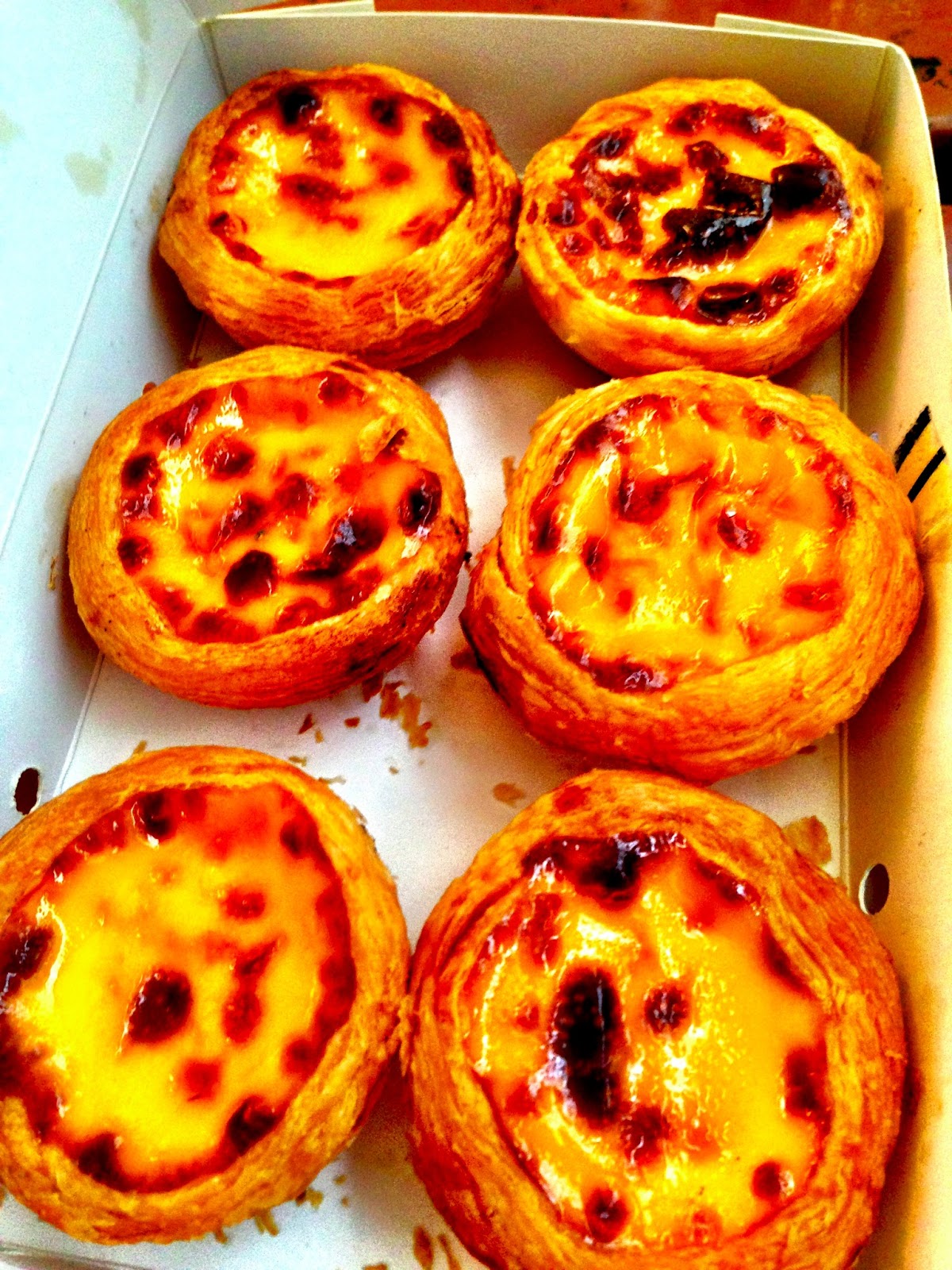 |
| My father’s recommendation. We were greedy and each ate two, then immediately regretted it. |
 |
| A man neither Chinese nor Portuguese enjoying a gelato by a fountain in old town. A scene from Europe a stone’s throw away from China. That is the crazy thing about Macau. |
 |
| An elderly Chinese man waiting outside the church. For what or whom, I’m not certain. |
 |
| A woman rushing to mass. |
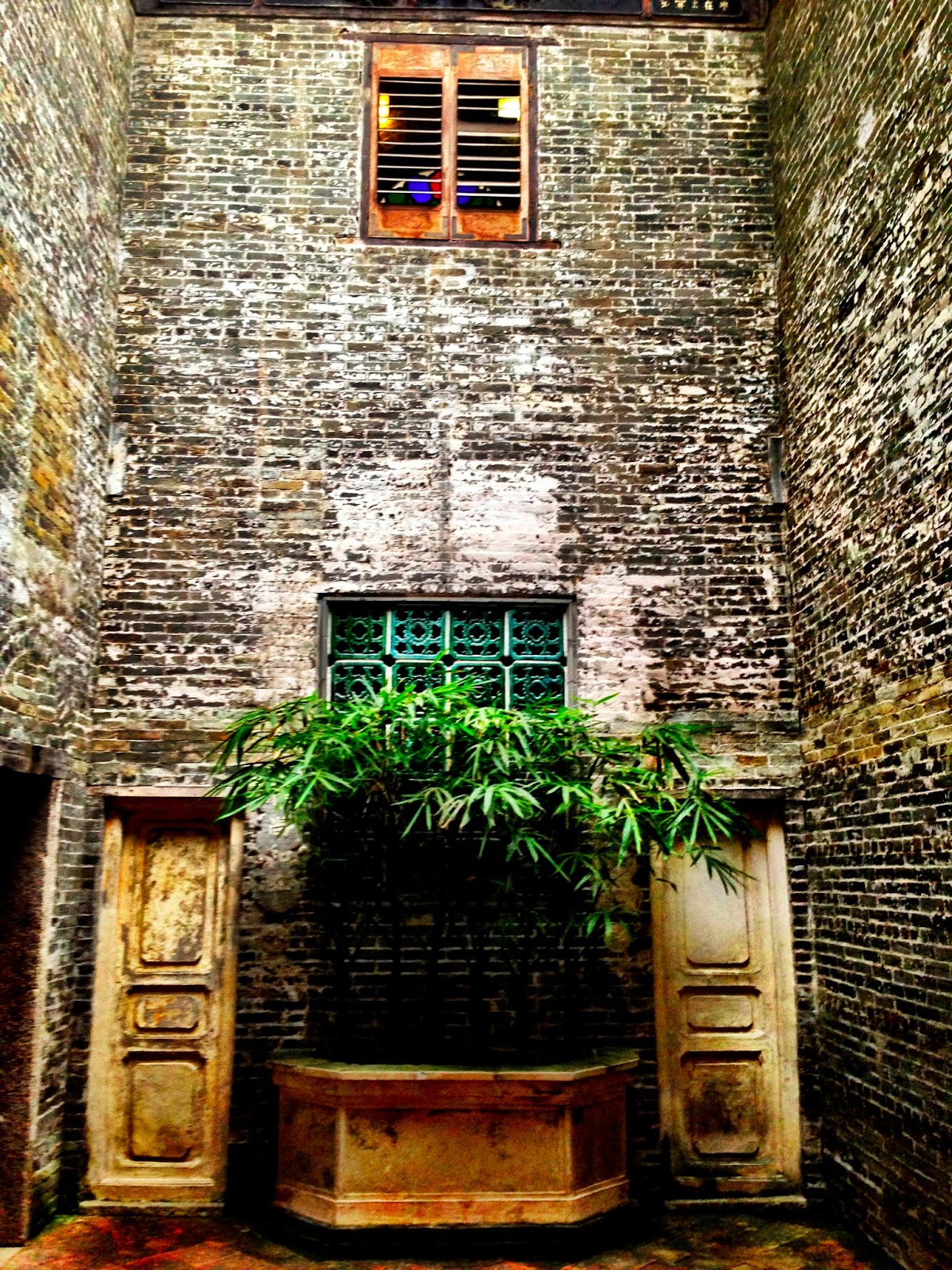 |
| Gorgeous brick atrium of the excellently preserved Casa de Lou Kau, home of a Chinese Merchant and gambling tycoon. |
 |
| Another atrium. I wouldn’t mind if the rain fell into my house through a place like this. |
 |
| A photo also taken on the way there, because it was nighttime when we left, but I like this shot. |
My father doesn’t understand non-fiction.
“What does it mean, exactly,” he asks, “This ‘non-fiction.'”
“I write stories that are true.”
“About what?”
“You, me, our family. People I meet. Things I see and think about.”
He looks at me, confused. Something is terribly wrong. “Why,” he says, “Why would anyone want to read about that? Who cares about you or me or our family?”
My father is not being rude, at least I don’t see it this way – he is genuinely curious as to what in the world makes me think this is a good career option.
“I don’t know dad,” I shrug, because I honestly do not, “This is a risk you take when you write. You write what you know and hopefully people want to read it.”
“And if they don’t?”
“Then…I get a day job and do something else in addition to write.”
My father is not satisfied. He’s about to pay a lot of tuition money. He’s a businessman, born to a woman who counted every penny and invested heavily in two things: land and her three sons’ educations. The former so that her sons could pursue careers in real estate development and the latter just in case they bungled it all away.
“Money must be spent on the knife’s sharpest edge,” she liked to say, and even though she passed away long before I was born, her words are from time to time echoed to my cousins and I via our fathers. The sharpest edge would be studying something like Electrical Engineering or becoming a doctor or, as my father had hoped for me early on, plunging into the world of accounting and economics (his eyes were always pretty open to my other faults, but for some reason my ineptitude at math eluded his gaze). Most of my cousins have landed right on the blade. I seem to hover somewhere near the hilt.
“I don’t understand why you won’t write fiction,” my father continues, “What about something like Harry Potter? That woman made a lot of money.”
Ah. The old Harry Potter comparison. As if I could ever in a million years do what Rowling did.
“Dad,” I say, irritation seeping into my voice, “I can’t just sit down and write some seven volume fantasy series. That takes…”
“What does it take? You know I saw a TV special about her – she was homeless! She didn’t even have pens and papers! You have everything! You don’t even have to work and you can’t do what she did?”
I look at him, eyebrows raised and mouth slightly open to say something that would emphasize my exasperation, but nothing comes out. I close my mouth, lower my eyebrows. Dim my eyes.
“Dad, I don’t want to write about things I don’t know or don’t have interest in.”
“Didn’t you like Harry Potter? You have all her books.”
“Yes! But reading something you like is totally different from wanting to write. I like reading about a lot of things, but I don’t necessarily want to write about those same things.”
“Why not?”
“Because it wouldn’t be the same or as good as the other people who write it. Everyone writes what they know, and if they don’t know, they do a lot of research, but normally when they are willing to do the research they’re interested in the subject. I like writing about our family and whatever else I’m interested in.”
My father leans back, “I don’t understand,” then looking up, he sees the look on my face. Not a sad look, just tired. The one I get right before I tell him that it’s better that we live far away from each other so I don’t murder him in his sleep. Time to change the approach.
“Okay,” he says, “just explain to me what non-fiction is. You say you write about family but I don’t understand why people would want to read about that. Show me some examples of people who write the kind of non-fiction you want to write and maybe I can understand.”
I think about David Sedaris, Adam Gopnik, and Anthony Bourdain, and how my father would not understand their appeal, even though all their books are bestsellers. Better to use a Chinese example, but I can’t think of any.
“Gun Germs and Steel!” my father says before I come up with anything, “That’s non-fiction, right? That’s a very good book.”
“Yes, it was,” I say, “I liked it too -“
“You could write something like that!”
“I could, but again, not my thing. That’s like history and social science…not really creative non-fiction.”
“Ohhh,” my father leans back, nods slowly. Is he starting to get it? “So you write more creatively.”
I nod, “I tell true stories from my perspective,” I pause. That sounds like a euphemism for lying, but then again, that’s a whole other bag of worms I don’t want to open. “It’s not research,” I say, “Well, there could be research involved, but that’s to add to the story rather than the story itself.”
My father is silent for a while. I’m not sure what he is thinking, just as he is not sure what I am thinking. I’m thinking that I need to find a better way to explain this to my father, whose friends nod fervently when he tells them, when they ask, “How are your kids doing?”
But he knows that look. “Your daughter wants to be a writer! That’s fantastic!” they say, clapping him on the back, but inwardly they breath a sigh of relief, “Better your daughter than mine.”
“True stories,” he says, leaning forward now.
“Yes. True stories.”
“But what’s so creative about telling the truth?”
He has me there. I’m not sure, actually, and I tell him so. I don’t make things up – at least not now. I tell it like it is, but hopefully there’s something beyond that. Maybe in the future, I may have to start making things up, to protect people I love or fill in the blanks or satisfy some deep-rooted craving for fantasy or whatever other reasons some writers become novelists and others essayists or biographers.
I turn to go and my father doesn’t ask me any more questions.
“Hm,” he says simply.
It bothers me that I can’t explain it better. But then again, that’s not the kind of writing I do.
“Good writers define reality; bad ones merely restate it. A good writer turns fact into truth; a bad writer will, more often than not, accomplish the opposite.” – Edward Albee
“Exploit the things you’re good at.” – Jason Lee
Two years ago around this same time, I found myself back in California looking for a job. I had just returned from a long weekend trip in Carmel, celebrating my Uncle Louis’s second, for-real retirement (at the eyebrow-raising age of 70) from an aerospace company. Before Carmel I’d been in Asia for a two month-long “waiting” period in much the same vein as I now await graduate school admissions decisions (more on that later) though back then it was for a Fulbright. The Fulbright didn’t come through and I went home to celebrate my uncle’s retirement and mourn my own entry into corporate America, hoping companies wouldn’t ask what I did immediately out of college.
Lately, I don’t feel like writing much. I also don’t feel like reading much, and this may or may not have something to do with the fact that this trip to Taipei, I’m living on the 7th floor instead of the 6th, where my aunt, uncle, and cousins live. My aunt has a key so she comes in whenever, often when I’m in the middle of doing yoga (in the morning) or on the computer (in the evening), and I go down to the 6th floor for my meals when I don’t eat out.
Anyway. I was afraid of this (but I doubt it can be remedied now), the brain drain I lamented in the States shortly before coming here. Two years ago I stayed in Taipei and stood at some sort of existential crossroads. I was waiting for a Fulbright and rationalized that I could dick around for a while before the die was cast. I mean, I wasn’t going to go through the hassle of finding a job and then have to quit just in case I got the Fulbright, right?
Well, it’s kind of similar this time, except I harbor a (not so secret anymore) fear that God’s like, “Dude, you’re having way too much fun because you think you’ll get into grad school.”
“Well God,” I say back, “Won’t I?”
He shrugs, “Perhaps.”
I try to write every day, to be productive by my productivity standards, which are already low by any means. Please don’t compare your life with mine because you can bet your butt I don’t compare my anything with yours – yeah, you there, with the job, the doting boyfriend/fiance, the master’s or imminent doctorate. I’m keeping my eyes and ears open and trying to remember everything I’m seeing and hearing and thinking, but there’s a lot going on – almost too much, in fact, in and around my family and my internal organs (mostly my brain). That kind of means I should be writing all of it down, but instead I sit in front of the computer or my diary and am frozen.
I don’t want to do anything but look at pretty pictures on other people’s consistently updated blogs, or read fluffy articles in the NYTimes (yes, they have fluffy articles). Oddly, I love reading about longevity and how to achieve it, even though my life is looking pretty murky right now. What’s the point of living as long as my grandfather did if sometimes all I want to do is watch “Transformers 3” again? It is without a doubt that Shia LaBeouf and his shiny robot friends will save earth yet again, though I’m not too sure what I’ll feel like at the end of the week. I’m not talking about the doubt that comes with thirteen grad school applications in a field that is more subjective than your take on Damien Hirst’s latest piece, but the doubt that seems to plague my generation (and probably future generations as well – but not my kids, hell no) in general.
Like… what….am….I…..doing? Not just today, but tomorrow and the day after and the day after that?
Well.
I’ll tell you a little story that may have colored my worldview today. Who knows – tomorrow I may write something entirely different and say, “Wow! Look at the colors of the sky! Look at the rain! How fresh and fragrant! The banyan trees lining DunHua South Road – so romantic, those aging silvan soldiers!”
My aunt caught up with me today as I was heading home from a long walk in the XinYi district. She had rushed to the organic produce store around the corner to get two little plastic trays of basil and cilantro – she was going to stir fry some clams for dinner, and the herbs complete the dish.
“Do you remember your San Gu Gu’s husband?”
I nodded. San Gu Gu is Third Aunt, my dad’s half-sister from my grandfather’s second marriage. She is about seventy-seven or so. We saw her and her family about every three or four years as she lived in Shanghai. I do not like San Gu Gu – she seems fake and has a reputation for asking my dad and uncles for money one too many times, even though she’s done quite well for herself as a doctor in Shanghai. I do however, like her husband very much. He’s a simple guy with simple tastes. He and his highly educated wife had three rather spoiled, lackluster children, one of who is slow and has stayed home all his life, and two others who went to expensive colleges in Japan (it was apparently the “vogue” thing to do for upper class Shanghai folks back in the 80’s) before moving to the States, where the daughter quickly married a lackluster guy and their son, Cheng, had his own spoiled, lackluster son named Jimmy with his wife, whom he met and married in Japan. They usually come over for Christmas and everyone shakes their head at Jimmy’s stunted emotional development and limited palate and widening girth – apparently Jimmy is a picky eater who really, according to his mother, “can only eat MacDonald’s so what can I do?” Well, don’t bring it to his room on a silver platter so that he can stuff his face without interrupting his video games, for one… but then again, he’s not my kid.
They didn’t come to Christmas this year because Jimmy’s mom, my cousin-in-law, I guess, if we’re going to get technical with family terms, was diagnosed with stage four pancreatic cancer and is now dying in a hospital in Downtown LA. Cheng put his job as a LA Area Chinese tour guide on hold to take care of his wife and Jimmy dropped out of school. I can’t imagine what Jimmy’s going through right now, but my impression of that kid is so poor I think he’s relieved to be able to sleep in this semester. It’s a terrible way to think because god knows I’d drop out of school ten times over if anything happened to my parents, so I shouldn’t judge a thirteen year old kid, but god he was spoiled. I can’t even begin to fathom how Cheng is doing.
“San Gu Zhang, your cousin Cheng’s dad, passed away last night at midnight,” my aunt said, “He had a stroke a few months ago and then I guess he just didn’t make it.”
My aunt opened the fridge to take out the clams. I noticed in the sink that she had broccoli stalks soaking in a large plastic bowl. My aunt was pretty paranoid about pesticides (as most people who cook for their families should be, I suppose), and always insisted on soaking and resoaking and rinsing the vegetables thoroughly.
“Was anyone there with him?” I asked.
I asked because Cheng, his wife and kid were all in the States, and San Gu Gu had fallen last month on her way home from the hospital. A particularly harsh cold front hit Shanghai just as her husband was hospitalized, and she had slipped on the ice that’d formed on the hospital steps. She broke her hip and was herself hospitalized and then confined to bedrest, far too incapacitated to visit her husband everyday as she’d hoped.
“No,” my aunt replied, “he died alone. The hospital called San Gu Gu who had to arrange a nurse friend of hers to take their youngest son, the slow one, to the hospital to see his dad one last time. Your San Gu Gu arranged to have her husband’s body donated to science.”
I thought about how sad it is to die alone in a cold hospital room, especially during a Shanghai winter. I hoped his room at a window at least.
“The strange thing is, your San Gu Gu knew she would never see him again after she fell.”
A few weeks earlier, when she’d first fallen, she had called my aunt, “My blasted hip,” she said, “I don’t think my husband and I have the karma to be together when either of us departs this earth. Of course, he will probably leave first – I don’t think I will ever see him again.”
This she said in a bed less than a few miles from her husband’s.
“It was such a cold cold thing to say,” my aunt said, slicing the broccoli. A small pot of water was boiling and I could smell the ginger and wine my aunt had tossed in with the clams, “But in the end, she was right. She knew it, somehow.”
I watched my aunt assemble the night’s dinner in silence. The clams simmered and slowly opened. The ginger puffed up with water and the small chili pepper my aunt sliced in cut through fragrant steam emanating from the wok. The broccoli bubbled and turned over and over – my aunt fished each stalk out with chopsticks. The rice steamer clicked. I set the table – just three spots tonight: me, my aunt and my uncle – all in relative good health. My cousins stayed late at work.
My aunt sighed as she carried out the last dish, a spicy minced pork. A Thai dish that she’d bought ready made at a gourmet grocery store in the basement of our favorite department store. My aunt is all about trying new things.
“Your cousin Cheng is probably having the worst year of his life. And it’s only February. First his dad, and now his wife…”
I nodded, but wondered if Cheng had the strength to tell himself that things could only get better from this point, well, some future point, not too far off. His wife is still here, not exactly fighting the cancer but not exactly giving up. I did not know her that well, but she wide-eyed and kind. The kind of person you describe blandly as, “wouldn’t hurt a fly,” and “simple-minded” who ended up being a bad mother because she was only trying to be the best mother possible, never saying no to her kid.
When my parents went to visit her at the hospital, I did not go. I didn’t want to.
The last bit I heard about her: her lungs too, like my grandmother’s, are filling with water. She was so skeletal my mother had a hard time staying in the room, because all she wanted to do was cry with pity.
“Pity is useless,” my father says, but even he was oddly quiet after he returned from the hospital.
At the dinner table my aunt and uncle shook their heads, thinking about all the older relatives we’ve lost these past few years. They rattled off their names like lottery numbers, and I was startled to realize that there had been so many deaths. I knew them all, varying degrees of vagueness. They touched my face at some point, told me I looked like my mother or my father, held my soft young hands in their old papery ones and said, each of them I’m sure, “How good it is to be young!”
“Tell your mother not to work so hard anymore,” my aunt said suddenly, chopsticks pointing at me.
“Why?”
“Life is so short, you see? She needs to enjoy it now, while she can. Go to the places she wants to go. Spend time with the people she wants to spend time with.”
I nodded, but inside, was shaking my head. When you’re a twenty-six year old kid like me, your parents are still the same parents who used to spank you and make you practice piano for an hour each day. They age, sure, but it’s like a flash. You go away somewhere for a little bit, and come back a few months later and notice that while your room is exactly the same and the sun still lands in the same spots on the carpet, your father has a lot of grey hair and your mom moves at a glacial pace. She’s always moved at a glacial pace, but Jesus now she’s really slow. Her back used to be so straight and now she’s slightly hunched. You wonder about your dad’s blood pressure.
“Mom enjoys teaching,” I say, “But I know what you mean.”
My uncle, ever the optimist, pushes back his plate – filled with empty clam shells – and smiles at me. Life is short, the eyes say, handle what you can handle.
“Me?” he asks, as though I’ve asked him, though I guess my look is searching. He gets up to get fruit from the fridge and brings it back with a flourish, “I’d like to live forever.”
“Don’t we all.” My aunt rolls her eyes, motioning with her chopsticks for me and her to finish off the last four clams.
I oblige then take a chunk of honeydew with slightly salty chopsticks. The cold juice floods my mouth and I wince. It’s too sweet for me.
My father left the other day for a two week trip to Asia, not for business, but for fun with retired friends. He is the leader/tour guide, meticulously planning their itinerary from departure to return, in charge of booking all plane tickets and hotels and even drafting a list of must-eat restaurants in each destination: Taipei, Macau, Shanghai, and some province I’m not sure of. Continue reading “My Mother’s Nightmares”
 VERY HIGHBROW