A Kitchen in Shanghai

I arrived in Shanghai late Thursday night at the wrong airport. My brother, uncle and cousin had already made the hour and a half drive to Pudong International Airport, where I was scheduled to land but which, due to fog, had been closed. My flight was redirected to Hong Qiao Airport midflight and when the announcement was made, the handsome Australian man in front of me turned around and away from his newspaper (incidentally, he was reading this article) and asked, “What just happened?”

Luckily two terse but nice Shanghai men in my row (two friends on their way home from a week of gambling in Macau) were kind enough to lend me a cell phone so I could call my brother with the wonderful news that yes, he had in fact, just spent an hour and a half driving to the wrong airport. Thankfully for me, Hong Qiao is oodles closer to “home” than Pudong and a 44 Renmibi cab ride later I was back in the cold apartment I first visited some six or seven years ago, upon my first trip to Shanghai.

My uncle bought the flat a little over a decade ago, when he had the good sense that all things money were headed across and above the Taiwan Strait, straight into the heart of Shanghai. Later, when business died down he sought to tie up loose ends and considered selling the flat. By then, the Shanghai flat had become something of a popular destination amongst family and friends and friends of friends. The idea was thus: Hey, the Ho’s have a house in Shanghai. We have family/friends in Shanghai. Let’s visit and stay at the Ho’s house. And happily, my uncle lent them the keys and happily, they stayed rent/rate free in one of the world’s grandest cities. It is ideal for visitors and residents alike. Situated west of the Yangtze River at a now less busy crossroads (before, it was home to Shanghai’s busiest Street of Bars and Drunken Rowdiness), the flat is a ten to fifteen minute walk (extravagantly convenient by Shanghai standards) from two major subway lines and, if one resides on a higher floor, boasts hazy views of the city’s skyline. Naturally when it came time, for my uncle at least, to sell the apartment, there was a resounding “No!” that emanated from all who have stayed and all who planned on staying. My uncle put his hands up in defeat. He shrugged. “Alright, alright,” he said, “It was just an idea. We will keep the house.”

And so the house remained ours, filled with my uncle’s tasteless furniture and many plastic tubs filled with mysteries of business passed. Who knew that less than two years after my uncle had sought to sell it would rise to such eminent use?

It is here that my brother has made a new(ish) life for himself. I woke on a cold, gray Friday morning in an empty apartment, knowing that my brother had left for work and that I would soon step out to see the city. I opened the door to the balcony, feeling both the bitter cold wind and several rusty hangers strike my forehead. I squinted, then closed my eyes, trying to imagine what it would be like to live in this city. Then opened them. What would it be like, every morning, to take in my laundry with my back to this view?

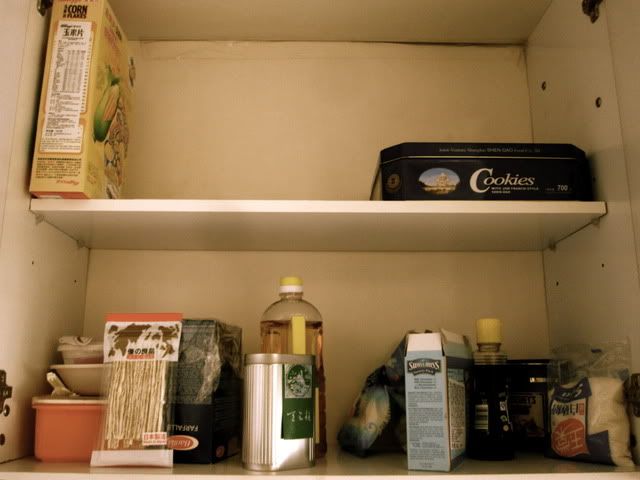
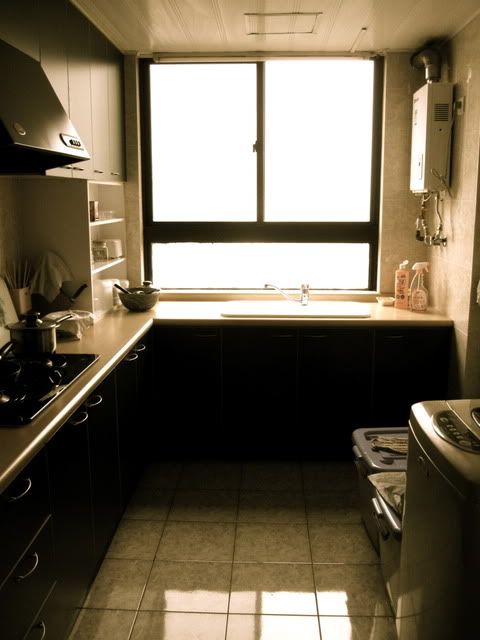
I couldn’t imagine it. Closing the door behind me, I stepped back in and walked to the room most familiar to me, in any house: the kitchen. It is, I believe, in the kitchen where one can gauge the “settled in-ness” of a person’s residence. As I saw that day, my brother has yet to “settle in.”

Emeril Lagasse’s nightmare.

Of these items, the cereal, Swiss Miss, pasta and peanut oil are recent purchases. The other items may very well be antiques, remnants of my uncle’s periodic visits of yore.
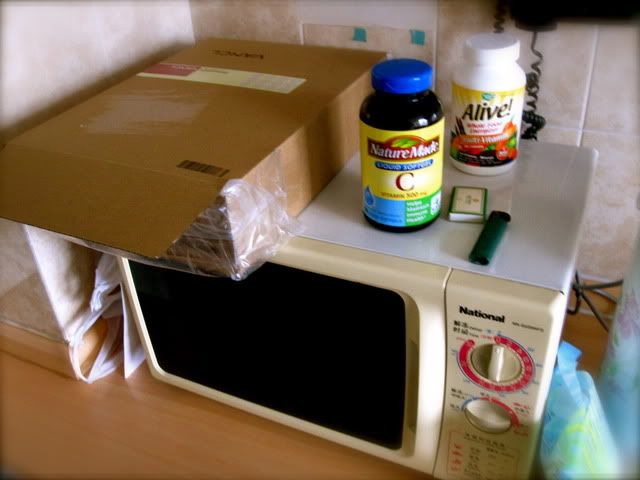
Like any reasonable and well educated person, my brother keeps his vitamins atop the microwave.
And subsists, when he is not being treated out to dinner by our vast army of relatives, on microwavable buns and dumplings, so that he may warm the vitamins at the same time.

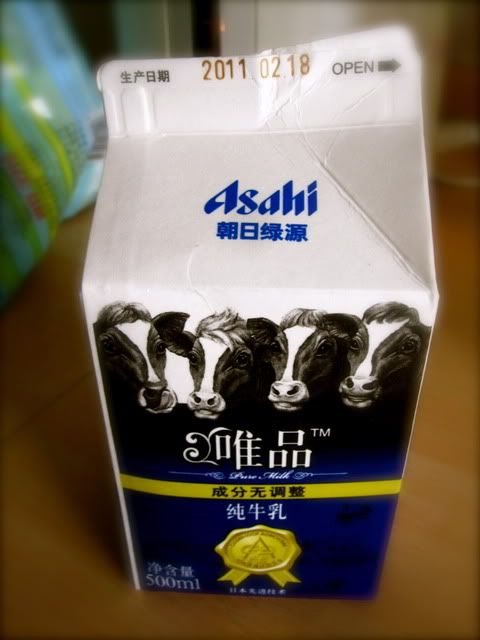
Calcium deficit beer lover’s delight: Asahi Milk. The cows only chew malted barley.
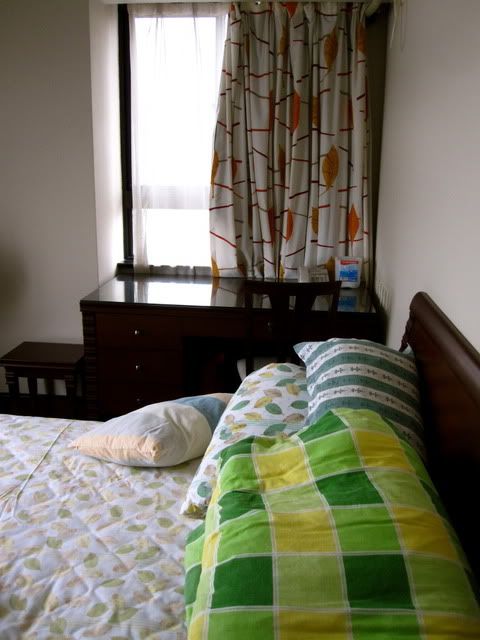
Not the kitchen, but what is now the “guest” bedroom, with a sterling example of Chinese interior decorating at its finest. How many prints doth thou seest? Too many, methinks.

I returned to the dining room where on the table, which has been rechristened my brother’s “office,” I saw this:

In China, they don’t believe much in euphemism.

I did not like the flat. Not for me. But I could understand it and its being fitting for my brother. “There’s still a lot of work that needs to be done,” he said to me, “but I’m looking forward to slowing changing things my way.” It takes a big heart and an open mind to see a home for yourself, anywhere. I was glad that at least one of us was able to do so.

Walking into an HSBC Commercial then Walking Out in Central, Hong Kong

The last time I went to Hong Kong was three or four years ago with my cousins Karen and Melody for a weekend shopping trip. We ended up window shopping a lot without buying much, mostly because even with “steep” discounts, most of the stores were high end and still out of reach. The stores that we could afford were often so jam packed that it didn’t seem like we would find anything. In the end, we walked around in awe of all the apartment towers and each spent a considerable amount of our budgets having our palms read at a famous temple, the name of which I have now forgotten. Oh yes, we also tried not to lose each other in the sea of people that swept over us like a head-on wave at every street corner. What I remember most vividly from that trip was the sheer number of malls that Hong Kong seemed to have. Taiwan, back then, had a good number of major shopping destinations, but still seemed far behind Hong Kong in density. And while my current return to Taipei has revealed that Taiwan has closed the gap somewhat, the few hours I spent in Hong Kong have showed me that an even smaller island still rules the Malls per Square Kilometer competition.

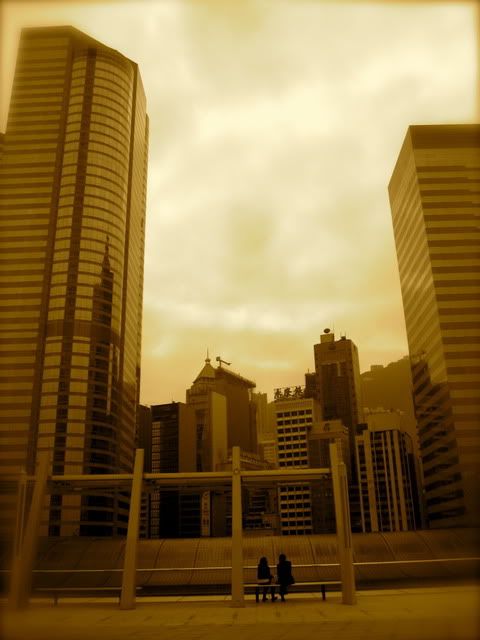
Two women lunch on the rooftop of the IFC, the watering hole for bankers and deal makers.

It seemed to me that every subway stop had an exit or two that led to a mall. Granted, I only got out of three, but each one had escalators that took me from the dim underbelly of the city into a vast and glittering sub-city built of polished marble, glass and merchandise. At one mall especially, the IFC or International Finance Center, seemed to be the new queen bee of them all. Located at the heart of Central, the IFC is, if you’re a banker or luxury conglomerate CEO, the place to be. I followed the herd of well-dressed folks rushing towards the IFC subway exit and found myself, as I’ve already said, intruding on an HSBC commercial featuring thousands of very well-dressed young men and women who no doubt keep Hong Kong’s economy robust by working during the day and partying during the night. The complex was decidedly “international,” meaning, I heard English spoken in many different accents (though British English dominated), and what’s more, saw small groups of schoolgirls in navy blue pleated skirts, knee socks, and loafers chatting in perfect English and walking about looking for a place to lunch. “International school kids,” I thought, and I was right.

It was an interesting place to suddenly find myself but given my budget and general fatigue of malls (I have Taipei to thank for that), I decided to leave the IFC (no easy feat, as it is labyrinthine and monstrous) and search for a different Hong Kong.

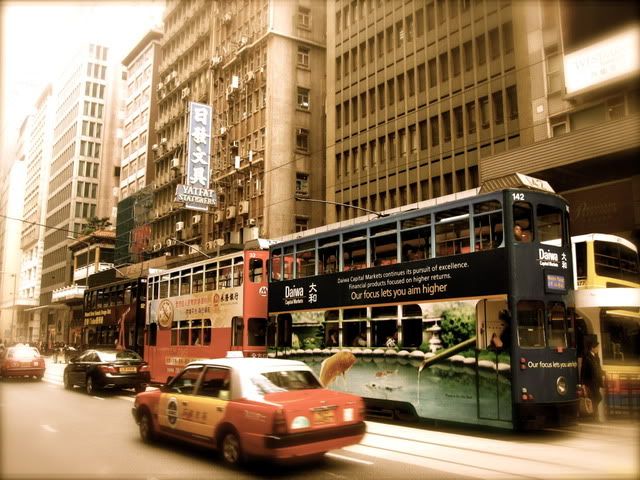
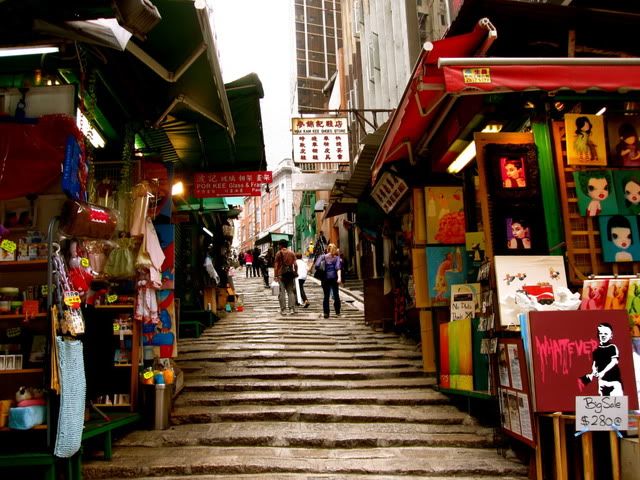
A typical street around Central. On the ground floors, most of the old shops have long been replaced by foreign boutiques, but one need only to look up at some of Hong Kong’s old signs to get a taste of the old.

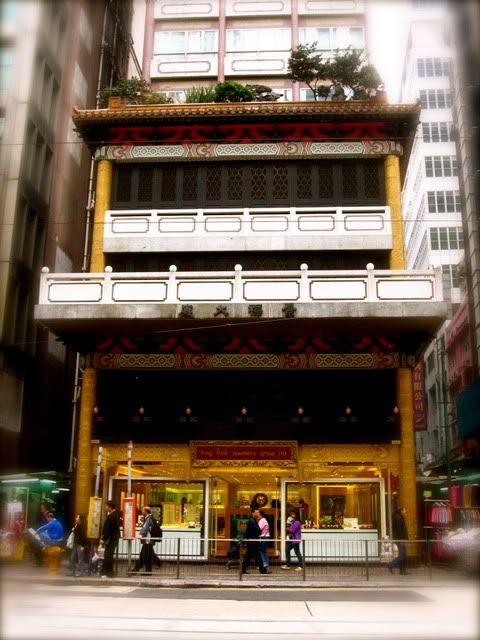
And sometimes old buildings refuse to leave, like this jeweler tucked in between two glass high rises.
These men too, needed respite from the IFC and emerged to have their shoes shined the old fashioned way. Each person belongs to a different Hong Kong.
The red urban taxis and three double decker trams, which I love. New York should invest in these.

Wandering about without a map and no destination in mind can be good and bad. Bad because well, you don’t know where you’re going. Good because you can come across a narrow alley filled with delights you otherwise would not have if you had an itinerary in mind. That day was good in terms of pleasant surprises. My aimless wandering paid off in terms of what I saw and what I ate.

A sudden small incline appeared on my right, filled with the works of local artists.
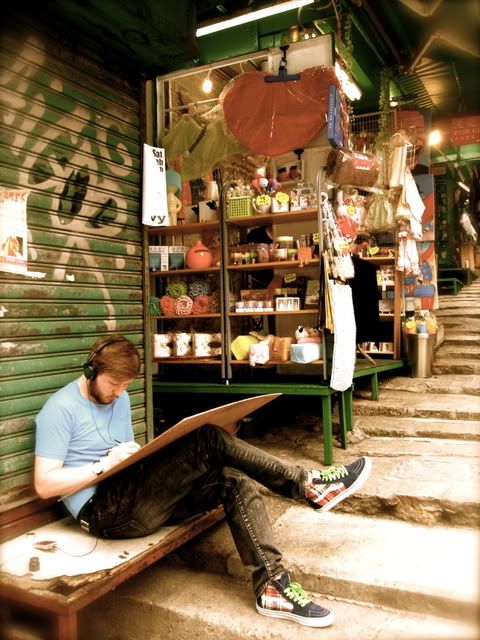
At the head of the street, a young man tunes the city out and draws.
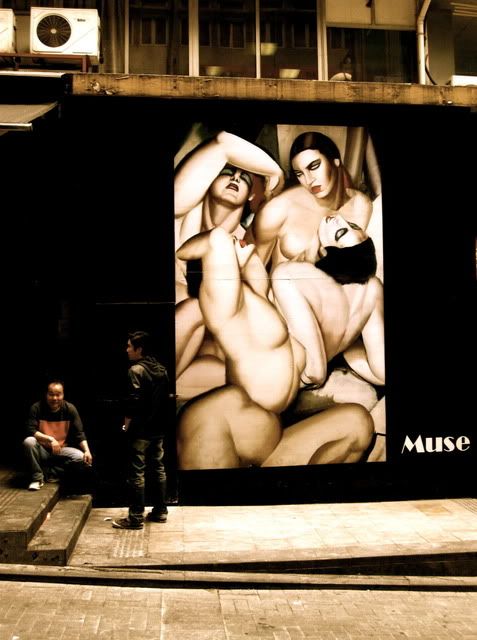
Not too far away, someone had a bigger canvas to work with.

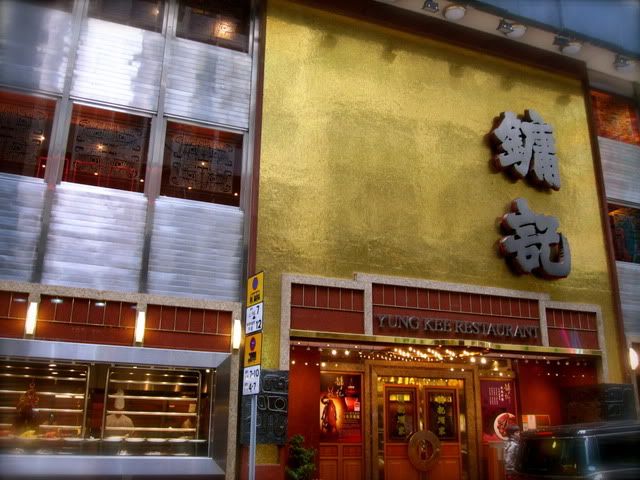
All this walking made me hungry and I started to look for an authentic, smallish noodle shop. Apparently I didn’t know where to look and walked around for forty five more minutes before seeing this:

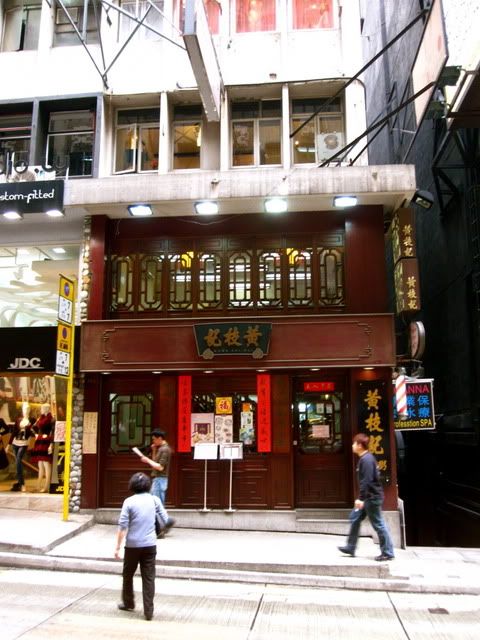
But the dishes looked enormous and out of my price range. I turned around and saw this shop, directly across the street:

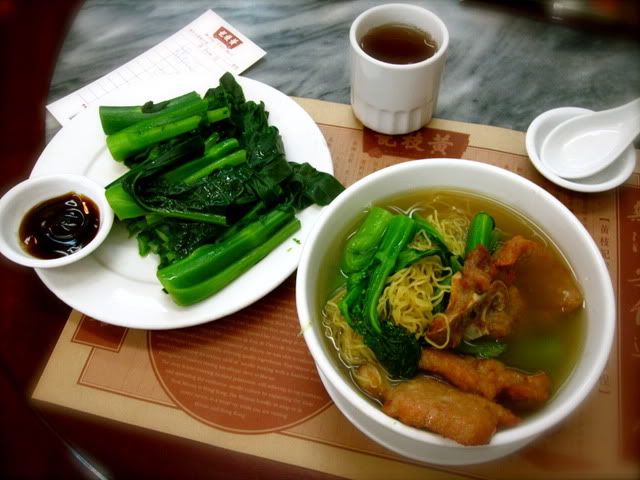
An old lady walked in and a young woman walked out. Seemed the be a restaurant for parties of one. I went there and ordered what everyone else was eating.

Pork chop noodles with a plate of Chinese broccoli.

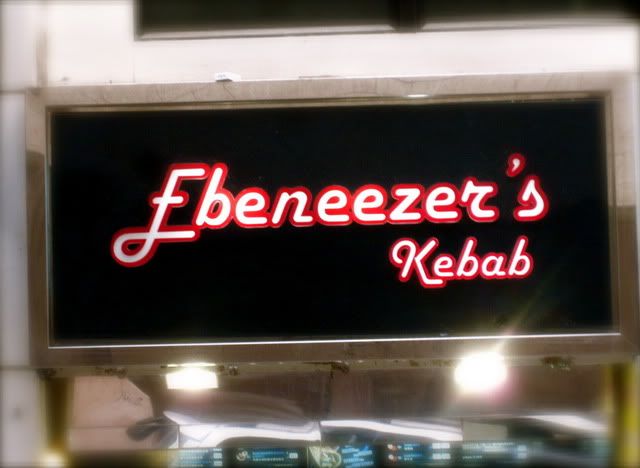
Satiated, I came back out and walked around some more. Didn’t buy or eat anything at these places, but got a good laugh out of their names:

Sure beats “Victoria’s Secret.”
Hamburger place.

Pretty soon it was nearing evening and I had to return to the airport to pick up my visa and catch a flight to Shanghai. But not before entering through one more mall…

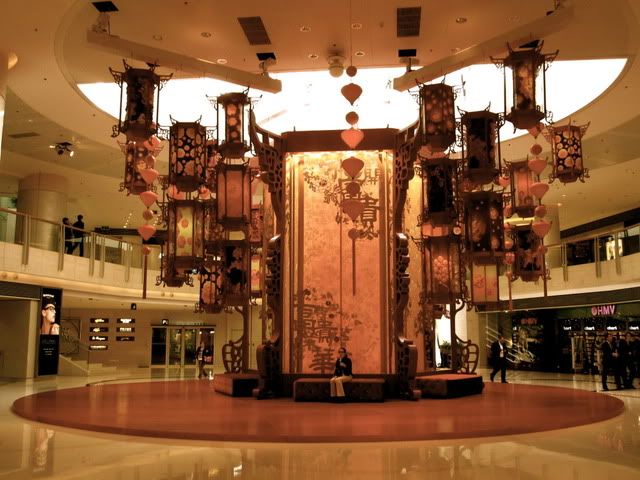
The lobby at Elements, another ritzy mall in Kowloon.

On the subway ride back, a cemetery at the water’s edge. Literally.

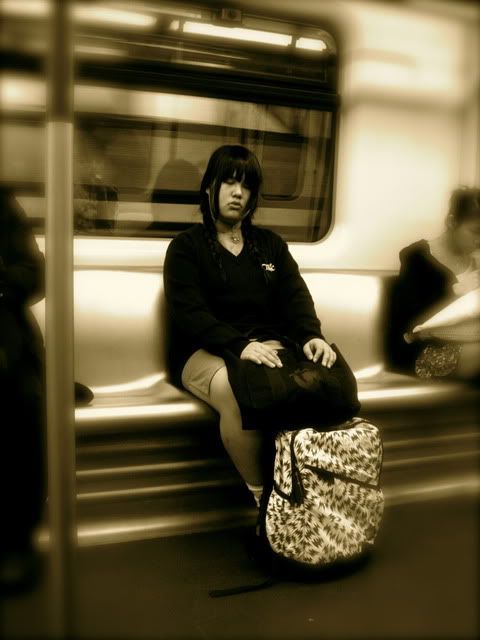
And a schoolgirl, doing precisely what I had wanted to do all along since waking up at 3:45 that morning, but am glad I did not, for I would have missed out on too much.

Tainan (Part 2) – A Village

Back from Hong Kong and Shanghai, but posting my last few Tainan photos before I forget…

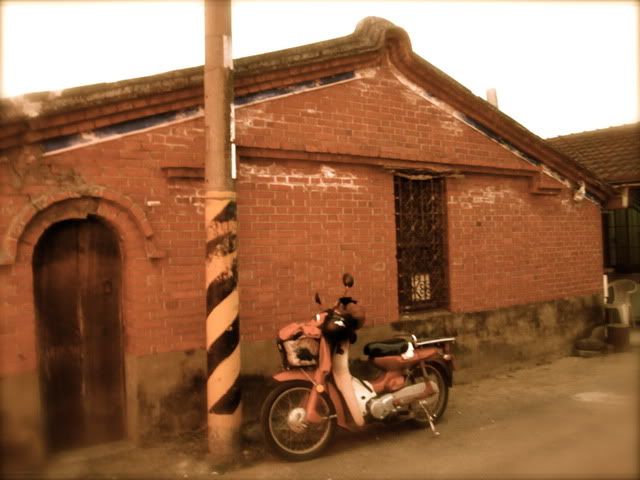
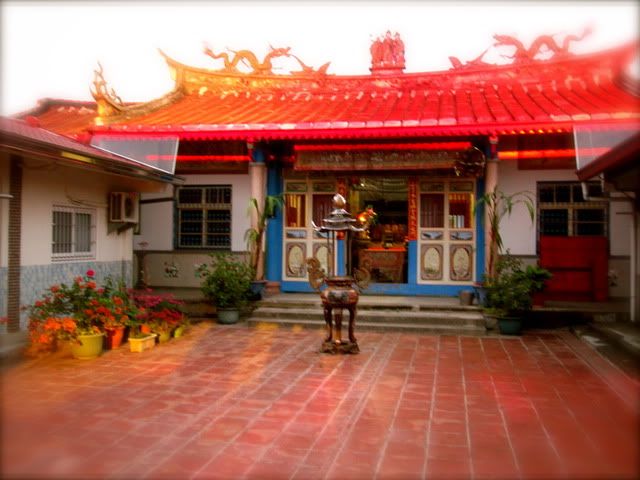
After visiting the temple, Dr. Chang’s friends took us to an old village, the Chiang Family Village in Lu Tao Yang. A woman in our group was actually from the Chiang Family, and the village patriarch had been her grandfather. The village is built in the old style, courtyard units connected together, and is so well preserved that the Taiwanese government declared it a National Historical Site. There was a concert there that night, held yearly at the end of New Year’s celebrations and performed by local villagers as well as professional musicians. It was a glimpse of old Taiwan, and Mrs. Chang’s father, who went with us, enjoyed himself immensely. “It reminds me of my old home in Shandong, China,” he said.

The entrance to the village had tables set up filled with games for children.
Chiang children, playing games.

One of the courtyards. Some of them are for worshiping ancestors. Such as this one. Many temples are built along the same principle.
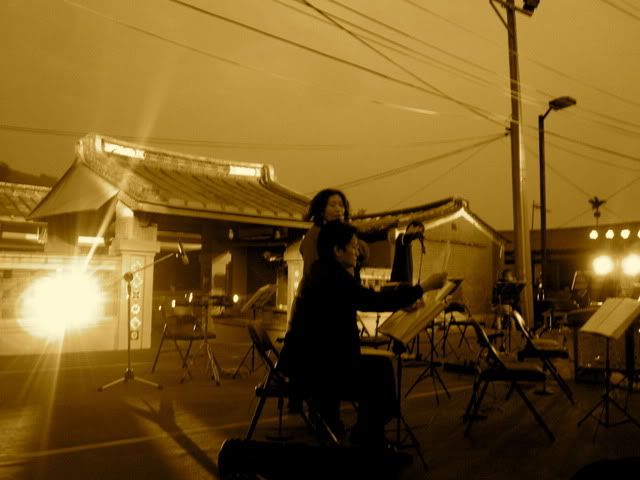
Musicians preparing for the night’s show. The stage was set in the village square.
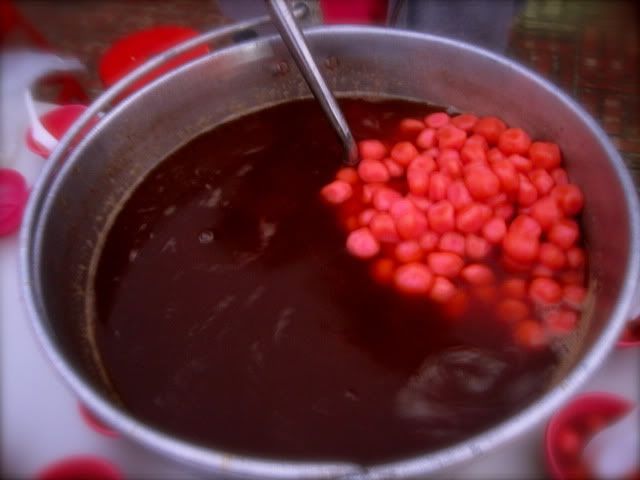
Volunteer ladies ladled out bowls of tang yuan, or sticky rice balls in sweet broth. You eat this for prosperity.
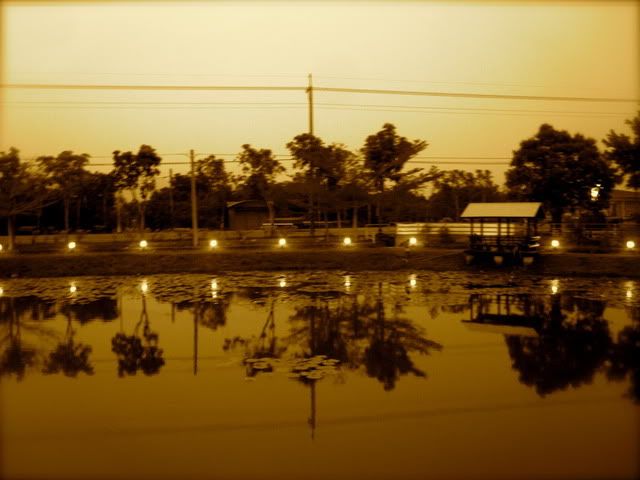
There was a small, moon shaped pond at the head of the village.
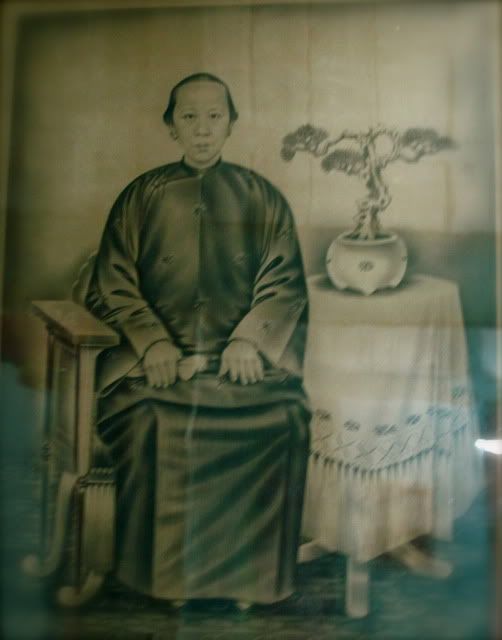
I saw this photo in one of the courtyards. I’m guessing it is the Chiang family matriarch.
Dining hall.
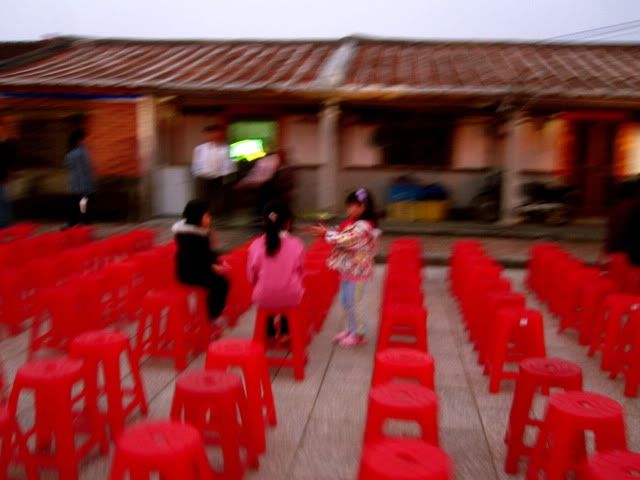
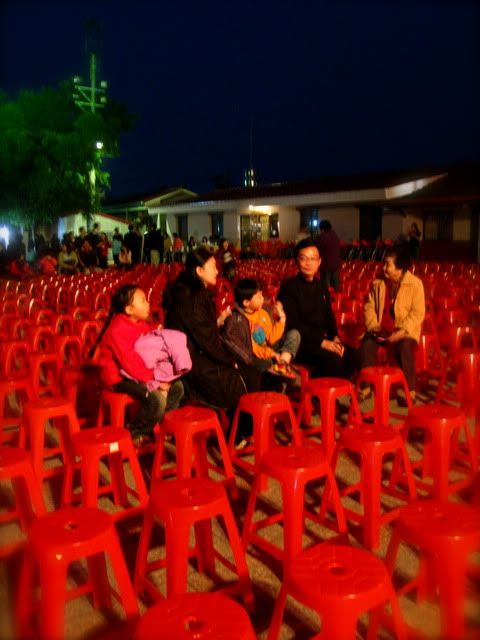
An eager family, waiting for the show to start.
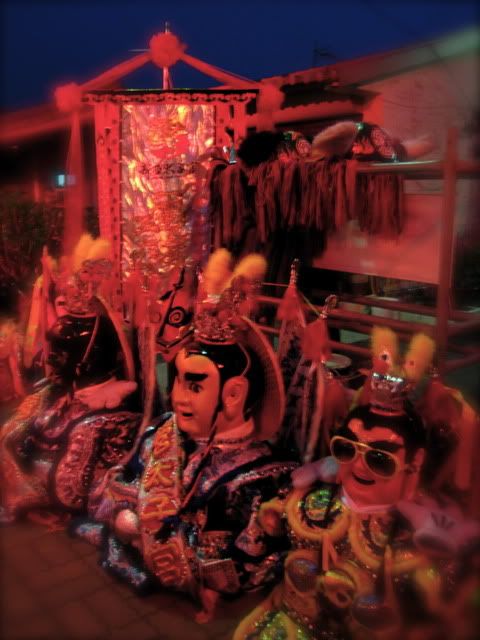
Costumes for the show. I wondered about the one on the right.

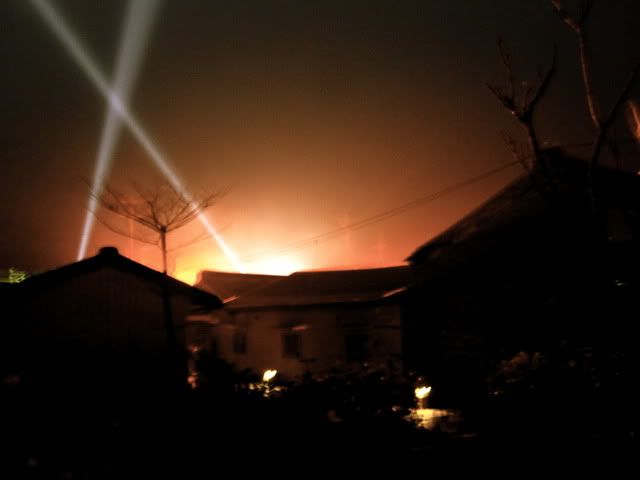
 As we left for Kaoshiung for our own dinner, I could hear the music start. I turned around and saw the village light up.

And for tomorrow, a preview of coming attractions…

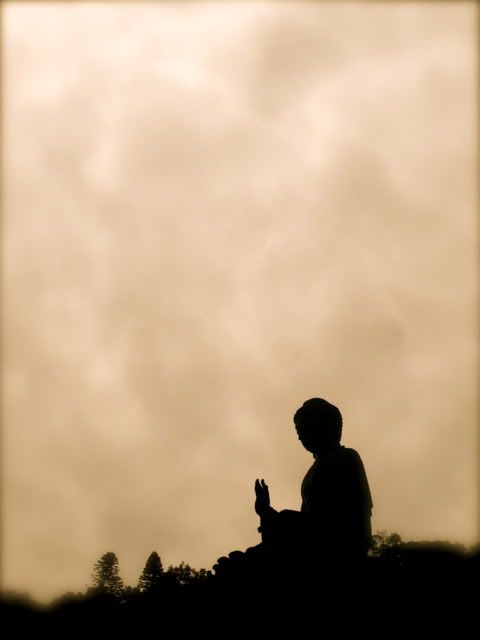
Tian Tan Buddha on Lantau Island, Hong Kong.

Tainan (Part 1) – A Temple

 Ironically, my stay in Kaoshiung offered very little of Kaoshiung. The Changs have a different way of life compared to my relatives in Taipei – the kids are shuttled around by car – partly because their parents are safety freaks and partly because up until two years ago, Kaoshiung had no metro system. The rest of the time, they study and putter about the house. They go to American school which, for some reason, means  they developed American tastes and though they eat home cooked Chinese food often enough, going out, a rarity in their family, means a Western themed restaurant with a cheesy name (e.g. Smokey Joe’s, Mama Mia). Not that I’m complaining – they wine and dine me enthusiastically, thinking that because I’m American, I must like the same places – and I do, but I wonder sometimes, of Kaoshiung’s street food…

Also on the itinerary this trip was a “long” drive up to Tainan, Taiwan’s cultural capital. If Taipei is equivalent to China’s Shanghai (it’s not equivalent, really, but in concept, perhaps) then Tainan is like Beijing, where one goes to find the island’s culture. And just like the world over, people in the south are known to be extremely friendly, especially to each other… but most people I know from Tainan, aside from their ardent and often violent belief that Taiwan and China are two separate nations, live up to their reputation.

Friends of Dr. Chang offer every year, to lead a caravan to Tainan to visit a temple followed by dinner in an old village, now a government protected historical relic. The village is composed of a group of old Chinese-style homes, with four sides and a courtyard. Families start out in one unit and as children marry and branch out, they move out into their own courtyards so that a couple generations later, the entire village might be largely one family – each courtyard representing one nuclear family and connected to other courtyards by blood and brick. This particular village belonged to the Zhuang Family – and one of the women in our group happened to be the daughter of the patriarch. We couldn’t stay for dinner though, because Jenny was waiting for us back in Kaoshiung, but it was a pleasant experience nonetheless.

The temple’s entrance – the stylish woman walking is actually 70 years old, the rather haughty mother of one of our group.
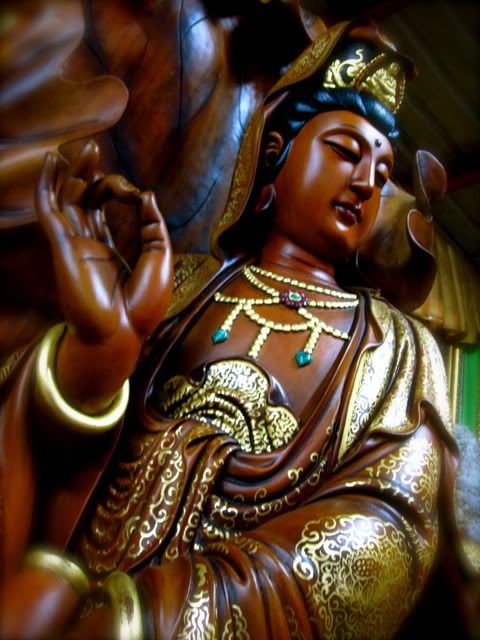
Guan Yin. Aka the Buddhist Madonna. She’s a bodhisattva, an almost Buddha, basically. She’s supposed to hear your cries and wails and offer aid.
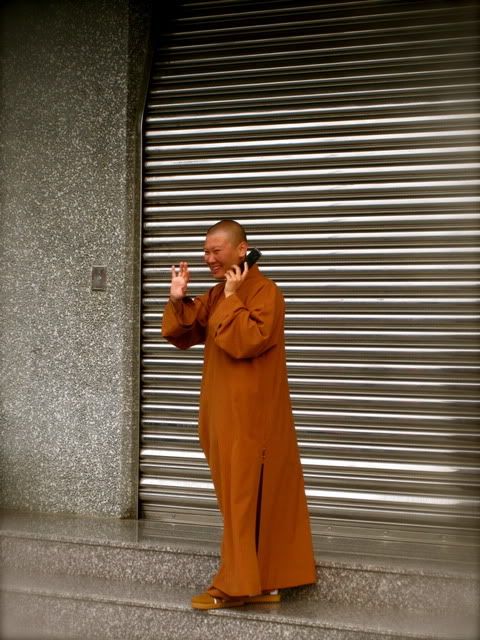
Nun on a cell phone. This really bothers me, for some reason. Just as it bothers me when I see Buddhist nuns and monks at Disneyland or at Narita Airport in Tokyo, shopping for electronics.
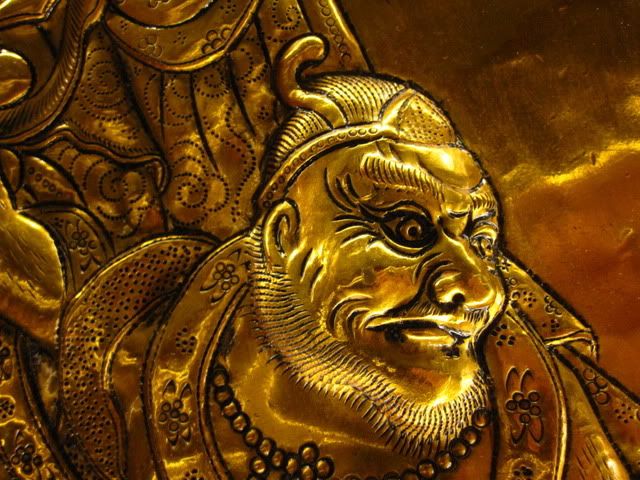
Don’t know who this is, but gold plated stuff photographs beautifully.
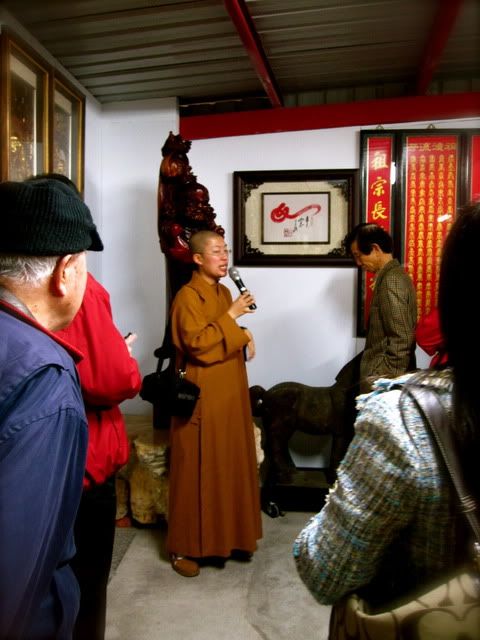
A nun introducing us to an extremely valuable bit of calligraphy. By the tour’s end, we had the sneaking suspicion that she was trying to get us to buy some of the temple’s relics. Which made sense, considering the temple only exists because some rich people donated their religious relics for auction and built the temple with the proceeds.

A giant rock standing before the actual worship house. The giant character in black means “Buddha.”
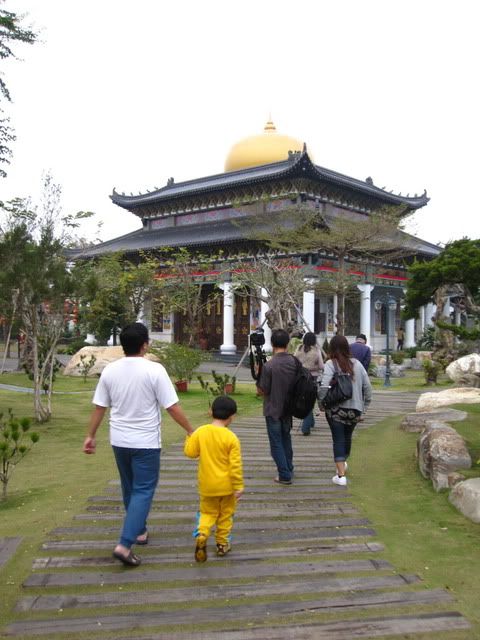
Following a boy in yellow down the pretty path to the actual temple. The nun first took us around some warehouse of expensive relics.

The brightly dressed boy feeding even brighter fish.

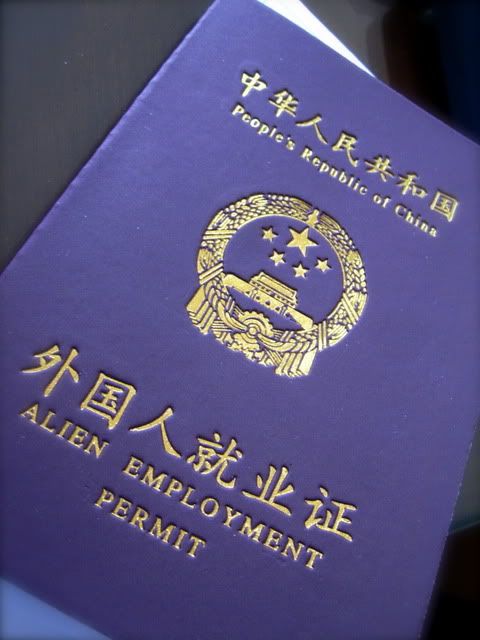
Tainan Part 2 coming next week, followed by Hong Kong (if I get any photos) and Shanghai. I leave at 4 am tomorrow morning for a flight to Hong Kong to get my Chinese Visa. I’ll arrive in Shanghai at 10pm and stay until Monday morning. It’s a bit early, but a happy weekend to you all 🙂

Real Convenience

Ask people in Taiwan who have lived abroad but decided that Taipei was still the city for them their reasons for returning, they will invariably reply, “Taipei’s convenience – you just can’t beat it.” Kaoshiung is getting there, with the relatively new metro and slowly but surely expanding city center, and with the High Speed Rail linking the southern capital with the northern capital with a 1.5 hour train ride, an American wonders what’s taking the Los Angeles to Las Vegas High Speed Rail so long to become a reality.

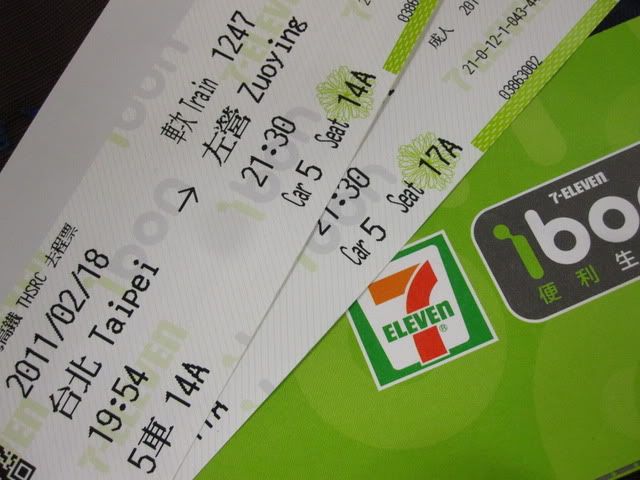
So this is why convenience is for me, redefined every year for me in Taiwan. I book the High Speed Rail tickets online. And then I go, “Oh crap, I have to go and pick them up at the train station? What if I get lost? What if I’m running late?” The website tells me, “You don’t even have to pay online. Find your local 7 Eleven, then pay and print your tickets there.” I say, “Wow,” and leave to get my tickets.

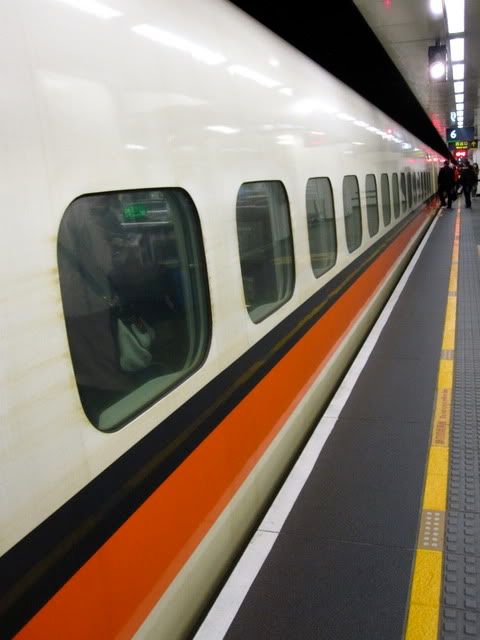
A few days later, I walk to the metro station which takes me to Taipei Main Train Station, where I take the stairs a few flights directly above the metro line and breeze through another set of turnstiles. The train is there, a silent, giant beige bullet (with an orange and black stripe -tiger colors – for the illusion of even more speed), waiting to whisk me and a few hundred more people to major cities down the length of Taiwan (and inexplicably, one city rather close to Taipei).

Like lightning!
 
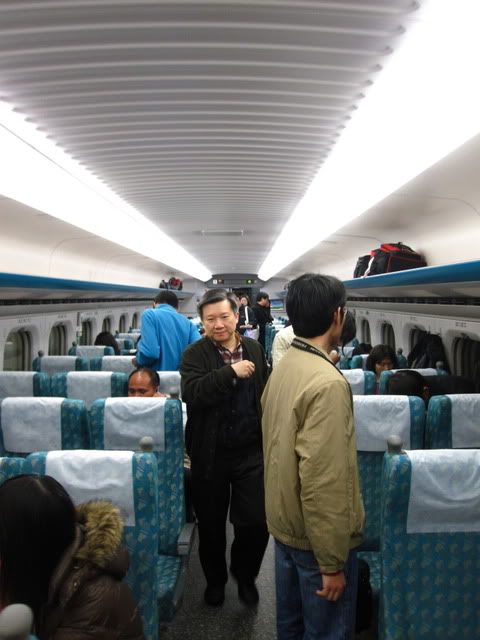
The train’s bright and clean interior.

Despite its convenience, the HSR is still very expensive compared to the buses: it costs 1,450NT or roughly 50USD for a one-way trip all the way south while the most expensive buses are still less than 400NT (12USD). But it’s a 1.5 hr. trip vs. a four or five hour bus ride. I’m lucky I don’t have to take the bus. 

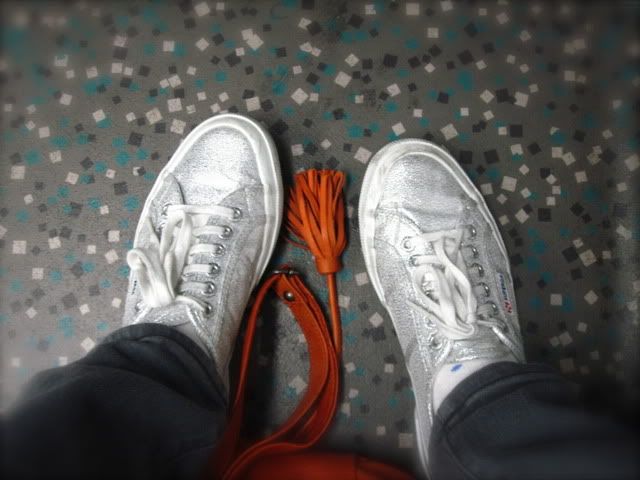
The train floor was a confetti party and my shoes, Superga Party Editions.

I spent an minute or so staring at the floor and then at the young man with a crazy haircut on my right. He was texting with his girlfriend and was mesmerized by her excessive usage of emoticons. And right when I decided, “Enough! I ought to read!” and reached for my book, the train slowed to a stop. Voila. High speed. I was there.

The Changs in Kaoshiung

Every trip to Taiwan also means a visit down south to Kaoshiung, a port city at Taiwan’s southernmost tip. Distant relatives live there, and by ‘distant’ I mean my grandfather’s uncle and his children, a warm and energetic young couple whose kids are supposedly my aunt and uncle…or something like that. But they are by no means ‘distant’ in the emotional sense of the word. I watched their children Wayne and Jenny grow up just as they watched me grow up and now, with Jenny on the cusp of graduating from high school, I am beginning to feel the wistfulness that comes with seeing someone younger and more hopeful.

Distantly related though we are, it makes me happy when people look at us and assume we are sisters. According to her parents, Jenny admires me, learns much from me, but when I look at her, I see a young girl more self-assured and generous in heart than I was at that age. Now nearing twenty-five, I feel there is much I can learn from her. Her eyes are bright, her smile wide, and her hopes great but not so that she should be unwittingly crushed beneath their weight. I seldom hear her complain about her impossible workload (it is whatever I underwent during high school multiplied by one hundred) and when she hits a road block, she says, “I can figure it out. I can find a way.” If these are qualities she learned from me, let me rifle through my memory and revisit that young girl.

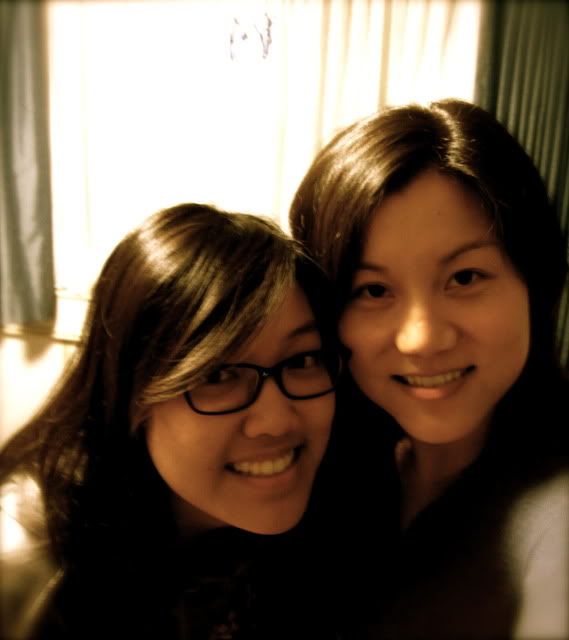
Jenny and I. See the resemblance?

Jenny attends Kaoshiung American School, an impoverished but acceptable counterpart to Taipei’s more financially robust version, and is contemplating spending her senior year abroad at Philips Exeter Academy in New Hampshire (where Mark Zuckerberg went). Wayne graduated from KAS two years ago and is now studying electrical engineering at Carnegie Mellon in Pittsburgh, whose cold and demographics are a far cry from the balmy tip of Southern Taipei, where diversity equals a handful of Chinese Mainlanders.

They are a simple family, in some ways very similar to the Taiwanese folks they’re surrounded by, and in some ways very different. Nearly six years ago I visited the United Kingdom with them and all together, we fell in love with the rolling green hills of Edinburgh and the bustling metropolitan of London. Wayne was about to start high school then and Jenny was a sixth grader – both, under their parents support and encouragement, were strong students with many talents and lofty academic dreams. I was a college dropout still trying to figure things out.

On a ferry ride to a place I remember by sight but have forgotten by name, I stood at the railing with Mr. Chang (for simplicity’s sake, I’ll call him Mr. Chang, when really he’s something like a great uncle or cousin), watching houses and ducks glide past as he told me, in his own way, that it doesn’t help to plan what we can’t know. “I was just beginning medical school when my father sold his watch-making business and bought a hospital,” he said, “The expectation was that I would graduate and head the hospital. It was a huge responsibility that came with enormous pressure. More than I could bear. When I graduated, I told my father no, I couldn’t accept the hospital. I wanted to start a small clinic and lead a simple life.” He did just that. He owns and operates a small, brightly lit clinic just steps away from where they live and because he sees his clients with a surgical mask, his patients stare at him blankly on the street when he waves to them and only come alive when he speaks. It is still hard work – he works from eight am to nine pm each day, and only takes vacations every other year or so when he can find a trustworthy and willing physician to take his place – but it is what he loves.

Mrs. Chang is a psychologist, a relatively new science in Taiwan. She specializes in sand therapy, which in the realms of psychology, is also relatively new. Her clinic occupies the floor above her husband’s and in the brightly lit space, one will find shallow boxes filled with sand and cabinets that open to reveal hundreds upon hundreds of miniatures: dolls, furniture, plastic shrubbery, cars, etc. Anything that you can think of, she has, only in miniature. The therapy consists of patients starting with an untouched box of sand and being encouraged to shape the sand anyway they want and to place upon it carefully selected miniatures that reflect, supposedly, their state of mind. Meanwhile, my aunt stands quietly by, scribbling notes and nodding and, when the patient is through, taking a photograph of your “work.” The sandscape changes when you are making progress, or regressing even, and only when you’ve plateaued emotionally does the sandscape remain static. (This last bit is my conjecturing). In 2005 I visited her clinic for the first time and made my own sandscape. A year later, I made another. I remember placing tiny plastic palm trees alongside sitting room furniture – whether this scene occurred in the first or second sandscape, I’ve forgotten. The photographs are stored somewhere on Mrs. Chang’s hard drive alongside her abundant notes and, I hope, her diagnosis that I have achieved emotional stability. Though she struggled to find clients in the beginning, is now steadily seeing five or six patients per week as Taiwan begins to accept the fact that yes, their society, like all societies around the world, is filled with crazies.

Mr. and Mrs. Chang.

 Their home in Kaoshiung bears her touch most distinctively. Like me, Mrs. Chang is neat. Not a freak about it, at least not by my standards, though her friends chide her and say she is “compulsive.”

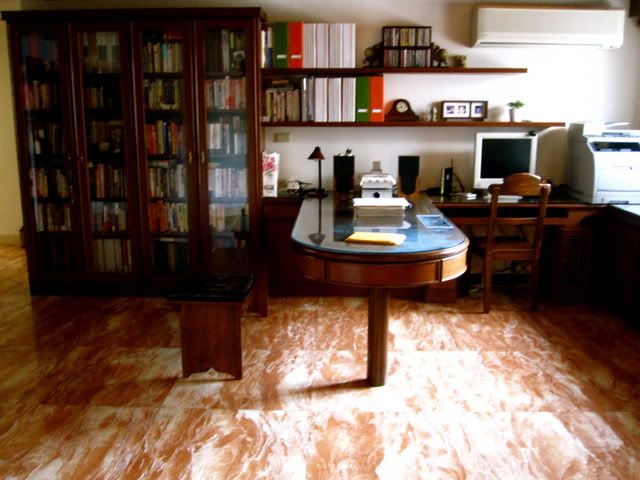
Their family study center. Neat.

But fascinating to me, her person always seems slightly disheveled. Her clothes, though neat in the wardrobe, seem to wrinkle on her slight frame and her hair, despite the warm coaxing of an ionic Japanese hair dryer, remains wispy and unruly. She is the soft-spoken, clumsy wife of a rather severe looking doctor, but her brain is sharp, as are her eyes, from years of study and discipline. She adores Laura Ashley, lavender and Josh Groban and though her mother died two years ago, taking to the grave her secrets of Chinese northern-style cuisine, Mrs. Chang has recently discovered the joys of cooking. She lovingly prepares healthy meals for her husband, children and her father, now widowed, now eighty-nine.

Mr. Shen is my mother’s father’s uncle. Does that make sense? But they are roughly the same age. He too, is from Shandong Province in China and despite many years away from the mainland, he retains his hearty Shandong accent. Though his wife passed away two years ago, Mr. Shen adheres rigidly to his daily routine. To assert his independence, he lives in a converted studio above Mr. Chang’s clinic, though he dines and spends most of the day at his daughter’s home. Every morning, he is up at five, eats a simple breakfast of toast and milk (powder from a can because he likes it hot) and takes a thirty minute stroll around the park. Then he walks to the house, lets himself in and settles down in the living room where he reads the paper. Then he sits quietly as the family moves about him, getting ready for their own days. Mr. and Mrs. Chang leave for the clinic, Jenny for school, and then it is just him and Teswi, the Indonesian maid whose Chinese is poor and whom Mr. Shen addresses with a wave. “I don’t know her name,” he said to me, “I wave at her, and if she happens to see me, she’ll come.” In the afternoons after lunch, which is usually heated leftovers, he returns to the park to sit and chat with other retirees and grandmothers, many of them from Shandong like himself. Now a bachelor, he finds himself quite popular amongst the park’s older women, many of whom now widowed, see him as something of a catch. One of the women told Dr. Chang during a check up that she thought his father in law was “the most gentlemanly out of all the fellows” who frequented the park.

“They know I’m Dr. Chang’s father in law,” he told Mrs. Chang one evening, about a year after his wife passed, “They know that if they take up a companionship with someone like me, they’ll be in good hands.”

“Then why don’t you…” His daughter searched for the right word, “…date some of these women? It’s never too late to love another.”

“Ha!” Mr. shen said, “At my age, it’s more costly to enter into one serious relationship than it is to entertain a hundred acquaintances at the park. I’ll keep things as they are, thank you very much.”

When he’s finished with the paper, he sits quietly in the living room, staring at the opposite wall with his arms crossed. Two or three times a week the phone will ring during these quiet mornings and it will be his son on the other line, calling from Irvine, California with news of his grandson, Dennis, who is currently waiting to hear back from colleges. Mr. Shen eagerly waits to hear of Dennis.

I arrived in Kaoshiung on the night of his eighty-ninth birthday, for which his daughter made him braised pork knuckles and long-life noodles. He was already in bed, so I saw him late next morning. He was sitting, the paper already folded before him. I brought my toast to the living room to say hello. He greeted me warmly, just as my own grandfather would, and then the phone rang. It was Dennis’ father. I heard bits and pieces. “Illinois?…Is he going to go?… Ranked third, you say? Well that’s quite excellent, isn’t it? Third! In America!”

Later, as he sat eating his lunch – the last braised pork knuckle and knob of noodles – he asked me how much a small car costs in the United States. He was thinking about buying Dennis a car for his graduation. “He’s a good boy, you know, got himself into the third best electrical engineering department in the United States. Such a good boy. Many talents. Plays the saxophone and football and won the world championship for an art contest. Ranked third, that school in Illinois. No doubt he’ll need a car…”

Long life noodles. But not if you finish the whole plate…

I looked at the park’s most eligible bachelor, his lips gleaming with pork grease, his face glowing with pride. I tell him that a suitable car for a kid like Dennis should cost about 15K. Twenty, if he’s feeling generous. “You could even get him a nicer car, used,” I say, but he shakes his head. Probably not used, he says, Dennis is such a good kid. Did he tell me that school in Illinois is ranked third? Third! In the U.S! Believing that to live long one should only eat until seventy percent full, he proceeds to cleans the pork knuckle but leaves a bit of noodles on the plate.
Post-op

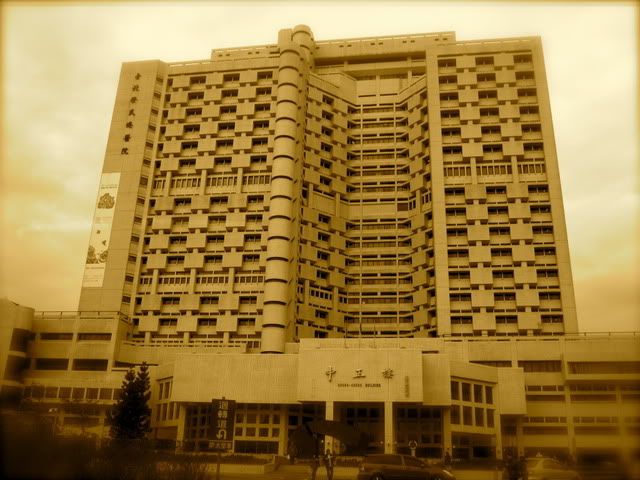
My grandmother had her left breast removed yesterday afternoon and is now camping out at the Taipei Veterans General Hospital, a towering behemoth of health care as well as neglect (though because of population and shortage of health staff, there is not much to be done). My grandma was lucky and went under the knife far more quickly than anticipated, as it seems much of Taiwan seems to be waiting for some procedure or other, but the doctor came and informed her that she is to be discharged this afternoon. They need the bed, he said, you’re going to be in pain either way, so why not choose home?

Though I could see my grandmother’s fill with doubt and fear – what does she know about nursing her own gaping wound, I see his point. The hospital – all hospitals, it seems – is filled with people. My grandma is on the tenth floor, yet on my way down in the elevator, we stopped on every floor and always, a crush of people waited to get in, to get out. Walking down the corridors, I couldn’t help but peak in every room, and just like a run-down hotel in a good location, they were all filled. People both old and young, upbeat and down-trodden. Life and not so much life.
   The hospital’s main building.

The hospital’s seal. The word is rong and it means “glory and honor.” Rongming (榮民) is the phrase for “veterans,” meaning, honorable people who served their country.

The hospital’s lobby with a giant Taiwanese flag, just in case patients wake up on their way in or out and forget where they are.

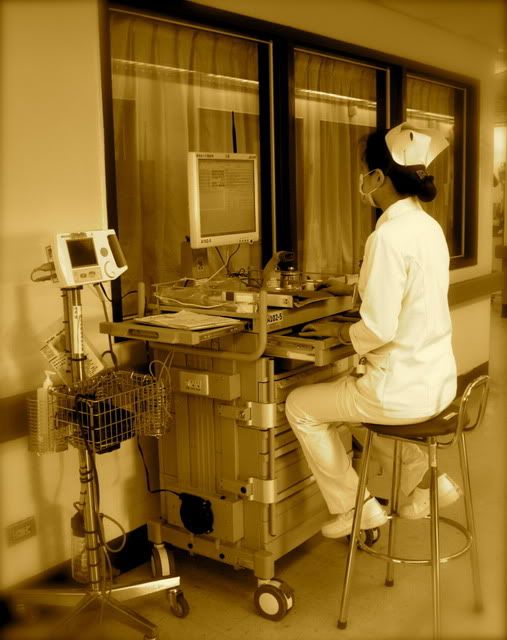
I got a kick out of the young nurses in their clean, white uniforms and their little hats, pinned to their hair. They are all very nice, soft-spoken young women, often cowed by the doctors.

The motto on the nurses’ carts. Is this true? I think so.

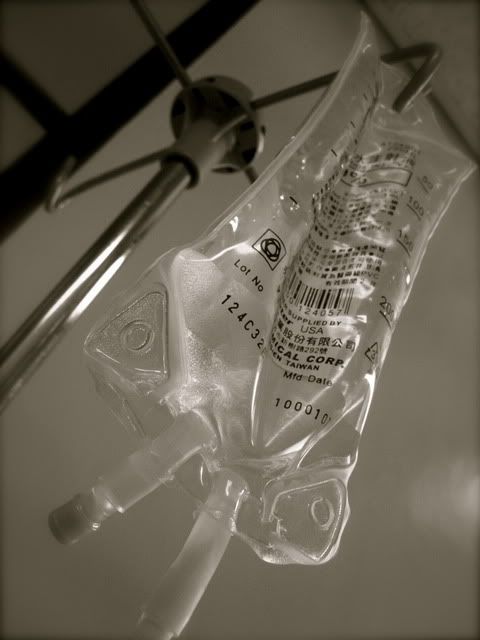
                       Chinese IV.

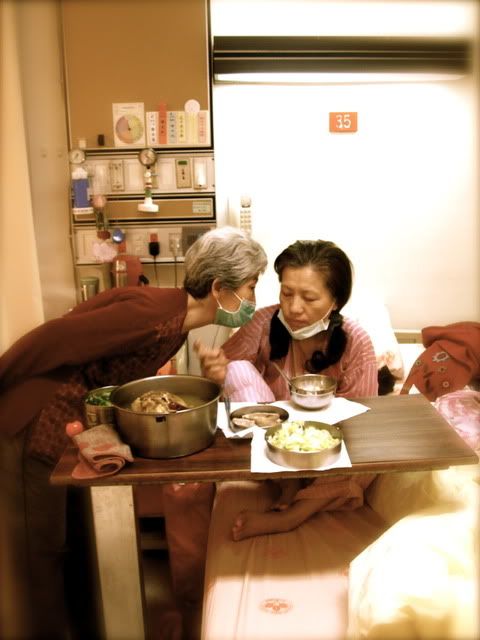
My grandma’s older sister, bending over to whisper something. When I asked U.S. medical students interning in Taiwanese hospitals what the biggest difference was between health care in the U.S. and in Taiwan was, they replied, “The role of family.” Taiwanese hospitals let families take a much bigger role in a patient’s wellness – but I think this has more to do with the culture as well.

A Sunny Day in Taipei

My first week here was extremely cold and I found myself regretting my decision to visit Taipei during the winter. Houses here – or our house at least – have no heat. Couple that with our new tile floors and with my aunt’s ardent belief that all windows must be kept open for constant circulation, well, you’ve got yourself a veritable ice box.

Somewhere in the middle of the second week however, temperatures became bearable (15 to 17 degrees Celsius) and then, a few days later, almost warm. The sun made its first appearance since my arrival at the tail end of Chinese New Year celebrations and my aunt, uncle and cats were eager to soak up the warmth. Now, the temperatures have dropped again and I am shivering, wondering if I’ll ever come back around this time of year. No matter, I can still revisit some recent, warmer memories…

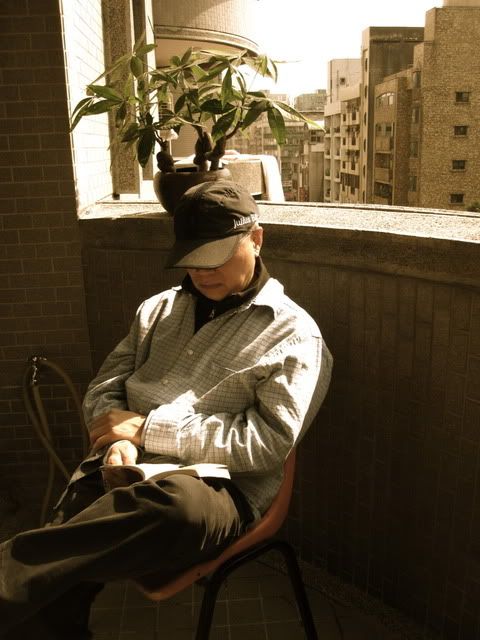
               My uncle, reading on the balcony. On weekends he prefers Buddhist scriptures and meditation to finance books and magazines.

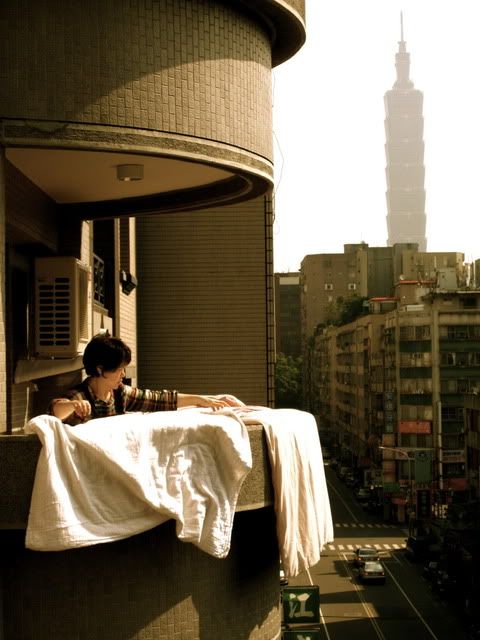
On the balcony over, my aunt spreads our blankets out to sun, believing with the rest of Asia (regardless of how smoggy their cities are, Asians prefer air-drying to dryers) that the sun’s rays kill germs.

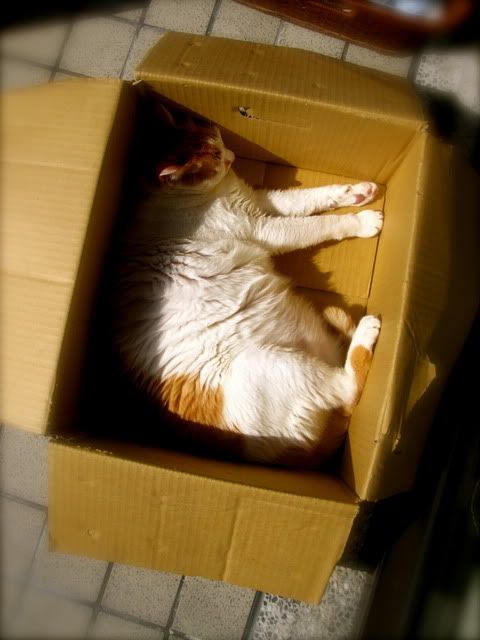
And at my uncle’s feet, Fat Cat (there are two cats – one fat, the other less so and called, unsurprisingly, Small Cat) suns in a cardboard box.

Mrs. Pang

For as long as I can remember, my aunt’s home on the sixth floor has been cleaned each Monday, Wednesday and Friday by Mrs. Pang. Every year when I come back, Mrs. Pang opens the door and in her rough, deep voice, calls out, “Is Betty back? I see an extra pair of shoes in the hallway.” And I, still sleepy, rise and say, “Yes Mrs. Pang, I’m back.”

“Ah…that means I’m another year older!”

She is as integral to my experiences here as any other member of my family, not least because for many years, she and I have shared the mornings. With my uncle at work, my aunt at her womens’ club and my cousins either at cram school or now, at work as well, Mondays, Wednesdays and Fridays mornings would be quiet, the apartment filled with my solitary, unproductive actions if Mrs. Pang did not come and work her magic. When she is here, there is a sense of industry and because she is working, I too, try to “work.” I read and write – for that, even when I’m not at school, is what I consider “work,” but it’s nothing compared to what she accomplishes.

She begins in the kitchen, sorting out last night’s (the weekend’s too, if it is a Monday) trash, washing dishes, wiping down the stove and counter tops, boiling water to drink and then, before moving onto the balcony, collects the laundry and starts load number one. Next she hoses down the balcony and scrubs the floor with a long scrub brush. The bathrooms are next, along with the bedrooms, where she dusts, changes linens, puts things away, and restores general order for my aunt, uncle and cousins, who can messy a tidy room in an astonishingly short time. When she’s not scrubbing, she’s ironing my uncle’s work shirts or, if the occasion arises, darning socks and patching holes in my cousin’s favorite sweaters. My aunt is not an untidy woman, but next to Mrs. Pang, she seems almost hapless, as would most women. Having recently moved back to their newly refurbished building, my aunt told me that if it were not for Mrs. Pang, who helped pack and store and unpack and replace nearly everything in the house, they would never have been able to move back as quickly as they did.

“I don’t think I could live without Mrs. Pang,” she said.

Uneducated and almost comically simple-minded, Mrs. Pang is an unlikely role model, but I look forward to hearing her key at the door because in her person and in her work she reminds me hardships are a part of life.

Seventeen years ago her husband was diagnosed with colon cancer. He underwent surgery, which was deemed successful and to celebrate his new found health, asked his son to buy him a noodle soup from a local shop. He ate the noodle soup, got an infection and was dead within the month. He left her with two children, whom she raised on her meager cleaning income. To hear her talk about her husband’s death is to hear a woman narrate the facts of life – there is nothing to contemplate – no hint of, “Why me?” or even a heavy sigh that denotes the hard times that came afterward – she scrubs, wipes, mops as she says, “A month later he was dead.” My face is filled with polite horror as I wait for her to continue, but there is nothing else to say. She continued working and living, each day at a time, through her children’s college educations and marriages and now, even as a grandmother, she works.

“Not as much as I used to,” she says, “Just your aunt’s house and one other lady’s. But I should keep working for as long as I can. A person has to work. What are they going to do otherwise?”

Taipei International Book Expo

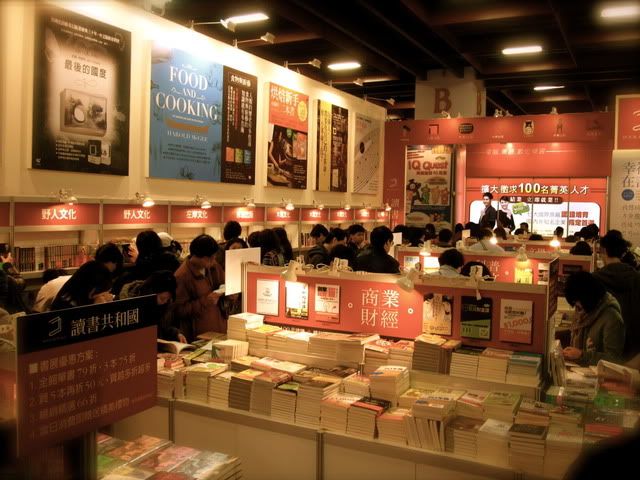
Sorry for the long absence – I was wondering why (and smirking at) so many people were dressed like bandits and surgeons when I first got off the plane so it was only natural that I find out the hard way. I contracted the flu that’s been going around and while I didn’t get it as bad as my cousin (who’s been sick no less than three times in two months) feverish headaches are the surest way to neglect one’s blog. But the fever’s gone and my desire to walk about and be a part of the community has returned – though no doubt by refusing to wear a surgical mask I risk picking up another one of many flu strands that are going around…My visit to the Taipei International Book Expo yesterday, a Sunday, was probably going right to the disease’s center, but I love books – and I like to live on the edge.

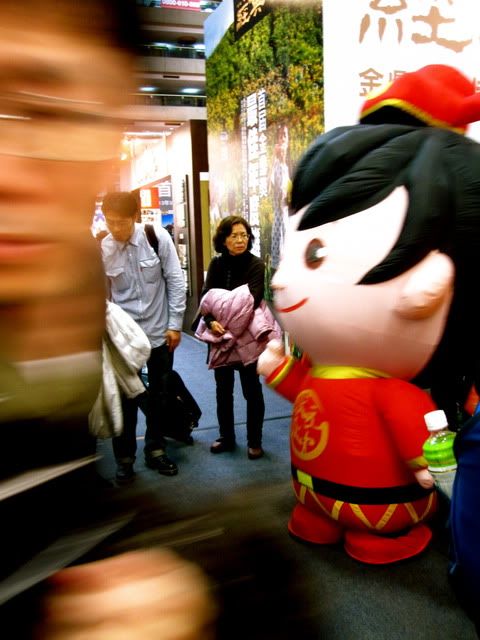
 Chinese/Taiwanese people love cheesy animal mascots – but I did like the artwork on this particular poster.

Ladies chatting on bright orange stools – not really reading. This was the booth for LiveABC, one of Taiwan’s largest publishers of English language learning materials.

 As I was flipping through this book a young sales girl came up to me and marketed rather aggressively, not giving me a chance to impress her with my English. I left with a brochure and the inability to socialize in English with confidence.

 The expo was packed – except for a few of the international booths (India and Turkey looked especially desolate while France and Japan were equally as crammed as Chinese language booths).

                       I have never heard of this magazine. Good luck to them and their stylist.

                       The expo atrium.

                      Never figured out what they were promoting.

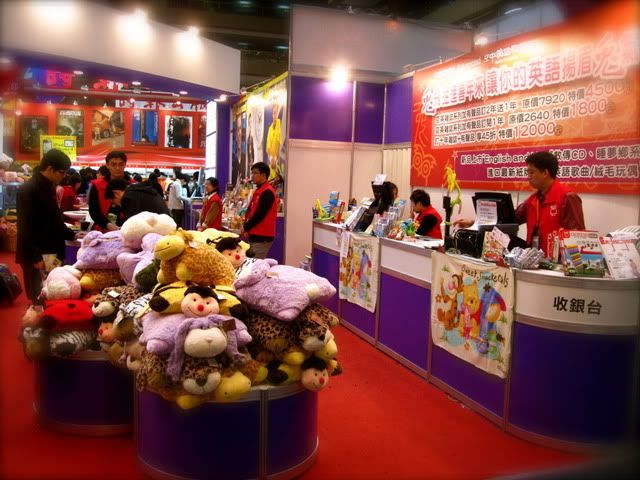
The booth for Studio Classroom, an immensely popular and effective English language learning magazine. I have no idea what the stuffed animals are doing in the middle…

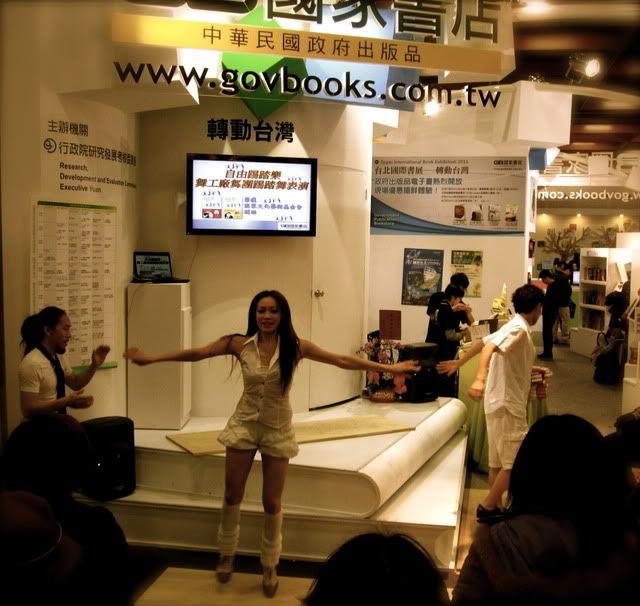
 …nor any idea what tap dancers are doing promoting government publications…

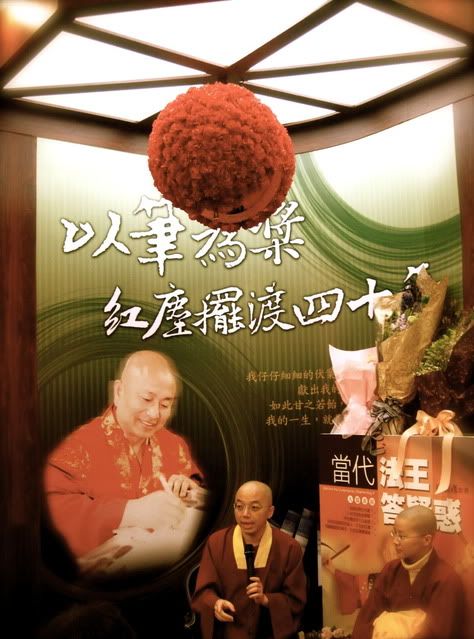
                       …or what this guy was talking about to attract the large crowd that stood before him, but these were just a few of the thousand plus booths I walked past.

I ended up buying just one novel at an English books booth after deliberating for more than ten minutes and reading for twenty. I’m a sucker for Victorian murder stories.