Free Bitches

A few days ago I started writing a longish essay about babies which inevitably turned into a meandering musing about age twenty-seven, which I will be in a less than two days’ time. The post had an unintended whiff of complaint, even though as I wrote, my heart was light and I was happily looking forward to my 27th year. I did not post it (which is not to say I won’t post it) not because it wasn’t true – babies DO make me think about growing older – but the thesis of the post, which can be summed up in my cousin Michelle’s turning to me last Saturday night, at the tail end of my nephew’s 100th day dinner when all the young parents with babies had gone home, to say, “Well Betty, we are some free bitches” wasn’t coming across at all. Like a knot in a poorly trained muscle, the mindset of birthday posts I’d written at 25 and 26 was hard to knead away.   
Michelle’s quip made me burst out laughing because it rang true; I just don’t think understood until now, on the brink of 27. Many of my relatives who had not yet left and my mother, sitting across from me, gave me a curious look. No doubt my mother was inwardly thinking, “When will she learn not to laugh so loudly with her molars all on display?” What I should have done was chuckled and said, hiply, “Word, Michelle. Word,” but what’s done was done, like many things. It was a freeing laugh – the kind, if you had been a spy crouched amidst my brain’s debris from the past twenty-seven years or so, that would have shaken up you and the debris. Cleared away some things. I felt lighter for it. 
I looked at Michelle with a thankful smile, though I’m not sure she sensed it, so smug was she in the “freedom” she’d probably always known. We are “free” in the way my married and with child counterparts are not, regardless of gender. My cousin Andrew spent the better part of the evening shaking his head and crossing his arms in a petulant gesture every time someone asked him, “So, when are you going to have your next kid?” while cousins Carol and Daniel, with two babies in tow, raced around the table trying to subdue their eldest, Ethan. 
I want babies, I do! I would be lucky to have children as cute and bubbly and devilish and smart as my nephews and incubating niece. And preferably have them with a smart, handsome man who doesn’t have to love reading or writing but accepts why I do. But I want children even more than I want to be married (“Gasp!” some people say, “A broken family even before it was ever whole!” Oh shush. I’m just saying, if spinsterhood becomes a reality I’d have no problem adopting neglected Chinese babies). 
But, for the first time in my life I feel a strange slowing of life’s refreshing current. A family of my own feels far away not because it seems impossible but because it always has, because of where I am in life. Except now something has switched on inside and the distance between me and said family finally feels comfortable rather than alienating. Those sparky-eyed children standing on the horizon, that sweet gangly boy named Ben and the spitfire girl named Isabel? They’re mine. But I’m a ways yet from greeting them. It’s a good thing they can’t see me, because I haven’t quite perfected a mother’s game face.  
Maybe it’s to do with the upcoming fall, when I’ll retrace my steps with sturdier shoes and sounder mind to the Big Apple and commence a not-so-fancy course of study at a decidedly fancy school, or perhaps the events and sights from this past winter, when I spent two and a half months in Asia, the sprawling continent and womb to places, cities, smells and people I’ve always been in love with and can never be away from for too long. All these things have gotten me thinking and plotting a future that is hazy, but deliciously so. Experience however, all twenty-seven years of it, tells me thinking and plotting are less important than happily living; and for once I’m content to do just that. 

Nightmares: Back to School Edition

I don’t think I’m ready to go back to school. It’s a good thing there are several months between now and September, when school – graduate school – begins, ample time hopefully, for me to turn the nightmares into not nightmares.

Last night I watched the last episode of Sherlock: Season 1and went to bed around 12:30AM, early by young people (especially on Friday night) standards. I woke up this morning at 9AM, feeling far from rested despite the 8.5 hours of slumber, .5 hours more than my body needs. When my eyes opened I was surprised to be in my room, in bed and, when my brain sorted itself after a few moments, without any real responsibility than to get up and make myself some oatmeal.

My nightmare was utterly vivid and upon waking I still felt the lingering sense of panic that had carried over from my dreams. The burden of fear still rested quite squarely on my stiff shoulders. I blinked and wondered what was causing my unease, when images from the nightmare began to replay themselves. They say you must try and recall your dreams in the first five minutes after waking or else they may be lost forever, and I did just that. But I regret doing so. I could have done with forgetting.

I am back on my middle school campus, a place I’ve not visited since…middle school. There is a pentagon-shaped building in the middle where we had our English classes (I had the great fortune of being taught by a sweaty obese woman I’ll call Frau Krau, who broke into sweat each time she walked across the room. “Is it hot?” she would say, a raspy lisped voice emitting from her thin, neon pink lips, “I’m so hot!” Of course she was hot; she weighed nearly 400 pounds. The rest of us chattered as she cranked up the air conditioning). Now, I have a science class in this building, taught inexplicably, by the Slavic Lit Professor I adored (and to some degree still do) back in college. What the heck is he doing teaching middle school science? It doesn’t matter, I am rushing to his class but for some reason am terribly late. There is an exam being administered and I miss it. By the time I arrive everyone has turned in their Scantrons (there’s a kind of paper I hope never to see again!) and the Professor is beginning a new lecture.

Rene Magritte The Schoolmaster, 1954        Oil on canvas, Geneva, Private Collection

I gulp. If the students notice me, they don’t show it and keep their eyes ahead on the blackboard. My professor has changed neither his style of dress (shabby) or his method of teaching (excited, lots of questions posed to blank-faced students) from his Berkeley days and is talking animatedly about neutrons. The blackboard is fuzzy; either I don’t understand the subject matter or I’m so anxious I can’t read it. The classroom air feels warm because – I look around – it’s completely packed. Every desk is occupied. The students seem solemn, they are taking notes. They look like they all did well on the exam. I want desperately to take a seat and pull out a fresh piece of paper and do the good student thing. But the exam! I stand awkwardly in the back of the room like a creepy auditor and wait for the Professor to reach a pause. Finally he assigns an in-class assignment and when the students (oddly robotic) have lowered their heads in unison, I shuffle towards him, embarrassed. He looks up as though pleasantly surprised that I have stood up (though of course I never even sat down), and listens patiently when I meekly ask if I can take the test now.

“Well, uh, let’s see.” He thinks about it. I search his face. He seems only mildly surprised that I missed the exam and asks no questions. So I ask myself. What was I doing? But my dream self does not know, she knows only that she is late and that the exam is quite important.

From a jumble of papers on his desk the Professor pulls out a Scantron and hands it to me.

“Here,” he says, then turns again to dig for the exam itself. My Professor remains even in dreams, remarkably unorganized. The bell rings as he continues his search. A stack of papers falls to the ground and I look around. Oddly, none of the students seem to notice. Silently, they stand and pack their things up. The professor seems to have lost the exam. Good God man, I want to cry, sweat forming on my brow, wasn’t the exam administered less than twenty-minutes ago?

“Ah,” he says finally, holding up a wrinkled sheet of paper, “Here you go.” And in a generous act of academic kindness, tells me to take the exam at home.

“You know what to do,” he says, implying that I will take it without cheating, “Just bring it back to me tomorrow.”

In the dream I am a cheater. I take the exam and fold it over the Scantron, thinking sadly, “What a trusting man.”

—————

It is the next morning. Delays, delays. I am driving some car and trying to make a U-turn. For some reason I’ve driven straight past the school, but my car’s being difficult. I’m aware of a giant shadow cast over from the left and of the open road to the right, not unlike the 15 North through Baker. Whatever is casting the shadow, I can’t tell, but I concentrate on making the turn. I do not think about science or my professor, only that I want to make it to class on time because I was already late yesterday. Finally the wheel gives way and I lurch onto the road heading in the other direction, back to school. I park at a filled but silent lot. Grabbing my books I see the wrinkled exam and the crisp, untouched Scantron. I’ve forgotten to take the exam. 

Rene Magritte The Companions of Fear, 1942 Oil on canvas Brussels, B. Friedlander-Salik, V. Dwek-Salik Collection 

What follows is the cliche’d sinking feeling made heavier still by shame. The shame of knowing my professor had not only trusted me but also given me special treatment, allowed me to take the test at home. What the hell was I doing the night before that I could completely forget to do it? But again, my dream self has no recollection of the night before, only that she woke up late and then had a difficult drive to school. She doesn’t pay attention, doesn’t do her homework, is perpetually unprepared.

In this dream there are no real consequences, only the feeling that I might profoundly disappoint someone I respect and admire. I lay in bed for a while, trying not to give too much weight to this dream and its symbols. Or perhaps this time, what I see is what I get. A professor is a professor is a professor. An exam is an exam is an exam. But still, I’m affected. I was bothered in the dream. I am bothered now.

I clutch the exam and the Scantron and walk with heavy feat towards the pentagon. I stand at the gates of the pentagon and gaze through the open door of my science classroom. The more punctual students have taken their seats and are already copying down the day’s lessons, absorbing the Professor’s words. He’s wearing another one of his ugly threadbare sweatshirts and waves a piece of chalk in the air, trying to describe something. From where I stand, it could be anything – Nabokov, Tolstoy, Dostoevsky, Dickens – but it’s science. Stuff that’s going to be on the next test. If he looks up and out, he’d see me standing on the opposite end, the blank Scantron in my hand and despairing expression on my face, but he’s happily doing what he does best. He sees nothing but the good, punctual students before him.

And almost evilly, the dream doesn’t stop there. My subconscious allows me a few more steps, and I take them. I walk towards the open door, clutching the Scantron tighter and tighter as my brain winds up with variations of the lie I’m about to tell. What will I say? How will I deliver it? How can I win him back because surely, there’s no excuse for not completing a take-home exam already a day late. What was I doing the night before? What was I doing? I step into the classroom and this time, the Professor, seeing me, smiles.

I wake.

What I’m Reading: Unbroken by Laura Hillenbrand

The last time I read a book for hours straight was in middle school. The book was Harry Potter and the Something or Other. After that things got kind of weird. My attention span got shorter while my book collection grew larger. I was always hunting for a great book, but seldom came across one that could keep me enthralled like books did back then, before I discovered the internet and magazines.
Continue reading “What I’m Reading: Unbroken by Laura Hillenbrand”

Solitaire

On Wednesday, grandpa turned on the computer.

“I haven’t looked at this machine in a long time,” he said, “This was something your grandma liked to play.”

He was referring to solitaire, a game I used to associate solely with grandma until I started looking down on my way through airports and airplanes and noticed many people playing on their tablets and iPads with trancelike stares. It is an addictive game. In elementary school I thought it complicated; for some reason the numbers on playing cards signalled to me that the game involved math, but one afternoon my brother patiently explained:

“It’s easy,” he said, not really verbally explaining but showing me on the monitor. He moved cards with a simple click and drag of the mouse, “You put things in order. At the end it just sorts itself out.”

I liked the neatness of the game: it fed benign obsessive compulsive tendencies of mine. There was something deliciously militaristic about dragging the cards to their proper place, where they were prettily displayed in alternating colors. It frustrated me when I reached the limit to the number of cards I could pull from the master deck, but that was part of the challenge. What’s next? Could I work with it? Would I be stuck? I especially loved, when everything was squared away, the exhilarating explosion of the conclusion: a seemingly infinite number of cards bouncing insanely out of their decks, the ultimate joke: all that labor to sort things out and then what? Bonkers! Bananas! Now deal again. Now start over.

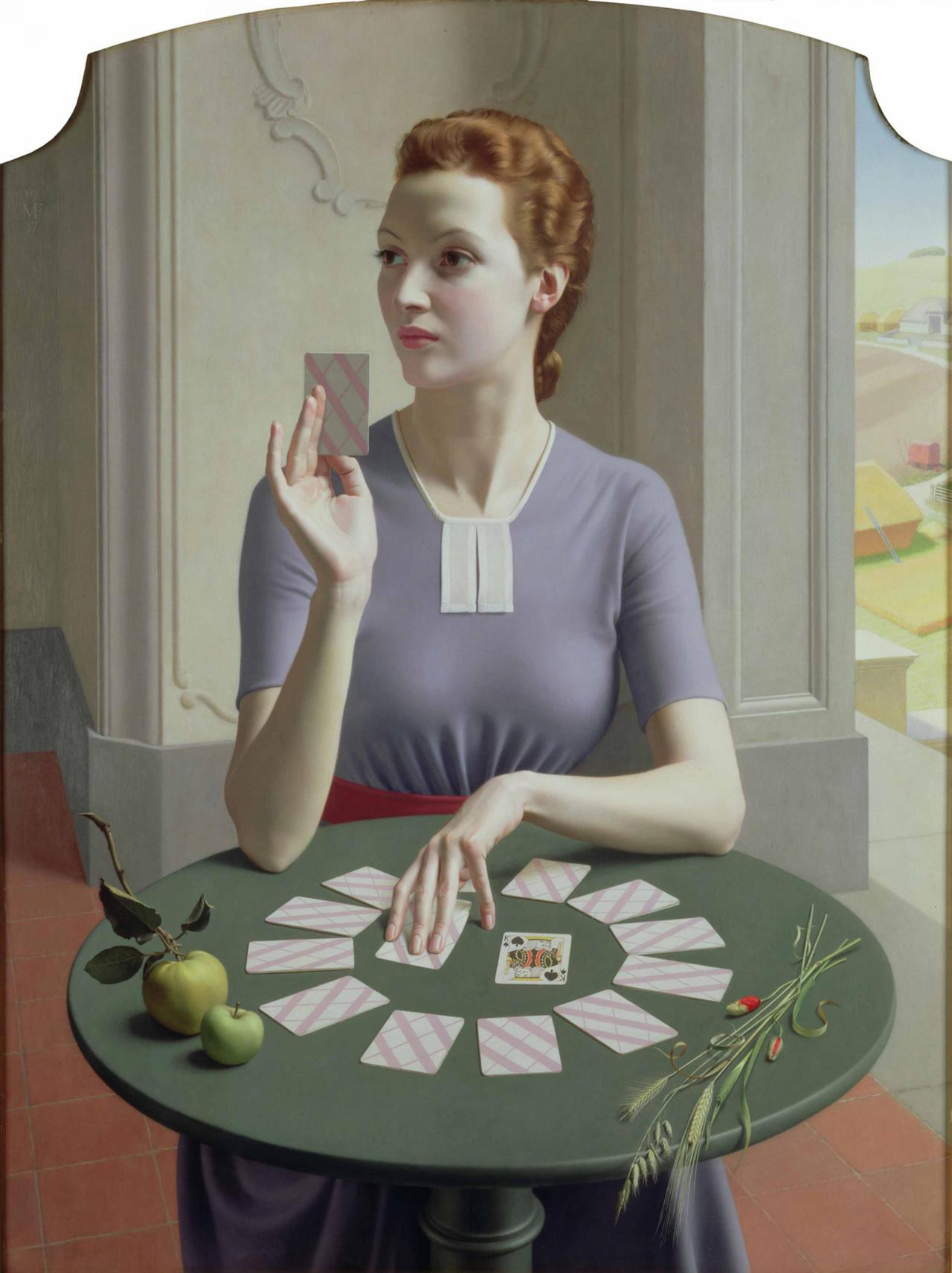
Meredith Frampton A Game of Patience, 1937    Ferens Art Gallery, UK

It may have been over a decade ago now, judging by the looks of the desktop, but someone, perhaps my brother or a cousin, or my uncle who runs a Chinese school and has a hoard of janky computers, set the PC up at my grandparent’s house. The idea was not to “connect” them – my grandparents never had internet – but to install some of their favorite games to help pass the time. Or keep them sharp. I’m not sure which, but both were achieved.

Grandma was an active woman, not that she exercised, but she kept herself busy around the house, in the garden, and in her kitchen. But sometimes when the weather was bad or when she didn’t feel like making buns (most likely her freezer was already full, waiting for hungry grandkids to come and empty it out), she’d set herself down in front of the computer and open solitaire. She played with an admirable concentration that seemed unlikely for someone who played purely out of boredom (I don’t think I ever saw a bored expression play across grandma’s face), and for some reason the image of her, playing solitaire by the sunny window that faced the neighbor’s wall is somehow, in hindsight, a paradoxical picture of elegance. Elegant precisely because it is not. The technical term for this, I cannot recall.

Objectively speaking, there was nothing elegant about my grandmother’s bearing. She was confident, but neither stylish nor poised. She had not exactly aged well. Some of the deepest wrinkles I ever saw were the ones that stretched in all directions across grandmother’s cheek. I can honestly say those wrinkles worry me because I know my skin-type is identical to hers. She gained weight in her old age, due largely to her voracious appetite rather than a slow metabolism (though this did not stop her from pointing out other fat people and shaking her head at them), and her hair, thick, curly and wiry, a Shandong Afro, was kept short in a low-maintenance haircut. On anyone else I would have said, “Butch cut, if there ever was one,” but on Grandma it was the only way her hair could be acceptably styled. A non-style, and in that, utterly her style. The hair stood up stoutly all on its own and grandma, if she was going out somewhere, would simply use an Afro pick to tease it up a bit before stepping out the door.

At home though, she was the epitome of low maintenance. Which is not to say she didn’t have her vanities: she liked having her nails painted and never turned down a bag or blouse or piece of jewelry her kids and grandkids bought her, but compared to the average female, whether Asian or Caucasian, she was, in her dressing and grooming habits, decidedly unfeminine. At least in her old age. She was most comfortable in loose elastic pajama-type pants and roomy collared shirts, which gave her upper body more definition than the soft roundness that was actually underneath. For additional adornment and truly special occasions, she alternated between an old diamond or ruby ring, a black pearl pendant, gifts from my mother, and preferred simple pearl studs in her ears. Around her thick, strong wrist she would wear a thin silver watch with a minuscule band of diamonds around the face. But at home, which is mostly where I saw her, she left those things on her dresser.

So solitaire. I just now recall an old deck of cards sitting on the kitchen table. The smiling cherubic faces of the odd looking angels and mermaids on the backs slowly being rubbed away, white edges stained yellow over the years with a thousand flips and shuffles on tables where countless dumplings were made by grandma’s hands and then consumed by our young mouths. She used to play with these tangible cards and it was only until after the computer was installed that the deck was put away. I never saw it again. It’s still in the house somewhere I’m sure, tucked away behind my grandfather’s knickknacks or old bottles of nail polish, the pigment long separated from the oil. Spare belongings for spare people.

On quiet afternoons, after lunch or perhaps an hour or so before dinner, when the dumplings were made and the vegetables washed and all that was left to do was boil water and drop them in, grandma would pull out the chair before the computer and play. Grandpa would be reading the paper just behind her or sit in front of the TV. Aside from the TV there would be very little noise. They were together but apart, in their own little worlds – she in solitaire and he as well, though a different kind. But they were together, living.

Edward Hopper Four-Lane Road,  1956 Oil on Canvas     Private Collection

Most Wednesdays, my uncle takes grandpa to Rose Hills cemetery. Grandpa brings flowers, if he can find a nice bloom, and they either sit for a while in the car or stand on the grass, near the grave, depending on the weather. I’m assuming. I don’t know. I don’t go with them, nor do I want to. Right now I think in terms of a single year, or when I’m being only slightly more realistic about how life tends to work out, two or three years.

“I hope I get into grad school next year.”

“I hope I find a job before I graduate.”

“I hope I meet someone before I turn thirty.”

It’s limiting, but digestible. My grandparents were nearing their 70th wedding anniversary when grandma passed away and this number I find both awe-inducing and bone-chilling. A few days before grandpa turned the computer on I drove him home from lunch. He was in a good mood and brought it up first. The next five years.

“I think I will still be around,” he said.

“Of course you will,” I said, sneaking a glance at him, “You said you wanted to see me get a master’s and maybe…well, if you’re up for it, maybe I am too, a PhD.”

He looked out the window and when he spoke again his voice had became thick.

“I say I can live for five more years, but one never knows. Your grandma was fine the week before she went into the hospital, and even on certain days in the hospital. She never knew what was coming next or that she had so little time left.”

“It’s true,” I said, “You never know. But still, it’s nice to look ahead.”

But that was the 27-year old speaking, not the 86 year old widower who was born pessimistic to begin with.

So on Wednesday after lunch, he stood up, turned around and saw the computer. He reached behind it and switched it on. I don’t think he planned to, he just did. I was still at the table, not yet ready to clear the dishes, and I watched him double click on the Solitaire icon. The cards were beach themed, absurdly sunny on the outdated monitor. I thought about the upcoming summer and laying out by the pool, going back to Taiwan for my brother’s wedding and my eventual move to New York City. The simple image of the sun shining over a colorful beach umbrella brought all these thoughts and more. My year ahead.

Grandpa clicked and clicked, dragged and dropped. He said nothing and played for five minutes or so. I did not see his face, but I sensed he was not concentrating; his expression, if I walked over to look, would be blank. There was something about his posture – his back was slightly stooped – and the placement of his hands, right hand resting only lightly on the mouse. As though it were moving it than the other way around. His chin rested on his left hand. The pose of a daydreamer, except he was not daydreaming. He was passing the time, playing patience.

Flight

*Bringing back some old stuff I removed, just to remind myself that it exists. 

In a few days my boss will leave on vacation. In his absence, I am to drive to his house twice a week, once to make sure the main water line is on (horizontal) and once to make sure it is off (vertical). Before his departure, I must see that his dog Fluffy (one cannot make up such a creative pet name) is safely boarded at a dog hotel and that his housekeeper is driven to her home in South Central LA, worlds away from her “office,” just as my mind is often, at the office.

When I first interviewed, the woman asked me if I would be okay doing the occasional personal tasks for my boss. I nodded gamely, thinking that personal things wouldn’t occupy more than twenty percent of the job. My main station, after all, was still at the office, at the massive desk right outside my boss’s office. I had my own printer, was just a stone’s throw away from the fax machine, and had drawers stocked with office supplies and company swag. But things change. Or more accurately, certain situations reveal themselves slowly…. roses bloom then wither and fade. Job descriptions can do that too. 
Here’s the sad part. I’m pretty damn good at the personal stuff because it doesn’t take much brain power. Driving to and from my boss’s house is easy. Making sure his wife knows when the Kogi truck is in town so I can stand in line and buy fifteen burritos, fifteen tacos and four quesedillas before she comes to pick them up is easy. Making sure his kid has a ride to and from tennis camp is VERY easy. But when you’re tired all the time and you just don’t want to do it- any of it, regardless of whether it’s personal or for the company – everything becomes hard. 
This afternoon my boss gave me a brief lesson on booking flights. The itinerary itself was slightly more complicated than his usual LAX – wherever – wherever – LAX. It was something like LAX – wherever – wherever – wherever – wherever -wherever – LAX. I showed him several options for the whole trip, then he started to ask questions about specific legs. 
“What about from wherever to wherever? And what if I left at this time? How much is first class? How much is business class? Can I fly direct from LAX  to wherever? Are the business class seats completely flat?” 
None of this in one go, but in spurts. So I started to answer his questions in spurts and in doing so, confused the shit out of myself. I wasn’t blessed as my boss was, with razor sharp memory. I hang on to the tiny morsels – crumbs, really – of memory that I have and pray, like I did in high school biology, that those morsels would be exactly what he wanted to know. But of course it never is. Booking these damn flights took me a week. 
“I could pick up the phone right now, call the agent, and get it done in ten minutes,” he said, “But you need to learn how to do this. You need to learn how to make it simple.”
He strolled to the easel he has in his office for grand ideas and quickly wrote down the route options I’d given him with the corresponding times. I watched in awe – I had read the itineraries over and over and still did not know a single one by heart. 
“Look at it,” he said, “You’re making it too hard for yourself. I don’t know what you do that.” 
The only thing he was missing now, he said, was the price for each route, “That’s the only information I need you to get now.” 
I had gone bleary eyed trying to give him details about the shorter flights in-between, confusing myself and irritating him in the process, giving him B, C, D, E, and X, when really he just wanted to know the three different options from A to Z and how much each would cost.
He drew a squiggly line in between the A and Z and said, “All that shit in the middle is important, but you can tell me that later, when I’m done deciding the big picture, how to get from A to Z. When deciding A to Z, I need to know two things: how long, and what does it cost.” 
He held up two fingers and said, “It’s all very logical when you think of it this way Betty. Time and money, right? I have money, so sometimes that allows me to save time. But I still want to know what it costs. How can I get there in the shortest amount of time and with the best value? Those are the two most fundamental things when it comes to making decisions in life: time and money.” 
My boss doesn’t know it, but he’s quite the philosopher. I agree wholeheartedly with his statement but will add another fundamental: energy. 
It seemed that this particular exchange, above all others, underlined to me exactly why my time at the Company is drawing to a close.  

Letter about New York

Dear X,

Dude thanks for sending the Ebert article to me. It’s nice to know he was so approachable – sometimes I have these lofty dreams about being some uber famous mysterious writer who doesn’t take interviews like Salinger, but I don’t think that sort of behavior is in my blood. I want to teach so I can make myself as accessible as my professors were to me, and I think these things really do come full circle 

I’m slowly getting more excited about moving to New York, but there is still so much going on before I even make the move. I’m still going back to Taipei for a month for my brother’s wedding and then J’s bachelorette and wedding… 

BUT I just returned from a long-ish weekend in New York where my emotions ran pretty high, at least on the first day and a half. My flight was delayed three hours and I basically spent all of Thursday dragging my carryon through John Wayne chasing friendly but incompetent UA agents down asking, “Will I ever leave?” When I finally arrived in New York (or Jersey, actually) and waited an HOUR for super shitty shuttle, I was shocked by the cold. Shocked! I had packed a wool cardigan and a tarp-like trenchcoat, but it wasn’t enough. I used to raise my eyebrows at people who said, “It’s so cold I wear two scarves,” but I became like that this weekend, twisting two cheap scarves together to make one slightly thicker cheap scarf that didn’t really do much. 

The sad thing was, it wasn’t even that cold by New York standards: just 49-55 degrees or so. That made me think, “I don’t think I can do this.”

On Friday I went to view some apartments with an Asian broker around my age – she moved to NY from SF, loved New York yada yada yada even though she lives with her boyfriend in a basement somewhere an hour and forty minutes away. The whole time she emphasized that she was being “straight” with me and I don’t doubt that she was, but my god her listings were terrible. We walked through torrential rain to four apartments, three of which were literally about as big as my brother’s room (including kitchenette! Hot plate right next to the desk or bed! Your choice!) and only had one window, just like Rikers, the place all the rapists and pedophiles go on Law and Order: SVU. Not very much light in any of the units, which I need tons of. They were all in these rank old buildings that appeared to be on the edge of caving in, which I began to think was quite normal in NYC.

Perfect example of don’t judge a book by its cover. 

The last one was on the top floor of an old townhouse, and it was larger with more light (2 windows!), but the building through which I had to climb seemed to be on the edge of collapse. I had never seen such filthy carpeted and narrow stairs, and the studio was very obviously the servants’ quarters back in the late eighteen hundreds. I wondered about things like furniture and how they got into the living quarters. 

The broker seemed to think I was accepting the situation because I just nodded silently every time she said, “This one is reasonable! Totally reasonable!” I wanted to shake her unreasonably hard. Still, despite my initial disappointment I held onto this rather prissy conviction that my dream apartment in my desired price range existed.

So I was wet and cold and staring into these abysmal hell holes in not so great neighborhoods, and when I finally got back to my friend A’s apartment I just wanted to pack up and rethink my leaning towards Columbia. I decided not to stay shivering in the apartment and went out for a walk, ending up getting on a bus that took me to the Met where there was a great exhibition on fashion in Impressionism. The museum was crowded, but still warm and I ate a cupcake in the basement (silently promising to myself that I would never EVER do that sort of thing again: eating giant desserts alone in the basement of anywhere), and felt oddly in-between warm and cold, happy and not very happy. I was between the art and the lonely place I remembered so well the first time I went to New York – and this time I realized, staring at the crumbs of my Crumbs cupcake, that the art wouldn’t be enough. 

Later in the evening, I attended the admitted students’ night and heard Richard Ford speak rather earnestly about the “point” of the MFA (he got his from UCI), and considering that he is famous (in the writing world) and has two books from which I have quoted endlessly on my blog and in my diaries I was like, “Heeey.” I also talked briefly to Gary Shteyngart who wrote Absurdistan, which I think I borrowed from you but never read, but then saw prominently displayed in every single bookstore. 

He was very weird in person and quite short and wearing a plaid shirt with short sleeves. Actually most of the professors looked weird (long white hair, huge glasses, gawky eyes, pale papery almost translucent skin – I kept thinking a bit wistfully about Zadie Smith who is gorgeous and teaches at NYU) as well as some of the students (including several girls named Cora or Fiona or Wynona who were all either tall and willowy or short and fat (eating disorder alert, the lot of them) the former who looked as though they were made of cigarettes and the latter who clutched moleskins to their heavy bosoms because, well, that’s what serious writers us. Interestingly, I saw SO many people holding Moleskin notebooks that for a minute I thought Columbia was gifting them to us, but disappointingly there were only the wine and cheese and the company of my future classmates.  

Basically most of the students looked as though they all took themselves and their “craft” very seriously and basically, I milled around with a glass of water and said, “Published? No, but I have a blog.” 

But everyone was kind and helpful, including a girl around my age from San Jose who gave up a full ride to Wyoming (they rejected me) for a no-ride to Columbia and who, like me, also likes writing about family (she is actually from Shanghai whereas I only get sick and throw up in Shanghai). There was also a gregarious black woman of about forty-five named Yvonne who was a professor back in Austin Texas but for some reason felt compelled to pursue an MFA with a focus on music writing and is now paying both her mortgage back in Austin and student loans. Because she was older I asked how she liked the classes (most of the students seemed to be late twenties early thirties) and she said, “Oh I love them! But there’s this one girl who writes exclusively about ex-boyfriends.” 

“Like Taylor Swift,” I thought. 

“Frankly,” Yvonne said, “I just don’t give a crap.” 

We walked out of the event together later that evening and she stopped me from turning on the path I’d come from, “Don’t walk through Morningside Park at night. I’m black and I don’t do that shit.”

I went out after that with my A and his friends (bright young things) from his graduate architecture program and mused at the various incarnations of “artistes: architects, writers, painters… Writers are somewhere in the middle – not so rigid as architects (all the bright young things seemed to me so angular, with their black and grey and white clothes – that and they were all Asian) and not so crazy as painters, though now I’m not so sure, having seen the collection of people who actually write for a living at Columbia. I label people so broadly and it probably hurts me (and them) but honestly, (and this is probably as close to damning the writer’s work as I’ll ever come – that and my awful habit of reading book reviews in lieu of the actual books…) it’s exhausting to note the details all the time. Sometimes I just want to say callously, “Oh? I didn’t notice because I don’t care.” 

And of course I am callous. During the admitted students’ night when someone asked me why I didn’t like the Bay Area. I responded, “I don’t like homeless people.” I felt several of my future classmates turn to stare. 

“Where I’m from,” I continued, “We pick the homeless up and drop them off in other cities.” 

More stares. I’m sure I made a rather distasteful impression on some of them, but they’ll get to know me once classes start and they’ll think what everyone things, “God she’s blunt.” 

ANYWAY – that was not the crowning and probably deciding factor of the weekend – FINDING MY DREAM APARTMENT. I went to meet with one more broker on Sunday and she showed me three brilliantly bright apartments in a five story walk-up, all within my price range and on West ZZth street between Broadway and Amsterdam, all gorgeously airy, with a window in the bathroom and in the kitchen, which was just large enough to accommodate a small small small dining table. 

I fell in love but was also heartbroken because it was much too early for me to lock any of them down without wasting $$$ on rent. I told her to keep an eye out for me for apartments just like these, and she nodded, though I could tell that she felt I’d be priced out once summer rolled around and rents routinely jumped up $200 or $300. 

I spent the rest of Sunday half brooding and half dreaming about said apartments and telling the universe that I wanted any one of these apartments, and convincing myself that I’d get one too, at my desired price point. But it didn’t seem plausible… but I still kept wishing. Demanding, actually. 

Then Monday, I was scheduled to see ONE MORE apartment, not through a broker but through a leasing agent that represented one building. I met him in the lobby and a rather disheveled, bony woman with piano hands came in behind me wearing wire-framed glasses and ugly shoes. The leasing agent, a man named Brian, asked me just as the elevator opened, “So, Betty, when are you looking to move in?” And I said, “August,” and the elevator doors slid open. 

“Betty?” the woman asked, and I paused to turn around as Brian held the elevator door open.

“Could I speak to you after you’re done meeting with Brian?” 

I thought her kind of weird. She seemed to me like a Berkeley professor or something. Rat’s nest hair and faded clothes. A Nokia phone. Lots of quinoa in the diet. I nodded sure, but was thinking, “Oh god what does she want…” 

When I came back down I asked her what was up, dreading that she might want to be roommates or something, but she basically turned out to be my angel in disguise. She was looking to sublet an apartment from May until August and was getting desperate because she had walked up and down the city, finding that everything was either too expensive or weird or the location was just not right (she had earned a hard won arts administration internship with the Lincoln Center) and was hoping to find something on the west side. My eyes lit up like the blazes and I quickly pulled her aside and lowered my voice: 

“Well, don’t tell Brian but I HAVE THE PERFECT PLACE!!!!” So we ditched poor Brian and put her in touch with my broker and the rest is history. 

So basically, I’m waiting for one final document to complete my rental application and voila – a gorgeous, sunny and clean studio on the upper west side shall be in my possession, hopefully by the end of tomorrow! I’ll show you video and pics when you come home. 

That said, please come visit me in New York. Anytime. My education remains to be seen, but my apartment will undoubtedly be the bee’s knees. 

love,

Betty 

Travel, Love

All this traveling is messing with my emotions. I’m a disappointing three hours into my flight home, sitting next to an elderly Taiwanese couple from Santa Monica who seem so at peace with the journey. Their expressions say, “Oh these long flights are just a part of life,” and they’re right. 

The woman ate her meal with modulated gusto, then after fidgeting with the entertainment system, decided to put her energy towards blowing up one of those inflating neck pillows. She is quite thin and, I’m guessing, on the cusp of seventy so the process strained what weak neck muscles she had. I wanted to help her out but it didn’t seem sanitary. My eyes darted back and forth between the small screen in front of me and the slowly inflating neck pillow until it reached a fullness she was happy with. She secured it around her frail neck and promptly fell asleep, leaning slightly forward so that the neck pillow seemed moot. Her husband is watching “Django Unchained,” which I just finished. It was a little too bloody for me, but that’s Quentin Tarantino for you. I thought, this is a love story in disguise.

Also a (creepy) love story in disguise. 

On the escalator in Eslite bookstore yesterday, I turned to my cousin. 

“This is so weird.”

“What’s weird,” she asked. We were going down to the food court to buy my uncle a salad for his lunch tomorrow.

“It’s weird that today, right now, I am in The basement of Eslite buying a salad, eating a green tea ice cream…”

My cousin turned to look at me, “So?”

“And tomorrow, I’ll be back in my room in California, going through my mail and reading my magazines.”

We stepped off the escalator and turned left to the food court, walking past the little stands of trinkets and then Bonjour Bakery, one of my aunt’s favorite bakeries in Taipei. Parisian taste, but I associate it with Taipei. 

“You need to thank the people who invented the airplane,” my cousin said. 

Indeed.

Travel is in my blood. I recall my grandfather’s photo albums in which he is pictured standing in front of every known tourist destination: Disneyland, the Singapore mer-lion, safari in South Africa, the Sydney Opera House, the list goes on and the photos fill dozens of albums, some in which he is photographed alone, others with his fourth wife, others with his fifth, and others, as a much older but no less robust man, with us, his blithe smiling grandchildren who are only faintly aware but will soon give into their growing appetite to see the world. 

2.5 months of traveling.

Does anyone remember that episode of “Sex in the City” when Carrie says that she’s dating more than one guy and her friends go, “What for?” And she says, wiggling into some couture, “I’m trying them on.”

It’s kind of like that, except instead of men they are cities and each one I visit I not only try on for size but also size them up: Could I happily live here? Do I like the air and the taste of the water; do the flora and fauna appeal to me? Do I like these roads and this public transportation system? And the people, could I love them? Is it strange that I smile at strangers in the street? (In most cities I find the answer is “Yes, but don’t stop smiling.”)

At this point the question is not yet ripe – or perhaps my experiences do not warrant the question. I don’t deserve it yet, just as I don’t deserve citizenship aside from the citizenship I currently possess because I haven’t given any city a fair chance.

A week each in London, Paris, and Berlin, and more recently, four days in Hong Kong, three in Seoul, just two in Shanghai (spent doubled over in bed), and even less than that in Singapore. And not just abroad but at home in the larger national sense of the word “home” – Berkeley, San Francisco, New York, Boston, Ann Arbor, and yes, even that glittering place of excess (for millions it is home!), Las Vegas. I am beginning to feel the roots of my current home begin to unwrap themselves from the ground and slide out, however slowly, like a giant taking off an old pair of shoes and on the hunt for some new kicks. 

I do it intentionally, so as not to get attached – what if I fall in love? Like really in love, head over heels – I’d have to stay longer than that to really learn about a place, wouldn’t I? 

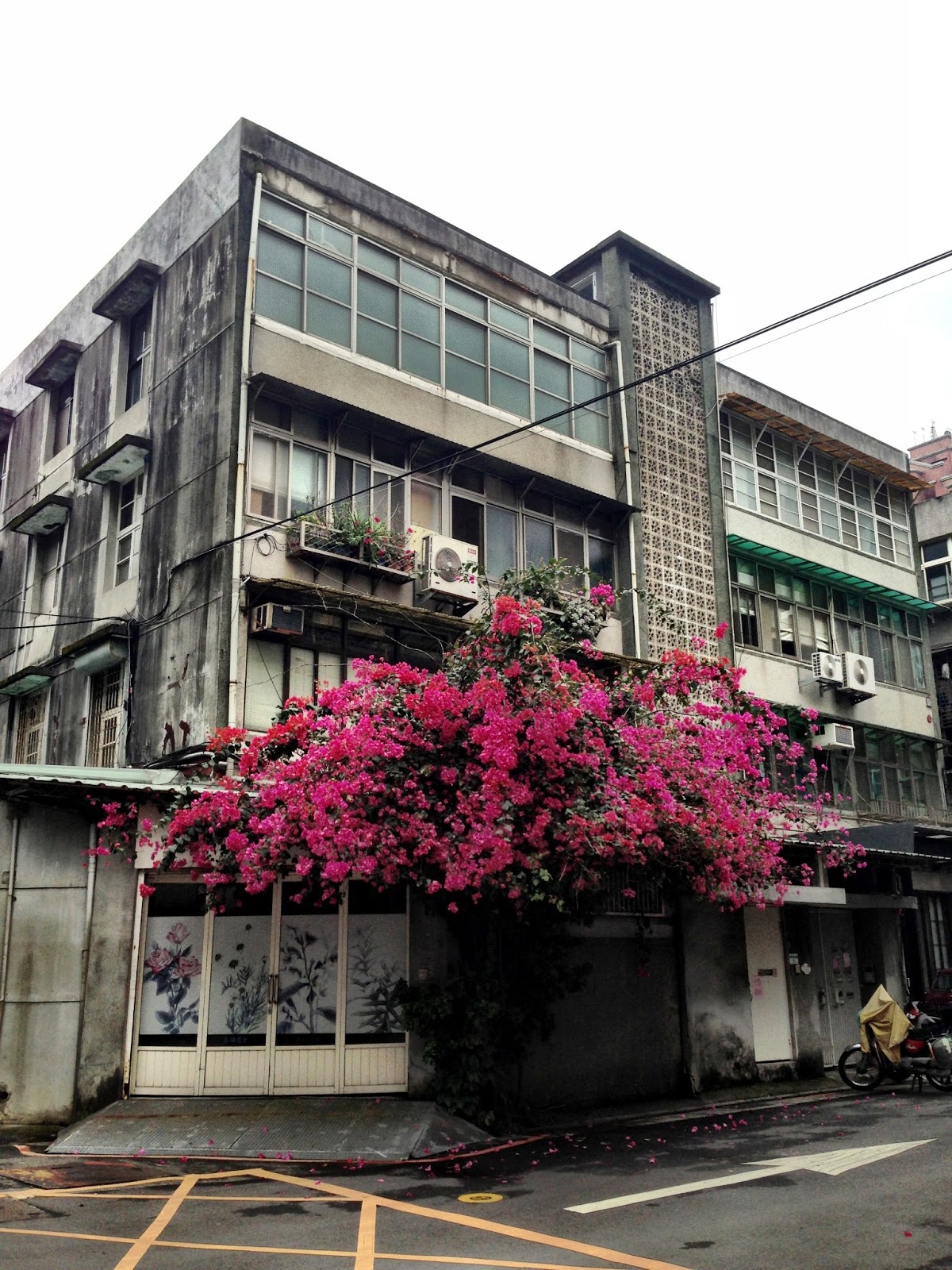
Too attached? A violent vine in Taipei. 

Isn’t that the most terrifying thing about falling in love? That the object of your affection could absorb you or swallow you whole then melt and dissolve your flesh and bones with its saliva, a potent mix of smog and trees and foreign but friendly looking children in strollers or prams, depending where you are? Like a Venus Flytrap but on a much larger scale. And by then you’re no longer a tourst – strictly speaking, you’re not necessarily a citizen, but you see yourself as such because you understand the ways and the roads and the tongues; you accept the weather because that’s how it is. 

I accept you, oh beautiful, blooming bougainvillea!

I have such a relationship with Orange County and Taipei, but at the same time these places are two faces of one mother: familiar, loving, taken for granted. Unless the earth swallows them whole.  

Back to my question. Not just “where?” but also “what if, if the ‘where’ is found?” The long answer is the one I’m still writing. The short? It’s a mystery. 

Macau Photo Diary: The Trading Gates

I didn’t know much about Macau. Admittedly, I still don’t. It just seemed like one of those places you try and make time for if you’re already in Hong Kong because, well, it’s there. My father, not a gambling man unlike most of his friends, likes it for the food. 

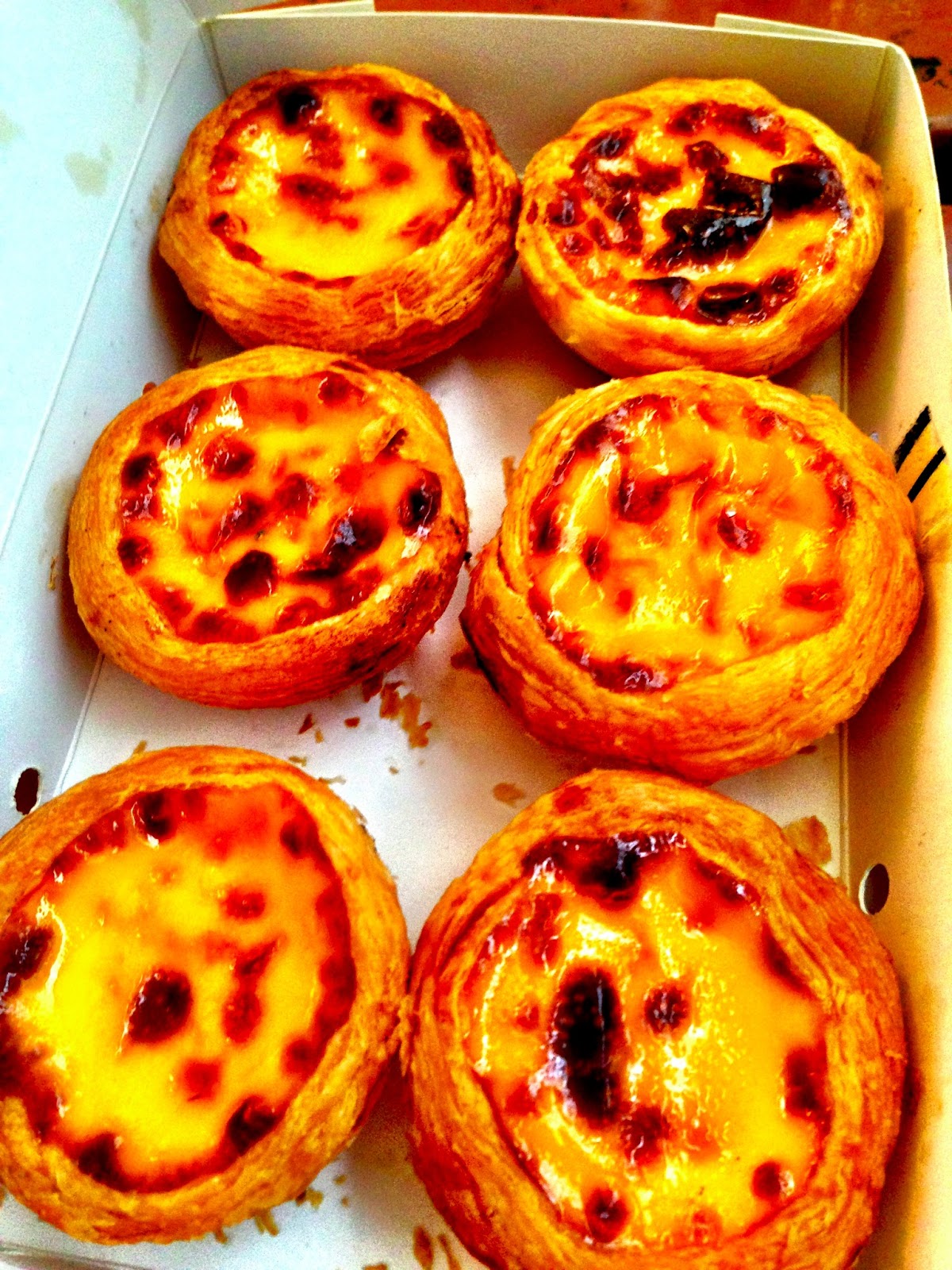
“The egg tart place,” he said excitedly, when I asked him where I ought to take E and C when we visited from Hong Kong, “Let me get you the business card. It’s one of the best egg tarts you’ll ever have.” 
I waited in the living room while he went to his study to retrieve the business card, and then to the garage, where he keeps outdated travel maps. My father is the epitome of homebody – he travels via television – but if he does travel he does so whole-heartedly if a bit blindly in the way men his age do, when they go to look but not to see. He becomes Uber-Tourist, hoarding free maps, business cards and trivia, and snapping photos all along the way with a camera that is usually much too complicated for his photos to reap full benefits. On a recent trip to Hainan island with my mother, my father clicked away furiously while my mother walked slowly behind him, pausing occasionally to sniff a flower or examine a leaf. 
“Your husband,” the other tourists observed, “Is very busy.” 
“Yes,” she said blandly, rolling her eyes at Uber-Tourist, “let him busy himself.” 
Among friends, he is almost laughably, the “learned traveler,” because even though you can’t have a two minute conversation with him without him interrupting you ten times, he’s remarkably sharp and he pays attention. Uber-Tourist for sure, but in his defense a curious travler as well. We both like to pepper the locals – street vendors and cab drivers and the like – with questions about society. My father tucks the information away and recounts them verbally to anyone who will listen. I take mental notes and later, if I remember enough, blog about it.  
He came back from the garage clutching a half dozen maps to his chest which he excitedly spread out across the table:
“Here’s where you want to go,” he said, pulling up a chair and motioning me to sit down, “I know you don’t have any interest in the casinos, but you can take the free shuttle buses into the Old Town…” 
Thus began an hour long verbal tour of Macau via outdated map, interspersed with jaunts down my father’s lanes of memory in which he and his buddies were younger men who worked and played hard, drank like fish and ate like kings without worrying about cholesterol and heart attacks. Each trip to Macau, he laughed, meant they would lose money and gain weight, not the world’s worst trade off, he said, jabbing me with his elbow, unless you’re a young, single woman. 
Times were different now: his friends all sported various diet-related illnesses and begged out of such trips or stopped planning them altogether. They ate light dinners, hardly drank, and went home early, as soon as dinner finished. They developed other interests and took different types of trips – in my father’s case, amateur photography and Hainan island with my mother, who can count the number of drinks she’s had in this lifetime on one hand. 
The map my father now so fondly gazed upon was of Macau, but also a place of rowdy, raucous memories, and now his daughter was planning to go. 
At the end of the hour, I concluded that my father and I were not so different, though he was perhaps more enthusiastic about egg tarts than I could ever be. He rather enjoyed, I was surprised to learn, walking around Macau’s old town and listed more restaurants than I could finish eating in a week.
“It’s not like Vegas,” he said, “The shows are not worth watching and the atmosphere is still kind of seedy,” 
He looked quietly down at the map with a soft smile, “But it’s quite different from anything you’ve ever seen and a good place to go with friends. I think you will enjoy it.”  
What follows are photos from the day trip I took to Macau with E and C. We did not gamble and set foot in a fantastically shaped casino only to use the restroom, among the gaudiest I had ever seen, with crystals hanging from bright chandeliers that cast a disco-club like glow over each toilet. 
My father was right, it was very different. Not in a good or bad way. Just different.     
Scene taken from the turbo-jet. Not recommended for those who get seasick easily.
My father’s recommendation. We were greedy and each ate two, then immediately regretted it.
A man neither Chinese nor Portuguese enjoying a gelato by a fountain in old town. A scene from Europe a stone’s throw away from China. That is the crazy thing about Macau. 

An elderly Chinese man waiting outside the church. For what or whom, I’m not certain. 
A woman rushing to mass. 
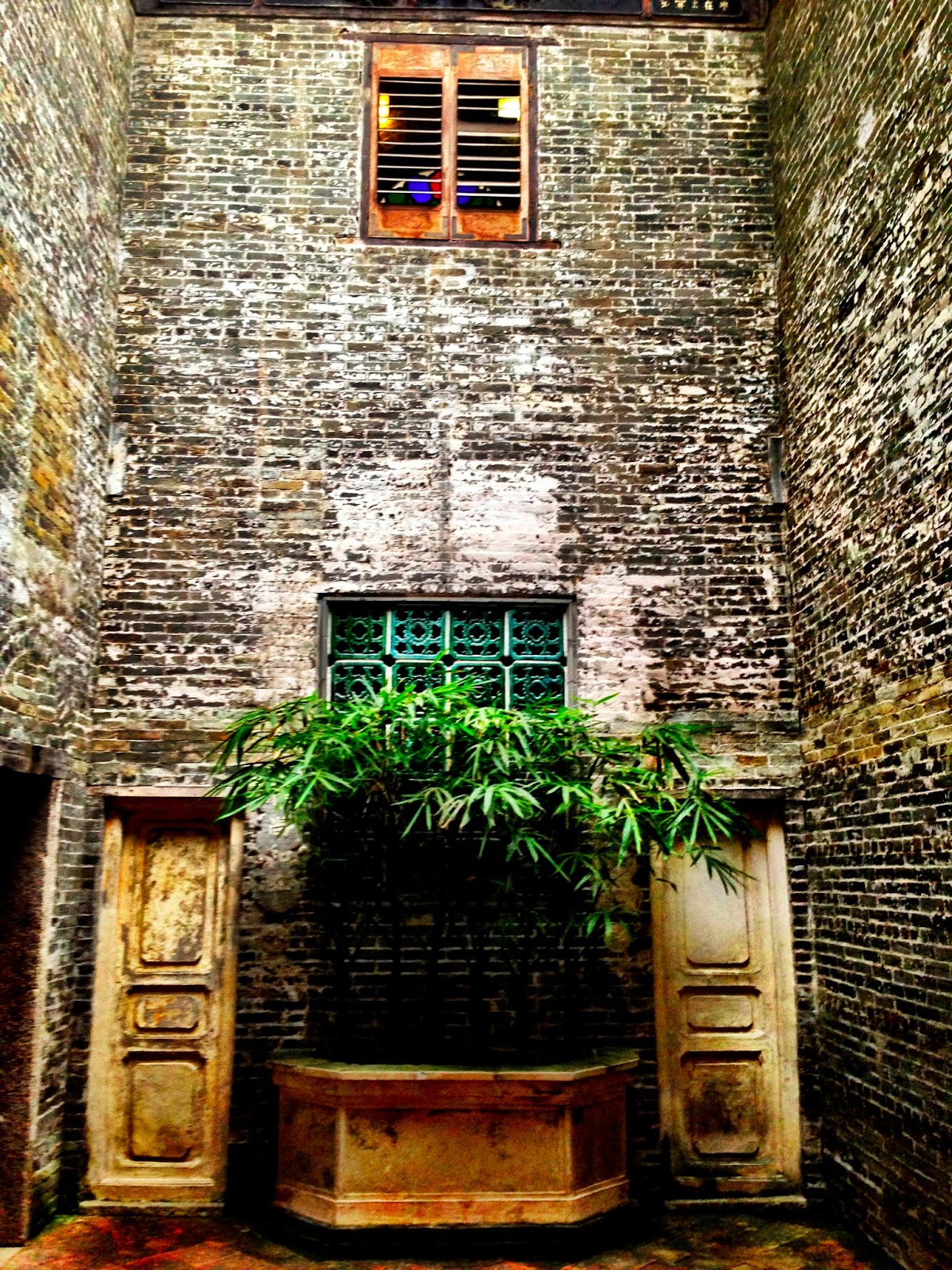
Gorgeous brick atrium of the excellently preserved Casa de Lou Kau, home of a Chinese Merchant and gambling tycoon. 
Another atrium. I wouldn’t mind if the rain fell into my house through a place like this. 
A photo also taken on the way there, because it was nighttime when we left, but I like this shot. 

Immunity

The plan was to fly from Seoul to Shanghai, spend a few quiet days with my brother and his wife before my cousin Karen came into town, at which point we would change out of tennis shoes and into heels and go out into the booming, boozing haze of Shanghai’s nightlife. Then, on Sunday morning we’d beat ourselves awake at 6AM, eyes painfully sensitive to air and light, hair still smelling like last night’s smoke and board a six-hour bus ride southwest to the Yellow Mountains in Anhui Province. We joked about the photos we’d take: done up, mascara’d young women in nightclubs and lounges, tired hags in the clouds high atop the Yellow Mountains.

“You guys have very diverse interests,” my sister in law mused.

That was the plan. What happened instead was I arrived in Shanghai from Seoul at 2:30PM, was greeted with icy cold rain, a half-hour wait for a taxi cab and then an hour long ride from the airport (the closer one, no less) to my brother’s place. I was underdressed and a bit tired from all the waiting, but still, I was in Shanghai and even though my body said, “Heeey, maybe you outta take a nap,” I shrugged off the fatigue, threw on an extra sweater and took a long walk with my sister-in-law before heading to dinner with my brother and his coworker in what seemed like the outskirts of town.

The coworker, a Korean named Daniel, had asked my brother a few months earlier if it would be alright to send some vitamins via his sister. They were much cheaper in the States where their safety and purity was assured. My brother said sure why not and a few weeks later a shoebox-sized packaged arrived from GNC at our house in Orange County, filled with fish oil and men’s daily vitamins, the latter of which made my mother wonder what the hell I was doing to my body. I explained that they were not for me and packed them into a largish suitcase with my scarves and shoes and brought them back to Taipei. My brother then came to Taipei from Shanghai for Chinese New Year and I handed him with the vitamins for his Korean coworker. Upon receiving the vitamins the Korean was pleased.

“When your sister visits Shanghai, I will treat her to dinner for her troubles.”

It really was no trouble (I marveled at the Korean man’s patience, waiting nearly three months for vitamins!) but this is why, after leaving Seoul, my first meal in Shanghai was a Korean feast in Shanghai’s Korea Town, adjacent to a Korean shopping center called Seoul Plaza.

My medical expertise tells me it was the sudden change in weather and not the food that made me sick. The dinner was delicious – a spicy mix of seafood and vegetables paired with endless Korean pickled side dishes and the most excellent bowl of white rice I’ve ever had the pleasure of chewing through – though I still get a bit nauseous thinking about that night’s dinner. I ate more than I normally would have, an unfortunate side effect of fatigue, but was otherwise in good spirits and looking forward to the night’s slumber. Walking out of restaurant into the freezing Shanghai air, I imagined that the Korean food had warmed me. Back at the apartment I changed into pajamas and clearly remember thinking as my head hit the pillow, “I will sleep very well tonight.”

And I did, until 6AM when I woke feeling ill in a vague, indescribable way. It was as though an insidious night terror had crawled down my mouth in the middle of the night and lodged itself in the core of my body, a limbo neither esophageal nor gastric. There was the faintest nausea with an indeterminate discomfort in my belly and a feeling of occupancy at the base of my throat – symptoms which on their own would cause me no worry but experienced altogether made me feel unsure about my existence. What was it? Like a word on the tip of one’s tongue, I could only say over and over again, when my brother woke and asked what was the matter with me, that I “did not feel well.” It was the understatement of the year. I was no stranger to stomach flu or cold and fever, but now the symptoms came from all directions and muddled my mind. Later my aunt would guess that I’d become victim to Taiwan’s latest flu virus, something that sounded like Nola, but without going to the doctor, we couldn’t be sure. I lay in bed ailing, the more coherent parts of my brain deciding whether to stay in Shanghai and calculating what the loss would be if I went home early: 500 RMB fine for canceling the Yellow Mountain tour package and a 700RMB fine for changing the flight and most painful of all, my cousin’s utter disappointment.

Going to the mountains was her idea and I was surprised that she had suggested it. I don’t know anyone else in my generation who would say, “Yes, let’s go clubbing in Shanghai and have a fancy dinner and all that, but please, let’s also see the Yellow Mountains.” That’s my cousin Karen for you. But I suppose when one is an overused and under-appreciated cog in a giant accounting machine, anywhere outside the office building would seem a respite. It makes sense then that the Yellow Mountains in Anhui, the backdrop to such films as Ang Lee’s “Crouching Tiger, Hidden Dragon,” and inspiration for James Cameron’s Pandora in “Avatar” were, at least two weeks ago, Karen’s much anticipated escape.

It would be better to see the mountains with her than not at all and she gamely researched and booked the trip, finding two of the mountain’s best-rated “resorts” (dismal two star motels at best, by most traveller’s standards) and looking up the area’s most popular trails for us to traverse. She had, a few days before her departure to Shanghai, assembled a respectable collection of borrowed hiking gear: a friend lent her his backpack and a coworker a pair of walking sticks, the kind that folded up into a tiny cane when not in use.  To everyone she talked excitedly about our plans. Some of her coworkers looked on enviously before turning back to their computer screens.

My aunt, not wanting her daughter to freeze to death in one of the world’s most famous mountain ranges, took Karen to the department store to buy a full set of Gore-tex outerwear to guard against the chilly mountain air. Karen had perused various online travelogues that advised travelers to prepare sustenance as food up in the mountains was expensive, so she’d gone to 7-11, stocked up on instant noodles and stolen a few packets of instant oatmeal from her office, where on Thursday evening she was only half-heartedly discussing convertible bonds with her manager. Her heart was already climbing the vertical steps leading up the Yellow Mountains and she could very nearly smell the crisp mountain air when she received the string of woeful text messages I sent her from the chilly guest room of our Shanghai condo.

“Hey Karen, I’m really sorry, but I got really sick all of a sudden. I don’t think I can go out never mind go to the Yellow Mountains. I think you should cancel your flight….”

She didn’t respond until a few hours later, but what happened, I learned after returning to Taipei, was that at 5PM on Thursday evening, she’d gleefully told her director that the convertible bonds would have to wait until after her trip to Shanghai. With a skip in her step, she went to check her phone to see if my aunt had called about her coming home for dinner, and instead saw the texts. She read them with the cliched sinking feeling all humans experience at one point or other and with her heart no longer light and her feet suddenly slow and lethargic, heavy, went back to her manager. She asked him to continue about convertible bonds with a muted expression.

“It can wait,” the manager said, waving her away. He knew when the underlings were checked out.

“I’m not going to Shanghai anymore,” she said and glumly explained what had happened.

Her manager laughed, not meanly, but patted her arm and said, “Well, since you’re not going anywhere, we’re not exactly pressed for time. Go tie up your loose ends and we’ll talk about it tomorrow. “

She cancelled her flight, the tour package, and on Friday, arranged to return all the things she’d borrowed. She’d unfortunately cut the tags off the Gore-tex stuff which made it hers forever, and the noodles, well, the noodles would stay uneaten in the kitchen cupboard.

The next morning, her friends and coworkers either jeered or looked at her strangely, “Aren’t you supposed to be partying in Shanghai?” they asked.

She hunched her shoulders and muttered something about her cousin’s weak constitution. The computer screen blinked with the likeness of convertible bonds, whatever the hell they look like. Karen blinked too. She shook her head. Expectations, she decided, were a dangerous thing. About 700 kilometers away in a much bigger and colder city, her cousin dragged herself out of bed, rushed to the toilet and threw up the remnants of a Korean feast.