Land of the Rising Sun

I took Japan for granted in that I knew it would always be there – a safe, clean if somewhat expensive refuge where everyone was happy, even if they weren’t and where I could always go if for some reason the United States turned to dust or if my relatives in Taiwan were bothering me to much. Isn’t that strange? To think of a place like that? Taiwan is convenient on the whole, but most of the things I love about Taiwan are actually things I love about Taipei. But in Japan, cleanliness, politeness, promptness, efficiency – these are national traits that don’t waver from city to city. I spent the week in Niseko, a tiny ski-village in Hokkaido so far removed from the bustling pace of Japan’s mega cities that had I kept the computers and TV off, I would not have heard about the earthquake until I returned to Taipei.

Yet even in Niseko, a truly international ski-destination swamped by Australians and Singaporeans and Honkys, there was never a moment when I thought, “Where am I?” The calm efficiency with which the snow was kept at bay by clean, polished looking tractors and the cheery voices and bright faces of the young seasonal workers that took our food and drink orders – every one and everything bore the distinct Japanese touch. Normally, skiing is the fun part and everything else is work. Finding a parking spot, walking to the slopes, getting off and on the lifts, and eating cold sandwiches in the car because the food on the slopes was bound to be tasteless and overpriced… but in Japan, the skiing was more work than anything else. It snowed heavily for three straight days, one of which I sat out and stayed in – and while I dreaded gearing up and going up the mountain, there was great comfort in knowing that I had beautifully designed Japanese lodging to come home to and that even if I should step outside its warmth, a few more steps would take me somewhere with the same Japanese hospitality.

Cleanliness. Politeness. Promptness. Efficiency. Those are the things I took for granted in and of Japan, and thus to see the tsunami come in and disrupt everything, destroying houses, cars, boats, fields (as though food prices were not astronomical enough in Japan), and most terrifyingly, families… churning everything and everyone into one, thick, dark Devil stew. Sendai, Natori, Fukushima, Onagawa …a natural disaster can destroy lives and homes and devastate landscapes, but most insidiously it can kill the idea of a place. Hurricane Katrina destroyed New Orleans before I had a chance to see it and almost immediately I thought selfishly, “Now I’ll never see it.” The same thing happened with the 2004 Indian Ocean Tsunami. Bali, Phuket – exotic paradises I had once dreamed of vacationing to had been washed away in a blink of an eye. In both instances I stood in front of the TV screen watching the water crash into the land and its people, devouring everything in its path and leaving behind nothing but fragments. But at some point the news stations move on. People move on. They don’t always stop crying, but they bend down to pick up the pieces, and they get up again. And slowly, you see people heading back there not only to vacation, but to live. New Orleans is being rebuilt, perhaps more solidly than before, and Bali and Phuket are once again thriving vacation spots.

Now I watch the Japanese people on the news, watch them calmly line up for clean water and food and gas. Watch them line up for buses and trains to go to work even as their country burns and crumbles around them. Watch them anxiously but quietly search message boards for names of friends, sons, daughters, mothers and fathers; watch their faces fall if no name is found. I watch them say “please” and “thank you” and say “Wonderful, it’s wonderful to have found you,” when they stand amidst rubble and find a friend.

I watch in awe and realize that while for some, the idea of a place is attached to its materials – buildings, technology, restaurants – nothing can kill a people’s idea of themselves. Even in crisis, the Japanese maintain order and efficiency. No fighting or pillaging, no finger pointing or dramatic wailing – though all of these would be completely understandable – only a heartbreaking silence and strangely, an indescribable acceptance – as though tsunamis, earthquakes, nuclear meltdowns, are all an expected part of life. On the news I heard a woman say, “I watched my husband wash away. I touched his hand briefly. I hung on to the roof of our house. I don’t know if I am lucky or unlucky.” An elderly man with a round face bit his lip and held back tears, “My home is gone. Gone. But I am here, so I suppose I am lucky.” And a woman, a mother among thousands of mothers now separated from their children, posted a handwritten note to her daughter on one of many message boards. “I hope my daughter will see my message,” she said, twisting her hands, “I don’t know where she is. But I hope.” And everyone, collectively: “We must go on.”

Cleanliness, politeness, promptness, efficiency – all maintained despite the crisis, to the best of their ability. And the most admirable of all, the cornerstone of Japanese identity from which all other traits spring: solidarity. From the very beginning the most important message came from the Prime Minister, from the news anchors, and from the scientists struggling to prevent nuclear meltdown: “Stay calm.” The second most important message: “Help each other.” Solidarity is what defines the Japanese people and solidarity will enable them to rebound and rebuild with efficiency that will astound the world. So I correct myself: I take Japan for granted because of the solidarity of its citizens. My idea of Japan remains whole.

“How much can come and much can go, and yet abide the world.” 
                                                                                    – Emily Dickinson
A Kitchen in Shanghai

I arrived in Shanghai late Thursday night at the wrong airport. My brother, uncle and cousin had already made the hour and a half drive to Pudong International Airport, where I was scheduled to land but which, due to fog, had been closed. My flight was redirected to Hong Qiao Airport midflight and when the announcement was made, the handsome Australian man in front of me turned around and away from his newspaper (incidentally, he was reading this article) and asked, “What just happened?”

Luckily two terse but nice Shanghai men in my row (two friends on their way home from a week of gambling in Macau) were kind enough to lend me a cell phone so I could call my brother with the wonderful news that yes, he had in fact, just spent an hour and a half driving to the wrong airport. Thankfully for me, Hong Qiao is oodles closer to “home” than Pudong and a 44 Renmibi cab ride later I was back in the cold apartment I first visited some six or seven years ago, upon my first trip to Shanghai.

My uncle bought the flat a little over a decade ago, when he had the good sense that all things money were headed across and above the Taiwan Strait, straight into the heart of Shanghai. Later, when business died down he sought to tie up loose ends and considered selling the flat. By then, the Shanghai flat had become something of a popular destination amongst family and friends and friends of friends. The idea was thus: Hey, the Ho’s have a house in Shanghai. We have family/friends in Shanghai. Let’s visit and stay at the Ho’s house. And happily, my uncle lent them the keys and happily, they stayed rent/rate free in one of the world’s grandest cities. It is ideal for visitors and residents alike. Situated west of the Yangtze River at a now less busy crossroads (before, it was home to Shanghai’s busiest Street of Bars and Drunken Rowdiness), the flat is a ten to fifteen minute walk (extravagantly convenient by Shanghai standards) from two major subway lines and, if one resides on a higher floor, boasts hazy views of the city’s skyline. Naturally when it came time, for my uncle at least, to sell the apartment, there was a resounding “No!” that emanated from all who have stayed and all who planned on staying. My uncle put his hands up in defeat. He shrugged. “Alright, alright,” he said, “It was just an idea. We will keep the house.”

And so the house remained ours, filled with my uncle’s tasteless furniture and many plastic tubs filled with mysteries of business passed. Who knew that less than two years after my uncle had sought to sell it would rise to such eminent use?

It is here that my brother has made a new(ish) life for himself. I woke on a cold, gray Friday morning in an empty apartment, knowing that my brother had left for work and that I would soon step out to see the city. I opened the door to the balcony, feeling both the bitter cold wind and several rusty hangers strike my forehead. I squinted, then closed my eyes, trying to imagine what it would be like to live in this city. Then opened them. What would it be like, every morning, to take in my laundry with my back to this view?

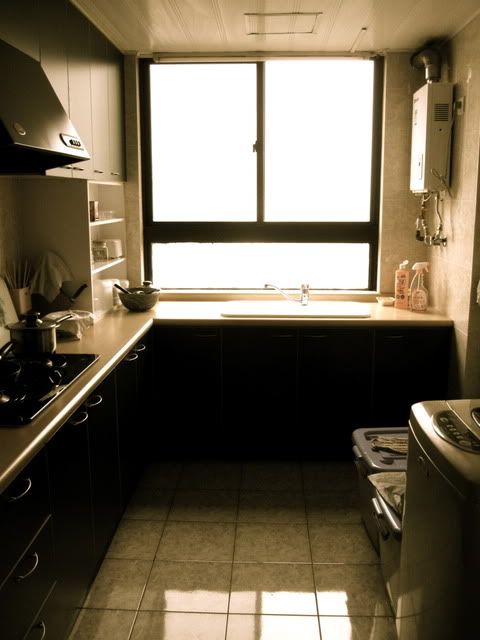
I couldn’t imagine it. Closing the door behind me, I stepped back in and walked to the room most familiar to me, in any house: the kitchen. It is, I believe, in the kitchen where one can gauge the “settled in-ness” of a person’s residence. As I saw that day, my brother has yet to “settle in.”

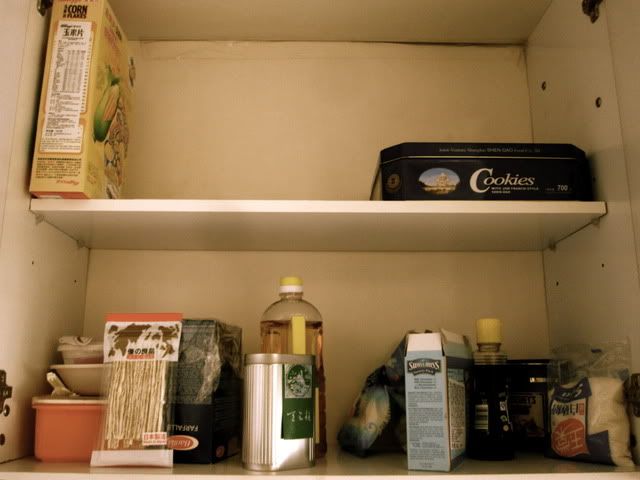
Emeril Lagasse’s nightmare.

Of these items, the cereal, Swiss Miss, pasta and peanut oil are recent purchases. The other items may very well be antiques, remnants of my uncle’s periodic visits of yore.
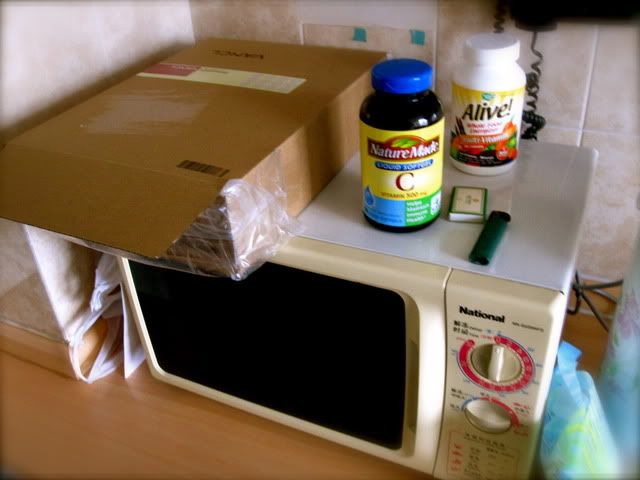
Like any reasonable and well educated person, my brother keeps his vitamins atop the microwave.
And subsists, when he is not being treated out to dinner by our vast army of relatives, on microwavable buns and dumplings, so that he may warm the vitamins at the same time.

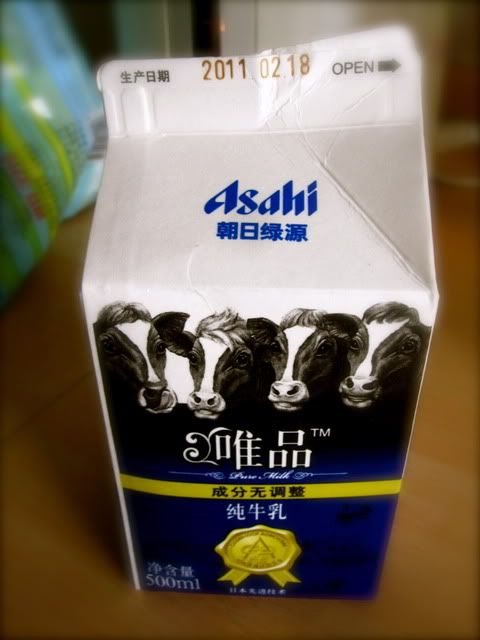
Calcium deficit beer lover’s delight: Asahi Milk. The cows only chew malted barley.
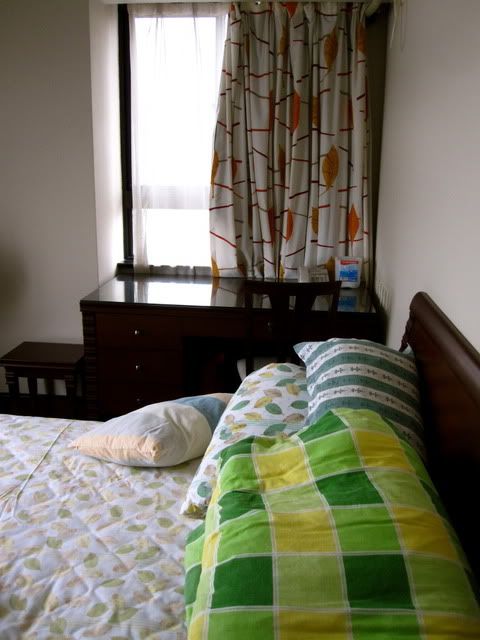
Not the kitchen, but what is now the “guest” bedroom, with a sterling example of Chinese interior decorating at its finest. How many prints doth thou seest? Too many, methinks.

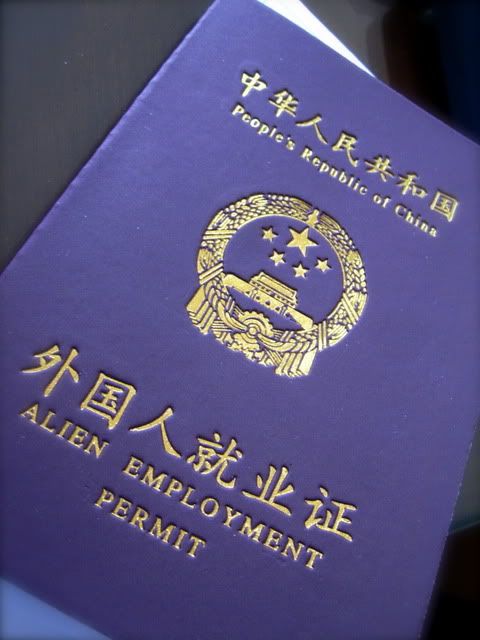
I returned to the dining room where on the table, which has been rechristened my brother’s “office,” I saw this:

In China, they don’t believe much in euphemism.

I did not like the flat. Not for me. But I could understand it and its being fitting for my brother. “There’s still a lot of work that needs to be done,” he said to me, “but I’m looking forward to slowing changing things my way.” It takes a big heart and an open mind to see a home for yourself, anywhere. I was glad that at least one of us was able to do so.

Walking into an HSBC Commercial then Walking Out in Central, Hong Kong

The last time I went to Hong Kong was three or four years ago with my cousins Karen and Melody for a weekend shopping trip. We ended up window shopping a lot without buying much, mostly because even with “steep” discounts, most of the stores were high end and still out of reach. The stores that we could afford were often so jam packed that it didn’t seem like we would find anything. In the end, we walked around in awe of all the apartment towers and each spent a considerable amount of our budgets having our palms read at a famous temple, the name of which I have now forgotten. Oh yes, we also tried not to lose each other in the sea of people that swept over us like a head-on wave at every street corner. What I remember most vividly from that trip was the sheer number of malls that Hong Kong seemed to have. Taiwan, back then, had a good number of major shopping destinations, but still seemed far behind Hong Kong in density. And while my current return to Taipei has revealed that Taiwan has closed the gap somewhat, the few hours I spent in Hong Kong have showed me that an even smaller island still rules the Malls per Square Kilometer competition.

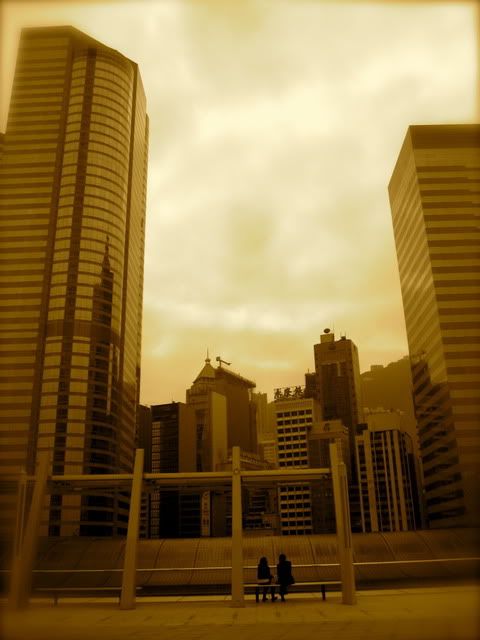
Two women lunch on the rooftop of the IFC, the watering hole for bankers and deal makers.

It seemed to me that every subway stop had an exit or two that led to a mall. Granted, I only got out of three, but each one had escalators that took me from the dim underbelly of the city into a vast and glittering sub-city built of polished marble, glass and merchandise. At one mall especially, the IFC or International Finance Center, seemed to be the new queen bee of them all. Located at the heart of Central, the IFC is, if you’re a banker or luxury conglomerate CEO, the place to be. I followed the herd of well-dressed folks rushing towards the IFC subway exit and found myself, as I’ve already said, intruding on an HSBC commercial featuring thousands of very well-dressed young men and women who no doubt keep Hong Kong’s economy robust by working during the day and partying during the night. The complex was decidedly “international,” meaning, I heard English spoken in many different accents (though British English dominated), and what’s more, saw small groups of schoolgirls in navy blue pleated skirts, knee socks, and loafers chatting in perfect English and walking about looking for a place to lunch. “International school kids,” I thought, and I was right.

It was an interesting place to suddenly find myself but given my budget and general fatigue of malls (I have Taipei to thank for that), I decided to leave the IFC (no easy feat, as it is labyrinthine and monstrous) and search for a different Hong Kong.

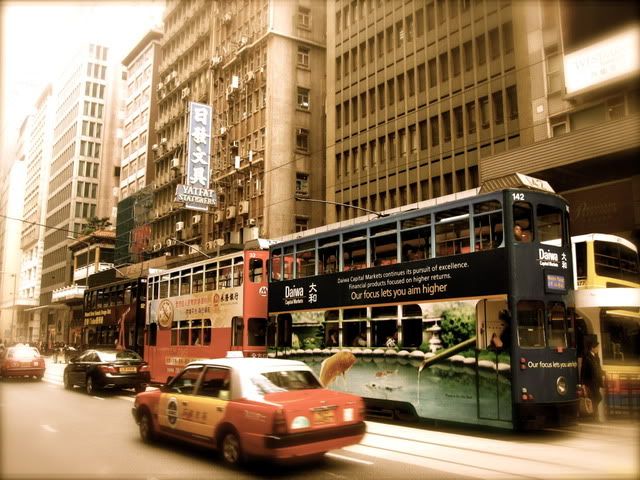
A typical street around Central. On the ground floors, most of the old shops have long been replaced by foreign boutiques, but one need only to look up at some of Hong Kong’s old signs to get a taste of the old.

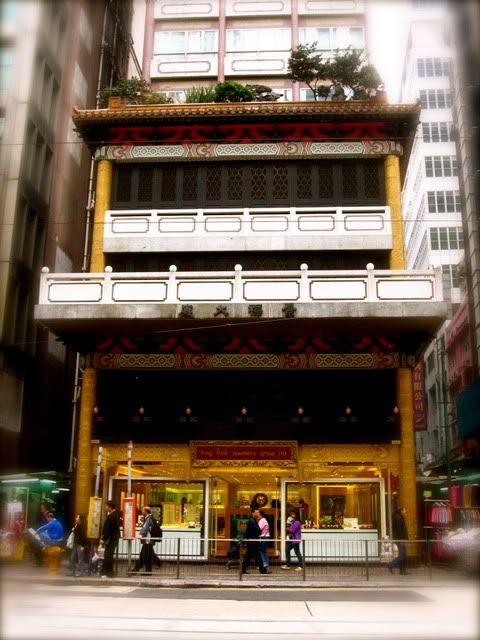
And sometimes old buildings refuse to leave, like this jeweler tucked in between two glass high rises.
These men too, needed respite from the IFC and emerged to have their shoes shined the old fashioned way. Each person belongs to a different Hong Kong.
The red urban taxis and three double decker trams, which I love. New York should invest in these.

Wandering about without a map and no destination in mind can be good and bad. Bad because well, you don’t know where you’re going. Good because you can come across a narrow alley filled with delights you otherwise would not have if you had an itinerary in mind. That day was good in terms of pleasant surprises. My aimless wandering paid off in terms of what I saw and what I ate.
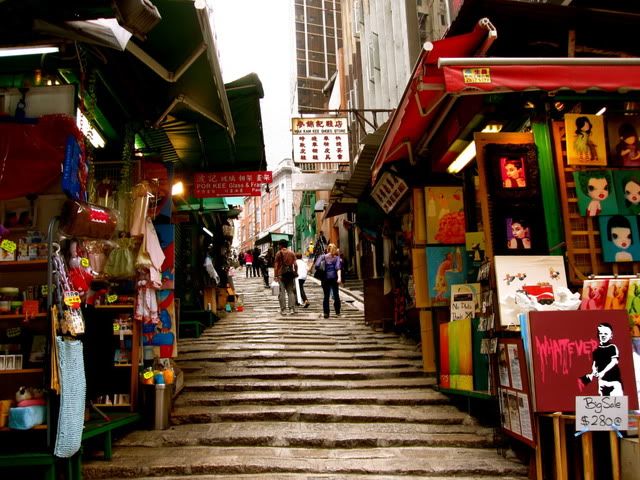
A sudden small incline appeared on my right, filled with the works of local artists.
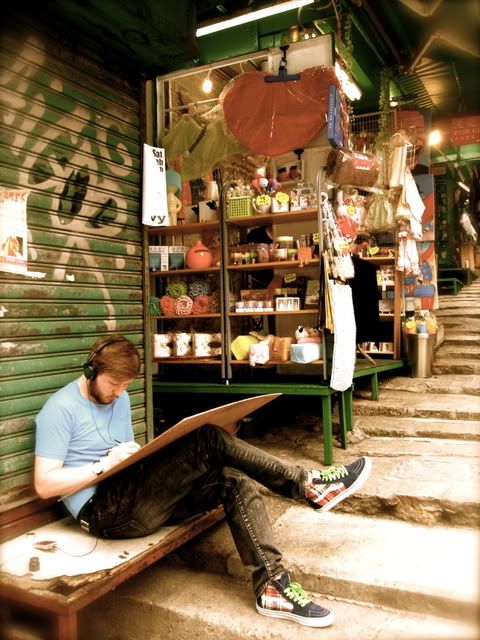
At the head of the street, a young man tunes the city out and draws.
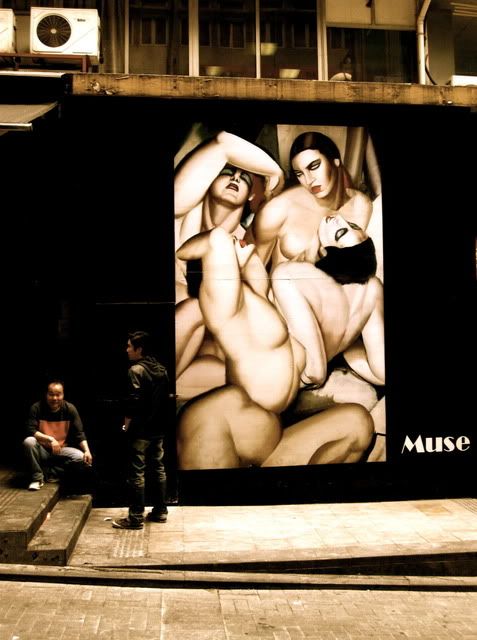
Not too far away, someone had a bigger canvas to work with.

All this walking made me hungry and I started to look for an authentic, smallish noodle shop. Apparently I didn’t know where to look and walked around for forty five more minutes before seeing this:

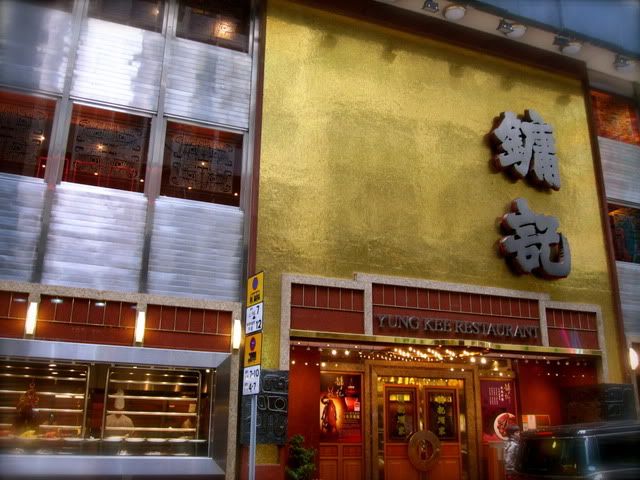
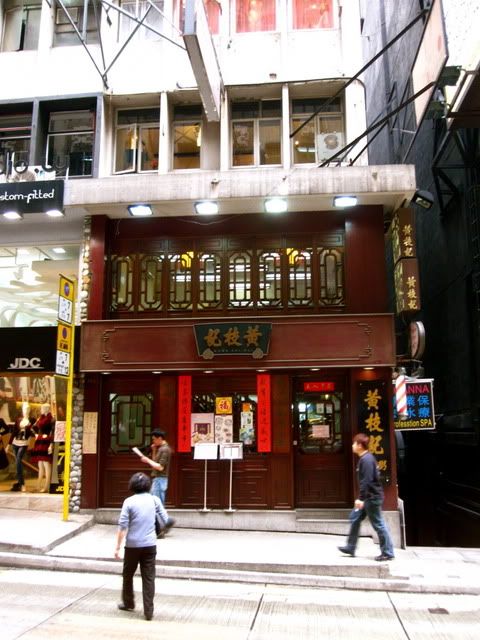
But the dishes looked enormous and out of my price range. I turned around and saw this shop, directly across the street:

An old lady walked in and a young woman walked out. Seemed the be a restaurant for parties of one. I went there and ordered what everyone else was eating.

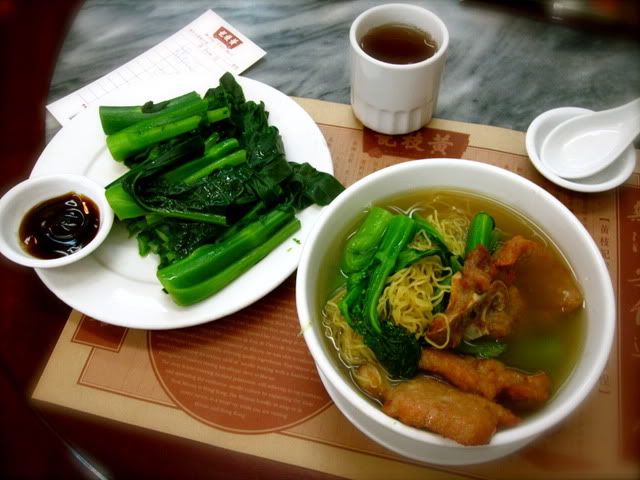
Pork chop noodles with a plate of Chinese broccoli.

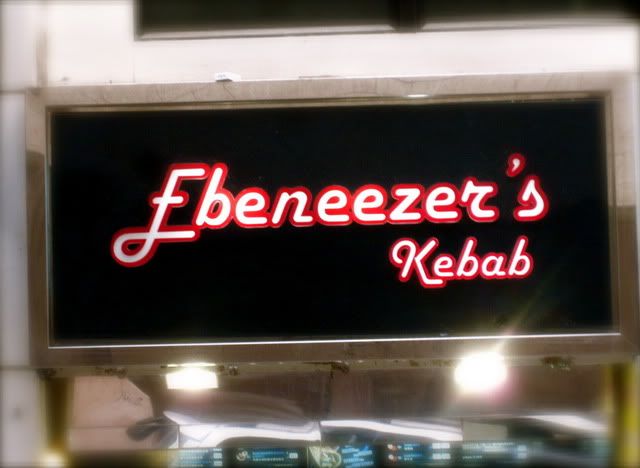
Satiated, I came back out and walked around some more. Didn’t buy or eat anything at these places, but got a good laugh out of their names:

Sure beats “Victoria’s Secret.”
Hamburger place.

Pretty soon it was nearing evening and I had to return to the airport to pick up my visa and catch a flight to Shanghai. But not before entering through one more mall…

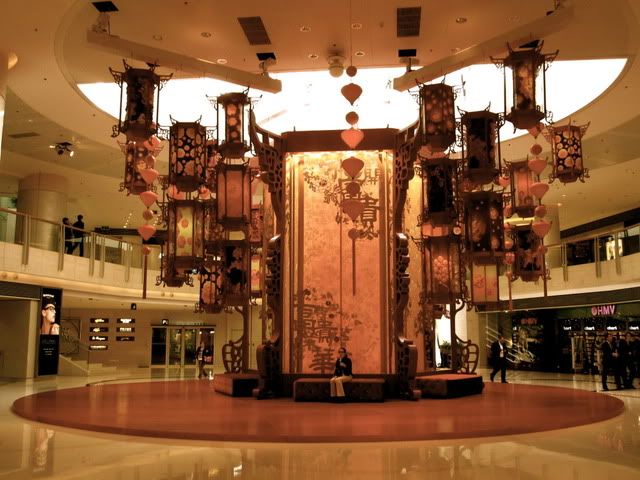
The lobby at Elements, another ritzy mall in Kowloon.

On the subway ride back, a cemetery at the water’s edge. Literally.

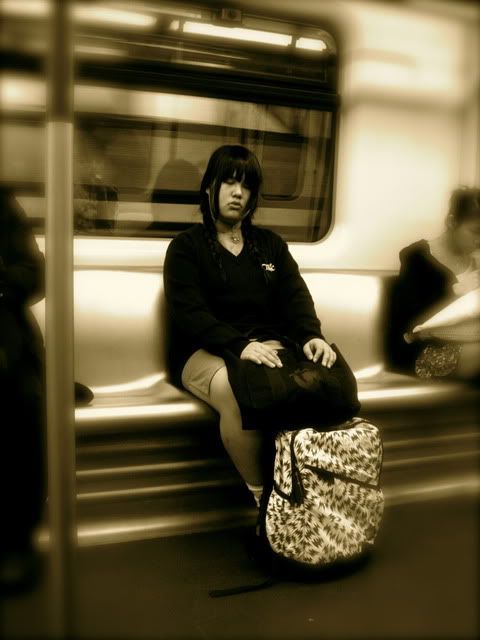
And a schoolgirl, doing precisely what I had wanted to do all along since waking up at 3:45 that morning, but am glad I did not, for I would have missed out on too much.

Tainan (Part 2) – A Village

Back from Hong Kong and Shanghai, but posting my last few Tainan photos before I forget…

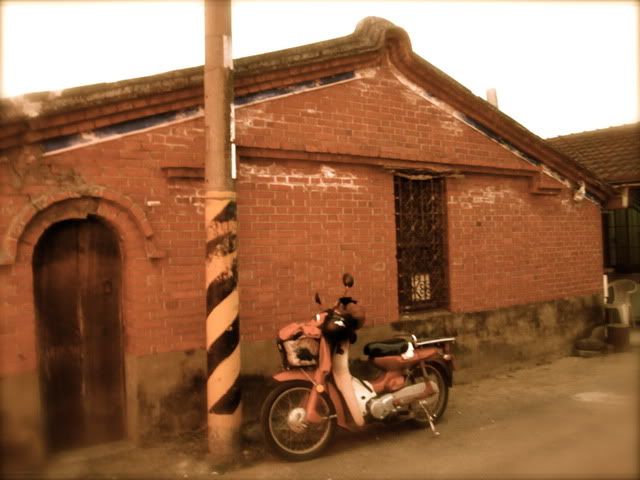
After visiting the temple, Dr. Chang’s friends took us to an old village, the Chiang Family Village in Lu Tao Yang. A woman in our group was actually from the Chiang Family, and the village patriarch had been her grandfather. The village is built in the old style, courtyard units connected together, and is so well preserved that the Taiwanese government declared it a National Historical Site. There was a concert there that night, held yearly at the end of New Year’s celebrations and performed by local villagers as well as professional musicians. It was a glimpse of old Taiwan, and Mrs. Chang’s father, who went with us, enjoyed himself immensely. “It reminds me of my old home in Shandong, China,” he said.

The entrance to the village had tables set up filled with games for children.
Chiang children, playing games.

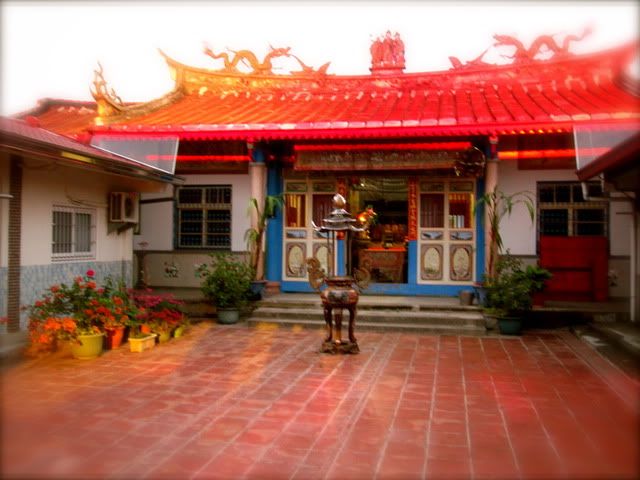
One of the courtyards. Some of them are for worshiping ancestors. Such as this one. Many temples are built along the same principle.
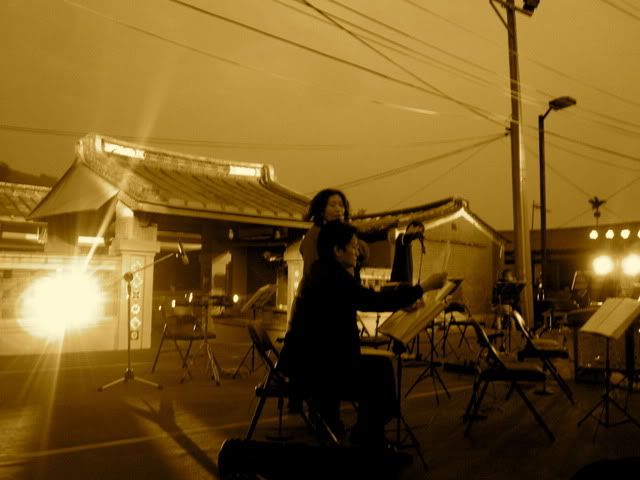
Musicians preparing for the night’s show. The stage was set in the village square.
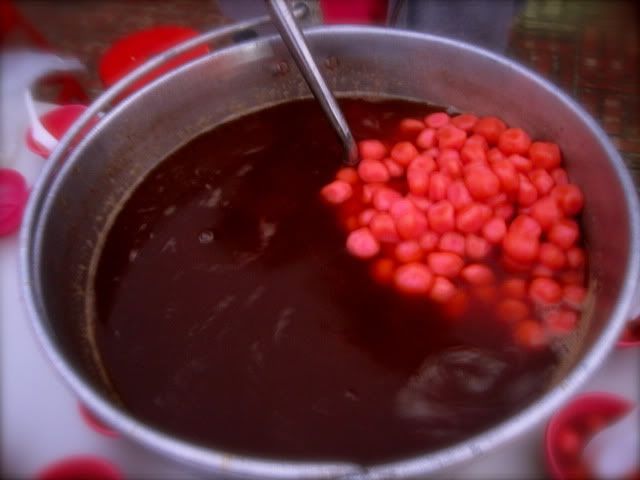
Volunteer ladies ladled out bowls of tang yuan, or sticky rice balls in sweet broth. You eat this for prosperity.
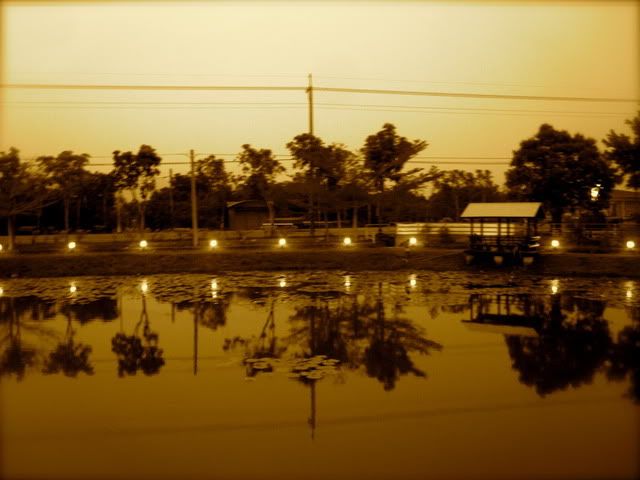
There was a small, moon shaped pond at the head of the village.
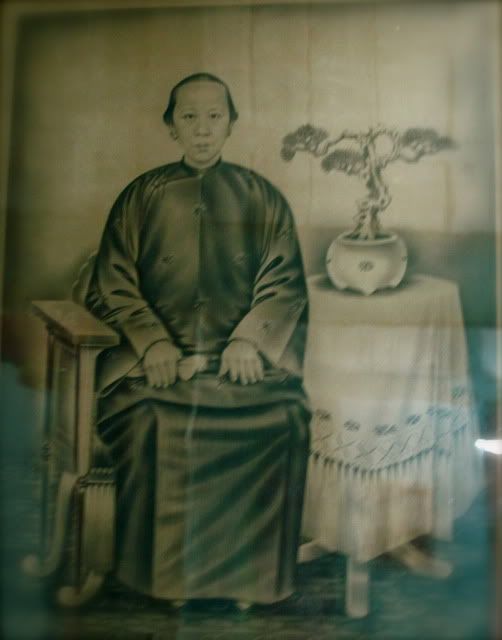
I saw this photo in one of the courtyards. I’m guessing it is the Chiang family matriarch.
Dining hall.
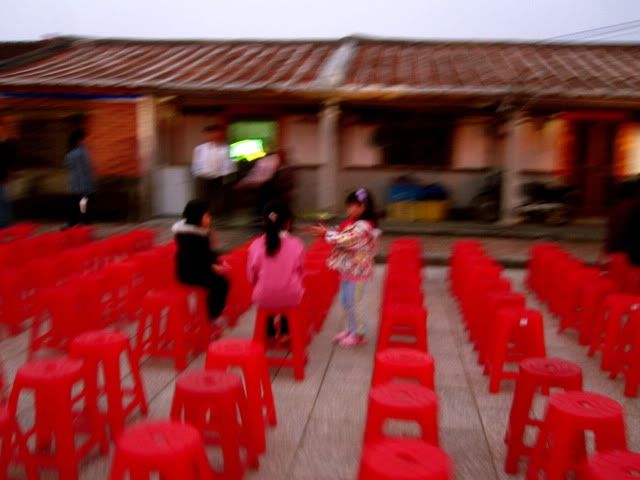
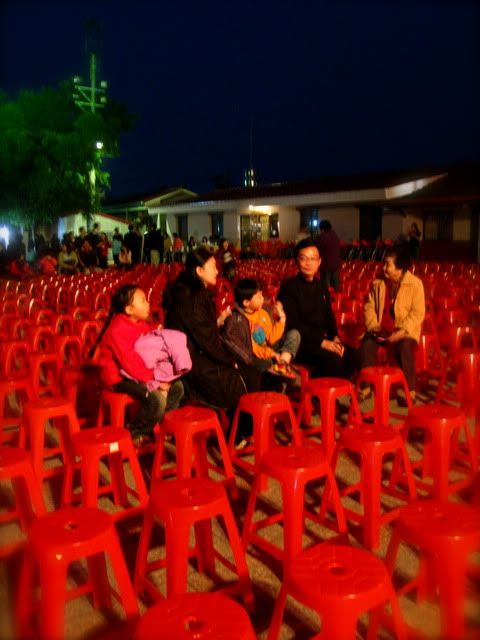
An eager family, waiting for the show to start.
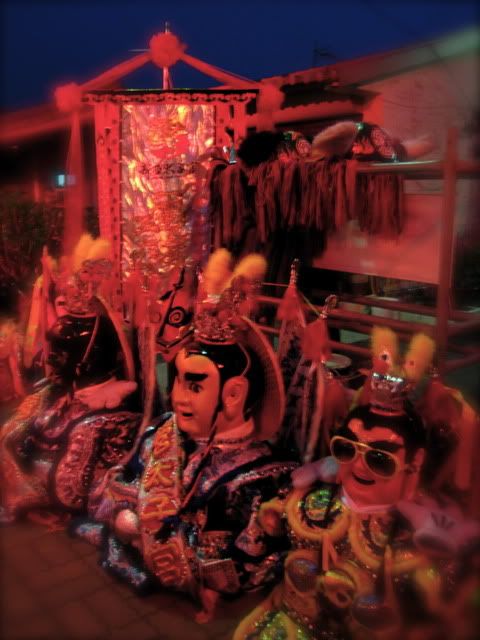
Costumes for the show. I wondered about the one on the right.

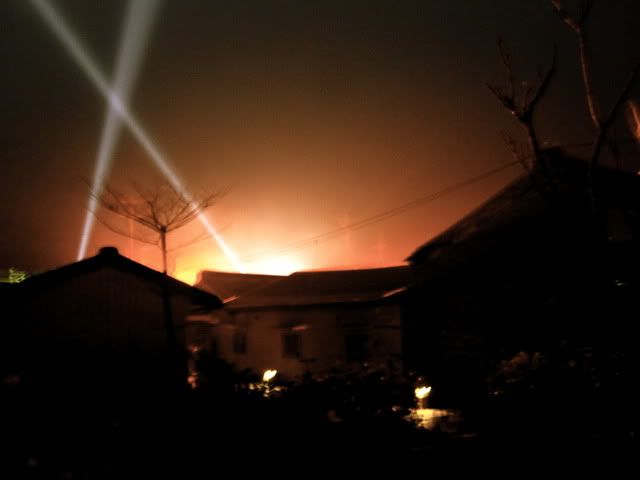
 As we left for Kaoshiung for our own dinner, I could hear the music start. I turned around and saw the village light up.

And for tomorrow, a preview of coming attractions…

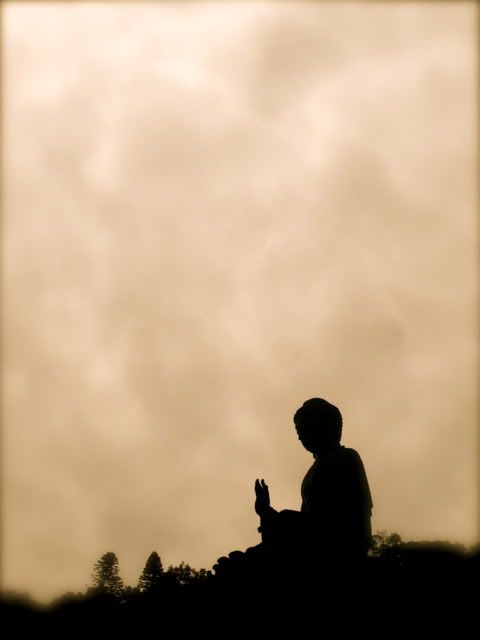
Tian Tan Buddha on Lantau Island, Hong Kong.