Alone on Thanksgiving

Unexpectedly, a small army of my mother’s badminton friends banded together to buy several lavish flower arrangements for my grandmother’s memorial service and for my mother. A massive pot of stunning purple and violet orchids were delivered to the chapel and a few days later, a young Hispanic man showed up at our door with two smaller but no less gorgeous arrangements for our home. Together, they cost a pretty penny and my mother was grateful.

“I ought to do something for them,” she said, “They really didn’t need to spend so much money and send so many flowers.”

It was decided that to show our thanks, she would buy them little candies and I would bake cookies to put together in pretty gift bags.

I baked an assortment of holiday spiced cookies: molasses gingerbread, cinnamon oatmeal lacies and pumpkin spiced walnut cookies and give each contributor a dozen or so to share with their family. I kept the oven on for what seemed like two days straight to bake enough for seventeen people, and when everything was packaged and wrapped, my mother was delighted in the overall effect.

So were the friends at the badminton club.

She came home on the evening after all the gifts had been delivered and I asked her how it went.

“Oh they were all so happy,” she said, “especially Ju Pei.”

“Who’s Ju Pei?”

“Don’t you remember the woman with the daughter that doesn’t like her?”

I did. I had very nearly written a novella about her.

“She loved the cookies,” my mother said, then her eyes got wide, “and she ate the whole dozen right in front of me.”

I stared at my mother. My cookies are known to be larger than the average sized cookie – whatever that means – and I always end up making ten or so less than the recipe calls for because of this.

“She ate all twelve in one sitting?”

“In less than thirty minutes,” my mother said.

My mother had presented her the gift bag upon her arrival at the club and Ju Pei was there, forty-five minutes earlier than when her lesson was scheduled to start. She often did that, as she disliked being alone in her house and passed most of the afternoon at the badminton club.

“She was so happy when I handed her the bag, and even happier when she saw the cookies. We started talking and she just reached in, eating one after another. By the time her lesson was starting, the bag was empty.”

“Didn’t she feel sick?”

My mother shook her head, her expression as surprised as mine, “No, not at all. She just kept on saying how delicious they were and how lucky I was to have a nice talented daughter who took the time to bake things for her friends.”

“Wow,” I said, “Well, that’s really nice of her. I guess I can make more for her next time, since she liked them so much.”

“Yes…” my mother said slowly, “Though she plays so much badminton to maintain her sixty pound weight loss…so I’m not sure if you should make her quite so many cookies.”

After her lesson Ju Pei came to chat with my mother again, asking if my mother and her husband were free to have dinner with her on Thanksgiving.

“I was thinking,” Ju Pei began, “I’d like to take you and your husband out to dinner on Thanksgiving. To Capital Seafood in Irvine. We’ll have lobster and crab! You can bring your daughter too.”

“That’s very nice,” my mother said, and trying to phrase the obvious as gingerly as possible, “but we spend Thanksgiving with our family.”

Ju Pei’s expression, my mother said, could not be described as crestfallen, but discouraged was certainly apt.

“Who the hell invites someone to dinner on Thanksgiving?” I asked, incredulous.

“Well she didn’t know that we made a big to-do about it, because she never celebrates with her daughter.” 

“Why not?”

“She says her daughter never asks her to dinner at her house, never mind Thanksgiving.”

“That’s really a pity,” I said, feeling terrible for the woman. I thought ahead to all the faces I looked forward to seeing on Thanksgiving and how warm my aunt’s house felt, no matter how cold it was outside, no matter that we had just lost our grandmother. I imagined the woman eating alone at the Seafood Restaurant, a glistening, sautéed lobster on the table before her.

“I don’t know what you do as a mother, as a woman to end up like that,” my mother shook her head, “but I sure hope I’m not doing it now.”

I kissed my mother on the cheek, knowing that it wasn’t a so much a difference in action as it was in souls. The woman wasn’t a bad person – she had just been ill-advised and then, it seems, too narrow-minded and nearsighted. Impulsive too, perhaps. But from what my mother told me the woman was beginning to change.  She was definitely someone worth studying, but perhaps not right now. My mother and I had Thanksgiving with our family to think about.

The Sea

<!– /* Font Definitions */ @font-face {font-family:Times; panose-1:2 0 5 0 0 0 0 0 0 0; mso-font-charset:0; mso-generic-font-family:auto; mso-font-pitch:variable; mso-font-signature:3 0 0 0 1 0;} @font-face {font-family:Cambria; panose-1:2 4 5 3 5 4 6 3 2 4; mso-font-charset:0; mso-generic-font-family:auto; mso-font-pitch:variable; mso-font-signature:3 0 0 0 1 0;} /* Style Definitions */ p.MsoNormal, li.MsoNormal, div.MsoNormal {mso-style-parent:""; margin:0in; margin-bottom:.0001pt; mso-pagination:widow-orphan; font-size:12.0pt; font-family:"Times New Roman"; mso-ascii-font-family:Cambria; mso-ascii-theme-font:minor-latin; mso-fareast-font-family:Cambria; mso-fareast-theme-font:minor-latin; mso-hansi-font-family:Cambria; mso-hansi-theme-font:minor-latin; mso-bidi-font-family:"Times New Roman"; mso-bidi-theme-font:minor-bidi;} p {margin:0in; margin-bottom:.0001pt; mso-pagination:widow-orphan; font-size:10.0pt; font-family:"Times New Roman"; mso-ascii-font-family:Times; mso-fareast-font-family:Cambria; mso-fareast-theme-font:minor-latin; mso-hansi-font-family:Times; mso-bidi-font-family:"Times New Roman";} @page Section1 {size:8.5in 11.0in; margin:1.0in 1.25in 1.0in 1.25in; mso-header-margin:.5in; mso-footer-margin:.5in; mso-paper-source:0;} div.Section1 {page:Section1;}

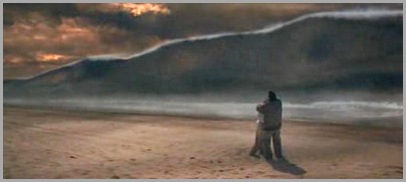
My mother dislikes the sea.
“Why,” I will ask. I think the sea is beautiful.
“It’s cold,” she will say. 
Edward Hopper Rooms by the Sea  1951 Oil on Canvas
At first I thought she meant figuratively: the sea is vast and unpredictable, not known to embrace anything except the animals that call it home. And even those animals, the sea will tell you, must plan accordingly. If a whale dies close to shore, the sea, with frothy fingers, will slowly, indifferently, nudge it to the sand.
“Take her,” the sea will say, “We are finished.”
I once drove at nightfall along the coast to Santa Barbara. The sun had set more quickly than I’d anticipated and I found myself on the darkest of roads, with only my weak headlights to guide me. The sea stretched out to my left, invisible yet pressing, and I could not help but stare, every now and then into that dark expanse. I turned the radio off and swore I heard tides crashing, waves and wind roaring, how close to my car I didn’t know, I couldn’t see. But my little car swayed with both the wind and my fear. Though it was summer and the interior of my car was quite warm, the ocean, sight unseen, was chilling.
In the morning, I woke and with my friend, whom I was visiting, walked to the beach.
It was another sea altogether, now glittering and calm. A gentle breeze swept across our faces and we squinted across the water. I recalled the unsettling fear I experienced the night before while driving along the very same water and marveled how different I felt now. Calm. Serene. Just like a pretty photograph on a postcard.
But I shivered. It was always several degrees cooler at the beach. So this is what my mother meant. In search of a warm breakfast, we walked back to the car, the sea glistening behind us.

My Mother’s Nightmares

c22f3-15_thumb3

My father left the other day for a two week trip to Asia, not for business, but for fun with retired friends. He is the leader/tour guide, meticulously planning their itinerary from departure to return, in charge of booking all plane tickets and hotels and even drafting a list of must-eat restaurants in each destination: Taipei, Macau, Shanghai, and some province I’m not sure of.   Continue reading “My Mother’s Nightmares”

Please Listen

Yesterday my mother came back later than usual from her badminton lesson, looking dejected rather than energized. She plays badminton two or three times a week with two other ladies, both of whom are much older, though in truth their athletic abilities are evenly matched.

“What’s the matter,” I asked, “Didn’t you have a good lesson?”

My mother nodded, her eyes ringed with fatigue, “Oh yes, the lesson was fine. But I didn’t practice much afterward.”

“Why not?”

“One of the new ladies came up to me after our lesson and asked if we could talk.”

“About what?”

“I thought she just wanted to get to know me better,” my mother said, “She started her membership some two, three months ago, but she isn’t the most social person. She doesn’t seem happy. Doesn’t really smile.”

The woman had approached timidly and spoke to my mother in a small, weak voice. My mother leaned in to listen.

“I know this is strange,” the woman said, “But I need someone to talk to. I’m so lonely. I don’t know anyone here, and it’s good for me to get out and exercise, but I’m also ashamed.”

 I’m not surprised that out of all the women in the club my mother was the one the woman felt comfortable coming to. My mother is quite judgmental, but you couldn’t tell by looking at her – she has a warm smile, soft inviting eyes, and a casual yet elegant manner that you can’t help but be drawn to. People see her and think, “Now there is a woman to whom I can pour my heart out to, who will be a friend and confidante.” More than a few times she’s had utter strangers approach her on long flights, tour buses and at conferences for Chinese teachers. They come up to her casually, feel about for mutual interests and when my mother seems receptive, unload their life stories upon her. Perhaps I’m making it seem too one-sided – my mother is a gifted conversationalist and a curious, inquiring woman, but it seems a bit excessive sometimes, the details she comes away with, and as she’s a master storyteller and I her favorite audience, she comes home and repeats the stories to me in such detail that I feel I’ve met them too and know their problems well.

“She told you all that?” I find myself asking, “And you met her when?”

“Just a few hours ago,” my mother will reply, as though it were normal to know so much about a complete stranger.

The Conversation Federico Zandomeneghi, 1895

When I was younger I scratched my head and thought, “What do they expect mother to do? How can she help?” But now, having had my own instances of over-sharing (though I hope not to a complete stranger), I know that they don’t expect her to do anything but listen; for some people, that is the ultimate help. Silence may be golden but talking to the right person can be quite therapeutic; my mother, and I know this from first hand experience, is not just an excellent and encouraging sounding board, but also that rare breed of person whose aura compels you to project your very best self – whatever hope and optimism you may harbor, however little of it is left – upon the conversation before you. That, I think, is the core of a good listener. They function like a diary you can write and write into, and the more you write the more at ease you feel, both within and without. The world is okay if you have a good listener.

This woman did not have a good listener. But she accurately detected one in my mother, and yesterday afternoon she waited on the pine green plastic bleachers, next to my mother’s racket bag, knowing that my mother would stop to wipe her forehead in between her lesson and her double’s game. My mother went to her bag and smiled at the woman, “Hello,” my mother said.

They traded pleasantries and my mother turned towards the court and her waiting friends when the woman asked her to wait a minute. Could they talk? My mother obliged – she hadn’t really worked up a sweat during her lesson, but what can you do when a lonely woman about your age asks you simply to listen? You cannot say, “Oh of course, but how about after I play two sets of 21 points?” Well, perhaps you could, but it isn’t the right thing to do.

Sensing desperation in the woman’s voice, my mother nodded, “Of course.” She placed her racket down on top of her bag, near the still-dry towel and turned to give the woman her full attention.

“What’s the matter?”

Snails

For the past few weekends, I was away. I was on “vacation” on those weekends, short trips to Palm Springs, Las Vegas and San Jose, but there is nothing more relaxing than waking up in your own bed on a warm weekend morning, no alcohol in your bloodstream, no loud music from the night before, no sore soles from high heeled dancing shoes. Self-inflicted torment, I know. On Sunday evenings I would arrive home, exhausted from the drive and the combination of sleeplessness compounded from both the preceding workweek and the resulting weekend. YOLO, my friend Drake likes to say.

YOLO indeed, but there are many ways to YOLO.

This weekend I was at home for the first time in a long time. A delicious, nostalgia inducing state. I was reminded of those lazy summer days of my youth (and in truth there are about to be a lot more with my impending unemployment) where my sole responsibility was to make sure I swam after 4PM, when the sun was not so scorching. And even though this weekend was similar in its simplicity, it is never the same as when you were young. But I tried. I tried.

I ate popcorn and watched a string of Tom Cruise movies (“A Few Good Men” and “Jerry Maguire” – I know he is a crazy Scientologist but man can he deliver some lines!), read magazines from June and July, and went swimming to assuage my growing likeness to a beached whale.

Socially, I spent much needed time with family; lunching with them at a hot, crowded noodle house in Rowland Heights with slow service but enormous dumplings and then cooling off in my cousin’s airy new mansion with green carpeting and onyx vanities. We cooed over their new baby boy. In the afternoon my cousin came over to swim and we paddled and talked while my father dozed in the living room. When we came dripping inside, he gave us fresh cut watermelon. We showered and lounged on my brother’s bed, watching Jerry Maguire propose to Dorothy Boyd.

In the evening, I cut yam leaves from my mother’s garden and blanched them for dinner. It was an eyebrow raising dinner: an odd combination of tomato sauce on yam leaves, with some Parmesan sprinkled on top. My carb-free version of spaghetti. I ate before my mother came home from her line-dance class and when she returned and sat down to eat with my father, I for some reason wanted to stay and talk to them instead of retreat to my room as I normally. I ate a bowl of shaved ice while my father gnawed on leftover pork knuckles. My mother finished the fish she made two days ago.

We were very happy.

After dinner I started to write this, then stopped. I had spend enough time in front of a screen, probably enough for my entire life, though certainly there are several thousand hours ahead. I looked up across the street and saw my neighbor’s car pulling in. I imagined him giving his wife a peck on the cheek as he set his keys down on the kitchen counter. I had been in their house once as a child, and knew the layout. It was the same as ours, except with a second floor. I saw a couple walking their dog after their evening meal, most likely discussing their grown children who lived in other cities. My parents were less than a hundred feet away – we were at the same address and yet I often wondered what they were doing.

I stood up and walked to the living room. My father was asleep in the massage chair. There was a travel show playing, showcasing the gorgeous scenery of some place in Sichuan China. The back door was ajar and my mother’s house slippers at the threshold. It was getting dark and I wondered what my mother could do in the garden.

I called her name and I think she heard me better than I heard her. She was on the hill, crouched in the vegetable patch my father had built for her. The sun was gone and by what light was left I could make out a small plastic bucket in her left hand and the swift plucking motion of her right.

Dunk, dunk.

Whatever she was plucking made a small, satisfying percussion as they hit the inside of the bucket.

“Mom?”

“Hmm?” Her voice was almost singsongy, and though I couldn’t see her face I knew her expression – the slightly wan, but contented look she gets when she’s spent a few satisfying hours in the garden. Hours well spent.

“What are you plucking?”

Dunk, dunk. 

“Snails,” she said, “They come out after dark to eat my precious leaves.”

Dunk, dunk, dunk. 

“Sounds like there are a lot.”

There are. It’s terrible.”

“What do you do with them?”

“I dump them somewhere else.”

“Don’t you think it’s disgusting to touch them?”

Dunk, dunk, dunk.

“I did,” she said, then paused to examine a particularly large one, “I used to use chopsticks. But not anymore. It’s much faster this way.”

I could hardly see my mother then, and left her to her work. Walking back into the house my father stirred.

Where’s your mother?”

Plucking snails in the back,” I said, “They come out at night and snack on yam leaves.”

My father shifted in the massage chair, nodding as though he knew all about snails and yam leaves, “Yam leaves are very good for everyone.” Then he noticed how dark it had become.

Go help your mother,” he said.

I wrinkled my nose, “I don’t want to touch snails or step in the dirt. I’ve already showered.”

“It’s dark,” he said, “You could hold a flashlight for her, couldn’t you? Bring her a light.”

I guess so. I didn’t feel like writing. Not yet. I went to my father’s cabinet, where he kept random things like flashlights and radios and took out the most powerful flashlight he had. The kind that cops use when they are suspicious of someone. The kind that doubles as a weapon. It cast a cold beam, but was sufficiently bright and would illuminate a slimy snail on a clean yam leaf like a helicopter following a car on a high speed chase. Fox News with snails.

Wordlessly, I went back to my mother and clicked it on right where her hand was reaching next. She showed no surprise, as though she’d known all along I would come back with the light.

Point it here,” she said simply. I did as I was told. I held the light for her as she seized the frozen snails. I don’t think she got them all.

“I could never get them all,” she said, “but I did get many of them.”

She told me about a friend of hers who made a funny sort of escargot with the snails she found in her garden.

But I wouldn’t do that,” she said. The little bucket appeared to be about full and I stayed away, purposely not shining the light into the bucket. I think it would have made me squeamish. But my mother took the bucket to a withered avocado tree several feet away from the garden patch and turned the bucket over. She whacked the bucket against a branch. The snails tumbled onto the ground, a confused bunch writhing in the dark.

My mother smiled at me as she came up the cement steps.

“Don’t touch me,” I said.

She laughed. “Of course not. Thanks for your help.”

We stood for a moment and looked down into the garden. A shadowy patch of yam leaves freed from the at least one night’s onslaught of snails.

My father dozed in the light of the living room. My mother was very happy. Poor snails. All they wanted was a twilight snack.

Monday Musing: Frustration…

…is when you spend the better part of Saturday morning writing “Density part 3” despite not having slept well, finding yourself quite satisfied with the product, then upon clicking “publish,” discover that the internet connection has dropped off and Blogger is unable to publish the damn thing.

Then, because you haven’t slept well, you forget the wonderful thing that is cut and paste – the very last thing I think about when figuring out how to save my work but is probably the most obvious. Microsoft Word has its flaws but is still ten thousand times more reliable than the internet because you’re not relying on some connection outside the computer. That is probably not an educated way to discuss software or cyberspace, but it is what I feel.

Sometimes I think about getting a computer without internet. Is that even possible? I once typed at an old computer – or was it one of those electronic typewriters?- at my father’s office (they are not too eager to upgrade their technology…when I first started at this company my father asked if I was going to learn notation and shorthand. I gave him a blank stare.) I sat at this desk that was straight out of the seventies and typed away:

The quick brown fox jumped over the lazy dog. Hello my name is Betty. My. Name. Is. Betty. There once was a boy named Otto. He jumped over the lazy dog and called the Fox a liar.  

It’s a variation of what I type when testing out keyboards. Once, at Best Buy and on a different occasion at Costco, I left that little nugget on all the laptops. Anyway, at my father’s office on this antiquated behemoth of a word processor, I experienced a strange quiet. Firstly, it was quiet. My garrulous aunt was out of the office  and my father was readying some things before preparing to leave. I sat and clicked away, wondering if this was what it was like to be a secretary some decades back. I sat up straight and imagined my hair to be in a neat little bun. Horn rimmed glasses. Nylons and sensible heels. Polished nails. A memory that clicked just like the keys on the typewriter.Then my father came out wearing his faded Costco polo shirt and his beaten up briefcase, saying he was ready to go. He broke the quiet which I never quite forgot.

Later in the car, I fantasized about that machine. Just it and me in a small studio apartment high up in the city somewhere, overlooking half a park and half a city block – a writer’s window. No internet. Just a landline, disconnected and a refrigerator filled with iced tea and granny smith apples (I am trying to quit coffee and food in general). I remembered a story about Victor Hugo locking himself in a tower and not coming out until he’d written something like 1,000 pages. He emerged alright, emaciated but euphoric because he’d produced. Good stuff, the fruit of labor unadulterated by internet and text messages and other people’s noise.

I can’t imagine it now. Before, I had some semblance of being disconnected. I didn’t text or call much, and though I discovered chat rooms at an early age, didn’t use the internet for nearly as much as I do now. My blog grows. Hopefully my readership expands, but my diary and the solitude necessary to populate its pages in a meaningful way has all but disappeared from my life. They have taken a back seat to noise, to media, to my damn iPhone. A few weekends ago I bent down to the low cabinet in which I keep all my diaries dating back to when I was sixteen. Sixteen! A decade ago! Crouching there near my desk chair, peering into the belly of this low cabinet, I could make out the high and low shapes of the various notebooks I’d kept. Some were fat, some were thing, most had a few blank pages at the end when I became tired of the actual material of the notebook, like its pages were the interior of an old office I had seen one too many times. I squinted, almost hesitant to touch those notebooks but when I finally did couldn’t stop rereading them. Though really, was there a need to reread? What is that paradox? The words, the words. They ALWAYS come at me with that damned paradox. Familiar yet strange. Strange yet familiar. 16, 18, 20, 24, 25, and now 26. Have I always been at odds with myself. Have I changed at all?

But it’s not all in my diary. There are huge chunks of my younger self floating out in cyberspace. I’ve referred to them before – these aliases created on a whim but now alone can represent an entire era of my life. Dharris. Citizenneb (a failed attempt at sound French, which is dumb because the French word for ‘citizen’ is ‘citoyen.’ People kept asking me, “What’s Neb?” I still didn’t learn after the four or five years I spent on AIM as GeeLFocker because GLFocker was taken. (Seriously, when I was sixteen, I thought Gaylord Focker in “Meet the Parents” was the funniest thing. My friends asked, “What’s a Geel?” God what was wrong with me.) And finally, after much hemming and hawing in college, a clean slate – I cast away the Xanga so that people would stop saying, “You have a Xanga?” In the same tone you’d say, “You used to be a stripper?” 

I wonder if this plateau I detect in my supposed intellectual growth can be attributed to the internet. On one end it’s a goldmine of information, all of it (I hate to say it but there is no better way to say it but with this pedestrian cliche): seriously, ridiculously, literally right at my fingertips. On the other hand it’s a landmine of wasted minutes which together form hours which turn into days. Landmines because if you don’t watch your step, you end up blasting to bits hours of your life. If I add up all the hours I’ve spent surfing Facebook (mostly of strangers, because I know all I need to know about my friends), fashion, food and travel blogs, and dicking-around blogs (if you’re looking to dick around, these two are la creme de la creme: 1. 2. Okay, okay, and a third.)

Anyway. I didn’t mean to write such a long winded musing. Or even about frustration.

I had wanted merely to record the fact that I had wandered into my mother’s room in search of a qtip and on her vanity found a notebook on which she’d written: “Travel Diary,” in her light pencil. My mother is the queen of impermanence when it comes to writing. She prefers pencil to pen and doesn’t press down very hard, making her words seem faint and almost insincere. Were they meant to be written? Does she even really want to record this? I suppose. I never took my mother for a diarist, but there it was – a simple diary. Nothing so bloated and self-indulgent as her daughter’s tucked away tomes or blog – my mother, when I really think about it, can be quite laconic. I had early on, when I became aware of this attributed it to her aging, but when I think back to my childhood and when I can remember her castigating me for one thing or other, it wasn’t that she was wordy, but she spoke very sharply certain words. Like, “NEVER.” or “I DARE YOU.” or “BETTY.” Words that on their own are neither sharp nor round but out of her enraged throat could have been wrapped in broken glass. My father is a talker. My mother…it depends. Between us the tables have turned – she doesn’t live vicariously through me – her life is much richer than mine now that she has found her groove both as a teacher and wife, and as a mother, she has learned that her daughter and son,  26 and 31, respectively, are finding their own ways in the world and this path, this particular walk involves talking things through.

She lets me ramble. This may have something to do with my writing less. She lets me ramble, like a good mother should.

Anyway, I forgot about the Qtip and zeroed in on this notebook. I think nothing of reading other people’s diaries. Stories are meant to be read. If you write it down, you want it to be read. Perhaps not by me, but that’s not really in your control when you’re not in the room, is it?

She had written down her activities in the past week: a baby shower here, a birthday party there, a line dancing class here, here and there. Perhaps she had always kept something like this, but I’m a snoop: how did I miss it before? And it seemed like a recent endeavor, as the notebook was fairly new and…she was still  in the first few pages. There were no thoughts or elaborations, just a simple line or two for each day. What cities they’d visited on a recent trip to Taiwan, what relatives they ate with and where. It was interesting, but as the dates went on I gathered that she was gaining steam. I couldn’t read all the Chinese but felt the passages growing. Or were they? Who knows. It is never too late to start a diary. Never too late to dip ones toes into that wonderful white white space between lines on paper. That space! I call it optimism.

I wonder how long she will keep it up. Is it for the fond memories, or just for memory alone, the bare bones of why we write things down: fear of forgetting?

Many many walks ago I said to Courage, I am nothing if I do not write. Or something along those lines. I wonder if all along, it was a genetic thing.

“We work in the dark – we do what we can – we give what we have. Our doubt is our passion and our passion is our task. The rest is the madness of art.”   –  Henry James  The Middle Years 

Kharma

We’re not a religious family. Once, when my Christian friends in elementary school asked why it was that I slept in on Sundays rather than attend church, I shrugged and said, “I go to Chinese school on Saturdays.” 
They stared at me blankly and said, “Yes, but that’s not the same thing.” And hearing them talk about their church activities and romances and holiday festivities, it didn’t sound like the same thing. They seemed to enjoy church and I, at least on Saturday mornings before I arrived, did not enjoy Chinese school. It was not my religion. It was the linguistic and utterly necessary (now when I look back) facet of my culture. That wasn’t a distinction I was wise enough to make as a child. 
So my friends went to church on Sundays while I slept in. One Sunday (or perhaps it was another day, but for narrative’s sake, let’s pretend it was Sunday), I asked my father, “Why don’t we go to church?” 
Without looking up from the TV he said, “You can go if you like.” 
“I know,” I said. My parents were very open that way. They encouraged me to try this and that, at least my father did, because it meant I would have less time to pester him during the Taiwanese news.
“But why don’t you go to church?” 
“I don’t need it,” my father said shortly. I didn’t see him move, but I detected a slight increase in the volume of the television. A young, pretty Taiwanese news anchor rapidly announced the evening’s headlines. It never seemed strange to me that my father was always watching the news in Taiwan. Because we had a fancy satellite dish, we got it in real time. I grew up with the sharp voices of young female anchors in the background. 
I asked my father what was then, for a 9 year old, a very thoughtful question, “You don’t need church or you don’t need religion?” 
“Neither,” he said, “But if you want to go to church, go.” He raised the volume one notch more before I could ask another question. I’m sure my father would have asked me to go to Church at that moment juts to stop bothering him. 
Later, I posed the same question to my mother, who answered more thoughtfully: “I’m not religious, but if I had to align myself with a particular faith, it would be Buddhism.” 
This made perfect sense. We celebrated Christmas, but not because of Jesus or anything, and I think the only times my mother stepped inside churches were weddings or the time she visited Europe. “That’s all they have in Europe,” she said, “Giant churches that all look the same. And pigeons.” A few years later, when I was going through a shoebox of photos from that trip, on which she’d gone to 8 or 9 different countries, I asked her where a few of them were taken. “It’s written on the back,” she said. I turned the photographs over and saw that she’d written “Europe” on all of them.

Aside from Christmas and the odd Easter dinner at so and so’s house, we really didn’t do anything else remotely religious. At least not in America.

Rene Magritte Golconde ,1953 Oil on Canvas. Houston, Texas, The Menil Collection

In Taiwan, we are religiously, a different family. This came to head when my grandfather passed away and suddenly all of us Ho’s became almost monkish in our devotion to the temple where our name plate was displayed. “Name plate” is a rough translation – a more direct one would be “ancestral name placeholder.” Basically it’s a small, standing plaque with our family name on it. You pay “rent” (actually I don’t know why I put that in quotes. It is actual rent) to the nuns at a temple to have it displayed (either prominently, which means more rent, or less so) and it represents the souls of your ancestors. I think it’s a convenience thing, as going to a local temple to worship the plaque is a lot more convenient than driving to the actual grave site, normally located in the countryside.

Apparently you have more than one plaque, because families, as you know, can be quite complicated. We had one for my grandma and her aunt, an old woman with no teeth who came to Taipei from Shanghai and helped raise my dad and uncles. They called her, in Shanghainese, “Nn’na.” I think their plaque is under “Hu,” my grandmother’s maiden name (some day my parents will read this and tell me, ashamedly, that I got everything wrong).  For many years their plaque was displayed at a temple that wasn’t very good about the upkeep. As happens with limited storage space, more nameplates kept on crowding in because other people in other families kept dying and pretty soon the “Hu” plaque was pushed back to a dark, dusty corner of the display case. Also, people weren’t too good about paying their rent – either that or the nuns at that temple were just lazy jerks and just let things fall to the wayside. Whatever it was, my grandma’s spirit was getting really sick of it. My grandma wasn’t a flashy woman, but she had been the proud matriarch – mother to three well-to-do sons and the third wife of a well-to-do customs’ agent who, even if he didn’t bring home too much bacon, made enough so that she could invest it in property. The property passed down to her sons, who built things on it and sold the things to people who needed such things (namely, housing and office space) and yeah, she was kind of proud of all that.

It made perfect sense that a woman who had built a small fortune around property should be in want of good real estate, even long after she’d left earth. She was disappointed with the set up her sons had left her in and decided to do something about it.

This is where things get weird. In Chinese numerology people born on certain days at certain times are said to be “lighter” in spirit than others. Their spiritual “weight” is lighter than average, meaning they can, if they’re not careful, drift to and fro between realms. I’m not explaining it too well, but I’ll quantify it with two stark examples. If 1 were extremely light and 10 was extremely heavy, my father, the man who doesn’t need religion but isn’t quite an atheist, would weigh in, spiritually, at around 7 or 8. Oddly enough, he studied numerology on a whim in his late twenties and, when my brother was born, predicted his son’s future physical attributes and certain personality traits quite accurately. By the time I came around he’d lost the instruction booklet.

Rene Magritte The Beyond, 1938 L’au-dela Oil on Canvas Private collection

But with children and the responsibility that comes with, my father more or less planted his already firm feet more firmly into the present, earthly life. When his father passed away, he worshiped at his grave out of respect to the rest of the family, still living, not because he actually felt my grandfather could hear what he was saying. (Indeed during a particularly long chanting session – I’ll more into detail about that later – my father fell asleep while kneeling and almost keeled over until a nun came to nudge him awake. My family was embarrassed. My father said, “What? What?”). My mother on the other hand, despite her relative poopooing of western churches, is extremely open minded to religious practices and other matters of the heart and spirit. She is not only receptive to Buddhist teachings, but also, on the whole, a spiritual person. She is the one that first brought to my attention the idea of Kharma – that what you do in this life could very well affect your next life – and while I know some people who resign themselves to this idea that their life now sucks because they’re paying for something bad in their past life, I don’t buy it – or at least try very hard not to. But on the spiritual weight scale, my mother is probably a 2 or 3.

If a spirit floated into the room where my mother and father sat watching television, the spirit would have a better chance getting my mother’s attention because a.) my mother doesn’t really watch too much television and b.) my father would, should the spirit successfully make faint contact, just turn up the volume. Even if the spirit happened to be his own mother.  

Dragon Lady

A few months ago there was talk of hiring a Chinese teacher to come to the company once a week to teach a conversational Mandarin class during the lunch hour. It seemed like a great idea – we have many Mandarin speakers, but most of the people in Business Planning – the department that deals most closely with our mandarin-speaking suppliers – do not speak it. It was very strange to me. All the Mandarin speakers (myself included) were scattered across accounting, legal, logistics and HR (me). They used it sometimes on conference calls to Taiwan and/or China, but mostly Mandarin was most useful for gossip. I speak Mandarin most often with the overly enthusiastic HR girl downstairs, and with the President. With my boss, I speak Chinglish. It is the language in which we are both most fluent.

When the HR girl told me they were looking for a teacher, I said without thinking that my mother taught Chinese. What I meant was, “My mother has a large network of Chinese teachers and can probably find someone to do the job,” not, “I am nominating my mother for the job.”

But the HR girl clapped her hands gleefully and tugged at my arm and in an eerie baby-girl voice that both suited her yet was utterly inappropriate, said, “Oh my goodness that’s great! Have her come in and teach! I’m sure your mother is wonderful.”

HR girl was right. My mother IS wonderful. She is, in highly sophisticated parlance, a bomb-diggity Chinese teacher. Just listen to my accent when I speak Chinese. Oh wait, I don’t have one. I sound like a native. 

Dragon Lady and her daughter (right) in 1996 with a family friend, Pearl, who was at the right place at the wrong time. Children who unwittingly wandered into the Ho household during Chinese lessons were forced to participate as well.

As tutoring one’s offspring goes, my Chinese education was a tortuous road, filled with beatings and screaming and more sheets of grid paper (for writing each character fifty million times) than I care to count. What’s worse is my mother taught us in addition to our Saturday classes at Cerritos Chinese school, which took place at the run-down Artesia High School, a poor, backwater of a high school that was known for gang violence and underwhelming test scores. It’s interesting that on the weekends, the high school morphed into a center of success – not because kids actually learned Chinese, but because it would be flooded with over-achieving Chinese kids who aimed for perfect SAT scores and thought (and someone actually said this), that the kids from Artesia High would one day mow their lawns. They mostly attended only so they could write Chinese School down as another activity on their college applications. Chinese School was not so much a school as a messy, disorganized network of frizzy-haired and frazzled middle-aged women who had nothing better to do on Saturday mornings than exert power they had nowhere else and teach uninterested children of all ages a language none of them cared to learn.

Wow, that was really mean. That was me looking through the lenses of my bitter classmates – I actually liked most of my Chinese school teachers because they paled in comparison to my mother, who was ten times stricter and could use physical force as punishment. (Most of my classmates were also ruled with similar iron fists, though sadly, a majority of their parents were so eager for their kids to “make” it in the American school system that they let Mandarin fall to the way-side of violin, piano, tennis, golf, and supplementary math courses. A decade or so later, this decision would nip them in the bud when China woke up and said, “Hey, I’m gonna run this town.” (阿,我睡醒了). 

No, my mother saw early on that her children weren’t talented at much else – I hated the piano and my brother froze without fail at every single recital. We were athletic, but not marvelously so – my brother loved basketball but was about a foot too short to consider it seriously and I preferred climbing trees and doing crooked cartwheels to anything with a ball or court. She had unsuccessfully tried to sell golf to me, but I didn’t see the point in standing, squatting, and hitting a small ball as far as it could go. It was like asking a rambunctious two-year old to meditate.  

Most disappointing was that we didn’t even shine academically. Asian kids are nothing if not brainy – and we definitely weren’t. I had tested into GATE, but was always at the back of the class. I did well enough in “language arts,” but my math scores were dismal, way below those of my Asian peers. and my brother was one of those strange fearless kids who just couldn’t be bothered to do homework sometimes, and was able to lie about it. He could lie straight-faced through his teeth, earnestness oozing from his eyes. He once erased the “D” on his report card and changed it to a “B,” and when my mother found out (though even if she hadn’t, I’m not sure the punishment would have been different because you know, a B might as well be a D) was livid and took out the belt to give my brother a memorable thrashing. My brother bore the punishment heroically. He cried a bit, apologized, and when his tears had dried continued to lie in the same way many years down the road up to his college graduation, in which he walked, dressed in cap, gown, and goofy smile but was actually four units shy of a degree. We, the family, stood sweating on the lawn for four hours, wondering if our tired legs were being pulled. Lesson learned then forgotten as quickly as the belt leaves the skin. 

No, my mother was adamant that if we were going to be good at nothing else, we’d at least be fluent in Mandarin. Or else SHE wasn’t a Chinese teacher. She had a reputation to uphold, and as an active member of the Council of Chinese Educators (or something like that) as well as a teacher at the Cerritos Chinese school and eventual owner of her own Chinese school, she would look quite foolish if her own flesh and blood were walking around with stuttering, accented Chinese. So to the extent that she was involved with Chinese school, so were we. We were forced into countless speech and poetry recital competitions as well as National Chinese History Bees. We placed first at several (those were good days) second at some, and none at others (those were terrible, terrible dark days), and all in all, form a rather amusing strip of memories, moments of “Hey, this isn’t so bad if I let myself get as competitive as my mother wants me to be,” intertwined with my earnestly wishing, “Why can’t I have a white mother with lower standards.”

My mother is wonderful now. She went through menopause some seven or eight years ago when, luckily for my brother and I, something snapped in her brain and her personality turned towards the light. She became docile. Patient. Sweet, almost eerily so. The hot flashes also erased part of her memory. Ask her now if she ever raised or voice or hit us, and she’ll say with a look of horror, “Oh God no, I don’t remember ever hitting you two.” 

Really.

Six or seven years ago things were very different. Not to paint a bleak and bloody picture of my childhood, which was for the most part filled with laughter and fun, but there were moments of sheer terror. My my mother was not the same person. She wasn’t a tiger mom – no silly feline cliches for my mother – she was another cliche, born in the year of the Dragon and thus a bona-fide, fire-breathing Dragon Lady.