I failed to write a timely New Year’s post which is not to say I did not try. Continue reading “Happy New Year”
Category: Travel
The Meadows
I like to tell people that I grew up in Las Vegas. This, of course, is far from the truth. Two or three weekends out of every year does not a childhood make, but that’s the impression the city leaves on a young mind, where a string of similar smoke and light filled weekends blend together to form a distinctive period. I grew up in Vegas the way some people “grow up” in boarding schools or summer camps or their own homes before their father started to drink – when they are older and look back on these halcyon days, they are bemused both by how far they have come and how little they have changed; by the strange, distant familiarity of the face peering back from their memory.
Las Vegas, more than any other city, is a static paradox. It is both an oasis and a mirage; it is a living, breathing, growing organism and yet, a place where time – youth, to be more precise – stands still. Visitors go to change overnight, but only to temporarily revert to some youthful, fresher, wilder version of themselves at the tender age of twenty-one. Some go to change, period.
Hard to imagine that it began as a rest stop. Las Vegas, like most cities in the United States, began as a discovery in 1829 by a Spaniard named Rafael Rivera who, admiring the abundant grasses supported by underground wells, called the land Las Vegas or “the meadows.” News of beautiful places spread quickly in those days (as was possible by word of mouth and telegrams) and Las Vegas was then visited by John C. Fremont whose descriptions of the area attracted more visitors. The Mormons followed with their Mormon Fort – a rest-stop between Los Angeles and Salt Lake City – and then came the railroad which sped things up for the Mormons and cemented Vegas as a perfect rest-stop. Had you told the folks back in the early 1900’s that less than a century later the name “Las Vegas” would conjure up images of everything from go-go dancers to more Louis Vuitton boutiques per square kilometer than Paris – conjure up everything except for, perhaps, meadows – they might have scratched their heads, spat in the dust, and gotten back on the train.
Now of course, there are no meadows, at least not in what most people know as Las Vegas. Aside from expansive man-made golf courses and the strangely jungle-like conservatories of various seven star resorts, nature is nowhere in sight. She has been razed or smothered, pushed to the edge of the city to make room for manicured lawns and imported flora. The only bodies of water (on the strip at least) are man made, worthy mirrors of their natural originals: Lake Como, the canals of Venice, Mandalay Bay… I say worthy not because one can see these reproductions and say, “Ah, now I need never to go abroad,” but because these bodies of water exist so effortlessly, it seems, in the middle of the desert. Do know that one must pass geographical graveyards such as Barstow (now the premier rest stop en route to Vegas) and Baker (home to the world’s tallest and most-often-defunct thermometer) on the way to Vegas. If you have never been and are going, you cannot imagine how the city will hit you. As a handsome Australian once said to me, one late, loud night at Tao, “You have to see it to believe it.”
The idea that it was lush nature that first attracted visitors to the area is almost comical. One never hears, “Certainly, those showgirls just paled in comparison to the natural scenery I saw in Vegas,” and only when your hotel room is facing the right way (and mine rarely does), do you say, “The view from our window was amazing.” But that is not to say the the view is not amazing – and this is the beauty of the place. It began as the meadows and is now, not even nearing its end as the city of sin, of light, of excess, of sex and drugs and alcohol. The view you see today is not only the meadows, but the evolution of the meadows into America’s Playground.
Anyone who has ever driven into Las Vegas at night from southern California on the I-15, knows this. Every time I go to Vegas, I drive and in nearly twenty-five years as a passenger of this drive, and several times in recent years as the driver, I have yet to grow tired of that opening view. Somewhere between Sloan and Arden, just before Paradise, the road takes a slight curve uphill through a low mountain range. It is around the time you and your carmates get restless, eager to get out, check in, stride across the ringing casino floor, unpack, start drinking, eating, dancing – in that order. The minutes are ticking away and half your party is already there, half in your car, another half on the way (in Vegas, no one does math). So the climb uphill. The last leg. Anticipation builds. It’s dark and despite your headlights, you strain your eyes as though you’re driving through dark, cosmic chaos.
Suddenly, the road dips and nature herself nudges you along. The mountains recede with their craggy arms outstretched, bowing wickedly to present to you the sprawling, sparkling spread that is Sin City. A sharp intake of breath. Glittering lights, geometric improbabilities – a pyramid! A Castle! A vortex of steel, concrete and glass! Paris! Venice! Imperial Japan! – all less impressive than their originals but no less startling when one encounters them in the desert. And always, without fail, as the car glides downward into the glittering mouth of the Sierras, I think with such pride as though humanity itself were my son, “Look at what man has done in this desert.”
Literary San Francisco
Grace sent this link to me today: “Literary San Francisco” and it churned a memory:
On the BART I once sat next to an elderly man who worked at Bolerium Books in San Francisco’s Mission District. I know this because he was answering letters to prison inmates who were requesting books and the letters all had “Bolerium Books” stamped upon them. I nearly missed my stop because the letters were: funny, sad, hilarious, surprising, awkward.
A clip, if my memory serves me right:
“Hey Dave! (and I assumed the man’s name was Dave, even though according to the article, the owner of Bolerium is named John Durham.)
Thanks for those books you sent me last time – they were so great. I can’t believe we bombed Hiroshima just like that and it was so devistating. I am sort of talking to this girl now though and she is really into astrology so can you send me some books on astrology and what ever else you think would be a good read. Time goes by pretty slowly here, you know that Dave, so anything interesting would be greatly apreciated. Thanks, Man you are the best!
XXXX”
There were a dozen more, each written in a boyish hand and varying in neatness – mostly though, the letters seemed to be carefully written. I imagine there is little to do in prison but to write carefully, letters to elderly men in bookshops. I wanted to ask him if I could just read them – (and of course understand the logistics of how a convict could suddenly be “talking to a girl”) but of course letters are very private.
He was a wiry gentleman, with a salt and pepper beard and wearing faded green fleece vest with an even more faded plaid shirt underneath. He sat with a simple canvas bag in his lap and with wrinkled fingers with lead smudges on the tips, thumbed through the letters. He licked his finger before turning the page, boldly, I thought, considering where the letters were from and in the quiet, steady way he read and took notes, his expression static, he seemed to me from another era. He jotted notes at the end of each letter, marking what types of books (ranging from history to religion to health) each inmate wanted and then put the letters back into their envelopes, which I saw were from at least four different prisons up and down California.
Anyway, after that I always meant to visit Bolerium, but never got around to it. But they do some good work. I think it’s great that convicts want to read.
Chinese Norman Rockwell
Serpentine is not a color, but if I had to describe the color of my room, it is the word I would use. A few months ago I was in need of housing, which led me to find this room on Walnut St, painted a most unfortunate and baffling color. A quick tour of the other four rooms (already staked out by the time I saw the house) showed better aesthetic judgment on display – pale blue, bright yellow, lovely lilac, and peachy pink – but this room, the middle room, right across from the bathroom and with only one window, the owners had decided to paint green. A few years ago, I had a polo shirt of the same color and it complimented my skin tone in the summers when I was more tan, but when I tired of it I could fold it up and put it away in a drawer. You cannot do that with the walls of a room. You wake up to the green only to work in front of the green and when you sleep, the green creeps into your dreams and everything becomes tinged with it. When you wash your face in the morning you realize you take longer because you are unconsciously trying to wash the green off your skin.
It is not a calming forest green, or even a sickly hospital green, but a fiesta green (I suspect the paint was called “Fiesta Verde” or simply, “Fiesta!”). I have a red aluminum water bottle which I placed in a corner and now that corner looks like Christmas.
The rest of the house is fine – painted odd colors here and there, but clean, cozy and filled with nice girls, slightly younger but who, in their wide-windowed, lovely-colored rooms, lounge on their beds and read in the abundant sunlight with their ankles crossed in the air. I walk by their rooms on the way downstairs or to the bathroom (which has more natural light than my room) and see them basking as I did once…
“Enjoy your time there, young woman,” I think and head back to my dim green hole.
My point: I am still in love with my room on the third floor of the pale, peach house on Warring St.
It had three white walls and one pale green wall, (which I had frowned upon when I first moved in but now I pine for that pale green wall!) and three more windows than the average college student’s room (four!), which meant more sunlight streamed in than I knew what to do with. Mostly, I basked. I basked on my bed, in my chair, on my other chair (the Ikea Poang, if you must know), and occasionally, left the room for a glass of water or nourishment the sun could not provide. Mostly though, I could be found in my room either napping, reading, watching TV, or surfing the internet, the sun’s rays generously warming some otherwise cold extremity. My room had been, as I suspected, a balcony when the house was first built. The wood floor was not – an imitation, laid over the original outdoor stuff and walls built where once, there was railing. In the middle of my senior year one of the house’s original inhabitants – now a grown woman of sixty something – happened to be visiting the area and, walking by her old house, turned back into a curious child. She knocked on our front door.
Our house mother let her in and spoke loudly with her in the hall outside my room before finally peeking in to alert me that we had a visitor. The woman, consummately Berkeley despite having made her adult life on the east coast, shook her head in awe.
“This was a sun porch,” she said, her eyes misting with nostalgia, “I used to sleep out here during the summers and drink lemonade during the day. My favorite place in the whole house.”
I tried to imagine what she was describing, and I almost could – though it meant mentally erasing the frat boys next door as well as the freshman dormitories across the street.
“How wonderful,” I said, “And how strange that now I am living here.” I was suddenly reminded of the movie “If These Walls Could Talk” – a film about lesbians, if I remember correctly – but which essentially told the story of a house through the years. I tried to imagine the woman as a young girl, wearing a frayed tank top and faded shorts, sitting with her back to the wall and a book resting on her knees, (for she looked bookish), reading on the sun porch with a glass of lemonade at her feet. I wanted to paint it – a Chinese Norman Rockwell – and give it to her. But I couldn’t.
“Time flies,” the woman said, and our house mother took it as a cue to rattle off some cliche or other, beginning with her favorite, “Let me tell you…”
Before leaving she smiled at me, nodding at the open books on my desk as well as the air. She sensed it: an air of leisure, of a young woman in a room of her own, cherishing the peace and the sunshine and the warmth.
“Enjoy your time here,” she said. “I will,” I replied.
And I did. Oh how I did.
I Was Born Upon Thy Bank, River
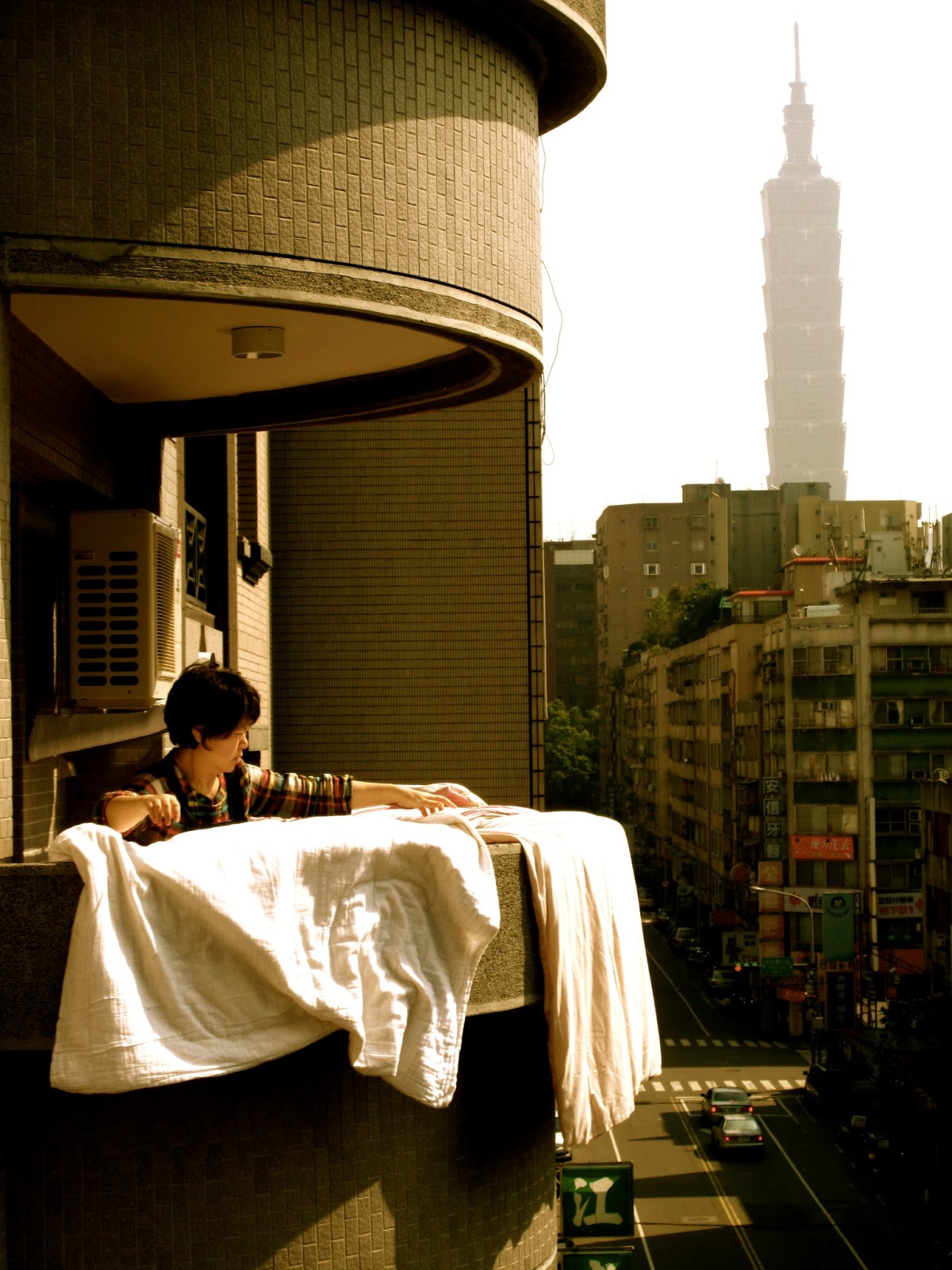
I was born upon thy bank, river,
My blood flows in thy stream,
And thou meanderest forever
At the bottom of my dream.
Henry David Thoreau
Continue reading “I Was Born Upon Thy Bank, River”
Travelogue: Philadelphia Hotel Night Shift
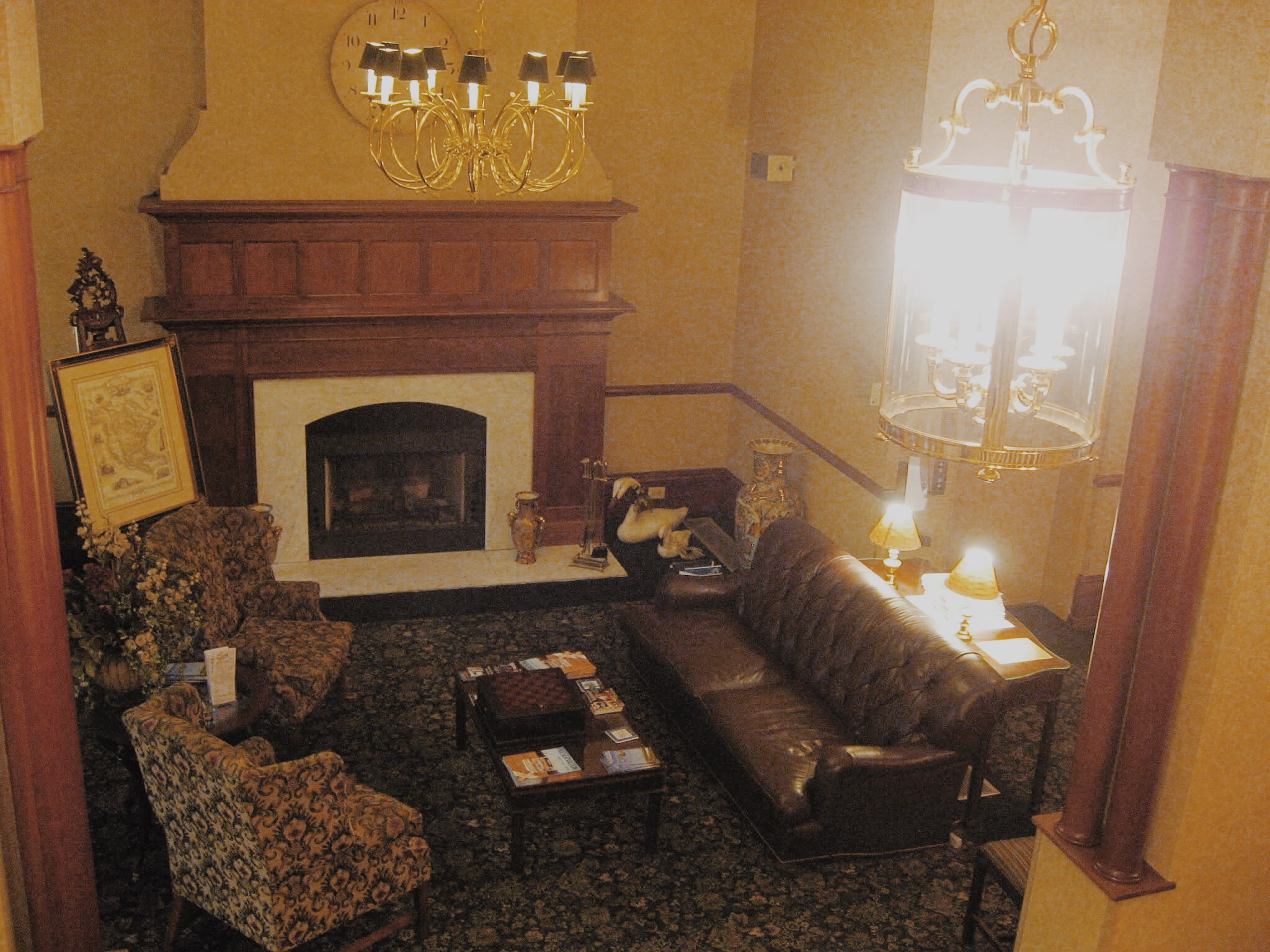
I’m staying at the Best Western Independence Park Hotel on the very quaintly named Chestnut St. in Philadelphia. Continue reading “Travelogue: Philadelphia Hotel Night Shift”
 VERY HIGHBROW