Orientation

It goes without saying that New Yorkers work hard. I am not yet a New Yorker – I remember Carrie Bradshaw saying in an early episode of Sex and the City that it takes, on average, ten years to “become” a New Yorker. While I’m enjoying myself right now (saying this warily before the first day of class and before the frigid terrors of east coast winter) I doubt I’ll give the city this much time. To do so means, judging by the harried masses that pass me by in the street on their way to important meetings and such, is to work much harder than I intend to while personal history and unexplored geographic predilections tell me New York is but the first of many stops. But for now, I have stopped here. For now, I am in New York.

Photo by Very Highbrow, edited with VSCOcam App. 

I arrived in earnest at 5AM on Monday morning, sleep deprived, with hairspray still in my ponytail, leftover from the wedding I’d been a part of over the weekend. I had arranged a pickup (Carmel Car Service, for those of you wondering which car service is most reasonably priced and reliable when visiting New York) to fetch me from JFK and was met promptly at the curb by a tall, lanky Chinese man whose skin indicated that he lived in a room with very little natural light and drove the evening to early morning shifts. He spoke passable English, passable because he’d lived in the States for over ten years, having spent the first five years working at his auntie’s Chinese restaurant in Minnesota before moving to the city for a driving job that promised more freedom and more money. But once in the car he confirmed he was from China and I switched to Chinese. This made him relax back into his seat a little, perhaps to hear me better.

“How long has it been since you’ve been back to China?” I asked.

“Haven’t been back since I left ten year ago,” he said.

“Ten years!” partly due to the haze of jetlag and fatigue, I could not fathom the implications of being away from home for so long. Though unsentimentally in his version of things, there wasn’t much to fathom.

He shrugged as though it were nothing, “I didn’t have reason to go back.”

“What about your parents? Did they come to visit you?”

He chuckled, “No, why would they come visit me here? There’s nothing to see here, really.”

“You haven’t seen your parents in ten years?” 

My jaw dropped despite knowing that his was and is a common immigrant story – my grandfather didn’t see his daughters for over forty years after the Nationalists fled to Taiwan – they were grown, married women with children by the time they reconnected with their father in Hong Kong in the eighties. They knew grandpa through the letters he sent, but that was it. By then grandpa had remarried a fourth time and had three sons.

But times are different now, aren’t they? Writing this just a week into my life here, I have spoken with my parents at least once every day and am planning their visit this November. I imagined his parents waving goodbye to a sixteen year old boy and embracing, or in more typical Chinese fashion, patting the back of a twenty-six year old man, some ten years later. I couldn’t do it. I wanted right then to be sitting in the passenger seat so I could turn and search his face. The right side anyway. But instead I looked out the window and wondered if my parents would notice anything different about me the next time I arrived in Orange county.

He had been heading home from Long Island, where he’d just dropped off an “old foreigner” when he received the dispatch for my pick-up. It was technically the end of his shift, but it was an easy job and he took it.

“It was on the way,” he shrugged, “And I don’t mind driving early in the morning because there is no traffic.”

His Chinese name was printed on the back of his seat, alongside his photograph, but he told me his English named was Michael.

A good solid name, I said, and he shrugged again, tapping his fingers on the steering wheel.

I was tired but didn’t see the point in sleeping. In less than forty minutes (Michael drove very fast) I would have to shake myself awake and summon the energy to haul my suitcases up five flights of stairs. I watched dazedly as outskirts of the city whooshed by, slowly giving way to denser clusters of buildings that couldn’t seem to decide whether to reach for the sky or stay closer to the ground. Michael kept the windows down, to save on gas? I don’t know. Maybe he liked the fresh air. I did too, that morning.

He guessed that I was coming to the city for work, but I shook my head.

“School.”

“What are you studying?”

“Writing.”

“I’m terrible at school,” he said without regret, “And writing.”

“It’s not for everyone,” I said.

His parents had hoped, I’m sure, that Michael would fare better in American schools when they bid him goodbye at the age of sixteen, but he didn’t. He didn’t finish high school, didn’t even contemplate college or technical school, and before he realized, he had turned twenty-one and knew only restaurant English. He had an uncle in Chinatown, New York who knew a cheap place he could live (less than $500 a month for his own room!) and who could get him started as a cab driver. But first he needed to learn a bit more English.

Michael likes driving – when I asked him what he does in his free time, he said, “Driving” – so saying yes was the obvious answer. He didn’t exactly study English diligently, but picked up enough to chat politely and understand where people had to go. Most of the clientele was white, wealthy.

“All the old foreigners have money for this sort of thing,” he said, “Mostly business men whose companies pay for it. They all pay with their company cards.” He made held up his hand as though he were holding an invisible credit card, “You know the company card?”

I nodded. I did know the company card. At the Company I had one which I swiped prodigiously for executives and their transportation expenses.

“I don’t really get too many Chinese customers,” Michael continued, “But if I do, they’re mostly young like you. I would never spend money on a car service like this. I’d get a friend to drive me.”

I chuckled, thinking back to how my parents hadn’t had time to take me to the airport.

“Can’t you ask one of the car services you used to use for the Company?” My mother had suggested.

It occurred to him that perhaps what he said was a little thoughtless and he gave me a brief glance in the mirror. My face remained neutral with fatigue and he said quickly, “But you just moved here, so of course you don’t know anyone.”

“No one with a car,” I said.

He has now lived in Chinatown for the past six years. On the days he doesn’t work or has just one or two pickups, he watches movies, plays basketball, and eats Chinese food because he doesn’t cook. He likes Taiwanese food, he told me, but did not proceed to get specific about which dishes. When working, he prefers the super early or super late shifts because he hates, hates traffic.

“You hate driving in traffic but you drive in New York City?” I asked.

All around, the sky was beginning to lighten and I could see Michael’s face more clearly. He didn’t seem tired at all, and he had been driving for the past six to eight hours. Much longer than my flight.

“It’s not so bad if you know the times to avoid driving. I let the older guys with families have those shifts. I like the quiet.” He waved at the open road ahead, just a few cars – poor slobs who had to get up earlier than the rest of New York – heading to work. Or perhaps heading home from the airport’s night shift.

“So you like this job,” I said, “Driving.”

“I do. I like driving, and it’s pretty flexible, the hours,” he sped ahead of a slow moving truck, leaning forward to do so, and then settled back, “My brother is very jealous of my job.”

“He’s here?” I asked.

Michael nodded, “Just moved here, but lives in Minnesota with my aunt and uncle. Works at the Chinese restaurant. But I tell him about my life here and he sees I have so much freedom. I make more than he does.”

“Why can’t he come to New York and be a driver?”

Michael chuckled, “His English isn’t good enough.”

We crossed the Robert F. Kennedy bridge onto Ward’s Island and a few moments later the imposingly complex building that was the Manhattan Psychiatric Center came into view. On my last trip back from the airport I had asked the cabbie, also Chinese, if it was a prison.

“No,” he’d said, “It’s for the people with,” and he tapped his brain and made a scrambling motion with his fingers. 

“The crazies,” I said in Chinese.

The cabbie, much older than Michael nodded, “The crazies. Lots of crazies in this city.” 

Then, I had given the barred windows of the center a wary eye, replaying the scene from Batman Begins when all the crazies are released from Arkham Asylum

But now, coming back as a new resident, the pale cream building seemed almost familiar, not unlike the neon Toshiba sign I pass on my way home from the airport in Taipei, or the Boeing building one sees off the 105 freeway in Los Angeles. Things that have nothing to do with my everyday life, but somehow, in their eye catching way, become the first concrete, assuring signs that home is not far ahead.

On FDR drive, Michael turned his face slightly towards me. 

“You have a boyfriend?”

I smiled, how inevitable this question was, to a young woman traveling alone.

“No,” our eyes met briefly in the rear view mirror.

As I am wont to do I imagined myself bringing home a cab driver.

“Mom, dad, this is Michael. He picked me up at JFK and the rest is history.”

I shook my head, smiling. This wasn’t what my mother imagined when she expressed hope that I’d meet a nice Chinese boy.

“Do you have a girlfriend?”

Now it was his turn to shake his head.

“No girlfriend,” he said, “I don’t have the time.”

Then, reconsidering the verity of his response, “I don’t make time, I guess.”

“Why not? Having too much fun in the city?”

Again, the boyish shrug. The shrug of boys everywhere who are oblivious to the hours, days and years they are shrugging away.

“What’s the rush? I’m so young.”

He turned right on 96th street.

“Only twenty-six,” I sighed, looking back at my own twenty-sixth year as though it had blurred past like the dawn-lit buildings alongside us.

He seemed to think he was reading my mind. Maybe he was.

“It’s different for women, I know. I know you women all want to get married at this age.”

I laughed, feeling like a jaded aunt or older sister. “I do want to get married,” I said, “But not right now. I just got here for school. But yeah, it would be nice to meet someone.”

On Fifth Avenue, he glanced at me again then focused on the road, shifting a bit in his seat. 

“But you’re probably looking to date someone… more suitable.”

I looked at him, knowing exactly what he meant but surprised he said it.

“Suitable…” I echoed.

“Yeah,” Michael shrugged again, “Suitable as in some of those old foreigners I drive around, or the other young Chinese men who wear suits and ties and work in an office. The ones with a corporate card. Not a cab driver like me.”

I didn’t know what else to do but laugh, “Not necessarily, but…yeah, probably not a cab driver.”

He laughed too.

“But you’re easy to talk to, and you’re young. You want to drive cabs forever?”

We stopped at a red light and he tapped his fingers on the steering wheel as though he were playing a set of drums. He was thinking.

“I don’t know,” he said, “I like it. I don’t think too far ahead. I’m going back to China at the beginning of next year to see my parents and see what it’s like there. I know it’s changed a lot.”

“It has.”

“But I like it here too. And I do like driving.”

The light turned green, and soon, we were coasting through the cool, leafy darkness of Central Park. It seemed like night again, and for a few seconds I forgot that we were in a city until we emerged again on 86th. Broadway. Then my street. Home-ish.

“You live in a nice place,” he said, parking the car and leaning forward to look at the building, “It must be expensive.”

Now it was my turn to shrug. I dug around my backpack for cash as he fiddled with the meter, “It’s not cheap. But that’s New York.”

“You could get a room in Chinatown for less than a quarter of what you’re paying here.”

“It’s too far from school.”

He waved his hand, knowing that was not the only reason, “Ah what do you care about the price of rent. You have rich parents who are paying for everything.”

He said it good-naturedly, honestly, and I laughed.

“Well, I don’t have a corporate card,” I said.

I handed him the cash and he nodded as it touched his hand, then got out swiftly to retrieve my bags. He hauled them to the curb and strode back to the car.

“Thanks,” I said, “It was nice talking to you.”

“Good luck in school,” he said, and smiling, “I hope you find someone ‘suitable.'”

I dragged my bags up the front steps and searched for the keys to the front door. It was 6:30AM. I didn’t hear the car start behind me and when I finally opened the front door and looked back, he was still double parked in the street. His head was bent down towards his phone.

It wasn’t until I’d gotten into my studio, huffing and puffing from making two trips up the stairs that I saw his text:

hi I am MICHAEL, who just picked you up. In Chinese, he typed this.

I texted back, Hi.

I am waiting for an old foreigner now.

You went to pick someone else up! I thought you were going home.

One more done, he wrote in English.

Well, I hope he doesn’t want to go to Connecticut!

Yeah, if you need some thing call me.

Thanks Michael, that is really nice of you 🙂 

HAHA, he wrote, try to make Real friend. His capitalization.

I wasn’t sure if he was telling me to or referring to himself, but I wrote back that it was nice to meet him and that I’d tell him if I came across good Taiwanese food in the city.

That is cool, he wrote, then a few moments later, still waiting stupid American.

I smiled to myself in my dim apartment. A stupid but “suitable” American, most likely. Always anxious to unpack immediately, I put the phone down and went to unzip my suitcases, then thought better of it. Orientation for school was in a few hours, at 1:30PM. I had six hours to sleep away the dark circles and shower off the last of the hairspray, to make myself presentable to potential Real friends. Somewhere in the city, Michael waited for both my response and a stupid American – and when the latter arrived and was delivered to his destination, Michael too, went home to his Chinatown apartment and slept.

New York is always somewhere else, across the river or on the back of the front seat, some place else, while the wind of the city just beyond our reach rushes in the windows. We keep coming home to New York to try and look for it again.            – Adam Gopnik 
Forwarded Humor

My mother told me two jokes yesterday. I was eating breakfast in the kitchen and she was using the computer in the dining room, which she has rechristened as her office. She sits at one corner of our long table where she uses her computer, corrects homework assignments, and Skypes with my brother. For anyone else it would seem a massive, lonely work space, but my mother manages to cover most of it with papers, Chinese workbooks, random notes and the occasional bowl of half-eaten oatmeal with an egg cracked over it (not very appetizing, if you ask me). This is also where she gets most of her information from the outside world, in the form of long-winded mass emails forwarded from friends and my father.

She knows better than to pass this cyber trash onto me. I have long since exiled emails from my father to a separate folder titled “Dad” but which could also aptly be called “Horrendously Time-Consuming Bi-lingual Junk Mail,” because for Dad, that’s the purpose of email. He still uses AOL, which is the digital equivalent of the Pony Express. He takes each email very seriously, as though it were a hand-written letter from a relative in China. Before, when he asked me, “Did you see that slideshow/essay/lengthy health report/etc. I sent you yesterday?” I would shake my head and say, “No Dad, stop sending that crap to me,” to which he would respond with an expression of hurt and indignation.

“I only send you the very best emails,” he would say, “They’re always informative or thought-provoking. You should take the time to read them if I’m taking the time to send them.”

I would tell him that I had better things to do. My father would become angry and petulant.

“Well I have better things to do too, than come home and make dinner for you” (if he came home to make dinner that day). And I would give him an odd look, because really. Really?

But I became tired of these arguments and sought to eliminate them from my days. I set up a separate folder: a small, Gmail Siberia reserved expressly for my father, and began to lie to his face. Now I always nod and say, “Yes yes, it was very interesting,” when in fact I haven’t the faintest idea what he’s referring to. It’s okay though, my father invariably provides clues. If it was a slideshow, he will say, “Those were some great photos right?” and I will nod, “So great.” If it was a report of some sort (usually warnings regarding the latest gang tactics – Asian parents love passing these around, even though they and most of their friends live in Newport Beach, Irvine, Cerritos or some other sterile, virtually crime-free city where their Benzes and Bimmers are more likely to be crashed by their Asian wives than vandalized by gangs) he will say, “Did you know that the gangs do this?” To which I will widen my eyes and say, “No! But now I do. Thank you.”

My dad never wants to discuss any of the emails at length. He just wants to make sure I see them. Hearing my response he will smile and nod, satisfied that he contributed somewhat to my daily intellectual digest. And saftey.

“See? I only send you the very best emails.”

At the end of the week I open the folder, give it a quick scan to see if dad sent messages specifically to me (there almost never are; if he has something really important to ask or tell me, he will call) and click “Delete All.” It gives my de-cluttering tendencies the slightest satisfaction.

My mother however, operates differently. She also takes those emails very seriously but rather than bombard my inbox, will call me into the dining room, disguising her intent with the same tone she uses when there is something wrong with the computer.

“Betty! Come quick!”

I usually put down whatever I’m doing and rush to the corner of the dining table. My mother is quite impatient when things don’t work (“Everything is doomed,” she likes to say, when really Gmail just needs refreshing).

But more often than not, the urgency of her call doesn’t match the urgency of what she wants me to see.

“Look at this adorable monkey!” (it was a slideshow of cute baby animals dressed up like human babies).

or:

“Look at this woman in China with no arms and four children! Look at her wash her face! Look at her gather vegetables from her field and wash and cook them!”

She will lean back, click to the next slide and sigh in wonderment, “Isn’t the human spirit amazing.” And there, the next slide will say in Chinese. “The Human Spirit is Amazing.”

As I am already there, at the corner, I can only nod and say, “Yes…” and wonder what it is that prevents me from taking the time to sit through these slideshows while my parents can raptly digest dozens a day. Is it a generational thing?

Sometimes though – and I’m learning to do this more often than to simply rush over like the idiot who believed the boy who cried wolf more than twice – I’ll simply pause what I’m doing, tilt my head and call back, “What is it?”

And my mother, knowing that what she wants to show me is not very urgent but if she doesn’t show me now, she’ll forget it and her daughter will somehow be at a unforgivable disadvantage, will say nothing.

I’ll say, “Mom? Mom?” And start to rise from my chair when voila, there she will be, in the doorway.

It won’t matter if she broke my train of thought – it’s more important that she keep hers. She’ll walk toward me and say, “I just now read a wonderful email…” and I’ll know that it’s story time. Forwarded email story time.

On Packing and Moving East

I spent the better part of the morning getting quotes on hypothetical cardboard boxes filled with clothes purchased over the years from Forever 21, Zara and H&M. By the United States Postal Service and FedEx, shipping would cost more than my entire wardrobe. By UPS, it is slightly less expensive, but only slightly.

“What would the value of the items be, per box?” asked the Indian man over the phone. He owned the UPS down the street from my house.

I did a quick calculation, estimating that the average cost of each item to be around $15. Subtract things like the changing of the seasons and the fact that no one ever buys “Vintage” fast fashion, I realized my clothes were probably worth less than a UPS cardboard box, which costs $8.50. I could basically put one hundred cheap polyester tops in each box and…

“About $200 dollars,” I said with as much resolution as I could muster. I felt then rather tender and generous towards my belongings.

I saw, via landline, the Indian man raise his eyebrows.

“That…is….” he wondered how to say it nicely, “Well UPS declared value can reimburse you up to $100 if anything happens to your packages.”

“That’s fine,” I said quickly. I wondered how severe the pangs of loss I’d feel if anything were to happen to my boxes. I imagined a small gang of bandits, each holding a medium sized U-Haul box, howling with glee and racing towards their appointed meeting place. Some misty bank underneath the Brooklyn Bridge. They would tear open the boxes, see bundles of brightly colored fabric and hoot – because you know, sometimes polyester looks like silk. They could make a killing on E-bay. One of them would beam a flashlight on the tags and they would all be crestfallen.

“Who the hell spends over $300 shipping Forever 21 crap across the country?”

After I’d bought the boxes (from U-Haul, because UPS is certainly a rip-off) I slid open my closet doors and was myself crestfallen. My studio in New York is sunny and bright. It has four windows, which is three more than in the other units I saw. It has a full kitchen with space for a small dining table and a standard refrigerator for the giant tubs of greek yogurt I will stockpile. It has a bathroom with a triangular tub, checkered black and white tile and a sparkling white sink. There is not much room to dance around in (something I like to do in my home bathroom), but it has a window through which lots of light can stream along with the gazes of other tenants, for whom, one Halloween, I shall prepare some “Rear Window” action. It has hardwood floors, high ceilings, soft, cream-colored walls and it sits atop five flights of long, narrow stairs. There is no elevator in the building, but exceedingly sturdy legs is a small price to pay for sunlight, quiet, and other things that keep you alive in the big city.

My studio also has the smallest closet known to man.

It is smaller than Harry Potter’s broom cupboard, smaller than the closets found on Lilliput. Smaller probably, than the island of Lilliput itself. It is, to quote a million people before me, a crying shame. My closet at home is already not enormous, but my father, when he remodeled the house, had shelves and drawers built in to maximize the space, which I maximized to the point of it being maxed out. I also have an enormous dresser and ample space under my bed. I don’t think I qualify as a shopaholic, but I have a lot of stuff. Some of it, my friends chide, for a life I don’t live. I don’t have plans to reinvent myself in New York, but I would like to wear my leopard coat and sequined jacket and borderline bordello-esque heels without someone staring, then hissing, “What is it, Halloween?”

I have a feeling that sort of thing doesn’t happen in New York and if it does, the speaker is probably homeless and insane, instead of a man dining out with his wife and kids.

But for now, my father is reminding me the definition of “essential.”

“Are these heels essential right now? Is this leopard coat essential?”

Nothing is essential, unless you make it so.

My father reminds me that I’m going there to study, not to strut around in stilettos and sequins doing God knows what.

“Yes yes,” I say, waving him away, “I didn’t buy all these clothes just to leave them in California.”

“Yes, but NewYork is a walking city. You must wear sensible shoes. And when it gets cold,” he looks dubiously at the leopard coat. It’s not real leopard (you’re welcome, leopards), nor is it North Face, “You’ll need to wear something warmer than this too.”

Mentally, I start to allocate shoes to one box. Loud coats to another. Sensible things I can roll up and pack into suitcases. Sensible things are to be worn when moving in, when going to class. When riding the subway. And after one is moved in, the not-so-sensible things can be taken out, pressed and worn on the town with friends after the sun has set. Senses are both heightened and on the wane. But this is exactly right; one does not move to New York to be sensible.

A Note on My Brother

My mother used to beat us. Not with anything laughable like a house slipper or the fleshy palm of her hand, but with a thick belt made of genuine cowhide. If we were very terrible (lying, talking back, getting C pluses on math tests), she would use the buckle side. Before you call the cops to make a retroactive arrest, just know my mother will shrug and say, “Did I? I don’t think so. I remember Betty and Howard being quite good kids. They didn’t need much discipline.”

My mother is now, having just turned sixty, the most placid creature one could ever meet. She moves glacially, speaks softly, feels tenderly about many things, including fundraising emails containing slideshows of starving children, paraplegic single mothers in rural China and wide-eyed baby monkeys in children’s clothes (Really. She once called me into the dining room to look at one such image). Now, imagining her wielding a belt to strike anyone is about as comical as picturing my father sitting through an entire ballet without snoring once. Also, the bruises and welts have long faded; I wouldn’t have anything to show the cops. I would seem like an evil spinner of twisted tales.

But ask my brother. Ask him. He’ll corroborate my stories. 
My brother is the reason I still have skin. He was the obedient one, the silent sufferer who would cry and bear it if my mother decided he’d overstepped. I don’t remember him being beaten very often, but when he was, it was terrible. There wasn’t much I could do about it but stay crouched outside the door, sobbing silently to myself and…hoping, obviously, that I wouldn’t be next.

My mother had a simple rule when it came to physical punishment: she would only hit us if a.) we talked back or, b.) we lied. I was terrible at lying but very good at talking back. My brother never talked back but was terrible at lying. And yet he found odd occasions to lie, especially when the lie would most certainly be discovered. His biggest lie as a child (as far as I can remember) was not so skillfully changing a D to a B on his report card. In his room with the door open. He did this around the same time my mother walked in to see if he was doing his homework.

That was a crazy night.

But on average, the likelihood of my getting beaten during any given week was much greater than that of my brother’s. I was snarky, opinionated, stupidly self-righteous – that is, attuned to rights every child should have, which I foolishly thought included that our parents should love us unconditionally, regardless of our grades or opinions.

“Why do I have to go to Chinese school? I’m American.” 
“You’re Chinese-American,” my mother would reply.
“I have an American passport. I’m American and it’s a free country and I don’t want to go to Chinese school. You can’t make me.”
“Wait here. I’m going to get the belt.”

“My American friends’ parents would never hit their kids over a C+.”
“Well, we’re Chinese and we don’t get C’s. Especially not in math,” my mother would say.
“You’re supposed to love me regardless of my grades. Love me for me.”
“This has nothing to do with love. You’re terrible at math and it’s embarrassing. For me. Wait here. I’m going to get the belt.”

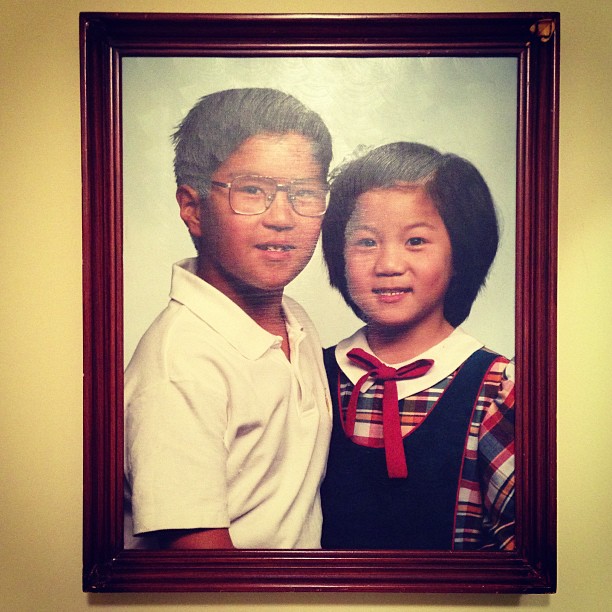
It’s obvious who was better at math (hint: glasses). 

And this is where my brother the hero would come sweeping in, shielding me from both my mother’s eyes piercing with rage and the belt.

“Get out of the way,” she would say, “This has nothing to do with you.”

My brother would speak calmly. It is the only way he knows how to speak. “Mom, you shouldn’t hit her. You should explain to her what she’s done wrong.”

“I’ve already explained too many times and she doesn’t get it.”

“Hitting her won’t make her get it more.”

If my mother recognized my brother’s brave heroism, she didn’t show it. Instead, she’d snarl for him to get out of the way lest he wanted a beating as well.

And my brother, probably just eleven or twelve, would quake, but he would hold his ground.

“No,” he would say, “No, mom. This isn’t the right way.”

How many of your siblings would have done the same? How many of your siblings would have stood their ground and calmly convinced my mother to back off on your behalf? More than a half dozen times, in the history of my brushes with corporeal punishment, my brother came to my rescue and literally saved my ass from my mother’s belt (one, incidentally, I never saw her wear). He encouraged my mother to use reason, something my father, Mr. Reasonable (but also, Mr. Chinese Man who culturally doesn’t often have a hand in disciplining the children), wasn’t around to do. As we grew older I began to see just how different my brother and I were, and just how essential his beloved “reason” was to my personal development.

My brother could see, from his lofty perch five years ahead, exactly where I stood, but he had long mastered the art of, “It’s not worth getting into,” and “Just let it go. Just let it be.” He’s never bossed me around – I cannot recall a single moment in which he has said, “You should do this or be more like this or stop being like this,” unless of course, I solicited his opinion and then ignored it. While the number of times I’ve forced my opinions upon him, pointed my finger at him to instruct him to do something, is somewhere in the trillions.

At the core of my brother’s worldview is that people will do whatever the hell they want. For them, their way, regardless of how you see it, is the right way…even if it turns out to be a disaster. They chose their path. They dig their own grave or…build their own stairway to Heaven. Save your breath, your energy and the throbbing red you see when someone does something contrary to what you want. Save the blood for something else; you can only control yourself.

My mother tried to beat me into a better math student. Guess what? Sixteen years later, I still scored in the bottom 25% of the nation.

A hundred people tried to talk me out of dropping out of college, but my brother, acknowledging that I needed the time, merely shrugged when I told him. He flew to New York to take me home.

In Manhattan, I greeted him at what was probably my heaviest weight and instead of saying, “Oh Jesus you got fat,” which is essentially what I say each time I see him, he said, “I think you look fine.”

Our flight back was the same time as my last final. I proudly carry an ‘F’ in astronomy from NYU, knowing that while other people were scratching their heads over Orion and Uranus I was in that very sky, sitting at my brother’s side, feeling safe and loved.

When I turned twenty-five, my brother called me from Shanghai from a number that showed up “Unknown.” I didn’t pick up. He left a message in his trademark monotone. Later, when we finally did speak, I told him the “Unknown” had scared me. It was weird to see it on my phone and I was already on the cusp of so many unknowns. I didn’t need my brother’s birthday phone call to wear the same mask. My brother took note. When I turned twenty-six, he called from his US number, which shows up “Guh” and costs ten million times more. It was the tiniest gift, but he remembered, and I smiled for a long time after we hung up.

He laughs at my jokes. Generously gets my humor more than I get his, and saves me face, neither confirming nor denying and simply chuckles when I say, “You’re my number one fan, Guh! You like watching “the Betty Show!”

When people meet my brother then meet me or meet me then meet my brother, they have a hard time believing we’re related. I’m loud and have close to ten million different expressions (all ten million of which I think only my brother has seen) and mask my apparent lack of femininity by moving like a robotic Jackie Chan.

“Howard,” some people have said, even if I’m standing right in front of them, “What’s up with her.”

My brother shrugs because he knows some people are hard to explain.

“That’s my sister,” he says, “Yeah, she can be kinda manly, but she’s cool.”

I not so secretly consider myself more emotionally astute, wittier, and wiser about things like what constitutes a healthful diet (he once asked me, “Does a potato have carbs?”), but he’s perfected his temperament and patience to levels I could only wish for. I’ve tried to change him – “eat less! Be more open about your emotions!” But he won’t budge. And why should he. He’s my brother.

He’s never tried to change me. I am who I am today in part because of this. He’s zen without really knowing what Zen means; a big brother without being Big Brother.

He’s also just turned 32, married, and living in Shanghai, China, where Blogger is blocked and where I think his birthday is coming to an end. He probably won’t see this until the next time he signs into Facebook via some complicated illegal network; hell, I’m not sure he even reads my blog. But it’s his birthday, so I thought I’d paint you guys a picture.  

Nail Polish

This afternoon I brought over a bottle of nail polish to grandpa’s house.

“What is that for?” He asked, seeing me place it on the table.

“I’m doing my nails before we leave for Las Vegas.”

He grunted at this admission of superficiality then turned on the television.

A while later, he turned to watch me put the finishing touches on my toes.

“You’d better wash your hands after touching your feet like that,” he said.

I smiled punkishly and screwed the bottle closed. “I’ll just wash them okay,” I said, “Just before I serve you lunch.”

Suzanne Valdon (1865-1938)  Jeune Femme Assise  Oil on Canvas    

After lunch, the polish was dried and I lifted my feet to show him. They shone a bright glossy red called “hip-anema” (by Essie, in case you’re wondering), and I was quite pleased with the result.

“What do you think?” I asked him, wiggling my toes in the air in a fashion rather unbecoming of a twenty-seven year old lady, at the lunch table with her grandfather, no less.

He barely glanced at my feet and shook his head, continuing instead to work his teeth with a toothpick.

“You don’t like it?”

“No,” he said simply, but I could tell he was trying not to smile.

I shrugged and rose to clear the table for dessert, a vegan coconut pecan cream tart. I didn’t tell him it was vegan. Surprisingly he liked it. I refilled his tea and peppered him with some questions about his time in the army. There were, during the lighter times, coconuts and a monkey named Hey Hey.

Finally he looked at the clock. One PM – nap time. He made his way towards the living room while I flopped down on the couch in front of the TV. I put my feet up on the opposite armrest and gazed at them. Kind of like navel gazing, but further away. The early afternoon sun glinted off my freshly painted toenails and beyond them, grandpa’s hunched, sleepy figure was about to turn the corner. 

I wasn’t satisfied.

“Grandpa!” I called.

He paused but didn’t turn around. A mottled hand rested on the wall for support.

“You really don’t like my nails?”

He turned his head just slightly, one foot on the single step that led to the living room, “No, I do not. Not even a little bit.”

“Oh.”

“But it doesn’t matter what other people think,” he said, a yawn creeping into his gravelly voice, “As long as you like them.”

“But I really want you to like them,” I whined.

He lifted the other leg to turn the corner and chuckled with the confidence of a man who knew when his opinion mattered. In this case, it did not. What mattered was that he played along. And splendidly, as Grandpa does, he played along. 

“Well,” he said, disappearing behind the wall, “You are asking too much.”

That Betty

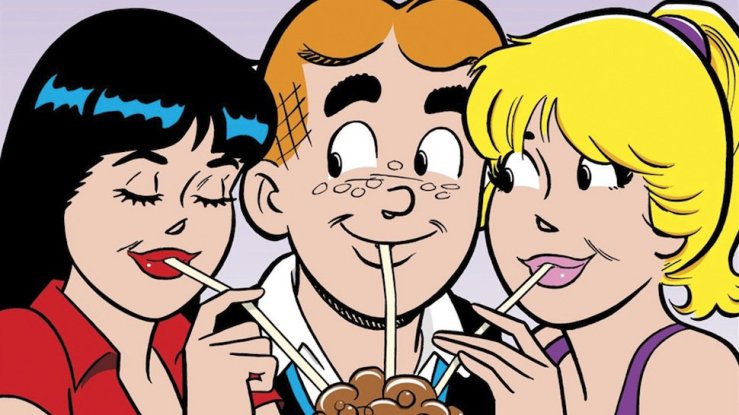
Archie Betty and Veronica
A blonde Betty. 

The Post Office in my home town was, up until she retired just a year ago, most often (wo)manned by a lady named Betty, aged sixty-some years. She is a proper Betty, meaning she was born in the forties, a time when the name “Betty” was quite popular for baby girls for whom their parents had grand dreams. These Bettys would go to college, marry well, start families and most likely not name their children Betty. By the time the later decades rolled around, there were other names were more in vogue. Continue reading “That Betty”