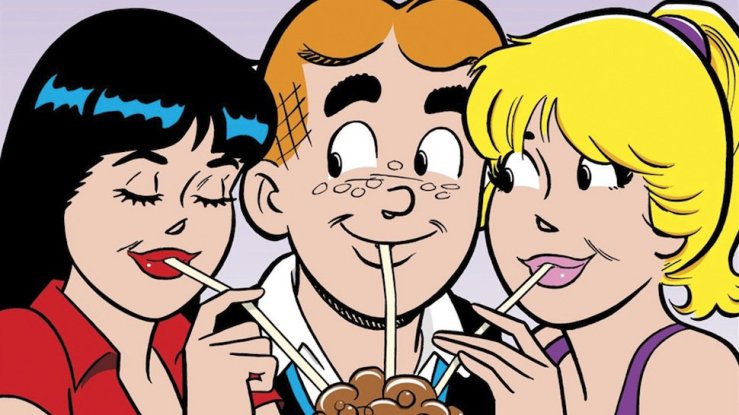
This Is Not A Relationship

My cousin Melody is not dating a guy named Jim.

She’s not dating Jim, so he pretty much follows her around everywhere they, or mostly Melody, wants to go.

She’s not dating Jim, so he drives her to these places in his BMW.

She’s not dating Jim, so when she found an unpaid internship about a 15-minute drive away, she decided that rather than spend money she wasn’t earning on cab fare, Jim would work around his class schedule and find the time to drop her off and pick her up. Sometimes, on the way home, she’ll ask him to get her something to eat. He always does. He complains about this “abuse” she inflicts upon him but really (and everyone knows this) he does it to himself. He’s in love with her. Otherwise, he wouldn’t do it.

They take trips together, to New York, Montreal and Mexico. They eat at nice restaurants, go sightseeing, probably hold hands and kiss.

If there was a drug that made him feel the way Melody does, he would take it. I should tell Jim about Xanax.

But she’s not dating him. According to Melody, they’re just friends.

“Jim knows too,” she tells me, “I told him.”

And I nod, though as the words leave her mouth I am certain I can hear the sound of Jim’s heart tearing.

A few weeks ago Melody called to say she was coming to New York for a career fair. She’s a student in Boston, studying business something-or-other and sometimes the school suggests they go to career fairs in New York, where they’re supposed to network with potential future employers. But the networking events are dull, awkward and futile affairs and most of the students go with the fair as an afterthought. They mostly just end up meeting up with friends or, in Melody’s case, a cousin in the city.

I suggested afternoon tea at Bergdorf Goodman. It’s a girly thing to do. We’re both girls, Melody a considerably more accomplished one than I.

“Sure!” she said, “And I’ll be bringing my friend. You know, the boy.”

I did know, remembering a conversation we had during the summer, when we were both back in Taipei for my brother’s wedding. Melody had just finished her first year of graduate school and had not, as she put it, “met Mr. Right.”

I was doubtful. From her Facebook photos it seemed like she was constantly being swarmed by guys, most of whom I was sure harbored not-so-secret crushes on her. And then there were the photos she posted of her many excursions outside Boston in which she was the only one photographed, smiling sweetly into the camera from across the table at a fancy restaurant or in front of some tourist attraction. In my experience, girls traveling together usually take photos together. Couples traveling together even more so. It’s weird not to. But when you’re traveling with a guy you’re not exactly dating or even considering dating, taking a photo together is weird. So Melody’s photos were snapped by some adoring fanboy who didn’t mind taking multiple shots from multiple angles and who, at least in theory, didn’t mind not being in the photos.

Click. And the heart tears a little more.

“Really?” I pressed, “You’re not dating anyone?”

“Not really,” she said, shrugging.

“Melody. C’mon.”

“Well, there’s a boy,” she said, using the Chinese term for “younger boy” or “little brother.”

“A boy?”

“Yeah, he drives me around. Nice guy, but just a boy. Seriously, it’s not serious. We’re not dating.”

I laughed, unsurprised and already getting the gist of things. The photographer was the boy was Jim. But still, I wanted specifics. Melody is sometimes a treasure trove of feminine mystique.

“He drives you around?”

“Yeah. He has a car. He’s nice, comes from a good family who does real estate like ours, but I’m almost two years older than he is…” she shrugged and twisted her hair, jutting her chin out in the half-pout she has when she’s mildly dissatisfied with some person or situation, “…I just don’t date boys.”

“So you’re not dating.”

“No no. Not at all.”

“So you’re just friends with this ‘boy.'”

“Yeah.”

“Is this the guy you went to Canada with?”

“And a few other places, yeah.”

“Just you two?”

“Yeah.”

“He’s in love with you.”

She shrugged again, “I told him we’re just friends.”

“And still he just drives you around.”

She nodded blandly, “He doesn’t seem to mind.”

“Amazing.”

René Magritte,  La Trahison des Images, 1929  Oil on Canvas    Los Angeles County Museum of Art

Melody, despite her euphonic name and sweet nature, is a hammer head attached to a scalpel. She hits these poor fellows with her long limbs, pretty face, and care-free nature then slices their hearts open with the deft hands of a gifted neurosurgeon. But imagine a neurosurgeon who doesn’t know she’s a neurosurgeon. She’s a particular breed of female who always, wherever they go, leaves behind them a river of tears, like that Justin Timberlake song, except less spiteful. The tears are not Melody’s but rather those of young, ideal-driven men who’ve been dumped and told to stop calling but who still follow her around like crack addicts with empty pipes.

Girls like Melody don’t merely break hearts. Love is never simple, and neither is lust. Melody’s MO, blithe as she is to it, is thus: she fills these hearts with promises she never makes but subconsciously hints at by merely glancing, smiling, chatting benignly with these guys – all these little, meaningless interactions point, in the lust-struck brain, towards more substantial promise: the promise of Melody’s undivided attention, of requited love and adoration and somewhere down the line, of a relationship.

It feels like love, it feels like attention, it feels like affection, but the hitch of course – and isn’t there always a hitch? – is that the feeling is always one sided. It’s a dense, heady mist upon which the love story the guy wants to see is projected. But at some point the film stops rolling, the mist dissipates, and he’s standing alone in the cemetery holding a can of soda she wanted but didn’t drink, amidst the remains of other deflated hearts that crackle like empty Doritos bags.

But being objective, I see, as I’m sure you do, that the guys do it to themselves (as does everyone else who’s dumb in love). Melody is loved and in return, she mildly likes, with no particular ill-intent. It’s always, if you ask these girls, kind of an accident.

It’s like taking a walk after a spring rain and coming across a snail or worm on the sidewalk. They don’t really noticing and step down lightly though not lightly enough. Melody always hears the crunch beneath the soles of her Havianas sandals (her footwear of choice as she’s nearly 5’10) and she’ll look down and say, “Oh shoot.” But like the rain, the moment passes and she shrugs. “Nothing to do about it now.” She wipes her feet in the grass a bit and walks on.

So Jim, whom she is not dating.

They’re not dating, so Jim drove Melody all the way from Boston to New York for a career fair only she signed up for. He told himself he could visit friends while Melody (and the two other people whom Jim also drove from Boston at Melody’s behest) went to the career fair.

They’re not dating, so when Melody told him he was going to afternoon tea with her and her cousin, he nodded sure even though he hates tea, hates sandwiches, and hates sweets. He hates those things doubly when he’s hungover, as Jim is when I meet him.

They’ve arrived at Bergdorf’s a few minutes before me, and are sitting across from each other. Melody has her back to the window that faces Central Park and a full view of the dining room. Jim faces Melody, so that she’s the only thing he sees, her pretty face glowing by the light of the window. Seeing me, Melody calls out, “Hi!” and Jim turns around. He looks as though he’s just woken up.

“I’m Betty,” I say.

“Jim,” he says.

“The boy,” I think, and take a seat next to Melody, but not before raising my eyebrows at her in a knowing way. She smiles at me. She knows what I’m thinking, but mostly I’m feeling sorry for Jim and marveling, as I do, at Melody. Another girl would have thought the situation awkward and avoided inviting Jim altogether – why bother with the explaining? – but Melody, and this is part of her charm, tells it like it is. We are not dating, her eyes tell me, this is just afternoon tea with my friend and my cousin.

So this is Jim. The boy. Dressed like a boy. He’s wearing a striped Abercrombie polo, the polo shirt of choice of guys from Taiwan his age and of a certain mindset, which is, “what everyone else is wearing/doing/dating.” He’s more tan than most Taiwanese boys, though this could have more to do with his heritage than actually spending time out in the sun. His head and all the features on it are round. Round eyes, nose, mouth. I can’t decide if he’s cute in a homely way or homely in a cute way. He’s certainly no Adonis, but there’s something comfortable and non-judgmental about his open face. Still, he’s obviously scored a trophy in not dating Melody. And, a few additional points for Jim: he’s more sturdily built (though far from built) than most Taiwanese guys, who all seem, at least when I visit the island, to be on some culturally induced famine.

Despite being only twenty-four and still a graduate student however, Jim seems to have already sunk one foot into middle age. It’s an affliction of young, wealthy Asian men who have too much money and as a result, too little motivation to do anything but get away from overbearing, nagging mothers and find respite in girls like Melody, who don’t nag, not really, unless you’re late picking her up. In which case, you’re in for it. But for the most part, Jim is never late. Jim’s going soft around the middle and probably, in the brain. I guess his main ambition in life at present is to keep Melody happy.

I look at Melody, who despite her easy, languid smile, seems merely content in the specifics of the moment, still a few steps away from happiness.

We look at the menu, though really there’s nothing to think about since we’re here for the afternoon tea, which comes in a set. We just have to choose the tea.

“I’m not big on sweets,” says Jim, thrusting the menu towards Melody, “My secretary can choose for me.”

A comedic attempt to assert his dominance, which Melody quickly shuts down.

“It’s tea you’re choosing, my dear chauffeur,” the hammer says, “The sweets are set.”

Jim is hungover from karaokeing with friends the night before. Melody and their other friends stopped drinking early on and Jim felt it was his duty to block for Melody the alcohol that seemed to keep on coming. But apparently Jim wasn’t as drunk as one of his friends, who was smoking a cigarette and then when he turned to exchange some slurred words with Jim, stuck the cigarette in Jim’s face. Which explains the odd-looking birthmark right under Jim’s left eye.

“It’ll scar,” I said, showing him a cigar burn on my right forearm which I got from my freshman roommate at NYU. She wasn’t drunk. We were walking and she was smoking a cigar and she put it down rather carelessly right where my hand was swinging. I forgave her.

“I did it for her,” he said, pointing indignantly at Melody.

She shook her head, “You did it to yourself.”

He looks at me in mock-protest, “See how she abuses me?”

I laugh, shrug, then launch into the barrage of questions I ask everyone when I first meet them, especially when they’re not dating my cousin: Childhood, schooling, parents, siblings, professional aspirations, general philosophies.

Jim’s father passed away when he was in the fifth grade and his mother raised him and his older brother, though they have a huge family on either parent’s side, so his mom had a lot of help. She sounds like the typical over-bearing Taiwanese mother-in-law, every other word out of her mouth attached to a nag. The last time Jim went back to Taiwan, he changed his flight and returned to the States earlier than he’d planned. In the States, he’d gotten used to not having to hear his mother’s voice all the time.

Jim has an older brother also in the States. According to Jim, they have very different personalities. His brother is an introvert. Doesn’t like partying or drinking or, I’m guessing, chasing after pretty girls.

“My brother loves to say, ‘Please, not now. Please just do not bother me.'” Jim says puts his hands up and grimaces in an imitation of his brother, “We are very different.”

After high school, he moved to the US for college in Hartford, Connecticut. His English is pretty good, but could be better considering how long he’s been here, but then he’s made friends with pretty much every Asian person in Hartford and now Boston, and through a few key acquaintances, many more friends in Flushing, NY.

“He knows a lot of people,” Melody says almost proudly, then pauses, “Well, actually, he knows like this one really fat guy who knows all the Chinese people.”

Jim nods as a matter of factly, “Yeah. I do. That one fat guy.” Jim points to the cigarette burn, “He gave me this. But he’s a good guy. Good times.”

And grad school? He shrugs, assuming I already know the answer. I do. Kids like Jim (like Melody too and to some extent, myself) go to grad school because it’s a.) what everyone else is doing – like wearing Abercrombie polos, b.) supposed to bolster your job prospects c.) a safe haven or one last hurrah before you’re actually ready to start working in the real world. Jim has never worked before, and this is something Melody has an issue with. Even she has spent two years toiling away at a Taiwanese bank after graduating from college.

“I’m into real estate,” he says, “That’s my family business background, and I’d like to learn more, but honestly, trying to find a job or an internship here is so damn hard, and it’s really easy to lose motivation. That’s when I admit to myself that yeah, I’m just another spoiled kid without too much drive.” He chuckles as he says this, and I find myself nodding along to his honesty.

“But,” he continues, “I do want to learn more. It’s the one thing I’m pretty much consistently interested in.” (Besides Melody, I want to add).

“Why are you so good to her?” I say jokingly, when he’s listed all the things he does for her on a daily basis, most of them involving driving and waiting and driving some more.

“I’m good to him too!” Melody protests, “I do his homework for him!”

I look at Jim, so this guy’s getting something out of it too – if not a girlfriend, then perhaps better grades.

Jim nods like he can’t argue with that.

“I’m no good with numbers,” he says, “She definitely has a better grasp of all the projects and stuff we do.”

I stare at Melody, unable to hide my surprise. She’s not exactly known as the brainy one, but then again, when your older sister placed first in the nation for the grueling college entrance examination and then graduated as the top electrical engineering scholar at the nation’s best university (things like this are a huge deal in Taiwan where test scores pretty much predicate your success as a human being), it’s easy for the rest of the world (and to some extent, the family) to remember that you have a brain at all.

“So you do all his homework?”

“No,” Melody says, “But if we have a project, which is all the time, we divide up the assignments and I’ll just take on more of the work load because – (she waves dismissively at Jim, who shrugs like “What can I do?”) – he just takes forever and the quality of his work is not as good.”

Interesting. I look at Jim and think, “Well, you drive her around and she makes sure you don’t fail out of the program. Sounds like a fair-ish trade.”

He shrugs and rolls his eyes, but smiles, “Haha, I guess.”

Then I ask the cruelest question of all, but I feel like we’ve reached that point where it’s okay. It’s probably not okay, but something tells me Jim can take it.

“So,” I look at Jim, “You drive her around. And you,” I look at Melody, “Do his homework for him. You guys take a bunch of trips together, and spend most of your time together, studying, hanging out, whatever.”

They nod. Yes, yes, yes.

“But you’re not ‘together.'”

They shake their heads, Melody slowly, and Jim more jerkily.

“So you guys have some kind of agreement.”

“That’s right,” Melody says.

Jim is about to say something, then stops. He breaks out into a sheepish grin, having decided, I think, that he can be honest here. He’s in a safe place: the sunlight dining room of the Bergdorf Goodman restaurant, seven floors above the swarm of tourists, half of whom are congregating outside the Apple store, lining up for the new iPhone.

“She doesn’t love me, ah,” he says, “She doesn’t love me so that’s the agreement. What can I do about it?”

I am surprised and not surprised by this honest declaration, and my fondness for the boy grows. I look at Melody, who rolls her eyes but in an endeared way, if that’s possible.

“Oh shut up,” she says.

“She always complains that I’m ruining her game,” he says.

“You are! How am I supposed to meet Mr. Right if I’m sitting in your car all the time.”

“I’m driving you places!”

She laughs, “True, true.”

“Besides,” Jim says, “You’re ruining my game too.”

“But Jim,” I point out, “Melody is your game.”

He thinks about it for a millisecond then concedes, “She is, she is.”

He looks fondly at Melody, who can’t help but smile back.

Jim smiles a lot, a weird confident thing. He’s not afraid of losing her, I realized, at least not outwardly so. There’s nothing careful or uneasy about him. He doesn’t tiptoe around her nor does he shy away from my questions which can come off as prying because they are. But thus far, despite their ambiguous (unstated) relationship status, Jim takes them all in stride. None of them seem too personal for him to answer, and he does as a matter-of-factly, with a wry smile. His father’s death, his mother’s reaction to his father’s death, his odd brother, his vague career plans, the cigarette burn mark on his left cheek, and the fact that Melody doesn’t love him back. These are all facts of life.

But Jim is smarter than he looks and more self-assured than how I first imagined him. He’s playing solitaire for now, hoping she’ll one day see him in the light he wants her to see him in. And Melody too, is far from brainless. She likes Jim, I can tell. Despite her reservations about his age and the fact that they’re roughly the same height, she likes that he’s not a pushover, and that he’s open. She hasn’t met his family but from the sound of it, they’re not too different from ours. This sort of thing matters in the long run. And lodged somewhere in the chords her fine-tuned feminine intuition, she knows he’s a good guy with potential. She’s waiting for Mr. Right, but if she’s lucky and if Jim is smart, he’ll become Mr. Right. They’re both playing the long game, just using different investment techniques.

A server in a white coat comes by to replenish our tea, but they need to be heading back to their hotel soon, to pick up Jim’s car and the two other people they came with. Jim is feeling less hungover – he barely ate any of the sandwiches but already he’s wondering what he wants to eat for dinner. Something more substantial than tea and small sandwiches.

The check comes and Melody pays for Jim’s portion.

“I’ll figure it out with you later,” she says quickly, motioning for Jim to put his card away, though I know she won’t.

As we step out of the restaurant and wait for the elevator, I turn and realize Melody is also wearing a shirt from Abercrombie. And white cutoff shorts. And her Havianas sandals. Jim is wearing shorts and sandals. She’s tall and he’s not-so-tall, so they’re roughly the same height, and there’s something about their expressions, the two of them standing easily side by side that seems picturesque in the most stereotypical, young Taiwanese couple sort of way. But they’re not a couple. They’re not dating. The elevator comes. We step in, go down, step out. I hug Melody and, just for the hell of it, hug Jim. I may never see him again because Melody might decide to pull out of the game. She might meet Mr. Right at a gas station on her way home, or in her next class or at her next real job – a lot can happen. Jim could get tired of driving, though I think the former scenarios are more likely. But we hug and make vague plans for me to visit Boston.

“I’ll see you then,” Jim says, “We’ll go out with my friends.”

“Thanks,” I say and find myself wanting to add, “Hang in there, Jim. Because you never know.”

I wave them out and watch as they walk past racks of expensive handbags towards the revolving door. Watch a boy and a girl wearing Abercrombie shirts and sandals, holding hands and stepping out into the city. You never know. You never know.
Fat Cat Is Dead

On Sunday morning, my cousin Karen in Taiwan Whatsapped me a single line.

“Betty, Fat Cat is dead.” 
That was it. There were no emoticons or explanations, just a simple declarative sentence that conveyed a history that spanned some sixteen or seventeen years and a loss just short of devastating. The statement itself was something inevitable, but very hard to imagine. 
I typed back quickly, saying that I was sorry and that it would be okay because Fat Cat had had a good life. She didn’t respond. 
I thought back to a conversation we had on the sixth floor in my cousin’s room, probably around midnight some years ago.
“I will be very sad when Fat Cat passes away,” my cousin said, “I know it’s right around the corner.” 
At the time, Fat Cat was still fat, but not decrepit. He moved slowly if at all because he was lazy, and only sped up when one of my cousins walked into the kitchen, towards which he would suddenly charge, drawing upon the generous but seldom used reserves in his flabby belly. When I visited, which was often, Fat Cat followed me when I strolled into the kitchen, hours after my cousins had left for school or work.

“Meow,” it would say, and rub against my ankles, “Meow.”

In Cat-speak, this means, “I will love you for the next five seconds if you’ll take some canned cat food and put it in this here bowl.”

But I am not one to feed fat things, and so very rarely was Fat Cat ever nourished by me.

My cousins Karen and Larry, my aunt, and even, in a more removed, hands-off fashion, my uncle, had been very good to Fat Cat, a pale yellow and white tabby Larry had rescued many years ago when he was in high school. Fat Cat was such a hit amongst the members of that sixth floor nucleus that a few years later, Larry brought home a dark-furred stray that would aptly be named “Little Cat.”

With a master named Larry, one could hardly argue that his pets ought possess names with more flair.

Compared to Little Cat, Fat Cat was obviously much larger, less active, more blasé about life because he had a few years on Little Cat, was rescued first, had seen things Little Cat could only imagine. Little Cat was much scrappier than Fat Cat, who though born in the feline slums of Taipei, harbored an innate  and perplexing sense of entitlement. It was as though upon setting foot into the 6th floor apartment, he washed his paws of his past and developed almost instantly a taste for expensive canned foods. None of that pellet crap for him. Perhaps in a past life he had been the obese Queen of some weird tape worm tribe because Fat Cat definitely had something odd going on in the gut. He was never ever full and would have, had my cousins allowed it, eaten himself to death. A poster cat for the grossest sin of gluttony. But still, he had his moments.

I have a picture with Fat Cat when he wasn’t fat, and was just “Cat,” because he was the only one. I am about twelve or thirteen, wearing a worn-t-shirt and baggy athletic shorts and hair in a messy ponytail, strands framing my young, open face. During later summers, when I too was Fat, Fat Cat and I would pass each other in the cool hall of the 6th floor and I would think, turning to glare at his quivering haunches then down at my own, that “Fat Cat, you and I have both seen better days.”

But in the photograph, taken in the same summer of Fat Cat’s arrival, I am athletic, bright-eyed, an animal lover. I’m clutching Fat Cat close to my cheek, grinning at the camera while Fat Cat, in a slender and more awkward version of himself, looks unamused. His front legs are splayed out awkwardly and his legs are dangling uncomfortably above my crossed legs. His expression states quite plainly, “What the f***.” It was not his best photograph, but he needn’t have worried, for my cousin Karen made certain to photograph Fat Cat at least one thousand times a year, so that nearly his every non-movement is recorded for all eternity. Here is Fat Cat lounging on the chair. Here is Fat Cat lounging on the other chair. Here is Fat Cat sitting on Karen’s bed. On the other (my) bed. On Larry’s bed. Here is Fat Cat with Larry in college, who physically, is going the way of Fat Cat. Note the look of tenderness and adoration on Larry’s otherwise, at any other moment, dull and inexpressive face. If Larry loved any one thing more real than Star Trek, it was Fat Cat, upon whom he showered with slobbery, affectionate kisses that would make even his girlfriend cringe.

Here is Fat Cat in a mess of blankets because it is cold. On the floor, paws skyward, fleshy white belly undulating like a water bed because it is hot. Under the kitchen table, like a pervert. Peeking over the kitchen table, tiny pink tongue lashing out above the class, tasting about for my aunt’s broiled fish, which she inevitably, at meal times, will debone and put in a tidy little pile for him to lick up. Here he is looking up from the kitchen tiles, because he is expecting to be fed. And here, utterly full in gluttonous splendor, sunning himself on the balcony in the small woven basket he barely fits in but somehow still does, rolls of fur spilling over the basket’s edge.

Is he comfortable? Seems like it. Fat Cat Fat Cat Fat Cat. Click click click. And each year, he gets a little fatter, a little fatter, his eyes though, stay the same blank roundness. No questions, this cat. His hunger is literal. His philosophy is food. Sleep. Food. The occasional cockroach, killed with a sadistic remove, much to the delight of his cockroach fearing master, Larry. Click click. Fat. Cat. One need only to check my cousin’s Facebook or hack into her phone to realize not all cat ladies live in musty apartments and knit in their spare time.

But that is beside the point.

My own dismal track record with pets makes me an unlikely candidate to memorialize Fat Cat, even casually. On my watch, multiple generations of Russian Dwarf Hamsters, two chickens, a kitten who barely lived long enough to open its eyes, an insipid turtle, and a fish or two have perished. Most of these I buried or, as with the hamsters, when they became too numerous and their deaths too frequent, tossed in the trash with a simple prayer (I was always careful to wrap them in some sort of tissue or paper towel, but of course wearing rubbermaid gloves). The chickens were eaten by coyotes, the kitten dead before I came home from school. I found my mother sitting silently in the kitchen with the kitten still in her arms, her eyes rimmed with tears. She buried it the next day underneath an avocado tree on our back hill, and it seemed soon, the tree too was dead. If it did bear avocados they were usually small and withered and reminded me of the kitten itself.

These were technically my “pets” but in a way, they were never my pets. It was a polite label I assigned them because I did not understand what it meant, as a young child, what it meant to make something your pet. But can you blame me? Size matters. Just as I have trouble befriending people who are too short (midgets – oh I’m sorry, little people need not approach me) because I don’t like looking down so much, the little pets are hard to hold in high regard. Their needs, though quite real, seem small because they are small. I never cried when any of those animals died, only sighed and thought, “Again? Damnit where are the rubber gloves.”

But the larger animals that lived with my relatives and were, from the moment they arrived, treated like members of the family, I remember quite fondly, and it was from their interactions with these lucky animals that I learned what it means to be an honest-to-goodness pet owner. I should like to think the affection I saw doled out to these furry members of the family rubbed off on me too. At least, the lens through which they saw their pets, even if I only wanted ever to borrow their glasses for a minute. The warmth of their fur, the sound of their soft footsteps or their graceful movements bounding from chair to sofa to floor – those sounds and sights no less familiar to me than those my late grandfather made (indeed my grandfather spoke to me about as often as Fat Cat mewed to me).

Even before my cousins in Taiwan brought home Fat Cat, there had been Holly, my uncle Jimmy’s dog rescued some twenty years ago from the pound, a mix between a chow chow and something else, so that the violence of the chow was subdued and he had neither the lion’s mane nor any distinct attributes of the other breed and was simply, Holly. He had a tail that was shortened, so the length of his body ended abruptly in an adorable nub, and his coat was a dark, glossy ambery honey-wheat. If that is a color. Holly was just another member of the family and I said hello to him just as I did to my cousins, aunt and uncle each time I entered their house. Holly passed away while my cousin, the youngest in the family, was studying abroad in Beijing during her junior year of college, and her parents, wishing to spare her the pain, did not tell her until she moved back home and saw that Holly was gone. It was a strange feeling that day for me too, when I visited their house and realized a few minutes after walking in that Holly had not come bounding out the door to sniff around the door, making sure I was a member of the family and not some hood rat gangster from the neighboring city.

The sadness that comes is not overwhelming, but it is genuine. I’m never as close to the pets as their masters, but over the years I too, have become accustomed and on certain occasions, even fond, of their presence. It will be the same strangeness again, when I return to Taipei next year and am greeted only by Little Cat, who though more aesthetically pleasing (more cat-like, rather than walrus-like), has the odd, distasteful habit of pissing on dirty laundry and keeping quiet about it. I will, a perpetual student/unemployed person, wake up much later than my more productive, salary-earning cousins, my busy-body aunt and wander into the kitchen in search of breakfast. I will open the fridge and feel an unfamiliar chill about my ankles, hear only the sounds of the city entering late morning. No mews, no plaintive if feigned stares, no nips around my achilles tendon. Just me, alone in the kitchen, on the sixth floor, because Fat Cat is dead. 

Forwarded Humor

My mother told me two jokes yesterday. I was eating breakfast in the kitchen and she was using the computer in the dining room, which she has rechristened as her office. She sits at one corner of our long table where she uses her computer, corrects homework assignments, and Skypes with my brother. For anyone else it would seem a massive, lonely work space, but my mother manages to cover most of it with papers, Chinese workbooks, random notes and the occasional bowl of half-eaten oatmeal with an egg cracked over it (not very appetizing, if you ask me). This is also where she gets most of her information from the outside world, in the form of long-winded mass emails forwarded from friends and my father.

She knows better than to pass this cyber trash onto me. I have long since exiled emails from my father to a separate folder titled “Dad” but which could also aptly be called “Horrendously Time-Consuming Bi-lingual Junk Mail,” because for Dad, that’s the purpose of email. He still uses AOL, which is the digital equivalent of the Pony Express. He takes each email very seriously, as though it were a hand-written letter from a relative in China. Before, when he asked me, “Did you see that slideshow/essay/lengthy health report/etc. I sent you yesterday?” I would shake my head and say, “No Dad, stop sending that crap to me,” to which he would respond with an expression of hurt and indignation.

“I only send you the very best emails,” he would say, “They’re always informative or thought-provoking. You should take the time to read them if I’m taking the time to send them.”

I would tell him that I had better things to do. My father would become angry and petulant.

“Well I have better things to do too, than come home and make dinner for you” (if he came home to make dinner that day). And I would give him an odd look, because really. Really?

But I became tired of these arguments and sought to eliminate them from my days. I set up a separate folder: a small, Gmail Siberia reserved expressly for my father, and began to lie to his face. Now I always nod and say, “Yes yes, it was very interesting,” when in fact I haven’t the faintest idea what he’s referring to. It’s okay though, my father invariably provides clues. If it was a slideshow, he will say, “Those were some great photos right?” and I will nod, “So great.” If it was a report of some sort (usually warnings regarding the latest gang tactics – Asian parents love passing these around, even though they and most of their friends live in Newport Beach, Irvine, Cerritos or some other sterile, virtually crime-free city where their Benzes and Bimmers are more likely to be crashed by their Asian wives than vandalized by gangs) he will say, “Did you know that the gangs do this?” To which I will widen my eyes and say, “No! But now I do. Thank you.”

My dad never wants to discuss any of the emails at length. He just wants to make sure I see them. Hearing my response he will smile and nod, satisfied that he contributed somewhat to my daily intellectual digest. And saftey.

“See? I only send you the very best emails.”

At the end of the week I open the folder, give it a quick scan to see if dad sent messages specifically to me (there almost never are; if he has something really important to ask or tell me, he will call) and click “Delete All.” It gives my de-cluttering tendencies the slightest satisfaction.

My mother however, operates differently. She also takes those emails very seriously but rather than bombard my inbox, will call me into the dining room, disguising her intent with the same tone she uses when there is something wrong with the computer.

“Betty! Come quick!”

I usually put down whatever I’m doing and rush to the corner of the dining table. My mother is quite impatient when things don’t work (“Everything is doomed,” she likes to say, when really Gmail just needs refreshing).

But more often than not, the urgency of her call doesn’t match the urgency of what she wants me to see.

“Look at this adorable monkey!” (it was a slideshow of cute baby animals dressed up like human babies).

or:

“Look at this woman in China with no arms and four children! Look at her wash her face! Look at her gather vegetables from her field and wash and cook them!”

She will lean back, click to the next slide and sigh in wonderment, “Isn’t the human spirit amazing.” And there, the next slide will say in Chinese. “The Human Spirit is Amazing.”

As I am already there, at the corner, I can only nod and say, “Yes…” and wonder what it is that prevents me from taking the time to sit through these slideshows while my parents can raptly digest dozens a day. Is it a generational thing?

Sometimes though – and I’m learning to do this more often than to simply rush over like the idiot who believed the boy who cried wolf more than twice – I’ll simply pause what I’m doing, tilt my head and call back, “What is it?”

And my mother, knowing that what she wants to show me is not very urgent but if she doesn’t show me now, she’ll forget it and her daughter will somehow be at a unforgivable disadvantage, will say nothing.

I’ll say, “Mom? Mom?” And start to rise from my chair when voila, there she will be, in the doorway.

It won’t matter if she broke my train of thought – it’s more important that she keep hers. She’ll walk toward me and say, “I just now read a wonderful email…” and I’ll know that it’s story time. Forwarded email story time.

On Packing and Moving East

I spent the better part of the morning getting quotes on hypothetical cardboard boxes filled with clothes purchased over the years from Forever 21, Zara and H&M. By the United States Postal Service and FedEx, shipping would cost more than my entire wardrobe. By UPS, it is slightly less expensive, but only slightly.

“What would the value of the items be, per box?” asked the Indian man over the phone. He owned the UPS down the street from my house.

I did a quick calculation, estimating that the average cost of each item to be around $15. Subtract things like the changing of the seasons and the fact that no one ever buys “Vintage” fast fashion, I realized my clothes were probably worth less than a UPS cardboard box, which costs $8.50. I could basically put one hundred cheap polyester tops in each box and…

“About $200 dollars,” I said with as much resolution as I could muster. I felt then rather tender and generous towards my belongings.

I saw, via landline, the Indian man raise his eyebrows.

“That…is….” he wondered how to say it nicely, “Well UPS declared value can reimburse you up to $100 if anything happens to your packages.”

“That’s fine,” I said quickly. I wondered how severe the pangs of loss I’d feel if anything were to happen to my boxes. I imagined a small gang of bandits, each holding a medium sized U-Haul box, howling with glee and racing towards their appointed meeting place. Some misty bank underneath the Brooklyn Bridge. They would tear open the boxes, see bundles of brightly colored fabric and hoot – because you know, sometimes polyester looks like silk. They could make a killing on E-bay. One of them would beam a flashlight on the tags and they would all be crestfallen.

“Who the hell spends over $300 shipping Forever 21 crap across the country?”

After I’d bought the boxes (from U-Haul, because UPS is certainly a rip-off) I slid open my closet doors and was myself crestfallen. My studio in New York is sunny and bright. It has four windows, which is three more than in the other units I saw. It has a full kitchen with space for a small dining table and a standard refrigerator for the giant tubs of greek yogurt I will stockpile. It has a bathroom with a triangular tub, checkered black and white tile and a sparkling white sink. There is not much room to dance around in (something I like to do in my home bathroom), but it has a window through which lots of light can stream along with the gazes of other tenants, for whom, one Halloween, I shall prepare some “Rear Window” action. It has hardwood floors, high ceilings, soft, cream-colored walls and it sits atop five flights of long, narrow stairs. There is no elevator in the building, but exceedingly sturdy legs is a small price to pay for sunlight, quiet, and other things that keep you alive in the big city.

My studio also has the smallest closet known to man.

It is smaller than Harry Potter’s broom cupboard, smaller than the closets found on Lilliput. Smaller probably, than the island of Lilliput itself. It is, to quote a million people before me, a crying shame. My closet at home is already not enormous, but my father, when he remodeled the house, had shelves and drawers built in to maximize the space, which I maximized to the point of it being maxed out. I also have an enormous dresser and ample space under my bed. I don’t think I qualify as a shopaholic, but I have a lot of stuff. Some of it, my friends chide, for a life I don’t live. I don’t have plans to reinvent myself in New York, but I would like to wear my leopard coat and sequined jacket and borderline bordello-esque heels without someone staring, then hissing, “What is it, Halloween?”

I have a feeling that sort of thing doesn’t happen in New York and if it does, the speaker is probably homeless and insane, instead of a man dining out with his wife and kids.

But for now, my father is reminding me the definition of “essential.”

“Are these heels essential right now? Is this leopard coat essential?”

Nothing is essential, unless you make it so.

My father reminds me that I’m going there to study, not to strut around in stilettos and sequins doing God knows what.

“Yes yes,” I say, waving him away, “I didn’t buy all these clothes just to leave them in California.”

“Yes, but NewYork is a walking city. You must wear sensible shoes. And when it gets cold,” he looks dubiously at the leopard coat. It’s not real leopard (you’re welcome, leopards), nor is it North Face, “You’ll need to wear something warmer than this too.”

Mentally, I start to allocate shoes to one box. Loud coats to another. Sensible things I can roll up and pack into suitcases. Sensible things are to be worn when moving in, when going to class. When riding the subway. And after one is moved in, the not-so-sensible things can be taken out, pressed and worn on the town with friends after the sun has set. Senses are both heightened and on the wane. But this is exactly right; one does not move to New York to be sensible.

A Note on My Brother

My mother used to beat us. Not with anything laughable like a house slipper or the fleshy palm of her hand, but with a thick belt made of genuine cowhide. If we were very terrible (lying, talking back, getting C pluses on math tests), she would use the buckle side. Before you call the cops to make a retroactive arrest, just know my mother will shrug and say, “Did I? I don’t think so. I remember Betty and Howard being quite good kids. They didn’t need much discipline.”

My mother is now, having just turned sixty, the most placid creature one could ever meet. She moves glacially, speaks softly, feels tenderly about many things, including fundraising emails containing slideshows of starving children, paraplegic single mothers in rural China and wide-eyed baby monkeys in children’s clothes (Really. She once called me into the dining room to look at one such image). Now, imagining her wielding a belt to strike anyone is about as comical as picturing my father sitting through an entire ballet without snoring once. Also, the bruises and welts have long faded; I wouldn’t have anything to show the cops. I would seem like an evil spinner of twisted tales.

But ask my brother. Ask him. He’ll corroborate my stories. 
My brother is the reason I still have skin. He was the obedient one, the silent sufferer who would cry and bear it if my mother decided he’d overstepped. I don’t remember him being beaten very often, but when he was, it was terrible. There wasn’t much I could do about it but stay crouched outside the door, sobbing silently to myself and…hoping, obviously, that I wouldn’t be next.

My mother had a simple rule when it came to physical punishment: she would only hit us if a.) we talked back or, b.) we lied. I was terrible at lying but very good at talking back. My brother never talked back but was terrible at lying. And yet he found odd occasions to lie, especially when the lie would most certainly be discovered. His biggest lie as a child (as far as I can remember) was not so skillfully changing a D to a B on his report card. In his room with the door open. He did this around the same time my mother walked in to see if he was doing his homework.

That was a crazy night.

But on average, the likelihood of my getting beaten during any given week was much greater than that of my brother’s. I was snarky, opinionated, stupidly self-righteous – that is, attuned to rights every child should have, which I foolishly thought included that our parents should love us unconditionally, regardless of our grades or opinions.

“Why do I have to go to Chinese school? I’m American.” 
“You’re Chinese-American,” my mother would reply.
“I have an American passport. I’m American and it’s a free country and I don’t want to go to Chinese school. You can’t make me.”
“Wait here. I’m going to get the belt.”

“My American friends’ parents would never hit their kids over a C+.”
“Well, we’re Chinese and we don’t get C’s. Especially not in math,” my mother would say.
“You’re supposed to love me regardless of my grades. Love me for me.”
“This has nothing to do with love. You’re terrible at math and it’s embarrassing. For me. Wait here. I’m going to get the belt.”

It’s obvious who was better at math (hint: glasses). 

And this is where my brother the hero would come sweeping in, shielding me from both my mother’s eyes piercing with rage and the belt.

“Get out of the way,” she would say, “This has nothing to do with you.”

My brother would speak calmly. It is the only way he knows how to speak. “Mom, you shouldn’t hit her. You should explain to her what she’s done wrong.”

“I’ve already explained too many times and she doesn’t get it.”

“Hitting her won’t make her get it more.”

If my mother recognized my brother’s brave heroism, she didn’t show it. Instead, she’d snarl for him to get out of the way lest he wanted a beating as well.

And my brother, probably just eleven or twelve, would quake, but he would hold his ground.

“No,” he would say, “No, mom. This isn’t the right way.”

How many of your siblings would have done the same? How many of your siblings would have stood their ground and calmly convinced my mother to back off on your behalf? More than a half dozen times, in the history of my brushes with corporeal punishment, my brother came to my rescue and literally saved my ass from my mother’s belt (one, incidentally, I never saw her wear). He encouraged my mother to use reason, something my father, Mr. Reasonable (but also, Mr. Chinese Man who culturally doesn’t often have a hand in disciplining the children), wasn’t around to do. As we grew older I began to see just how different my brother and I were, and just how essential his beloved “reason” was to my personal development.

My brother could see, from his lofty perch five years ahead, exactly where I stood, but he had long mastered the art of, “It’s not worth getting into,” and “Just let it go. Just let it be.” He’s never bossed me around – I cannot recall a single moment in which he has said, “You should do this or be more like this or stop being like this,” unless of course, I solicited his opinion and then ignored it. While the number of times I’ve forced my opinions upon him, pointed my finger at him to instruct him to do something, is somewhere in the trillions.

At the core of my brother’s worldview is that people will do whatever the hell they want. For them, their way, regardless of how you see it, is the right way…even if it turns out to be a disaster. They chose their path. They dig their own grave or…build their own stairway to Heaven. Save your breath, your energy and the throbbing red you see when someone does something contrary to what you want. Save the blood for something else; you can only control yourself.

My mother tried to beat me into a better math student. Guess what? Sixteen years later, I still scored in the bottom 25% of the nation.

A hundred people tried to talk me out of dropping out of college, but my brother, acknowledging that I needed the time, merely shrugged when I told him. He flew to New York to take me home.

In Manhattan, I greeted him at what was probably my heaviest weight and instead of saying, “Oh Jesus you got fat,” which is essentially what I say each time I see him, he said, “I think you look fine.”

Our flight back was the same time as my last final. I proudly carry an ‘F’ in astronomy from NYU, knowing that while other people were scratching their heads over Orion and Uranus I was in that very sky, sitting at my brother’s side, feeling safe and loved.

When I turned twenty-five, my brother called me from Shanghai from a number that showed up “Unknown.” I didn’t pick up. He left a message in his trademark monotone. Later, when we finally did speak, I told him the “Unknown” had scared me. It was weird to see it on my phone and I was already on the cusp of so many unknowns. I didn’t need my brother’s birthday phone call to wear the same mask. My brother took note. When I turned twenty-six, he called from his US number, which shows up “Guh” and costs ten million times more. It was the tiniest gift, but he remembered, and I smiled for a long time after we hung up.

He laughs at my jokes. Generously gets my humor more than I get his, and saves me face, neither confirming nor denying and simply chuckles when I say, “You’re my number one fan, Guh! You like watching “the Betty Show!”

When people meet my brother then meet me or meet me then meet my brother, they have a hard time believing we’re related. I’m loud and have close to ten million different expressions (all ten million of which I think only my brother has seen) and mask my apparent lack of femininity by moving like a robotic Jackie Chan.

“Howard,” some people have said, even if I’m standing right in front of them, “What’s up with her.”

My brother shrugs because he knows some people are hard to explain.

“That’s my sister,” he says, “Yeah, she can be kinda manly, but she’s cool.”

I not so secretly consider myself more emotionally astute, wittier, and wiser about things like what constitutes a healthful diet (he once asked me, “Does a potato have carbs?”), but he’s perfected his temperament and patience to levels I could only wish for. I’ve tried to change him – “eat less! Be more open about your emotions!” But he won’t budge. And why should he. He’s my brother.

He’s never tried to change me. I am who I am today in part because of this. He’s zen without really knowing what Zen means; a big brother without being Big Brother.

He’s also just turned 32, married, and living in Shanghai, China, where Blogger is blocked and where I think his birthday is coming to an end. He probably won’t see this until the next time he signs into Facebook via some complicated illegal network; hell, I’m not sure he even reads my blog. But it’s his birthday, so I thought I’d paint you guys a picture.  

Nail Polish

This afternoon I brought over a bottle of nail polish to grandpa’s house.

“What is that for?” He asked, seeing me place it on the table.

“I’m doing my nails before we leave for Las Vegas.”

He grunted at this admission of superficiality then turned on the television.

A while later, he turned to watch me put the finishing touches on my toes.

“You’d better wash your hands after touching your feet like that,” he said.

I smiled punkishly and screwed the bottle closed. “I’ll just wash them okay,” I said, “Just before I serve you lunch.”

Suzanne Valdon (1865-1938)  Jeune Femme Assise  Oil on Canvas    

After lunch, the polish was dried and I lifted my feet to show him. They shone a bright glossy red called “hip-anema” (by Essie, in case you’re wondering), and I was quite pleased with the result.

“What do you think?” I asked him, wiggling my toes in the air in a fashion rather unbecoming of a twenty-seven year old lady, at the lunch table with her grandfather, no less.

He barely glanced at my feet and shook his head, continuing instead to work his teeth with a toothpick.

“You don’t like it?”

“No,” he said simply, but I could tell he was trying not to smile.

I shrugged and rose to clear the table for dessert, a vegan coconut pecan cream tart. I didn’t tell him it was vegan. Surprisingly he liked it. I refilled his tea and peppered him with some questions about his time in the army. There were, during the lighter times, coconuts and a monkey named Hey Hey.

Finally he looked at the clock. One PM – nap time. He made his way towards the living room while I flopped down on the couch in front of the TV. I put my feet up on the opposite armrest and gazed at them. Kind of like navel gazing, but further away. The early afternoon sun glinted off my freshly painted toenails and beyond them, grandpa’s hunched, sleepy figure was about to turn the corner. 

I wasn’t satisfied.

“Grandpa!” I called.

He paused but didn’t turn around. A mottled hand rested on the wall for support.

“You really don’t like my nails?”

He turned his head just slightly, one foot on the single step that led to the living room, “No, I do not. Not even a little bit.”

“Oh.”

“But it doesn’t matter what other people think,” he said, a yawn creeping into his gravelly voice, “As long as you like them.”

“But I really want you to like them,” I whined.

He lifted the other leg to turn the corner and chuckled with the confidence of a man who knew when his opinion mattered. In this case, it did not. What mattered was that he played along. And splendidly, as Grandpa does, he played along. 

“Well,” he said, disappearing behind the wall, “You are asking too much.”

That Betty

Archie Betty and Veronica
A blonde Betty. 

The Post Office in my home town was, up until she retired just a year ago, most often (wo)manned by a lady named Betty, aged sixty-some years. She is a proper Betty, meaning she was born in the forties, a time when the name “Betty” was quite popular for baby girls for whom their parents had grand dreams. These Bettys would go to college, marry well, start families and most likely not name their children Betty. By the time the later decades rolled around, there were other names were more in vogue. Continue reading “That Betty”