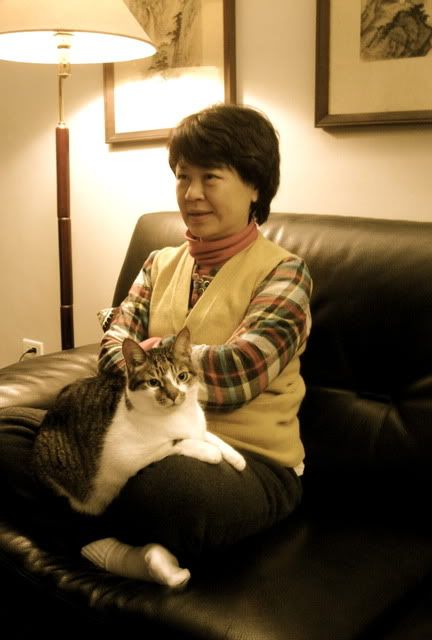
Home 3

I helped my brother pack. My father hunted high and low for a matching set of suitcases as a sort of farewell present for my brother – while many things, my father is not a good communicator of things emotional and this was his way of saying, “Travel well, my son.” I emptied out my brother’s closet, carefully rolling his shirts and pants into neat piles, making sure to leave room for ties, underwear, hats, shoes. His life didn’t fit as neatly as anticipated into two suitcases, but most of it did – we zipped them up and set them upright, marveling that these awkward twins on his bedroom floor could hold so much and still so little. We dragged them out to the car along with a large cardboard box filled with office supplies. I was sure it would be cheaper to buy supplies in China, but my brother insisted he would rather just take them to spare himself the hassle of finding an office supply store in labyrinthine Shanghai. “Good point,” I said. Though really I wondered if any of those items he packed had some sort of sentimental value. Could a stapler, a tape dispenser, a few pens and notepads remind him of home? But perhaps not. For the most part, he wanted to travel light. He left behind quite a few clothes, along with most of his books, golf clubs, and shoes, and I, a closet clotheshorse (no pun intended), admired his relative indifference to leaving these items behind.
“I’ll come back,” he said, “So you better not donate anything.” 
I gave him my solemn promise.
And just like that, he was gone.
Shortly thereafter I disappeared to Taiwan for two months, and my parents reverted back to the quiet life they’d lived while we were away at school. In Asia, I visited my brother in Shanghai and realized that while he had barely unpacked, he had, in his heart, settled in just as hardily into our family’s condo just as he had done in Podunk. My uncle bought the condo in Shanghai some ten years ago, predicting he’d need a home base for his frequent visits when business was good. Business turned out to be okay, but the condo was frequently visited by family and friends who stopped by for weekend shopping trips or expos – I had stayed there once in the winter and once in the summer, and found the condo’s location to be its only draw. Located on the twelfth floor of a tall building (which in its heyday was THE address to have on that street), we had a wonderful view of the city and a short walk (by Shanghai standards) to the nearest metro. Behind us, a fancy theater was being built, designed in that new architectural style that likens buildings to eggs and nests. We were on a street nicknamed Bar Street, once rival to Hong Kong’s Lan Kwai Fong – at least in terms of noise –but was now a quieter place for expats and locals to gather. No matter how a man may boast of knowing Shanghai, no one can ever truly grasp its center.
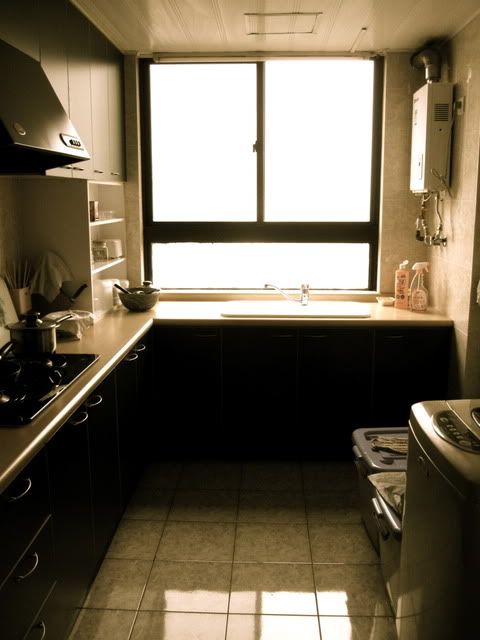
My uncle had furnished the condo cheaply and on the fly, with matching, dark furniture in every room that ate up the sunlight and horribly mismatched drapes and bedspreads, most of which I suspected were gifts from relatives who wanted new drapes and bedspreads in their own homes. The kitchen was sparse, sporting only a few warped pots and pans and a paper cup that held disposable chopsticks. A broken hot water boiler sat collecting dust in one corner and holey, threadbare rags hung from a railing along the wall. There were two bathrooms, but one lacked a shower curtain.
“Yeah, I need to get one,” my brother said. I nodded, examining the dingy pink tiles and the yellow lighting. The fixtures depressed me. The place was cleaned everyday, so cheap is that sort of labor in China, but you can’t wash away bad taste – or age. But my brother, a man of simple tastes, was oblivious to all this.
“I suppose I’ll change it someday,” he said, zero intention behind his words, “but it’s pretty good for now.”
I thought about our home in California, and wondered if my brother still considered it thus. We had hugged and cried at the airport, but it had nothing to do with the actual house he was leaving, just the people inside. But had it been me departing, I would have cried just as heartily for my pink room, my books, my small but adequate closet, my bright, gleaming bathroom. I thought of my brother’s new old living quarters: this is not a home.
And yet.
I watched my brother move around the house in the comfortable way an actor moves around a set after a few weeks of filming – humans, we learn fast, adapt easily, don’t we? He worked at the dining table, which he converted into his workspace. Using water he bought on a weekly basis from the dingy convenient store downstairs, he poured hot tea in the kitchen always standing in the same spot, slightly to the left of the water boiler, and left his dirty dishes in the sink with the confidence of a man with a maid, who also washed his clothes and hung them up on the balcony to dry so that at night, my brother could bring them in if he felt like it. In the mornings, I wasn’t fully awake, but heard the beats – seamless sounds – of him readying for work, and those same beats in descending order (thump, thump of shoes being cast off, the jingle of keys, the creak of the doorknob) of his homecoming in the evenings. As a guest, I could imagine his life in the apartment without me – those same sounds, only perhaps the sound of my voice replaced by the sound of strange Chinese sitcoms complete with laugh track, or perhaps no voice at all but the sound of his fingers upon computer keys, another late with MS Excel. He slept well, ate well (by his standards, anyway) and while he spent most of his time at the office or at bars with friends, the condo was home in every sense that it could be, to a young man living in Shanghai in 2011.
Two months later I was back in the U.S. with my parents, in my room, throwing myself into working life, creating a routine that involved hot yoga, friends, and family. I had moved the coats to my brother’s closet to let my other clothes breathe a bit and wondered what he would say when he came back and discovered my little transgression.          
Very little, it turns out. On Memorial Day weekend my brother materialized at LAX with the express purpose of attending his best friend’s wedding. I picked him up, a huge American smile on my face, not really grasping how much I missed him until he was sitting in the seat beside me. Oh brother, where hath thou been?
“Man I missed it here,” he said. I sped down the 105, the LA skyline whizzing past, knowing that compared to Shanghai’s architectural beasts and beauties, LA seemed like the outline of a village. Soon LA disappeared altogether and we were in the quiet, tree-lined roads of our small town, driving past our middle and high schools like two visitors cruising down the proverbial memory lane.
At home he unpacked while I blathered on about dating, friends, family and hot yoga. A good brother, he nodded and smiled, moving a bit awkwardly around his bed and the lone suitcase, having left its twin in Shanghai, trying to figure out where to put everything. I wondered if he would want me to move my coats for the time being so he could hang his suit up for the wedding. He must have, at some point, noticed my coats in his closet – but he said nothing, nothing at all and instead hung his suit up in the bathroom on the hook behind the door. I found it there the next morning, slightly irritated that he had removed my robe to hang his suit there, then ashamed that this was the only space he could find.
The weekend flew by – the wedding passed, then Memorial Day, then Tuesday, Wednesday and finally, Thursday, the day of his departure. On Tuesday night we had gone out to dinner and he had said, suddenly, “I sort of miss Shanghai.” I realized then where his life was. Or more accurately, I learned how differently we, though siblings with a close emotional core, defined essential terms. He carried home in his heart, his being large enough to grasp it completely while I simply lived at home, it being a space to hold my heart until I moved on into the next. Is this the difference between people who are truly hardy and those who are only reluctantly so? My brother lived happily in Podunk, Pennsylvania and I only half-heartedly in Berkeley, New York, and Taipei. Space was merely space to him, a place a place. He possesses the only center he needs while I search for material, tangible tethers. World traveler, some people call me, but they don’t know the divided nature of my traveling. Abroad, I long to be home; at home, I long to be abroad.
On Thursday morning my brother woke up at six am to hug me goodbye. I was leaving for work, but something about the light, the time, reminded me of the morning he left for Podunk. That summer dawn, he had knocked softly on my door and whispered, “Betty, I’m leaving.” I started crying almost immediately, knowing not how our relationship would change, only that I would miss him terribly.

Now two years later he had left and come back again and again, with each departure feeling more and more final. And he was now leaving again. I hugged him tight, knowing that I would see him at holidays and on my own future visits to Asia, but that by then he would be at the door of or perhaps fully enveloped by his other life, just as my mother and father had been some thirty years ago, when they met and married and left childhood and childhood homes behind. But I do not dread this, this inevitable progression of life – we branch out, move out, move in, move on. My coats would stay in his closet and my brother would stay in Shanghai, for the time being, and then wherever he chooses to settle next. But we, regardless of where we are, remain close. Places, things, tethers – I’m beginning to learn they were always beside the point.
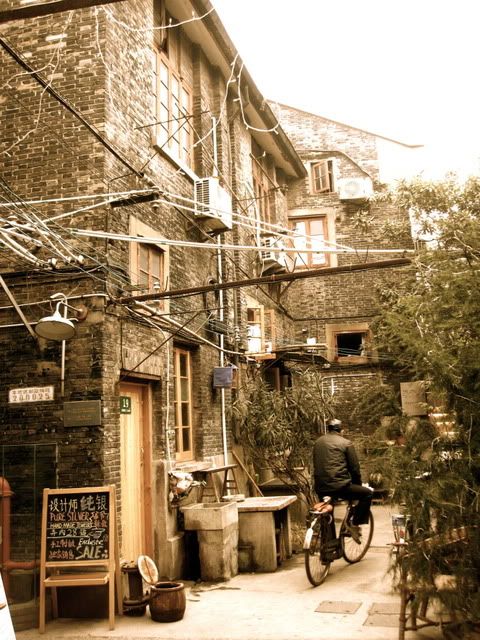
Home and Away

IMG_5805

My brother and I lived at the Irvine apartment for a year while our house was gutted and refurbished. Travertine replacing yellowed marble, wood floors replacing faded carpet. Tiled countertops became granite; chipped and peeling windows became large one-paned pieces that widened each vista. Our bathrooms became brighter, marbled, chromed. Continue reading “Home and Away”

Home

Once, walking by my mother’s room and seeing her settling down for bed, it occurred to me that this had not always been her bed, this room, her room. She lay down on the right side – had she always slept on the right side? – and turned her face towards the lamp, preparing to read herself to sleep.
“When did you start to see this as your home?” I asked, standing in the doorway.
She looked up, the pillowcase hiding half her cheek, “What do you mean? I have never not seen it as my home.”
“No, I mean, when did you…” I faltered, wondering how to phrase the question. I used myself as an example.
“I’m home right now, right? This is my home.”
My mother nodded.
“But you once had a childhood home like this too. When did you feel like your childhood home was no longer your home?”
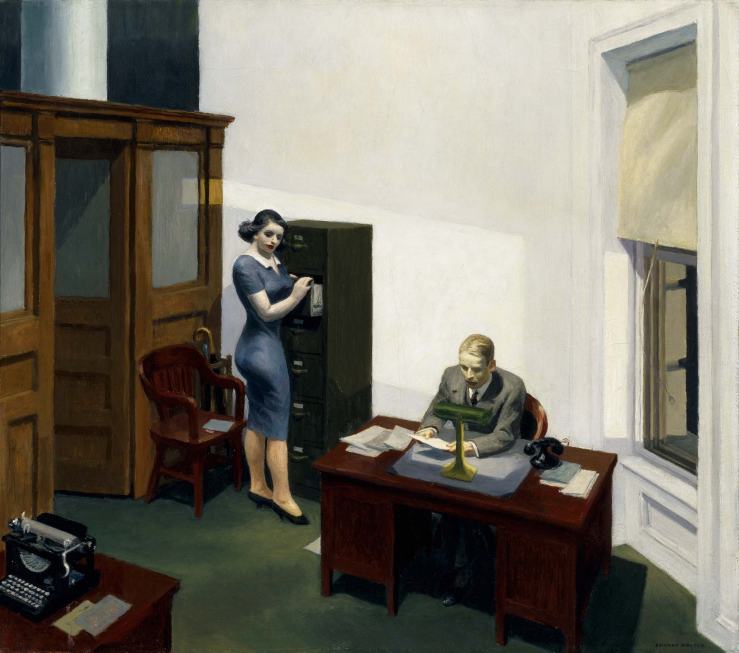
Edward Hopper, Cape Cod Morning, 1950 

My mother paused for a minute, fingers lightly holding the thin book she had been reading, “I guess when I got married. I lived with your grandparents until then.”

“Was it a strange transition?”
“No, not really.”
“You marry someone and move out, move in, and it’s home? Automatically?”
“It ought to be, but it’s different for everyone. Why?”
I shrugged, not knowing why I was asking except that I had, in that instance, caught a glimpse of my mother as someone younger, without husband and children, living in another house, sleeping in another bed.
  <!– /* Style Definitions */ p.MsoNormal, li.MsoNormal, div.MsoNormal {mso-style-parent:""; margin:0in; margin-bottom:.0001pt; mso-pagination:widow-orphan; font-size:12.0pt; font-family:"Times New Roman"; mso-fareast-font-family:"Times New Roman"; mso-bidi-font-family:"Times New Roman";} @page Section1 {size:8.5in 11.0in; margin:1.0in 1.25in 1.0in 1.25in; mso-header-margin:.5in; mso-footer-margin:.5in; mso-paper-source:0;} div.Section1 {page:Section1;}

–>

Five years ago, my father caved in to the leaky faucets, peeling wallpaper and yellowing fluorescent light covers of our house and announced that he would renovate. Among the things that I pushed for (including a ten-foot kitchen expansion and an entire second story with a game room) was my own bathroom, preferably en suite, and a walk-in closet, every girl’s dream. My father was receptive at first, nodding and taking notes to pass onto a Japanese architect with a fancy pedigree who came back with thousand dollar drawings of my dream house. But on the third or fourth floor plan, my father came to his senses. Among the things that my father actually implemented in the renovation: none of the above. I argued with him for a whole day, though knowing in the back of my head that he was right.
   “Why would I turn it into a two-story house,” he protested, “when you and your brother are about to move out?” 
    He painted a picture of life a few years down the road when the house would be home to just him and my mother, an aging couple with separate but faintly overlapping spheres: my mother’s being the backyard where her orchids and African violets threatened to overtake the lawn, and the dining room, where her Chinese school textbooks and papers had already smothered the smooth wood of our long table. My father’s territories included the living room couch where he often fell asleep in front of Jim Cramer and other Wall Street types and the small round wooden table to the right, where his computer sat and from where he generously doled out more spam than necessary. The kitchen was shared between the two of them, though more and more becoming my father’s territory as he neared retirement and discovered a passion for cooking and entertaining.
In my father’s vision, I saw my brother’s and my bedrooms, shuttered and empty, void of life except for a past life, embalmed in our childhood knickknacks, items that never made it to our new homes, shared with new people. The most recent thing among these relics would be the odd piece of mail that my father would inevitably bring in. Like a lonely mailman on the edge of retirement, he would come down our hallway every so often to set these envelopes upon our dusty desks, wondering when we’d swing by for dinner and pick up the mail. It was a cold, almost cruel image, one that would be realized, soon enough, and vividly so that I did not need to remind my father.
In a sort of compromise, it was decided that my brother and I would move out to a relatively new apartment complex in Irvine while the house was stripped down. My parents would hold down the fort until the renovations crept up to their side of the house, upon which they would then relocate to an Extended Stay on the outskirts of town. My brother and I rented a beige two bedroom in a beige complex behind a beige and purple shopping area. I took the master bedroom, which had an en suite bathroom and a walk-in closet that was sadly, larger than my parents’ at home. We would bring the old furniture from our rooms for our apartment and when the year was up and our house was done, we’d sell it and buy new pieces for our refurbished rooms.
On moving day my brother recruited several of his strongest friends to help us move into the apartment – we worked swiftly and within a few hours our childhood rooms stood empty with compressed patches of carpet lining the ground, where the furniture had been. Here had been my bed. Here had been my desk. Here had been my bookshelf. Only flat circles and rectangles remained from that former life. In the corners, corpses of unfortunate bugs had gathered, my ex roommates. As my brother and his friends drove off to our new apartment, I stayed behind for a while, tying up loose odds and ends, squeezing my belongings into the car. Our apartment was only fifteen minutes away, but it seemed much further than that, now that our rooms were empty. I returned to my room one last time, wondering if I’d miss the flowery wallpaper and matching drapes, adornments chosen by the elderly white couple who had lived there before us.
It was late afternoon as I walked back towards my room. I heard the familiar whirr of our old Kenmore vacuum cleaner, but aside from that, the house was strangely quiet. My mother was teaching Chinese school. I followed the whirr to my room, where I saw my father my father standing in the middle, vacuuming up the dead bugs on the compressed carpet. It clenched my heart, that sight. We were leaving only temporarily, but it was a preliminary stage to something absolutely necessary – my father knew it too. I stopped in the doorway, observing my father move as the afternoon sun danced around him. He did not see me and was framed by the squares of my old window, the view from which he often used to remark upon: “It’s quite nice, isn’t it?” Now he was no longer looking out the window for I was not there to enjoy it with him, not there to receive the old remark. Rather, he moved his arm back and forth with a mute, methodical sadness, stared intently down at the carpet, the fibers of which hinted faintly, only faintly, at his daughter’s footsteps.  

A Family Vacation in Carmel California, Part 2

Part II: Balderdash

The Acorn’s crowning glory, the place everyone could agree was beautiful and worth its wood was the backyard. It grew from a multi-tiered deck that led down into a freshly laid rectangle of grass, where there waited a horseshoe pit and a small platform for spectators or, as we used it, afternoon yoga sessions. Here, we could all stand together and see the ocean without being mauled by strong winds. Here was the grill where Andrew made delectable pork chops. Here was the hammock Caroline lounged in briefly before being summoned to play cartwheel. Here was the small square of sand with the metal rod sticking up where Darwin and Hoyt spent hours trying to toss horseshoes around, punishing the loser with push-ups. And here was the platform upon which Lynn led the girls from pose to pose until we ended up with the sun falling upon our faces in Shavasana, the yogic dead pose, feeling more alive than ever. 


On our last evening we dined at the Flying Fish Grill in downtown Carmel, a gem that slopes gently down to the beach, where a giant twisted tree stands with one sharp, dead branch jutting into the grey sky. Like stone, its trunk was smoothed from sandy winds. For dessert we bought a carton of Mocha Almond Fudge (an ubiquitous albeit elusive flavor – cartons never taste as good as scoops from a sweet shop) and two boxes of Magnums – ice cream bars I discovered on another beach, in another country to enjoy at sunset on the Acorn’s deck. And we did, taking in the seascape for one last time. Geese walked about the grass beyond the deck, foraging for their own sweet grub. My cousins played a final game of horseshoes. The sky glowed, than began to fade. The air was crisp, the sea calm, the grass soft but cold, as though prodding us indoors. Our ice cream finished, we went in, single file and slightly muted as people usually are at the end of vacations. Behind us, the sun fell slowly down behind the sea. 
In the living room Andrew announced, “We have time for one last game.”
Caroline and I nodded.
“Balderdash,” we said. They were leaving that night, while the rest of us the following morning.

As our parents talked wistfully in the kitchen – save for uncle Louis who sat down once again in his favorite chair – Caroline explained the rules of “Balderdash: The Hilarious Bluffing Game.”
The cards provide five categories including strange words, movie titles, and acronyms. Define or explain them. Make up what you don’t know and hope people believe it.  

Caroline was right, I was good and won the game by a two-space margin; though the highlight of the game belonged to my cousin Andrew, who for the acronym TEAM, wrote “Turtles of European American Mothers”. I laughed until my lips cracked. Balderdash indeed.

And all too soon, it was time for two of our party to break away. As Caroline and Andrew readied to go, Lynn played a little girl’s tune upon the old piano in the Acorn’s game room while her husband stood by, hands crossed over his chest, marveling.

“I didn’t know she could play,” he said, as I walked by.

A few walls away, my mother chatted quietly with Darwin, both thinking that the music wafted from someone’s computer. My uncle Louis stood up from his chair and paced around, dreading his youngest son’s departure. He wrung his hands.
“Too short,” he said, face forlorn, “Too beautiful, too short.” 
We stood on the grass, the only light coming from the Acorn’s windows and Caroline’s car, which glared at us from the pitch-black driveway and cast long shadows of our bodies left behind. Hands in our pockets we thought collectively of the following day, the long drive home, and life with less garden and less sea, more light at night. They waved goodbye. We waved back.
“And now we are eight,” Darwin said softly.
The Acorn became the only source of light.
As I wondered how far I dared to walk without a flashlight, Uncle Louis turned to go inside. “Too short,” he said again, “too beautiful, too short.” And though he couldn’t see, I nodded. Balderdash indeed. 

Family Vacation in Carmel, California

Part 1: The Acorn 

In Carmel, I learned how to play Balderdash. 
On Sunday morning we stood at a lookout point on 17-mile drive, a famous stretch of highway that contours the ocean – or does the ocean contour the land? –  and discussed what to do after dinner on our last evening together. 
“Balderdash,” said Caroline, squinting over the water’s rolling glint, “I think you’ll be good at it.”
I nodded in anticipation; who wouldn’t love to play a game they’d be good at? 
The night before we had watched a terrible Taiwanese movie about young gangsters – they crossed and double-crossed each other mostly in Taiwanese, which most of us didn’t understand. And on Friday, the night we arrived, we played Charades, parents included, girls vs. guys. The girls lost, but it wasn’t a terrible loss. Some things take practice. 
And so our weekend passed in a sprawling, ocean side paradise. My cousins rented a rustic house – some family’s home, filled with their history, their lore – to celebrate their father’s retirement. It was called “The Acorn,” though more fittingly it might have been called “The Hive.” Single story with four bedrooms and a separate cottage, the Acorn was designed decades ago in a labyrinthine style for a large family with many children and a constant stream of guests. Built of dark, paradoxical wood that seemed both sturdy and slight, the house creaked ceaselessly, yet was quiet. At night it required dozens of lamps to light yet in the mornings, was flooded with pale, seaside sunlight, the kind that hesitates to emerge from behind the clouds, like a shy but beautiful child hiding behind his mother’s back.
The house was, as my cousin Andrew noted, like a “little museum,” filled with old books with fascinating titles (Principles and Practice of Butter Making by McKay and Larsen, and The Science and Practice of Cheese Making by Van Slyke and Publow – apparently it takes two to write about such subjects). The oldest volume was a Rutgers yearbook from 1928, strangely titled The Scarlet Letter. It left a dusty red mark on my pajamas when I set it in my lap to scan the pages for one Mr. Whisler, the grandfather or perhaps great grandfather of the family who owned the house. But he was nowhere to be found. Yet around me, the Whislers and their friends were everywhere. They hung from the walls in faded photographs and pencil portraits, stern-faced gentlemen with white hair and stiff moustaches, somber-faced children sitting cross-legged before their clapboard schoolhouse, and soft-looking women with high collared dresses and tight braids. They stood atop mantles and bookshelves in trophies of contests past, the most amusing of which was a stout bronzed cow set atop a gleaming onyx column, awarded to T.F. Riley in 1950 for Highest Butter Fat Increase Per Cow: 59.5 lbs. In the front cover of the oldest books were inscribed the names of people – some visitors, some relatives – and, on the underside of a wooden duck, a gift to the Whislers “From George, 1970.” 
My uncle Louis, nearing his mid-seventies, lumbered around The Acorn like a happy child with too-big shoes. Though a former aerospace engineer whose daily work involved pages and pages of algorithms, an hour long commute into the heart of Los Angeles and top-secret trips to top-secret destinations (to this day he is still unable to discuss the nature of some of his projects) he was immediately at home in the Acorn. He found a favorite chair in the living room and developed a routine that included consuming a large brunch, followed by a walk along the ocean if the weather permitted and if the wind was not too strong. 
My aunt Joannie wore a red parka and new, old tennis shoes for much of the trip, smiling softly at her children all around her and her husband, for whom retirement was long overdue. It was a special occasion, she said, when I complimented her shoes. The shoes were nearly a decade old, a gift from her youngest son, but she had saved them for such a trip. They contrasted nicely with the house’s dark floors and against the vivid green grass of the garden, through which she traipsed with my mother.
My parents loved the house too, but for different reasons: my mother gathered parsley from the small herb planter next to the kitchen to sprinkle on our eggs and disappeared for what seemed like hours at a time to stroll around the gardens, which were green and lush and smelled of the nearby sea. She sniffed each blossom and gingerly stroked the wisteria hanging from the trellis, trying to remember the English names of other small, pretty faces.
“Rho…” she would say on her way in, wiping her feet on the mat outside, face flushed from the chilly air, “Rhodo…” And I would finish for her, “…dodendron, Mom. Rhododendron.”  
Like me, my father found the house a perfect place to read, though not because it was filled with books. He brought his own – a thin but dense Chinese paperback with a severe-looking emperor on the cover – and read in one of two padded wicker chairs with their backs against a large window overlooking the garden. In the mornings, my cousins still sleeping, I would wake and walk into the kitchen to see my father fully dressed with hair combed, breakfast eaten long ago, reading in the chair, George’s duck sitting quietly next to his right shoulder. Occasionally my mother’s slow figure would appear in the window, her upper body curved towards a bush or tree, and for a brief moment their bodies would align, my mother standing behind my seated father, the only division between them being a large pane of glass, translucent yet impenetrable. 
Compared to the walls and shelves of all the other rooms, the bedrooms were the sparest; closets emptied and dresser tops cleared for strange guests and their strange, anachronistic things: smart phones, laptops, iPads. Faded paintings and old sports equipment hung from the walls, though like a lingering smell or an intangible albeit vivid memory, one could still feel the aura of visitors past. Being one of two single people on the trip, I volunteered to share a small room with my cousin Darwin (together we made a two-spoke third wheel) thinking it would spare him sharing a room with my father, whose snores I often compare to a jackhammer. Even two rooms away however, my father’s snores impinged upon our late night conversations. We wondered how my mother slept at all. Though in the morning Darwin would accuse me of snoring softly, like a “little bear,” at night, tucked into our narrow twin beds, the ceiling slanting close above our heads, we talked about relationships – his, mostly. What makes a relationship work, we wondered, certainly not snoring like a jackhammer. Yet all around us, married couples old and young slept and slept.

Spring Cleaning

A few days ago was Qing Ming Festival, when Chinese families visit their ancestor’s grave and give them a good scrub.

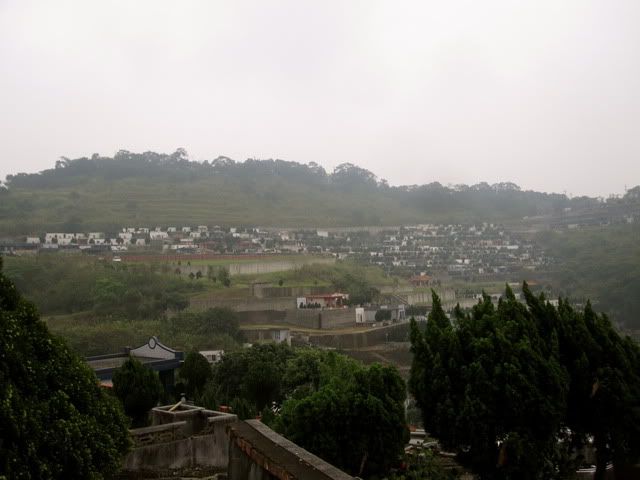
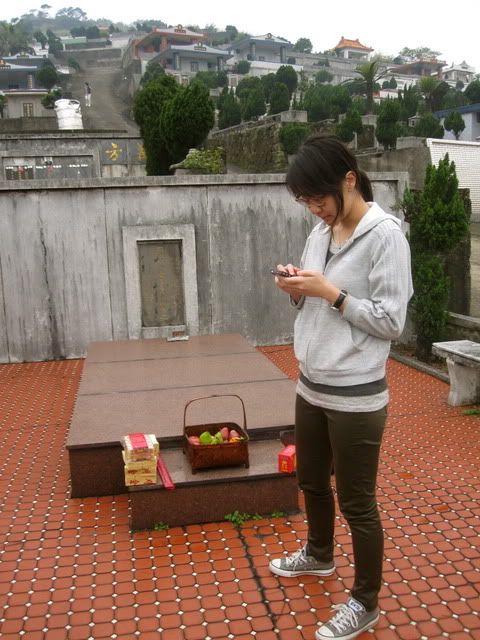
A Taiwanese cemetery.

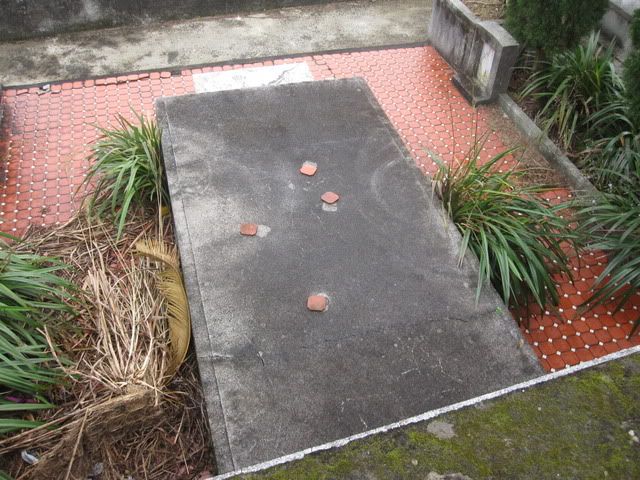
A few years ago, this was actually necessary. Families would load up their cars with brooms, dustpans, pruning shears, etc. to tackle the natural growth that would eventually creep up over the tombs, which are much larger than standard American grave plots.

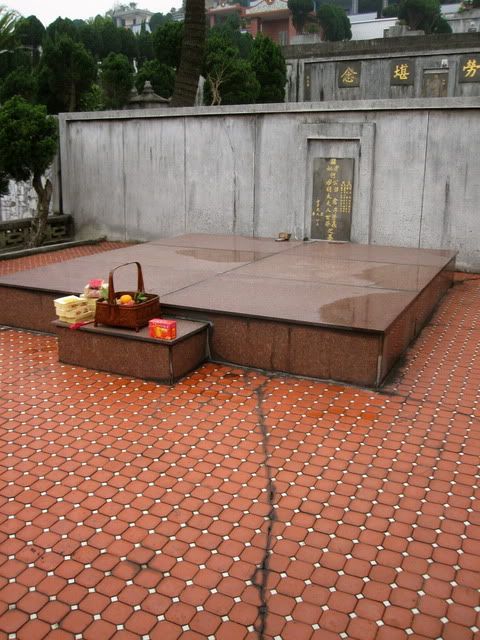
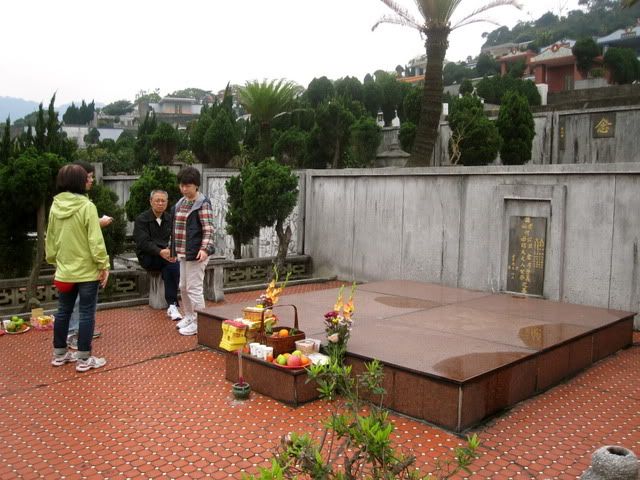
Where Grandma and Grandpa Ho are buried.

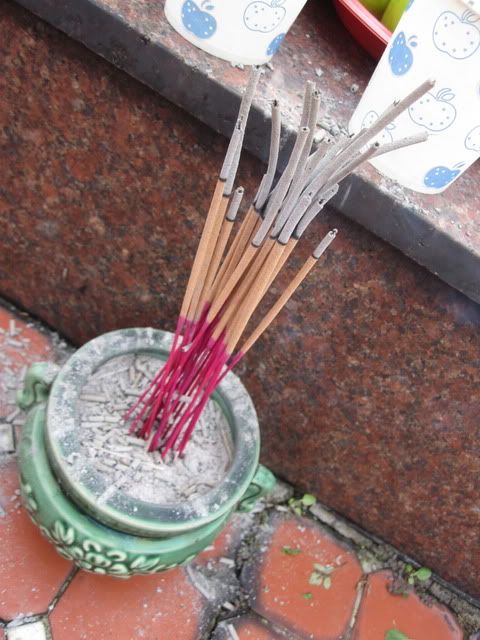
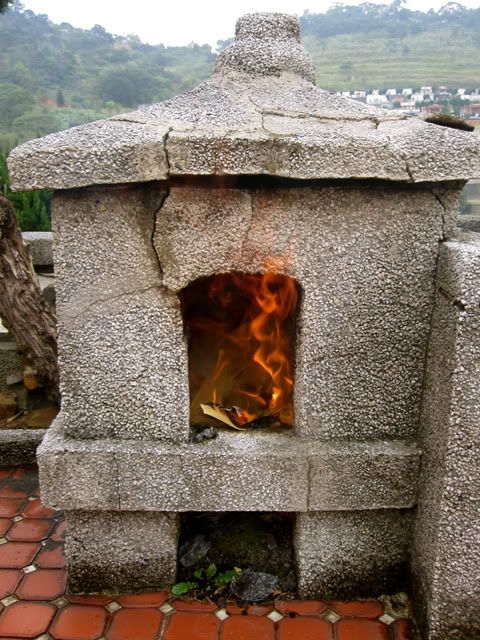
When the weeds had been pulled out, the bushes and grasses trimmed back, and fresh flowers, fruit, wine, and whatever other edible offerings set before, burning incense would be placed in a small pot before the tomb. Incense signifies a spiritual vigil. The living light incense for the dead, or for the Gods, to show that we still respect them. Incense also marks a sort of connection between the two worlds; once the incense is lit, we are in conversation with the dead and it is while the incense burns that we believe our ancestors are consuming our offerings. After the ancestors have eaten and drunk their fill, we burn paper money for them to use in the afterlife. At the markets, one must be sure to buy the right currency: Ghost or God money cannot be burned for Ancestors and vice versa.

Nowadays, at least in Taipei, grave cleaning is unnecessary. We were lucky to find a quiet cemetery with spacious plots and tiled floors. Once a month, we pay a maintenance fee, like you would in a high-end apartment complex and the caretakers come and do the cleaning for us. Some people forget to pay the fee, and their ancestors’ graves are noticeably neglected.

Whoever lies here is writhing in shame.

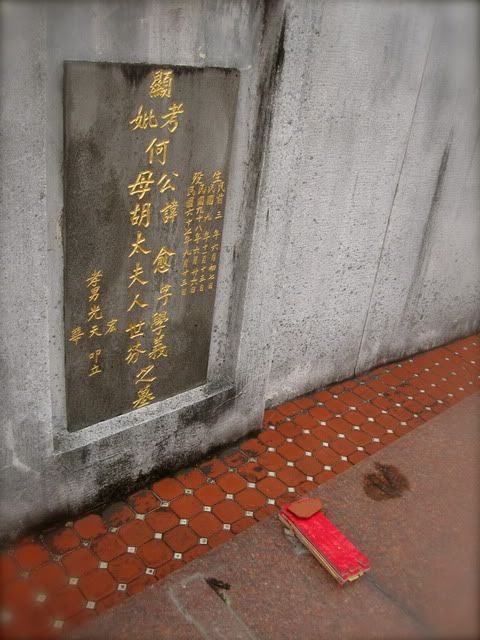
But in Taipei county, land is scarce and plot burials are now rare – reserved for those who had the foresight to buy a plot early on. If you didn’t make such an investment, its cremation for you. My grandfather was the last person in our family to have a traditional, whole-body burial – the plot was bought many years before, when his third wife (and my biological grandmother) passed away. When he lived, we came once a year to worship our grandmother and our father’s great grandmother, who is buried in the neighboring plot, but my grandfather never came along. And why would he? In the second photo, the characters on the tombstone are painted gold, but they’re only gold when the person has been buried. For many years, my grandfather’s name was still in red, signifying his status as a living man.

Also for many years, Grandpa would wait patiently for us to finish eating lunch so he could go home and take an afternoon nap. Now, we wait for him.

The adults talk about where to go for lunch. My uncle (seated) was eating vegetarian that day.
My uncle takes a work-related call.
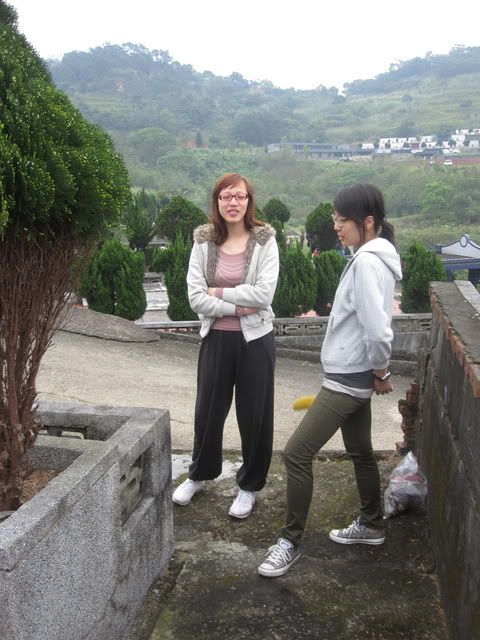
My cousins complain about work. Melody (left) works at a bank. Karen works at PWC.

Almost there…not.
To kill more time, Karen resorts to playing Angry Birds (and then checking Facebook) on our great great Aunt’s grave.

Finally, our grandparents and the Gods alike have feasted and it is time to burn paper money.

May they shop in peace.

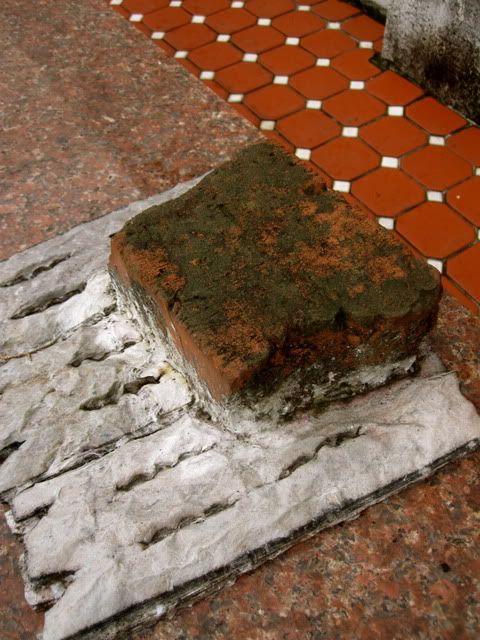
Last year’s grave cleaning marker is removed – a stack of red paper left on the tombs to signify that the relatives have come and paid their respects:

And replaced by a new marker.

Cleaned.

Until next year, Grandpa.

Little Cat

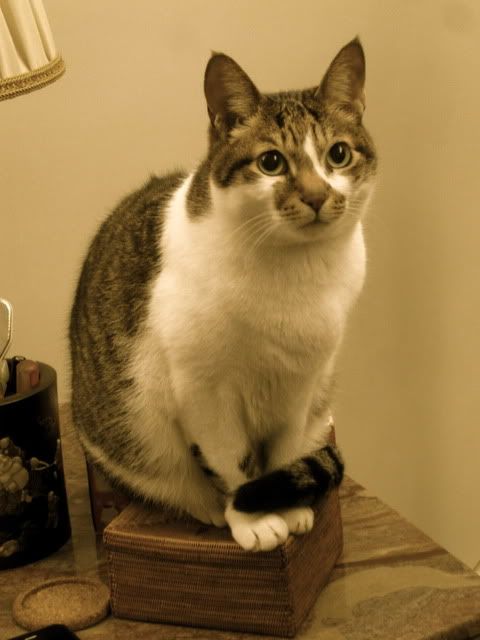
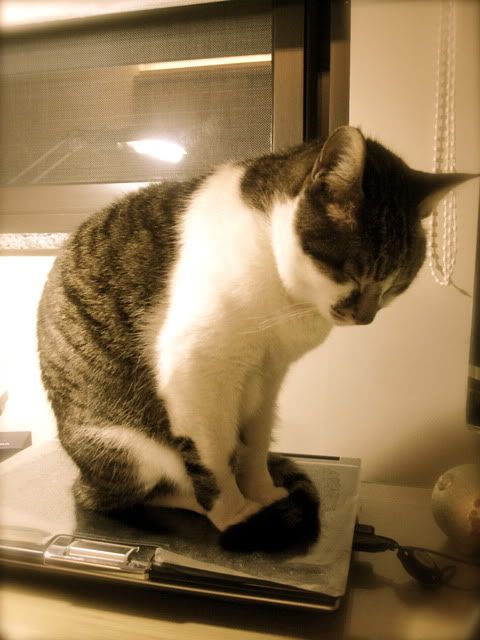
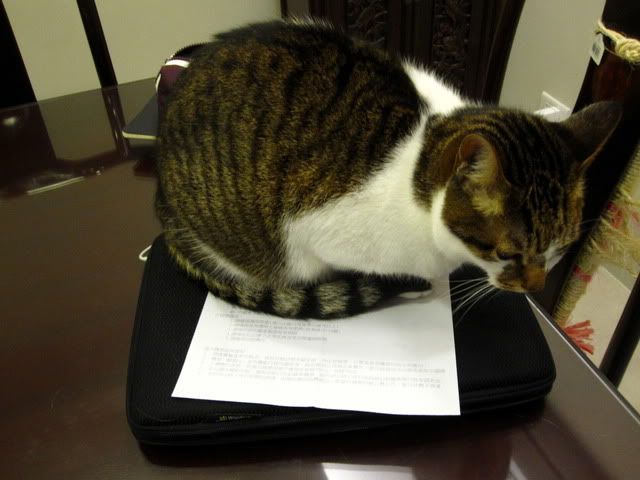
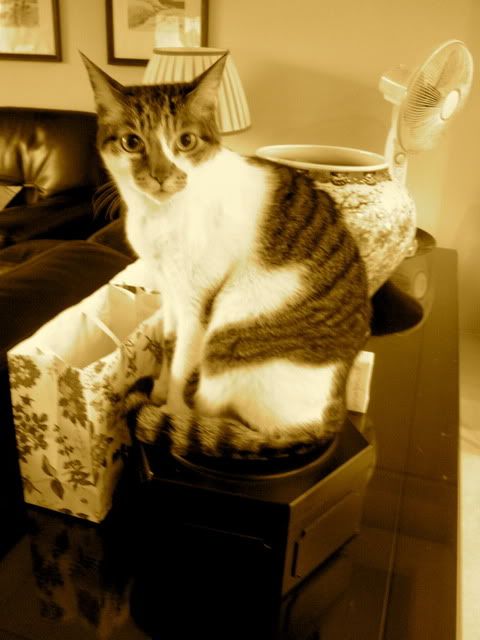
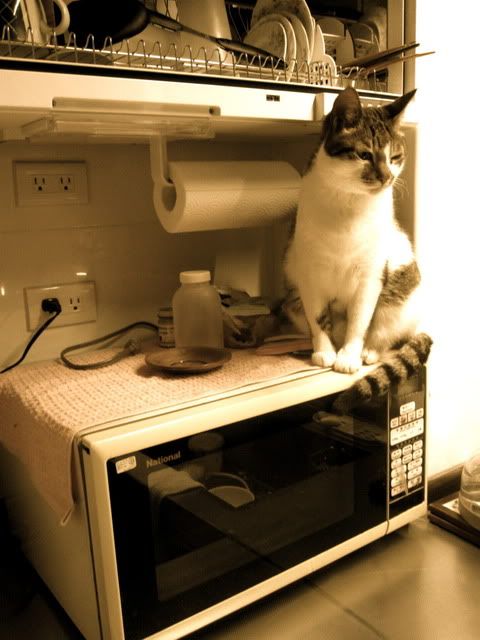
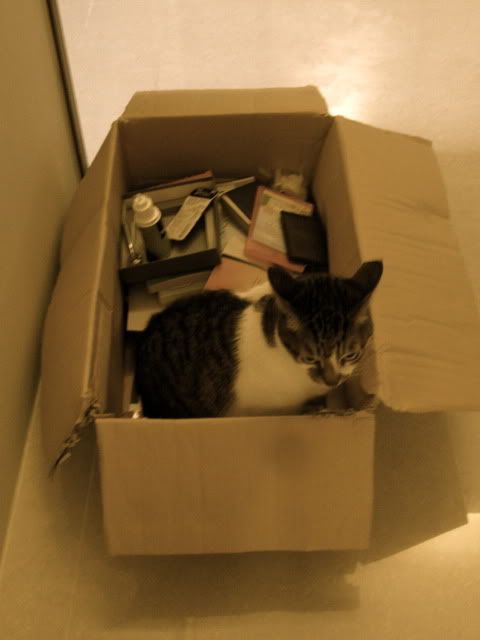
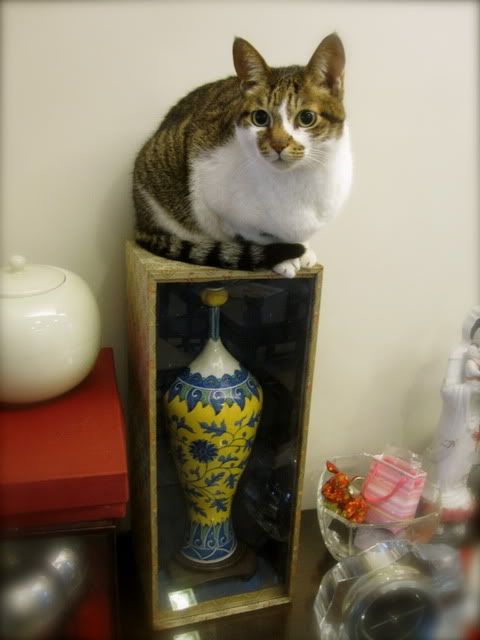
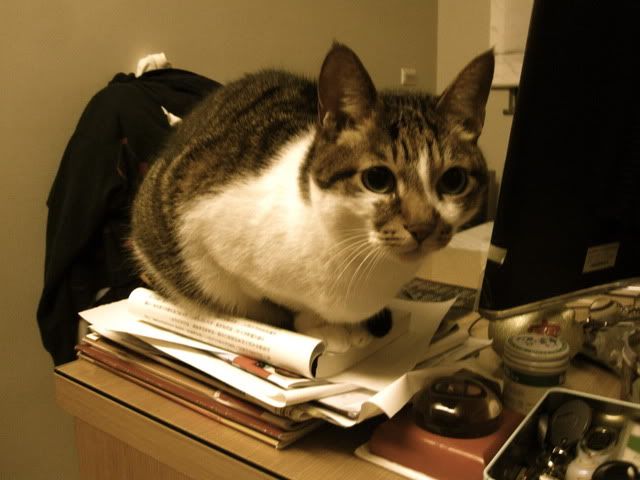
My aunt has two cats – a fat yellow cat and a less fat dark, striped one. They’re called, fittingly, Big Cat and Small Cat. My aunt never saw the need to give them other names. Big Cat’s problem is he mews whenever he wants to eat something. Which is always. He also doesn’t move. Like some people I know. Small Cat is more active. He’s also more jumpy – the first to disappear if a stranger comes into the house. Small Cat’s problem is he likes to pee on things: clothes, blankets, pillows, and once, my aunt’s head. He also has this weird thing where he likes to fit himself on a tiny platform. Because he pees a lot, no one puts him on a pedestal. So he does it himself.

Cat on a pseudo-Victorian novel.

Cat on a small woven box.

Cat dozing on my uncle’s laptop.
Cat stirring on my laptop.

Cat on a cookie box.

Cancer cat. (Shortly after this photo was taken my aunt shooed him away).

Cat in a box of junk.
Cat on a boxed vase/urn. I think.

Cat on a stack of finance magazines. Money cat!

Cat on my aunt. Happy cat 🙂

What an outrageously pointless post.