100 Years of Vanity, Part 1

IMG_5034
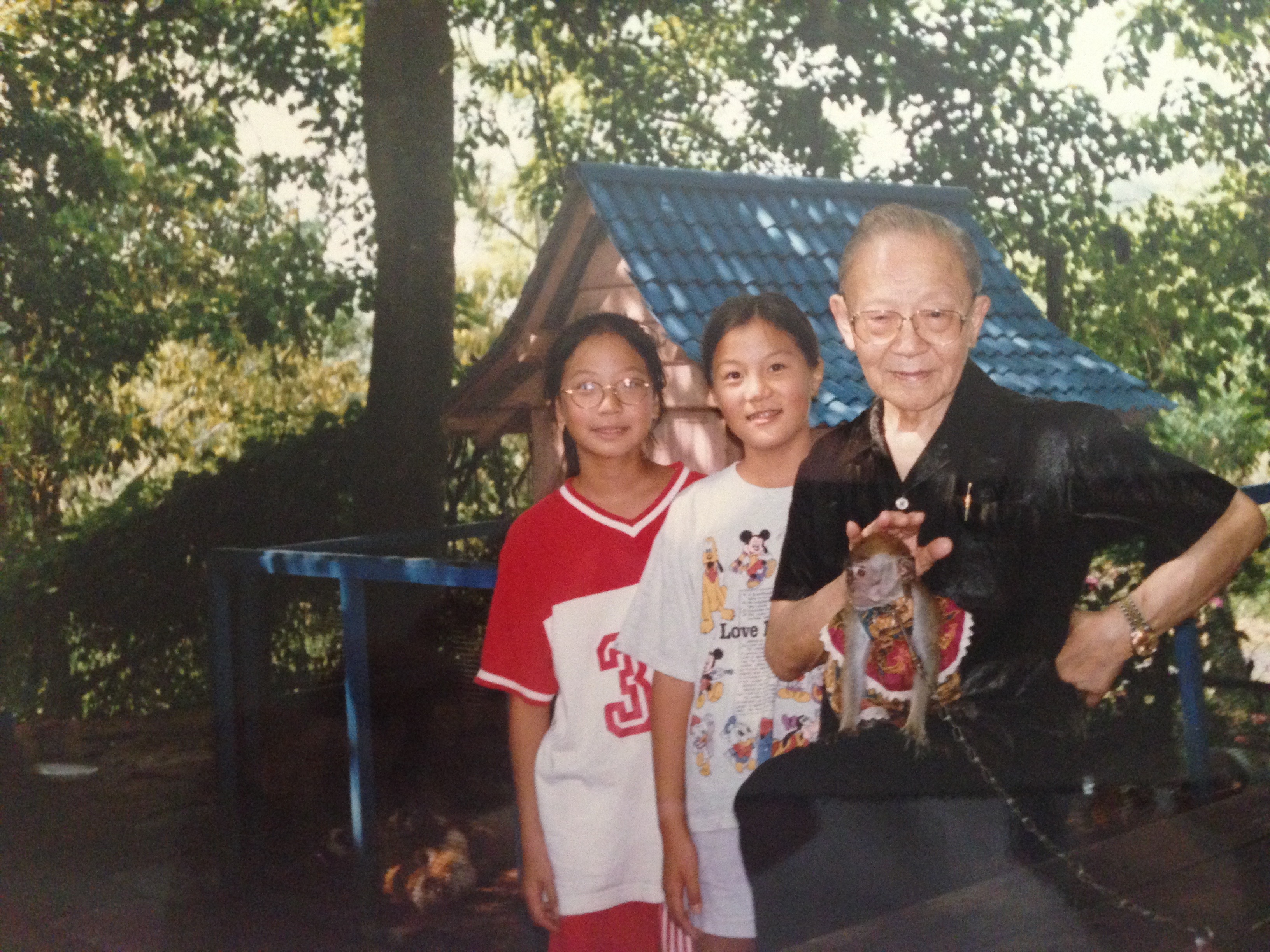
At dawn on his one-hundredth-birthday, my grandfather shuffled quietly to the bathroom, closed the door, and began to powder his face. Though “powder his face” is an understatement. What he really did was raid my grandmother’s cosmetics cabinet and use up an entire bottle of foundation. He was working his way through a new blush compact when my grandmother intervened.

Security Blanket

A few days ago my mother came in to say goodnight and saw me hunched over my work phone, typing something out to my boss. I looked up, aware my eyes projected fatigue if anything.

She kept her hand on the door handle, as though deciding whether or not she should come in – it was late. She was constantly reminding me to sleep earlier but at the same time saw so little of me during the day that the evenings, right before bed, were the only time we really got to talk

I look forward to talking to my mother at night. Now, she is busier than my father (though he will never agree to this); after teaching a few hours she comes home to make dinner (unless my father, having left work early as he often does now, comes home to make it first) and then prepares to leave again to play two hours or so of badminton at the local club.

When I was younger and she didn’t play badminton, I often watched her sneak in a short naps here and there. I would come home from school and shout something to my brother who would say, “Shh. Mom’s sleeping.” And she’d be in the living room, stretched out primly on the flowered couch, her knees propped up or feet crossed at the ankles, a slight frown on her face. A light sleeper who stirred at the slightest sound, she was never fully asleep. I pitied her for it because my father’s snores are murderous – meaning you will either die from exhaustion, or kill him in the middle of the night.

Whatever my mother thought of her sleeping situation, she and my father worked it out long ago. She took to retiring earlier than he – to get a head start, I suppose. Her tactic was to enter REM before my father came to bed, and would thus be immune to the noise. But I doubt this. It is one of those sacrifices women make when they marry. My father gives her love, warmth, a family, the financial stability to pursue her non-profit Chinese school dreams – all that and more – in exchange for the restful slumber she had before she met him.

And yet to my surprise I observed that my mother slept poorly when my father was not there. As they grew old together, she came to rely on the rhythm of his breath to put her heart at ease. At the end of the day everything was fine – he was there, alive and well, and together they were whole. Her children may grow and fly the coop (though this has yet to happen with the youngest bird), but at the eleventh hour through the first, her husband was there, sleeping peacefully albeit noisily by her side. 

So perhaps it was not the sleep. Whatever it was, she seemed to be always tired, in the same way I feel now. For a long time we thought it was her liver. My mother is also very gullible – fatigue and gullibility do not mix. Fatigue makes one desperate, even more gullible than usual, and she bounced from one doctor to the next, collecting a docket filled with lies about her physical condition.

She was never known for being fair, yet one doctor said her skin appeared jaundiced, which indicated her liver was failing her. Another doctor pointed to the white hairs along her hairline, saying it was something to do with her blood. Lupus. Cancer. Hypothyroidism. We never really did figure it out, but thank goodness my mother, despite her gullibility, hates western medicine with a passion and refused to take any of the medication. “Why damage my liver further, if my liver is already weak?” she reasoned.

Chinese medicine, with its strange herbs and animals parts were another story – my mother believed in eastern medicine with the same principles with which she adhered to Buddhism. Not strictly, but willingly, out of familiarity. Eastern medicine could be explained in Chinese terms more readily than western medicine and procedures, and was, in general, a more holistic approach, which appealed to my mother’s nature-loving bent. She spent a small fortune on carefully measured packets of horsetail, cordyceps, starfish, feverfew and fenugreek which she dutifully boiled every night with dates and ginger root so that our house smelled not unlike the strange, dim doctor’s offices she visited on Taipei’s outskirts.

As a family we tried to persuade her to take on less. Cut her private tutoring classes. Forget doing the Chinese school – not only was it a non-profit, it bled money. Don’t serve on the advisory board of this Chinese committee and that. Stop editing Chinese textbooks for free. And for Chrissakes stop traveling to China and Taiwan for exhausting two-week long conferences while staying in shitty hotels with bad food.

But my mother is stubborn when she sets her mind to something and she had learned long ago that married or not, a woman must have her work. So she persisted in building her Chinese school, and despite our protests, took on more private tutoring students. For a while I feared she would die of exhaustion. And somewhere in the middle of all this, she began to play badminton, hours at a time, three or four times a week.

I thought, “Oh goodness. She will collapse one day.”

Instead, the opposite began to happen. She became more energetic, more lively, more ambitious. It wasn’t just the exercise but also the growing profile of her tiny Chinese school. The two together: a woman’s work and the care she devotes to her body – is a powerful combination for happiness. Yes, she still comes home exhausted some days, but for the most part I have never seen her look so vibrant. My father noticed too, and rather than continue to persuade her to quit, he now accepts his growing role as Mr. Mom – he cooks more, takes care of more things around the house – not that he didn’t before, but he is home more often than my mother is, and the role of half-house husband suits him well.

From my mother I learn that for a woman – or any person, really, to stick to their work, stick doggedly to it even though no one pushes them to do so, they must really love the work. She has the energy to do it because that is how the mind functions – it provides phantom energy, the most potent and secret kind, to help you accomplish what you most love and need in order to feel whole.

And now my mother, armed with phantom energy, comes into my room each night to ask me about my work.

“Does it make you happy?”

“Is your boss a nice man?”

“Do your coworkers like you?”

Yes, yes and yes, I say, but still, there is a feeling that everything about the job is fleeting, much like every other job I’ve held in the past.

I tried to go in with an open mind, thinking, “Who knows how long I’ll stay?” Maybe I will love it and end up staying three, four, five years. A decade?

I heard a hollow laugh when I posed the possibility to myself. 

I’m too young to think that any position I hold now will be my “career,” but I can’t shake the feeling – both paralyzing and liberating – that I may never have a “career,” not in the conventional sense of the word. What is industry? What industry? How should I categorize myself and where, in the vast career planes and skyscraping corporate verticals, do I belong?

“It was a great comfort to turn from that chap to . . . the battered, twisted, ruined, tin-pot steamboat. . . . I had expended enough hard work on her to make me love her. No influential friend would have served me better. She had given me a chance to come out a bit—to find out what I could do. No, I don’t like work. I had rather laze about and think of all the fine things that can be done. I don’t like work—no man does—but I like what is in the work,—the chance to find yourself. Your own reality—for yourself, not for others—what no other man can ever know.”

Joseph Conrad, Heart of Darkness 

Red Envelopes

$320:
At dinner my mother reminded me to prepare red envelopes for my aunts and grandmother back in Taipei, in celebration of Chinese New Year.

“This is the first year you’re working full time, with a salary. You should share that with them.”

I nodded, wondering how much I ought to give.

“A nice even number,” my mother said, “Even numbers are good luck. Except for 4.”

Four, in Chinese, is almost a homonym for “death.” There is a slight tonal difference, but not much.

——–
$400: 

I read this at work today, during my lunch break. The Modern Love column is the NYTimes’ own nostrum to the bitter feelings their Weddings and Celebrations section might induce. Being multi-faceted, I read both sections religiously.

Today’s column struck a chord. 
“A STORY that haunts me involves a woman I know whose fiancé went out to inspect a potential apartment for their married life and never came back. He wasn’t dead in a ditch. He was just gone, without clarification.”

———

$200:
When she was 30 years old, my grandmother made the very strange decision to marry an 80-year old man. She was introduced to him through a coworker who knew that she’d been jilted in love. 
“Just meet him,” the coworker said, “He’s old, but doesn’t look it. He’s taken good care of himself. And he’s got a good family. They will treat you well.”
My grandmother simply nodded. She was tired. She was always tired after the day she returned to Taipei from her mother’s funeral. She put on an ugly green corduroy skirt and a fuzzy orange sweater, and went to have dinner with the 80-year old man and his family. 
———
$400:
My grandmother’s story haunts me, even though I have only ever heard it from other women’s lips. 
“She was dating a man for a long time. They came up together from the south and took low-paying jobs. Anyone on the outside could tell he was a lowlife. He had a hard time keeping his jobs, but she worked hard and saved almost every penny. She wanted to buy a house, start a family with him. 
“Her mother grew ill then passed away. Your grandma took the train back home to be with her family in the south. She wasn’t gone for long, but he stayed up north, who knows what he told her. When she returned to Taipei, he was gone. He had taken the money too. Every dime she had saved for their life together.”

——–

$320: 
Once, upon hearing that my grandma had bought herself a $6000 mattress, my mother asked her why. The mattress stood in for a million other useless things my grandma has bought for both herself and others. She is generous, to say the least and to watch her spend, it would appear that savings accounts had no purpose.
My grandma shrugged, “Life is short,” she said, “I want to be good to myself. I have no children and no parents to leave it to. Whatever I can’t spend, I’ll give away to charity.” 
My mother wanted to frown and say, “Please keep some for a rainy day,” but stopped herself. My grandmother’s rainiest day had come and gone.

Chinese Opera

My grandma likes coleslaw. She fries some dumplings for my dinner, twelve more than I ask for, saying she will eat some as well. But she eats only four and then reaches into the fridge for a leftover carton of coleslaw from KFC.

“I like this…salad,” she says, “It’s one thing Americans make right.”

Before dinner I ask my grandpa if he likes dumplings, as this is my grandma’s specialty. In her heyday she could make over 400.

“That wasn’t news, honey,” she says, holding up her hands as though there were a watermelon sized ball of dough between them. “I could make that many easy. And I did so for many years. But then I fell and had to enlist your grandpa to roll out the dumpling skins.” She gives him a look, “That’s when productivity really went downhill.”

He isn’t listening. His hands are folded in his lap and his head is turned toward the television, where Beijing opera singers are warbling on a sparse stage. A man with a long black beard and fierce eyebrows is crying about something. I can’t understand, but my grandpa shakes his head, the old frown playing on his old face.

I try to make him smile and ask him a favorite question, one I know the answer to.

“Do you like dumplings?”

He shakes his head again, but the frown softens.

“Well you sure did marry the wrong person,” I say.

My grandma sits down slowly, using her arms to hold herself against the table. She has weak legs but strong arms, and she winces slightly from the bruises on her hips and shoulders. Weak legs caused her to fall against the windowsill the day before Thanksgiving. She split her forehead open, doused the carpet in blood and now she sports a Frankenstein cut over her forehead and the world’s most vibrant bruise down the right side of her face. Her right eye is swollen, but I can see it clearly when she rolls it. She is a hardy woman. She fell. Blacked out. Woke up a little dizzy half an hour later, her face covered in blood, and then proceeded to the bathroom to wash the blood off.

My grandfather woke to the sound of water running at 1AM and went to find his wife covered in blood.

My grandfather has a strong heart. He panicked, but dialed my uncle, who drove them both to the hospital. In the car, my grandfather wrung his hands in his lap. He wonders if he is lucky to have heard the water running, or lucky that my grandmother awoke at all, and did not bleed to death on the carpet. The whole way to the hospital, he is thinking this.

My grandmother has weak legs, but strong arms. Arms that were once capable of making over 400 dumpling in one morning, but now can probably only do a hundred and fifty or so.

“Seventy years is a long time to be married to the wrong person,” she says, rolling her eyes and nodding at my grandpa. “He’s a strange creature, that one. Strange.” If she spoke English, she would have said, “and a huge pain in my ass.”

Without a word, my grandpa rises slowly too – he has moderately weak legs and, when he was younger, a scholar’s hands. He walks slowly to the hot water dispenser and presses down on the top, filling his insulated tea mug with the hideous painted swans.

“Seventy years,” my grandpa says, in between pumps. I see him eying the mottled skin on his hands and thinking back, perhaps, to when he did not move so slowly and when the sound of running water at 1AM wouldn’t have meant anything. Seventy years. Seventy years. In Chinese he says, “how cruel life is,” but I know he is thinking, as I am thinking, how strange and wonderful.

“Marriage was different then.” My grandma leans back in her chair and puts one leg up, a sign that she’s about to tell me something. “I got married at eighteen and right away I moved in with your grandpa’s family. I had to take care of four generations. Four! I had to please them all and make sure the house ran smoothly. Women back then were different. We made everything by hand. We weren’t afraid of hard work. We had to make our own clothes, trousers, even shoes!

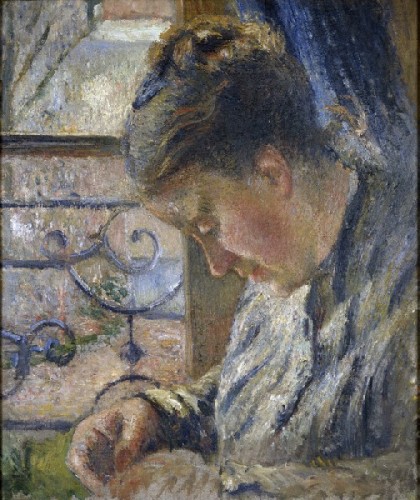
Camille Pissarro, Madame Pissarro Sewing, 1885

My grandpa’s mug is filled and he has seated himself back at the table. He nods along to my grandma’s words.

“Your grandpa was lucky – he married a smart one.”

I burst out laughing, and I can see a shadow of a smile on grandpa’s lips. But he nods.

“What! It’s true!” my grandma purses her lips. “I learned quickly. My mother raised me to be useful because my father died when I was thirteen. Women had work, but not all women did it. There were plenty of girls that just ran wild in the street, girls that didn’t even know how to hold a needle, but my mother wouldn’t let me become one of those girls.”

My grandma shakes her head sadly, as though I have just come in from running wild in the streets.

“If you weren’t married by 23, you were an old maid. No one wanted you then!”

Now it is my turn to give her a look.

“Well of course times are different now,” she says, “Back then you were defined by your marriage. If you look at me, you wouldn’t say I need a man.” She leans in close to me and lowers her voice, “Just between you and me, your strange egg grandpa would not last a week without me.” I turn to look at him, with his hands folded in his lap, his lips pursed. They would be pursed forever if it wasn’t for my grandma goading him to talk now and then. She leans back, content that I know who’s who in this relationship, then shrugs. “But that’s just how it was.”

“Women back then were different,” my grandpa says suddenly. He gives me a look and this time, smiles for real. I know he is thinking about me at family dinners, how my voice is the loudest. How I talk too fast. Say too much. Laugh too loud, and then says exactly what I expect him to say, “They didn’t talk so much, for one thing.”

My grandpa takes his blood pressure with his glasses on, recording the numbers in a little notebook. They seem wildly different from day to day, and I ask him how accurate the readings are. Not very he says, but continues to write down the numbers.

They are examining their medication cases, those long plastic bars that have a compartment for each day of the week.

My grandpa gives me a serious, thoughtful look.

What day is it?

Sunday.

Ah. I forgot to take these this morning.

My grandma roles her eyes. What else is new.

Ah well, he says, then motions for my grandmother’s arm. Let’s take your blood pressure. She lays it out on the table, one strong arm. Seventy years, I think. At least she must have made 400 hundred dumplings at least once a month. 4800 dumplings a year.

336,000 dumplings, just in the course of her marriage, not including when she wasn’t yet married and made dumplings for her own family.  

I write on my phone as the machine groans and squeezes my grandma’s arms.

146 over 56 my grandpa reads, and diligently writes it down next to his numbers. Blood pressure. Heart beats. Life in numbers listed on a clean white, lined square of paper.

Are you still writing your email? My grandpa asks me.

No no, I’m done with that. I’m writing about something else.

He nods. Someone in the family told him I like to write. He turns to my grandmother. Did you take your medicine?

I’m waiting for the water to cool.

On the screen, the actors wail. My grandpa turns back to watching Beijing opera just in time to see the actor with the long black beard disappear behind a curtain and emerge with a gray beard. My grandma asks him whats going on.

The man’s family was executed by the evil Emperor, and he too, is next on the list. He wants to escape, but cannot leave the palace. All the guards have their eyes on him and he has no way out. But he stays up the whole night fretting and his beard turns white from stress. The actor disappears again, and reemerges with a white beard. He laments his beard turning white, but knows it doesn’t matter, because he will die soon anyway. But the next morning, the executioner does not recognize him and he is able to escape with his life. The audience applauds wildly.

I don’t understand the opera, but with my grandpa’s translation, I can understand the relief the man with the white beard must feel. Or perhaps my grandma can better understand. Her face is bruised and battered, but she still has her strong arms, even her weak legs. She can still tell me stories and roll her eyes and call my grandfather a strange creature. 

It’s a nice story, sighs the strange creature with the strong heart. He sounds a little tired, but happy.

Edward Hopper Two Comedians, 1966 Oil on Canvas

Thanks, Giving

In kindergarten, we were asked, the day before Thanksgiving, to outline our tiny palms on orange construction paper. I remember removing my hand and seeing what my teacher promised would be a turkey and what a turkey it was! We were instructed to color in the lines of our fingers to represent the turkey’s plumage and to give the turkey a face and legs. Carefully with a brown crayon, I drew a wing, a crooked smile, and spindly turkey legs. With a black crayon, I gave it beady-eyed sight. A rudimentary leering bird: a child’s take on a symbol of gratitude.

That was the easy part, not necessarily the art.

On the back there were printed words followed by blank lines: “I am thankful for….”

Gratitude as a concept was rather foreign to me. As a four year old with strong opinions and a sense of self (which would sadly, come and go), I thought I grasped how the world worked. My relationships were simple and so was my life. School, Chinese school, screaming and yelling with my cousins took up the bulk of my time, along with the occasional spanking which resulted in more screaming and yelling.

I doubt I propped my elbows up on my preschool desk and twirled my black crayon in a thoughtful way. I doubt I asked myself: “What am I thankful for? A very good question indeed.”

What happened, (despite my memory being notoriously poor, I am certain this is 99% accurate) is I simply looked around to what my classmates were so furiously scribbling and saw the words, “Mommy”, “Daddy,” “Brother,” “Dog” and other generic words that compose a child’s world being scrawled out in illegible child’s script.

So I followed suit. Not because I was a lemming, but because my classmates reminded me then that “Hey, these bozos have the right idea! I am kinda grateful for my dad, my mother (even though she uses the belt) and my brother, (who saves me from the belt). These people/things are to be grateful for.”

An early lesson in gratitude.

Normal Rockwell Freedom from Want 1943 The Normal Rockwell Museum

Now two decades later I don’t have to think about it anymore because they are always on my mind. Give me the blank lines again and I’ll give you a book.

I am thankful for……

Family.
Friends.
My job and the smiling faces (and kind-hearted reprimands) that come with it, and all the other jobs I’ve had, never for the paycheck (because for many years there was never a paycheck) but for the stories.
Life in general, for more stories.

 And most importantly, because this medium commands it, I am grateful for you literate and “very highbrow” people who make time in your busy days to read my blog. Because writing a blog no one reads is like dancing alone – which on certain days can be just the right amount of fun – but usually, it is better with company.

Happy Thanksgiving.

All of the Lights

Across the street, my neighbors have already put up their Christmas lights. Yesterday, as I was backing out of the driveway on my way to a family dinner, I saw two young men standing on their front lawn, an intimidating tangle of Christmas lights at their feet. 

One of them had his hands on his hips, a concerned look on his face. The other was texting someone – it didn’t seem like they would get the job done anytime soon, but then again, they were professionals. I wished them a silent good luck and drove off. This morning, the “icicles” are up and dripping rainwater.

We used to put up Christmas lights, the only family on the block to get up on a ladder and do it ourselves. My brother, father and I would spend the morning untangling the lights, go in for lunch, and then come back out and hang them up on nails we had driven into the edge of our roof when we first moved here. At our old house we used the giant, multicolored bulbs that now, mostly evoke the 80’s and early 90’s, but moving here, we saw that the neighbors used the smaller white lights so we switched, too. A few years ago we stopped putting lights up. It was, as the excuse goes, “too much trouble.”

Too much trouble. Photo from digsdigs.com.

 And though I missed them at first, I too, was relieved when the holidays were over and there was one less thing to put away. On top of that, we live in a strange area which, once a year is assaulted by the Devil’s breath, also known as the Santa Ana winds. They blow ferociously around the house, knocking over my mother’s potted plants, rolling them into the swimming pool and sometimes, cracks brittle tree branches. They cause fires which is the last thing anyone needs around the holidays and make your skin dry and ashy, which is also blows (pun intended) when you are trying to look your best for friends and family and photographs. They tear the Christmas lights this way and that, and sometimes, damages the bulbs so that when we plug the lights in, half of the strand is dark. Our house then looks like a sullen face with one garish eyebrow.

But the winds can’t touch what’s on the inside (unless some idiot leaves a window or two open). 

—————–

Except for a few outlying years where Christmas was randomly held at my cousin’s or aunt’s house, the party is at our house. Those exceptions however, occurred three years in a row and burned themselves in my father’s brain – he began to think that perhaps Christmas would never be at our house again.

Somewhere in the middle of this, we remodeled our house. During, my father took stock of all the things we had in the garage and made the decision to clear out our junk. He informed me of his decision, and I applauded him. He, my mother and the rest of the Asian immigrants from their generation are notorious pack rats, so it was nice to see that he was making an attempt to be otherwise. And for a while, it did seem like we had more room in the garage. Except when the holidays rolled around and it was decided that our house, newly remodeled, would once again be the place to have the annual family Christmas party, I couldn’t find the Christmas decorations.

To be more specific, I couldn’t find our ornaments – none of which were particularly expensive, but they had great sentimental value – at least to me. There were ornaments my mother and aunts had made for their first Christmas here in the United States and a few others that solely by being manufactured three decades ago, were simply of better quality than ornaments today. Lastly, there were the half-dozen or so handcrafted popsicle stick ornaments my brother and I had made in preschool and elementary school – rudimentary but completely original creations with our childhood photographs in them. We wrote things like, “Merry Christmas Mom and Dad,” in our child’s script on the back of them, and even though they were meant for our parents, I would have been happy to take them with me to my future home.

Inexplicably, my father saw the ornaments as “junk” and kept instead the dozens of empty jars, boxes, paper bags, unused yet outdated appliances and suitcases – all utterly replaceable.

When I discovered that the ornaments were gone, glittering lonesomely in some distant landfill, I berated my father. What a Grinch he was, I cried (though I do not think there is a Chinese word for “Grinch,” and instead must have used the Chinese word for “shitty person”), how could he throw away things with so much history and keep all the junk?

“We stopped putting up lights so many years ago and haven’t had the party here for three years,” my father said, “I imagined it was only a matter of time before we stopped putting up the tree too.”

I was old enough then to accept that what was done was done and I said so.

“What’s done is done,” I said, “but we are going to put up a tree for as long as I live at home. That’s something I don’t ever want to give up.” 

My father nodded, “Yes.” His face was thoughtful, but he did not seem particularly sorry.

A few days later however, he accompanied me to buy the tree, and when we had stationed it in the corner of our newly remodeled living room, he stood back and said, “It is quite nice to have a tree, whether we have a party here or not, isn’t it?”

I nodded.

“Will you go and buy more ornaments?” he asked.

I nodded again, though my heart winced to think of our old ornaments.

“Buy some nice ones you really like,” he said, then with a sigh, “I didn’t know you’d want to put the tree up again.”

I looked at him then and realized he must have been feeling a subtle but supreme regret. He had had the best intentions when he was clearing out the clutter, but erred in his judgement.

It didn’t matter. It was Christmas and in a few days the family would be gathered at our house again, There would be presents and people around the tree; good food, rowdy laughter and fond memories. The ornaments, no matter how old or handcrafted, had never been the focal point of our gathering.

“Thanks Bah,” I said, “I’ll get them tomorrow. It’ll still be a beautiful tree.”

Unknown

On my 25th birthday I received a call from “Unknown.” It was 11:35 pm and my birthday had wound down without ever having wound up. I had woken up, gone to work, come home, napped, and putted around the house in my usual after-nap stupor. I ate a quiet dinner with my parents, neither of them bringing up the fact that I had just turned twenty-five. Why would they? Aside from the fact that I never could remember their birthdays (annoyingly, they chose to celebrate birthdays by the mysterious Lunar calendar, as though they were werewolves) May 9, 2011 was just like any other day, and would, judging by how things were unfolding, be like any other year. There would be a celebration in Las Vegas that following weekend, for which I was excited. Three friends and I would “party it up” young people style, meaning we would don short dresses and tall shoes and teeter about sprawling casino floors looking forward to dancing all night in massive, ornate nightclubs but really end up just wanting to sit down. The fact of the matter was that at age twenty-five, aside from one’s tall shoes and short dress not being nearly as tall or as short as those on twenty-one year olds, one’s energy is somewhat lacking as well.

But before that was to happen, I found myself at home in my childhood room, feeling strangely subdued. I stood barefoot in the narrow space between my desk and bed wondering where the time goes. I can re-connect my train of thought even if it didn’t necessarily happen like this:

“Goodness, I’m twenty-five now. I ought to write something. I ought to write a diary entry or something. Marking…this….strange ambivalence I feel.”

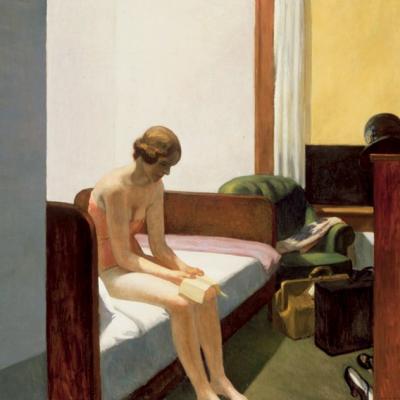
Edward Hopper Hotel Room, 1931 Oil on Canvas

It was ambivalence rather than the panic some of my friends reported feeling on their 25th birthdays. It wasn’t a quarter-life crisis, at least not yet. I didn’t feel lost or disappointed or much like questioning my life’s purpose (perhaps unwisely, I believe no one ought to ask themselves -not at twenty-five, anyway – unless they prefer the worst of mental agonies). Rather, I felt a numb surprise and mild amusement at what my sixteen or eighteen year old self would have said if she had foreseen her twenty-five year old self living in the same room and working at an aerospace transparency systems company.

Certainly, I went through these motions:

  • Looked at my computer and mulled over posting a blog entry. But the thought of sitting stunned before a blank screen and then forcing myself to hash out a half-assed, self-indulgent entry about nothing or, worse, a variation on a tired theme (the future!? What of it?!?!). 
  • Browsed my bookshelf for an inspirational/uplifting book. Perhaps Robert Greene’s The Forty-Eight Rules of Power? Or How to Think Like Leonardo Da Vinci? I shook my head no. Twenty-five merely meant a year older, not several thousand times more ambitious.
  • Stole a reluctant, guilty glance at my diary, the thin black volume that sits deceptively stolid atop my desk and in which I write only to curse/pine/dream. On past birthdays, it had been my greatest friend, a kindred spirit with clean lines upon which I wrote of grandeur and optimism only a young(er) person is capable of. I often looked forward to writing in it on birthdays and New Year’s Eves, seeing my filling the slate as a paradoxical but comforting way to clear it. Yet that night, my diary was a stranger.

No. No reading or writing would be done on my twenty-fifth birthday. Though it was late my mind ticked hungrily, vaguely wanting something it could not find on the bookshelf or even within itself to write out upon paper. Something critical to my feeling centered and whole had been missing from the moment I woke and it was never regained or returned. It was not my parents’ lack of acknowledgment (however abusive or neglectful this makes them seem, this is simply who they are. They love me dearly, in other ways), nor was it anything from my friends or from myself, even.

I wanted to speak to someone very dear to me, someone who had been where I was and who knew me and could say something that would dispel the ambivalence, however silly and temporary it was. I am, for the most part, an emotionally stable person – but my self-purported stability pales in comparison to that of my brother. Ah. There it was, and wasn’t. He was not there. I went to my phone, which sat charging on my dresser. I had plugged it in immediately after work, leaving it on vibrate and throughout the afternoon it buzzed with various texts and calls from people wishing me a “good one.” Near dinner time however, I had gone out of the room and forgotten about it until now. And now I thought to revisit the slim gadget – a gift disguised as hand-me-down from my brother – two messages blinked from the screen – “One Missed Call: Unknown.” and, “One Voicemail: Unknown.”

Play:

Hey Betty, it’s your brother.” 

Always, that unnecessary yet singular self-introduction. I would know that voice anywhere, a younger, smoother, more articulate and unhurried version of my father’s. Better English.

“I just wanted to give you a call and say “Happy Birthday.” So hope you had a good one. I’ll talk to you later. Bye.” 

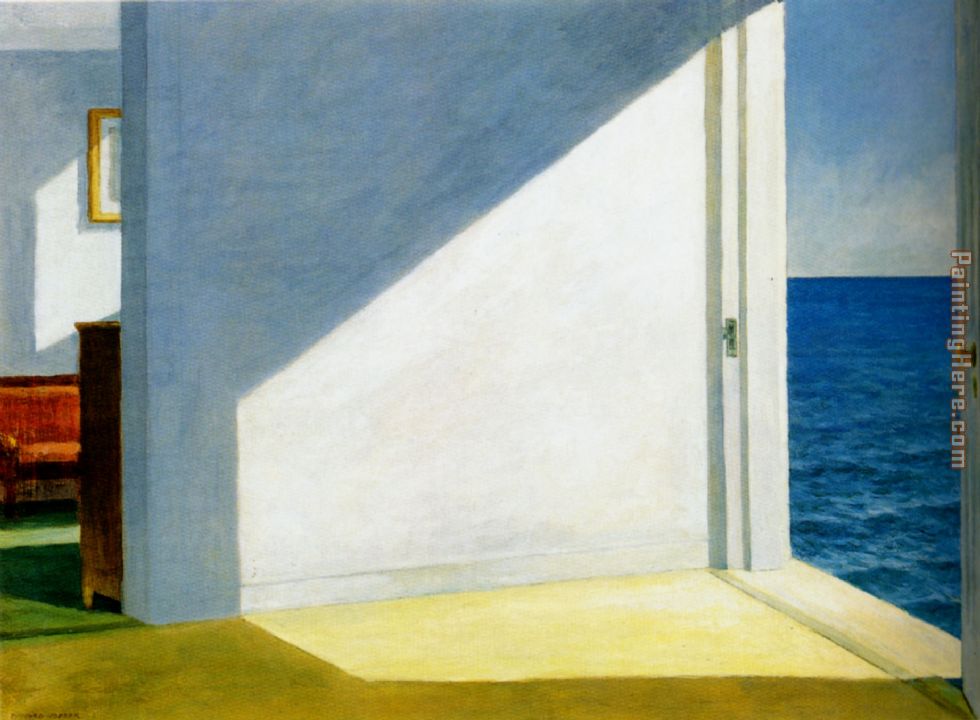
Edward Hopper Rooms by the Sea, 1951 Oil on canvas.

And that was all it took. It was, in the history of voice mails, perhaps not the warmest, or the most enthusiastic, and most certainly not the most sentimental, but my brother is all those things without overtly being any of those things. He was “Unknown,” but perhaps the only “unknown” I could ever, ever be certain about. He was away, yet right there in my hand. He had sent a sliver of his voice into the phone he had passed down to me and in doing so, filled a gaping void I felt most acutely that Monday morning. The missing piece was not to be read or written, but heard. And standing there in my childhood room at the age of twenty-five, I was grateful that from the swell of uknowns that lay before me, I could at least be sure of one.

Love, a Facet

When my mother goes abroad, which is often, her greatest fear is that we will let her garden die. And by “we,” I mean “I.” My track record for watering mom’s plants lags far behind even my brother’s, whose record would be deemed abysmal by any green thumb’s standards. If asked, he will water every other day for about a fraction of the required time, standing in one place like a statue in a fountain so that a very lucky spot in my mother’s garden will continue to flourish while all the plants around it wilt and wither to the ground like an empire fallen around a tyrant king. Occasionally, if he feels generous, my brother will flick his wrist to and fro, like tossing crumbs to serfs and peasants so that by the time my mother comes home those plants are clinging on for dear life, their stomata (a dusty word, pulled out of 9th grade biology fog) puckered beyond recognition.

But being male and being her son, my brother would only be mildly chastised by my mother’s furrowed brow. She would say, sadly, “Thank you for watering my plants,” before inevitably turn on me because really, watering the garden is a woman’s job, “Why didn’t you water the plants?” she’d say, implying, “Where were you when this massacre happened? Why did you not stop it?”

And really, if my only shortcoming as a daughter was a reluctance to water my mother’s plants, then I’d say, “Oh boo hoo, deal with it,” but this is far from my only shortcoming. For one, I love my mother’s garden in the same way I love Target. I love shopping there and would be terribly, terribly distressed if one day it were to implode and Wal-Mart became my only option for “cheap mega-stores in which to spend too much time and money,” but I would never in a million years enjoy working there. I will take from it (hell, if Target had a “blind employees only day”, I would don soft slippers and leave with an ungodly amount of stolen Hawaiian Tropic Sunscreen, cheap t-shirts, and NYTimes Bestsellers), get what I need to live my good life. But give back? Never!

And so too with my mother’s garden. She plants and tends to a variety of my favorite fruits, vegetables, and herbs: tomatoes, yam leaves, leeks, green onion, mint, basil, cilantro, doughnut peaches, apricots, and those are just what I can name off the top of my head. She does the harvesting as well as most of the cooking (though my father will beg to differ); I merely nod gleefully when she brings in basket after basket of my favorite produce.

With such a plentiful garden that makes so many people so happy (we often swap with my other green-thumbed aunts and grandma), it is only natural for my mother to worry about it in her absence. I worried too, briefly, wondering how many minutes of my day I’d have to devote to watering plants during her recent trip, as my brother would not be here to split the responsibility with me. Watering always turned out to be a rather enjoyable experience – I found I enjoyed the cool breeze at dusk and the grass between my toes, the soothing white noise of the water, but like many things enjoyable or not, I prefer selfish acts of indolence to productive acts of generosity that ultimately benefit myself as well. As it turned out, I needn’t have worried about touching the hose at all – not even once. My father, the jack-of-all trades that he is, saw to that.

If my mother is not traveling with my father, she knows in her heart that my father will take care of not only the plants but also of everything else. It is not in his nature to sit still for longer than an hour long news segment (unless it is very late at night), or to let things fall apart or stay in disarray. I inherited this from him, a desire to purge and clean and organize – though I do it almost exclusively in my own space. My father has a larger conscience than I – and even though rather annoyingly, he likes to be recognized for his “achievements, (“Do you see what I did with the bamboo grove today? Doesn’t it look so neat like a Japanese garden?” Or “Look at these lunches I packed you!”) I would be very narrow-hearted to say that he does not deserve it. Thus my mother knows that her husband – he who masquerades as a sloth on weekday evenings in front of the TV but in actuality, is the king of efficiency and productivity – will take care of the garden, take care of the house, take care of the lazy, easily fatigued, adult, live-at-home daughter in her absence because it is in his nature to do so.

But a smart woman, my mother knows better than to ask him directly. My father no doubt grew up thinking that old joke, “Today is opposite day” was endlessly amusing. In Chinese, we say people like that take great joy in “singing the opposite or minor chord” and for the most part, these people are huge pains, as my father is. But my father is also reliable in the way a man ought to be, especially if he is to talk so loudly and be, in general, a huge pain. He assumed the role of housewife upon my mother’s departure, donning yet another hat in addition to the ones he already wears: bread-winner (and maker, as lately he’s been tinkering with various banana-bread recipes), voice-of-reason, advice dispenser, organizer, laundry man (though this is one chore I do prefer), and a long list of other roles.

Long ago the divisions were made: my mother’s domain was the garden and the messy vanity area in their bathroom. Rather than makeup and perfume – the accoutrements of most women’s vanities – my mother had stacks of Chinese homework and textbooks, pens and pencils she scavenged from wasteful students, and special offers from nearly every Las Vegas casino resort, a testament that even otherwise frugal educators can have foolish and extravagant vices. My father lay claim to the family room, taking the central spot on our curved black leather couch and the small, wooden round table in the corner where he reads his emails, browses the paper, and clips Costco coupons. He is also in charge of cleaning and organizing the garage. The kitchen was like the middle part of a Venn Diagram, where husband and wife converged to cook grand dinners together when they entertained or simply, when they each had ideas about dinner that just so complimented each other.

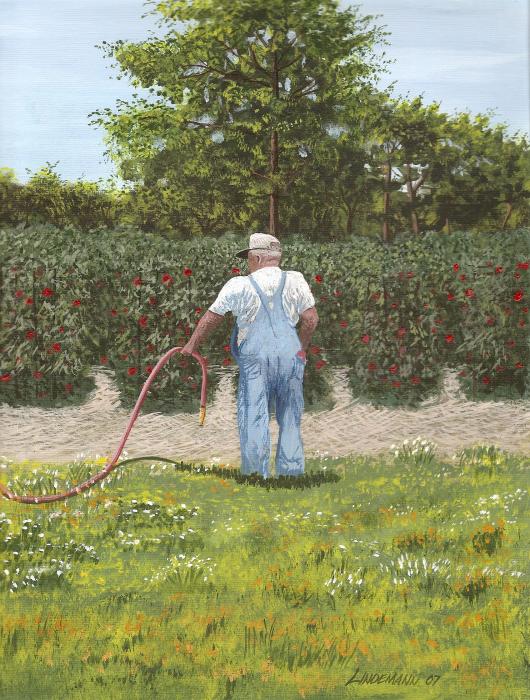
Old Man in Garden by Don Lindemann

Here’s the thing: when my father is gone, my mother stays in her domains and never ventures into my father’s. Why should she? She doesn’t read the newspapers, nor does she watch TV. The garage is just where she parks her car. But when my mother is gone, my father, though you could not tell from his face, almost gleefully assumes the role of gardener as well, and disappears into the yard for hours on end. The garden, because of what is produces, is closely tied to the kitchen and when my mother is home, the clanking pots, running water and tinkling glasses are usually an aural sign of her presence. However, sometimes the kitchen falls unexpectedly quiet and I come out of my room to find the kitchen empty and the back door slightly ajar, a pair of black house slippers awaiting my mother’s feet to re-inhabit them, sounds replaced by this simple image. Recently however, I still hear the clanking and the rushing and the tinkling, and sometimes, when the sounds stop, I enter the kitchen to see that there are pots bubbling on the stove, vegetables diced on the chopping block, and the back door slightly ajar with my father’s beige house slippers standing by. The television is invariably on, the sounds wafting into the kitchen – and the overall effect is calming, as is the knowledge that even without my mother, my father can keep things running smoothly for all of us. 

Like clockwork he removes his socks after dinner each day and steps out and into the backyard to water his wife’s plants until the sun goes down. He does this after a full day’s work, after spending a half hour making dinner for himself and his adult, live-at-home daughter, who during the summers, comes home from work to swim and then sleep for an hour. She eats with relish because her father cooks what she loves, and after dinner, does the dishes, memories of her father being a huge pain briefly suspended in her gratitude for the meal, lovingly prepared. She soaps the dishes and thanks her father for dinner, reminding herself that nothing and no one, no matter how steady or reliable or invariable, ought to be taken for granted. The father nods, pleased that his daughter is both fed and happy and without further ado, steps out into the warm evening air to water the plants his wife adores.

July

IMG_0404

My grandfather was interred on a hillside in the outskirts of Taipei city on a muggy July afternoon. As tradition dictated, we turned our backs on his coffin as the gravediggers dropped him into the ground. There is nothing sinister about a man dying from old age, but there is too much mystery about death to take chances, so by turning away, we were protecting our spirits from following his into the grave. Continue reading “July”

Father’s Day

Yesterday afternoon it occurred to me that I am often rude to my father. To anyone who has seen me speak to my father, this is old news. Sometime after my 19th birthday I gained a false confidence that allowed me to bite – not always back, but just bite. It was always there, brewing. My mother always said, “We could never control you. We could never tell you to do anything you didn’t want to do.” And it was true. I have always thought, “What do they know?”  They mostly being my father.

As a child, I would wait at home for my father to bring me books from the library, where he’d stop by on his way home from work and pick out a few picture books for me to read. He reads. I read. He is where I get it from. I got older and started to check out books for myself, rolling down literary hills like the proverbial stone, gathering moss until one day it seemed my tastes would never change. I was stuck in fiction while my father hoped, what with all our magazine subscriptions and shelves filled with reference, history and business books, that I’d transition my tastes to non-fiction. Useful stuff.

“There’s little to be gained from reading fiction,” he would say, “Or at least low-quality fiction.” And perhaps it started then, perhaps it didn’t – but I began to suspect at some point that my father did not and would not understand me. Ever. I admit for many years I read low quality fiction. And while I falsely considered myself a reader from a young age only because someone had pointed out to me in middle school that I always seemed to have a book in hand, it wasn’t until I met other, truer readers – boys and girls whose reading levels seemed years ahead of mine and whose favorite authors wrote single novels about extremely well-developed individuals rather than a series involving a boy named Leroy aka Encyclopedia Brown or soulless novels with gruesome covers that ultimately disappointed in the end (Christopher Pike, anyone?) – that I realized where the really good reading was.

He reads no fiction now, preferring history and finance books on Sunday afternoons, but my father is extremely well-read in classic Chinese literature. Fiction, yes, but vastly different from the emotive, English literature I prefer. Or so I’ve heard. I won’t knock it until I’ve tried it, but this is more than my father is capable of. He sees my novels and glossy fashion magazines and wonders (sometimes correctly, oftentimes not so much) that my brain is all fiction and fashion and frilly.

Misunderstanding breeds contempt, and while my father can never harbor contempt for me, I let my contempt for him grow because I did not – do not- understand how he cannot understand me. It is always a shame when your child is someone you cannot get along with, but my father is blind to this. He likely thinks we have a wonderful relationship, filled with smiles and laughter and understanding – and to a certain extent, in small doses, thirty-minute intervals (or however long it takes to eat dinner), we do. I admire my father for many things: he is calm under pressure, he is knowledgeable, he is organized, a good cook, generous, kind – he is all these things and many more wonderful things. But he is also loud, obnoxious, self-involved, a poor-listener, humorous in a way I find contemptuous rather than truly funny, and alarmingly narrow-minded at times (“No one will read your blog,” he has said, “If you only write about personal things.” Oh father, I beg to differ.)

In college, I began to expand my reading tastes. Thanks to the likes of Jon Krakauer, Russell Baker and Erik Larson, I learned that non-fiction can be just as fascinating as fiction if not more so, as it was real. I ate up biographies, social studies, and eventually opened myself to business books – or at least books that seemed more business like. In the back of my head, I thought perhaps it would give me more to talk about with my dad, but (and this may seem small, but day after day it can become exhausting) he is always more interested in showing what he knows and testing to see if you know it to, in which case, if you don’t, you’re in for an irritating session of “How can you not know this?”

It is not a fun game, especially if one has as much pride as I do.

So my contempt. What is it made of? One part exhaustion – frankly, I am tired of my father. We do better when I am far away. One part empathy: he has none, so I make up for it. Who knows whether it is actual strength or a missing link, a gaping hole in his emotional makeup; I have a hunch however, that it is a enigmatic mixture of the two. No one, and I mean NO ONE, has ever seen him cry. When my grandfather died, he merely smiled and patted my sobbing cousins on the back. “It’s the way of life,” he said. When his mother passed away some forty years ago, he paid his respects and then called my mother, whom his mother extremely disliked. “My mother’s dead,” he said, though perhaps a bit more eloquently, “Let’s get married.”

He is a thinker, but in the most pragmatic way. I am a thinker too, but in the most useless, ineffective way. He sleeps anywhere, without issue. I can no longer sleep. He is a businessman. I like to write personal essays on a blog. All these things caused our personalities to butt heads, but now as I get older, I see that I’m the only one butting.

My father tries now, to accommodate me in every which way. And this is where his vulnerability lies: he does not want his children to be very far away, except that my brother has already flown the coop and may never come back in the way that he came back, just a year ago. And while I’m nowhere near financially ready, my father can probably sense that my feet are itching to go. He does not mean to smother, and honestly I cannot say that he does, but my irritation with him, my narrowed eyes and sullen face and one-word monotone responses that too soon give rise to sharp, ungrateful tones and sarcasm smother our relationship and threaten to unravel an already thin string.

But this Father’s Day, I recognize it is I who needs to change. Not my dad, whom I thought was set in his ways and incapable of change, but me, a kind, happy girl to anyone else but to her own father, who can’t cry or hug or listen or understand, but who loves.