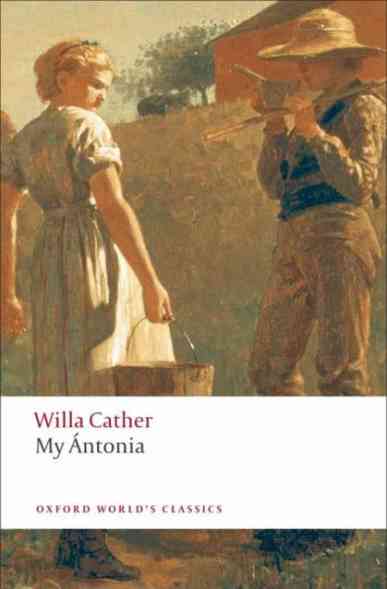
 Oh Electricity, you are wonderful. We never know how great the light is until we’re forced to live in the dark. Continue reading “What I’m Reading: My Antonià by Willa Cather”
Category: Writing
Because Other People Do it Better (Writing about New York Edition): Adam Gopnik
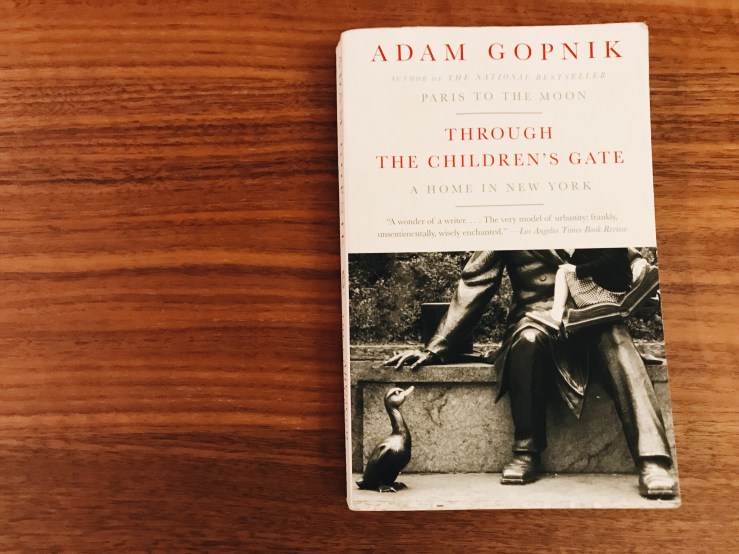
In my personal statements for certain schools, I’m asked to list authors who’ve influenced me – and even though I’m afraid of the admissions people reading my list and then reading my writing sample and saying, “Well here’s a shameless imitator,” I have to be honest. Influences are influences, and of the many essayists I read and love (David Sedaris, Betsy Lerner, Joan Didion, Joseph Epstein, et. al.), Adam Gopnik stands out above the rest. Continue reading “Because Other People Do it Better (Writing about New York Edition): Adam Gopnik”
What I’m Reading: Great Love Stories
 I’m currently reading My Mistress’s Sparrow is Dead, an anthology of great love stories selected by Jeffrey Eugenides, one of my favorite writers now though I’ve yet to finish either of his novels. Continue reading “What I’m Reading: Great Love Stories”
Thoughts on the Kindle and Real Books

For my birthday two years ago my brother bought me a Kindle. He assumed I was running out of shelf-space (I was), and that being the voracious reader I was, needed a one stop shop for all the books I had yet to read but had no room for. Continue reading “Thoughts on the Kindle and Real Books”
Ira Glass on Having taste, Talent and Being Successful
Yesterday Madame Receptionist and I took a stroll around the company parking lot. Sometimes, when my boss takes a long lunch or when things are not so busy I have the time to do so. Sometimes I come back a little late and he is already back from a not-so-long lunch, and instead of asking me, “Where the hell were you,” as I feared he would the first time I came back late, he merely nods as our eyes meet and turns back to his computer screen.
“I’m no slave driver,” he once said, when I asked him for two days off to visit Chicago, “Go, take a break. Have fun.”
When I returned a lady from accounting asked me if I had gone to visit a boyfriend.
“No,” I said, “Just a friend.”
She giggled and nodded towards my boss’s silent figure behind the glass.
“You know,” she said, “He told me you went to Chicago and I suggested that maybe you went to visit your boyfriend, and he said, ‘I hope so.’ Isn’t that funny?”
Anyway, that is beside the point.
On our stroll, we discussed various social media tools we used for our blogs. Mine is mostly writing – hers, a fashion blog, is mostly pictures. We both use twitter, Facebook and recently, Pinterest, an online pinboard that allows you to ‘pin’ images you like to customized boards. People can follow a select few or all of your boards: a more organized version of Tumblr, if you will. Yet I’m wary about using Pinterest in the same way I was wary about Tumblr – mainly, that it didn’t promote original content but the constant reblogging or “repinning” of others’ content.
I think before, it wouldn’t have bothered me so much. The internet is for sharing. Who cares if I’m unoriginal and I have nothing to post? I’ll just repost articles written by other people who made time in their days to generate original content. I’ll share pretty pictures I didn’t take, songs I didn’t write, clothes I didn’t make or outfits I didn’t put together. There’s nothing wrong with being an editor.
Well. There is nothing wrong with being an editor – in fact, I suspect sometimes I edit better than I write (you’re welcome, dozens of people whom I’ve helped with college essays and letters of rec – except for the ones who didn’t get into the schools of your choice, in which case, you have only yourself to blame) just as there is nothing wrong with being a curator. And indeed there is “art” in curating and editing and tweaking something original so that it is enhanced, but nowadays with the proliferation of social media sights that promote sharing, those that merely share will take a back seat to those that create in addition to sharing.
Madame Receptionist and I discussed what it meant to have taste – or how having taste doesn’t necessarily translate to success. Recently, a member of the marketing team announced her departure for the apparel industry. She had started her career in tech and was indeed poached from a CE company to join ours, and while she never verbally expressed her interest in fashion, there were little clues to be found here and there. The steady stream of fashion magazines, for instance, that came in the mail for her, and the random compliments she paid both of us, “Cute shoes!” or “I love that skirt. Oh my God where did you get it?”
Perhaps the biggest clue she could have given however, was in her own dress, which unfortunately fit in a little too well with the other wardrobes of the tech industry, which is to say, she dressed rather drably. Her ensembles consisted of black or grey slacks, shiny polyester tank tops from Banana Republic or the Limited, and boring, pointy-toed pumps that could either be very expensive or very cheap – a choice you never want pose to people who care to guess. Her hair was a limp, depressing mess, and though her eyes seemed energetic enough, I wanted very badly to hand her a hairbrush and to convince her to eat some protein to promote healthier hair shafts. Critical, no? Yes. Very.
That’s my point – it’s easy to be a critic. When she announced her departure I asked her why and more importantly, wondered what the apparel company saw in or on her person that could possible convince them to lead marketing at their company. Surely it wasn’t the pointy-toed pumps? Perhaps they had thought them more expensive than they were?
“I’ve always loved fashion,” she said, “and they really liked what I did here and at my previous job for digital marketing, so they want me to help them do the same there, except it’s for clothes, which is much more geared towards my interests.”
I’m not say the woman did an amazing job at my present company (that remains to be seen), but whatever she created was eye-catching and most importantly, tangible to land her a “dream” position she really wanted. When it comes to design of website, clothing, interiors – it’s easy, if you read a lot of magazines, weblogs and come into contact with the actual things, to formulate opinions of what you like and dislike. What’s harder, and what few people actually push themselves to do, is go one step further and ask themselves why. At least I am very bad at this.
I used to think it was perfectly acceptable to say, “I like what I like, I don’t have to explain why,” and in certain contexts, it is. But not when you want to drive change, or innovate, or make something better. You have to be able to say why.
During my first week I got a head of myself. My boss asked me for more business cards and I found a box of them in my desk and, upon handing it over, remarked that they weren’t very pretty business cards.
He looked at me curiously and said, “Well, we are in the process of changing our marketing image, but why? What don’t you like about the card?”
I could answer that easily enough. I didn’t like the card stock (it felt flimsy), and the logo on the back seemed dated despite its being only a year old. The card was neither “timeless” nor clean, attributes I felt excellent designs had. The colors were also to dark for my taste. The card looked like a promotional item for a cheap nightclub or a bad movie poster.
“Okay,” my boss said, “Interesting opinions. But how would you change it?”
I wasn’t prepared to answer that – at least not in as much detail as my diatribe against the card warranted.
“Simplify it,” I said, after a while, “We can make it cleaner looking. Use thicker paper. Different fonts and perhaps a different logo. Less color.”
“Be more specific,” he said.
I had a vague idea of what I thought was an attractive business card in mind, but could I actually sit down and design one? I don’t know – probably, after a few days of researching and studying other business cards, but at the moment, I was ill-prepared to back up my assertions. Why should my ideas (criticisms) reasonably trump the existing design? I was merely being a critic and not ready to deliver any solution to the problems I had called out.
My boss shook his head. “It’s great to have an opinion. It’s great to have taste, but you have to be able to support it. It’s easy for anyone with taste to say ‘Oh I don’t like this, I don’t like that,’ but are you actually creating anything to remedy what you think is bad taste?”
Okay, maybe he didn’t use the word “remedy,” but that is what he meant and it stuck with me. Probably one of the more important things I learned at work (in addition to never parking my boss’s car too close to the curb because it scratched the bottom of the car). Was that all I was? A spout of opinions? I have always been one to sprint to conclusions and shuffle towards reasoning, but at work (and slowly elsewhere, including on this blog), it’s becoming dangerous to do so, especially where other people have stronger opinions, stronger criticisms and the work ethic, stamina and reasoning skills to drive those opinions home.
Basically, it won’t do to just have taste. You (or I, really) have to do the work. Otherwise you’re just adding to the noise.
That was much longer than I intended – really, I just wanted to share this wonderful video with you all. I didn’t create it, sadly, nor did I say the words, but in this case I’m acting as curator 🙂
Ira Glass on Storytelling from David Shiyang Liu on Vimeo.
My Father’s Stories
Somewhere in between high school and my second year at college, I stopped reading fiction. Not altogether – a small number of brilliant novels made its way into my hands via persistent recommendations from friends and family – but very, very rarely now, compared to my youth when fiction was all I would read. As a young girl visiting the library, I would make a beeline for the new fiction section. If it seemed I’d already gone through the choicest ones, I’d make my way to the back shelves. But I never wandered beyond the shelves marked “Fiction and Literature.” My memory is poor, but perhaps I have done that walk so many times this impression could not help but be ingrained: I remember one evening, hurrying past the biographies and wrinkling my nose in distaste at the thick tomes about real people. “Why would anyone want to read about real people when there is so much great fiction?”
My father was a hypocritical detractor of this mindset. He would shake his head whenever I walked in with a bag full of novels and say, “That stuff doesn’t grow your brain. It makes you dream,” and I’d roll my eyes and say that he had no heart. Fiction builds character, I said. Why do you think I’m so amazing?
I say hypocritical because my father grew up on a steady diet of classical Chinese literature – all of it fiction. You may know the most famous: The Dream of the Red Chamber, The Romance ofthe Three Kingdoms, and Journey tothe West – impossibly long and complicated stories written back then by people with plenty of time and imagination, for people with plenty of time and growing imaginations.
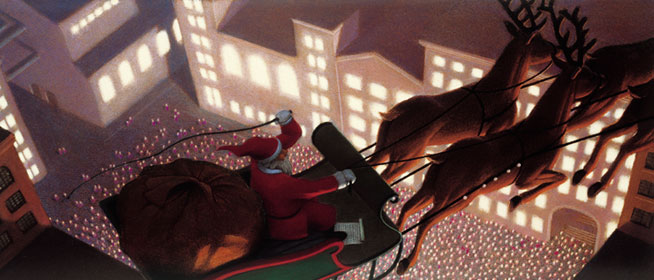 |
| My favorite scene from “The Polar Express.” |
As a grown man with thoughts of career and family, he stopped reading fiction, but he never stopped thinking about it. I have often said that I remember little of my father from my childhood, though if I were to excavate the loose grey matter I hardly use, I would find him exactly where I needed him most.
 He often picked me up from daycare and, if he came home later (though always in time for dinner), he would come bearing a large stack of children’s books from the palatial Cerritos Library. When we lived in the city, he took me there on weeknights or Sunday afternoons so that I could make my own choices and I will never forget that magical wing, designed to mimic a medieval castle with turrets filled with thin, colorful spines, each bearing a tale, not necessarily a lesson. But after we moved to a city some thirty minutes away, he often stopped by on his way home from work and picked out books with what he hoped was a discerning eye. To be honest, I don’t remember many of the books – The Polar Express, The Velveteen Rabbit and The Vanishing Pumpkin stand out (going online to see the covers of these books now, for some reason makes me cry) – but collectively, they comprised a lovely childhood.

What’s more, my father told us stories – at least, he tried to. It is a running joke in our family that my brother and I ought to know those stories by heart, at least the Journey to the West, because my father boasts of having played raconteur to us each night around bedtime. And he did, we do, but only parts. He always fell asleep after three or four lines so we never heard the ending. How did the sly monkey and pious monk get to the West? More than anything my brother and I know the sound of his snores, which now blend seamlessly with our perception of that tale. I know now, from Chinese school and later studies that the monk, the pig and the monkey eventually reached their destination, but it is vague to me, unlike my father’s introduction to the story, which still rings loud and clear. Indeed, you must be able to recall the fables and other bedtime stories your parents told you as a child – perhaps you never even set eyes on the words but you remember them and the images they evoke. It becomes innate – the stories as much a part of your genetic makeup as your hair and bones, your heart.
For years I rolled my eyes at my father, thinking he would never understand me because I loved novels and he seemed only to ever read business books and magazines, but looking back, I realize I had forgotten the source of this love.
The Art of Walking

A few nights ago, en route to a friend’s house, I drove down our dark hill and nearly into a man who was dressed like a flashlight.
That Other Life
If you let them, some things die. Hopefully not this blog.
*
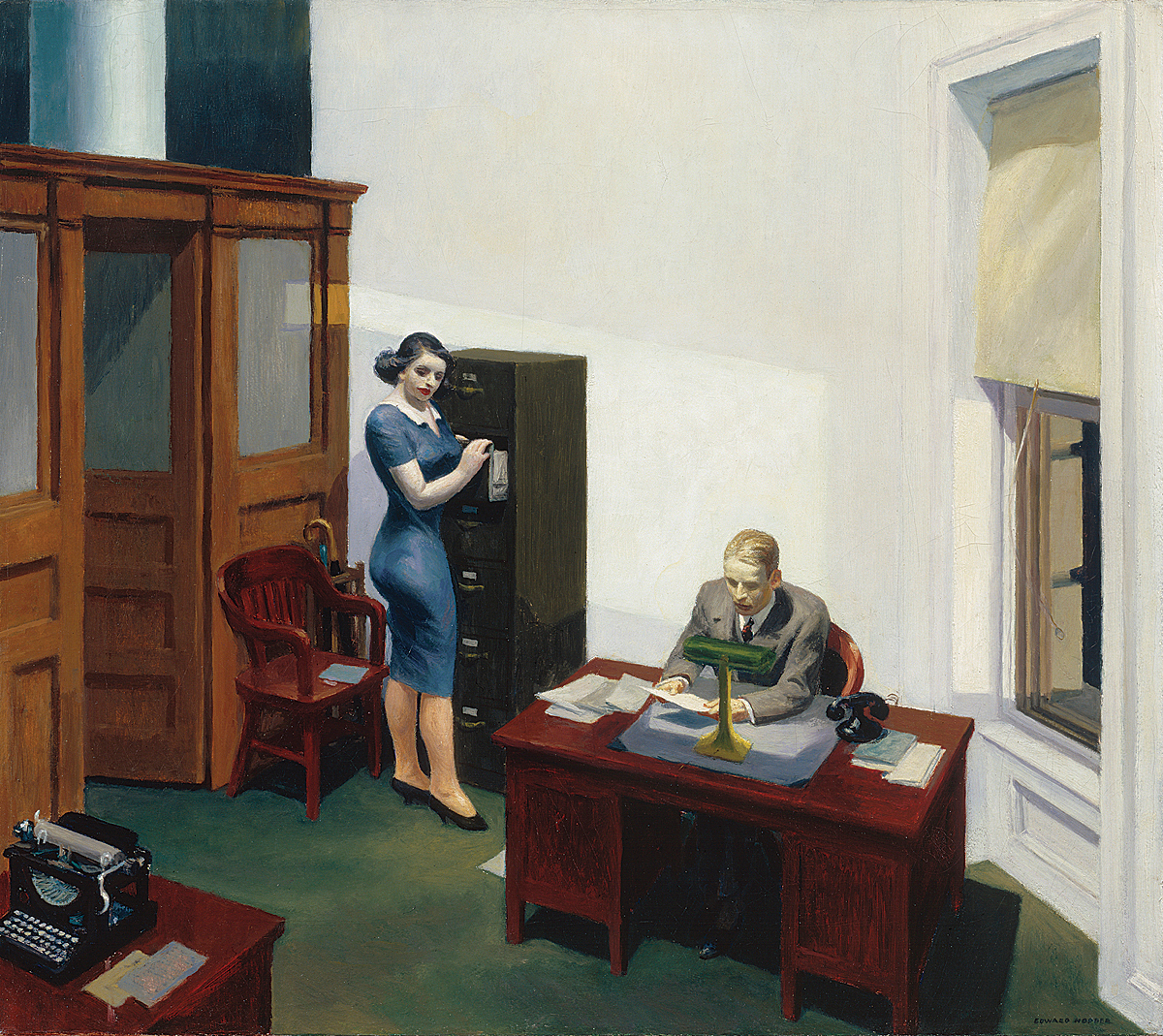 |
| Edward Hopper Office at Night, 1940. Oil on Canvas |
I’m two weeks into my new job as executive assistant and already experiencing doubts as to whether I’m “cut out” for it. Or any job. As a student (a time of my life which seems paradoxically distant yet recent), I had sat, curled on my bed one afternoon and read this book. In it she writes something along the lines of, “I became a writer because I couldn’t do anything else. No really. I was unemployable.” I had laughed then, wondering if I’d feel the same way once graduation came and went. And it did. That damn day crept up on me like the Lochness monster (by most accounts, the Lochness monster is quite stealthy) and before I knew it my mental bones had been ground and spat out onto the asphalt of the road I’m standing on now. I had to pick up the pieces and rebuild it to withstand the pressures of the real world. All I can say is, an architect I am not. I did so poorly. Very, very poorly.
*I will likely be reusing this painting in future posts.
What I’m Reading: The Sportswriter by Richard Ford
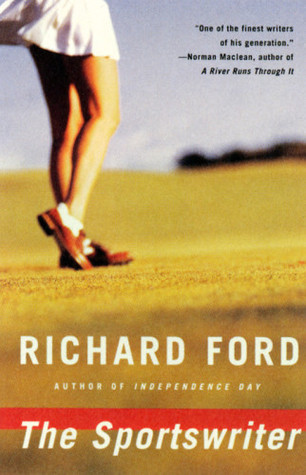 Almost done with The Sportswriter by Richard Ford, the first novel I’ve read since March, I think. Again, no book reports. Just great passages I’d like to share. Continue reading “What I’m Reading: The Sportswriter by Richard Ford”
What is This Blog About?

Recently, I’ve been more vocal about my blog.
I dare now, to tell people I’m a writer. In today’s world, it’s perfectly acceptable to have just a blog to show for it… right? Continue reading “What is This Blog About?”
 VERY HIGHBROW