Photo Diary of a 2013, Part 2

At the beginning of April, I left the bustle of Asia and came home to this:

The road. 

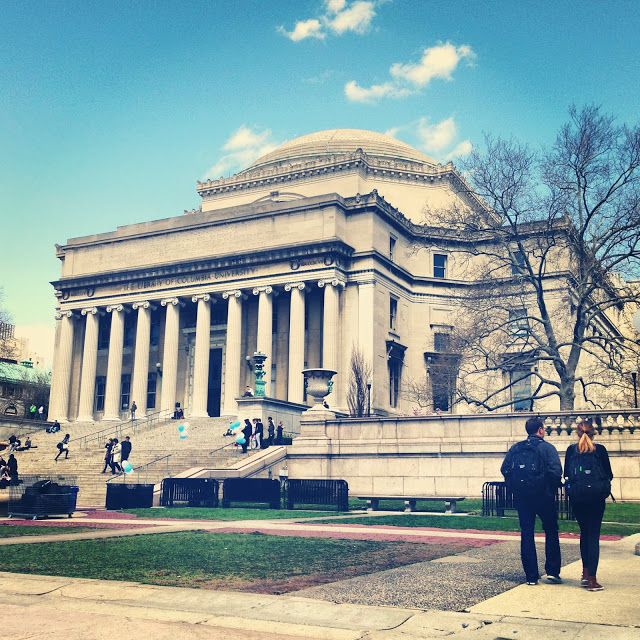
I flew to New York to attend Columbia’s admitted student’s night and stayed with Albert, an architectural student from Taiwan whom I’d met many years ago through my cousin. He never slept and smoked like a chimney and was constantly complaining about his monumental workload, but ask him if he’d prefer to be studying anywhere else and he’d shake his head. “New York is where I want to be.” His apartment was my temporary home and despite it being dark, with critical windows facing brick walls, I could see how when life is full and you’re doing what you love (and hardly ever come home because you’re at studio), things like that matter just a little less.

“I haven’t slept in three days,” says Albert, “But I’ll sleep when I’m dead (or when I run out of cigarettes).”
I was, obviously leaning towards Columbia but two things helped seal the deal: 1. They gave me more money. 2. I found my dream studio, minus the nightmare of five flights of stairs and no elevator. Also, the passionate urging of others helped. “It’s New York! What the hell are you going to do in the middle of butt-fuck nowhere North Carolina or West Virginia! New York, Betty! New York!!! Every writer’s dream!”  
I have yet to set foot inside that building. 
With the minor detail of where I was to spend the next two years of my life out of the way, it was time to settle into a peculiar routine: three days a week I lunched with my grandfather. I would get to his house around 11AM, read for a half hour, then put together a simple meal while he watched TV or read the paper. We’d eat, chat about things – sometimes he would tell me stories, sometimes he would be quiet and shake his head, wondering what was to become of me. All the time he would think about his old half, my grandmother. Lunch was always short, a thirty minute affair at the end of which I would clear the dishes and ask him if he wanted dessert. 
“None for me,” he would say. But I would push and push and eventually he would share a pineapple cake or have a bite or two of ice cream. We would read for a half hour more and he would retire to take a nap. I would move to the couch and try to continue reading, but eventually, the whirr of the water pump in the fish tank, the breeze from outside and the warming afternoon sun would cause me to nod off and for an hour Grandpa’s house would be silent but for the slow, even breath of an old man and a young woman, an anchor and a sail. 
Because sometimes glasses just don’t cut it. 
And around these afternoons I saw friends… 
Coworkers who turned into great friends, Grace and Enny. 

 …family….

Babies galore at Lucas’s (on the right!) One Month Celebration held, where else? At Sam Woo’s in Irvine. 
May rolled around and I turned twenty-seven. A damn good age, if you ask me. 


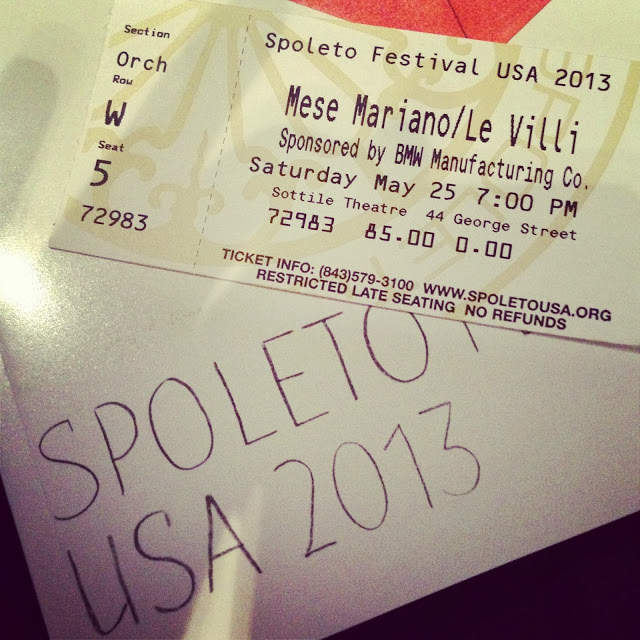
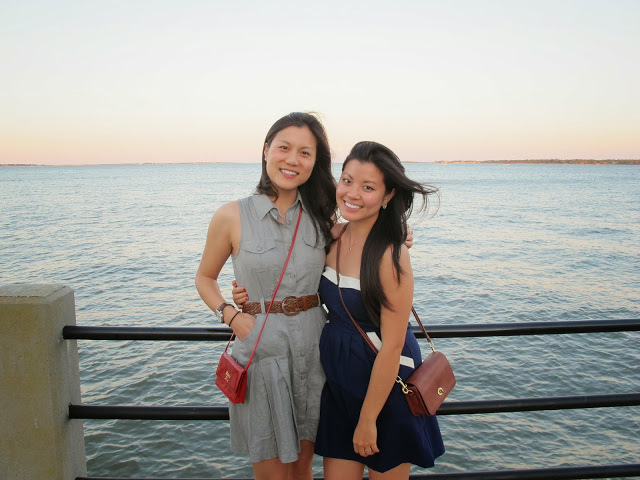
I took a trip to Charleston to see Grace, a cellist who was playing in the Spoleto Orchestra (longer post to come). I fell in love with the south and southern food, but that was expected. I went to my first southern beach and wondered what the hell southern Californians were so proud of. We wore summer dresses. I let my hair down and played bingo and drank with classical musicians who were surprisingly raunchy when they weren’t playing classical music. We walked a lot, ate a ton, and I pretended to understand the opera she got me tickets to.

Woohoo, culture! 
Grace walking at Sullivan’s Beach. 
When we weren’t stuffing our faces with fried everything we were trying to walk it off.  
Like that one ride at Disneyland. 

And immediately after that, my mother suggested an impromptu trip to Kauai. She popped into my room one evening and asked, “How much are tickets to Kauai at the end of May?”

I looked for her, then asked, “Who are you thinking about going with?”

She seemed surprised, “Oh, you! Do you want to go?”

This is what’s called a no-brainer. So we went, just the two of us.

My mother thinks about her mother. 

On our last day there, we went swimming in the hotel pool, then my mother took a nap while I wrote a letter to my brother. When she woke, I asked her how she felt about barbecue. She said fine. I ordered it by phone and drove to pick it up. My mother stayed in the kitchen, peeling papaya and when I returned, I saw that she’d been crying.

“Mom, what’s wrong?”

She started crying again.

“I was just thinking about grandma.”

“What were you thinking about that made you think of grandma?”

In hindsight, it was a stupid and insensitive question, but I think my mother understood what I meant.

“I am so lucky that my daughter can travel with me and we can spend time like this, but I can’t do that anymore with grandma.”

I hugged her, because you can’t really do anything or say anything but hug a person who misses their dead mother.

“Let’s eat outside on the balcony,” I said, and she agreed.

I poured us each half of the small bottle of wine we’d gotten from the airline and when everything was served, she raised her glass to me, something I’ve never seen her do. My mother is not a big drinker.

“I wish you a good happy life in New York,” she said. Her voice broke and her face crumpled and I choked up too, but did not cry. I said thank you. I said, “I already have a good and happy life.”

My mother thinks about me. 

At the end of June, it was time to return to Taipei. This trip was much shorter than the first, but no less fun. For starters, my cousin Karen and I returned to Hong Kong:

Traveling for business, obviously.  
Before our feet started to hurt. 
Do this panorama some justice and click on it. 
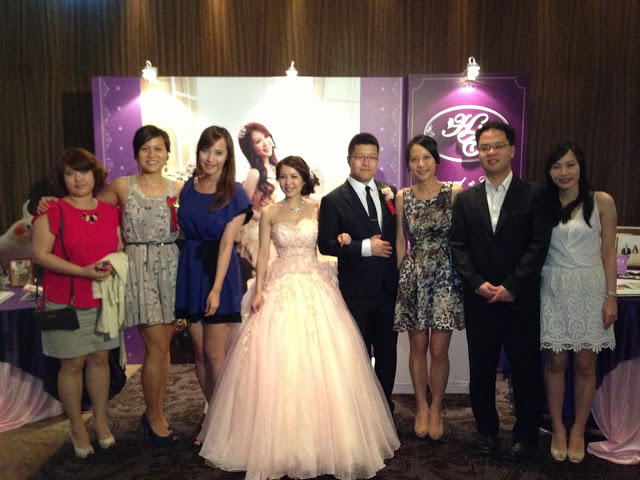
My brother got married (again, to the same Cathy), at the W Hotel in Taipei. He cried the whole time and Cathy, was like, “What is wrong with you.” It was very touching. 
Bubbles and my brother’s tears. 
Some Ho’s and then some. 
I spent some quality time with family in Taiwan, and it felt a little different this time because I wasn’t sure when I’d next be back. 
My uncle at the office. He looks at numbers, then reads Buddhist scripture, and is in bed by 9PM. Every. Single. Day. 
My cousin Melody was also home from Boston over the summer, taking a break from breaking hearts. Over Din Tai Fung, we talked about the elusive Mr. Right and the ubiquitous Mr. Wrongs.  
I ate Chinese food as though my life depended on it, unsure of what awaited me in New York. Pasta, it turns out. 
And a lot of the time, marveled at the fact that this guy was in a relationship with a girl who really really likes him. “I don’t know why either,” he says. 

I returned to California in the middle of July, hoping to return to a somewhat normal schedule, but it was crunch time. There was another trip to Vegas with the girls I go most often and have the best time with: 

Elevator selfie. 

A short trip to SF. First stop, two nights at Erica and Carson’s:

TPE – HKG – SF! Taxicab selfies are now a thing. 
I had lunch with Emily from Pearl’s wedding. She lived in SF and was trying to convince all her single girlfriends to move out there. 
“The odds are so much better for women in SF,” she said, “I heard it’s hard to meet someone in New York.” 
I nodded; I had heard the same thing. But a month later Emily would make it very easy for me to meet someone in New York. 
“What about POI? He’s offensive and so is Betty.” 

And the main event: Jaime’s Bachelorette party, which was supposed to be tame but ended up like this:

The bachelorette and a very drunk man who liked very much to “back it up.”  

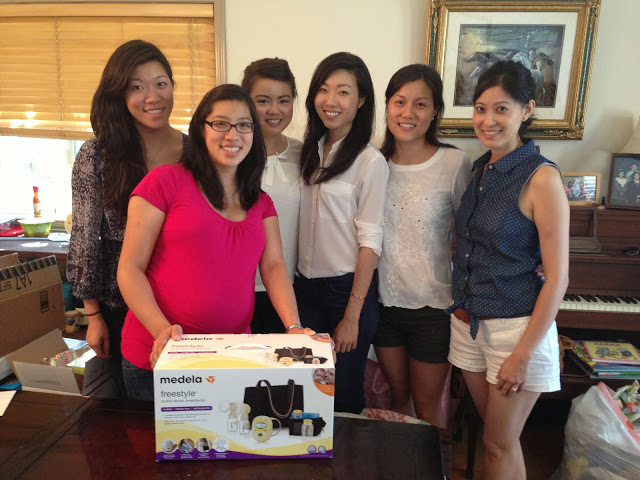
My cousin Wendy’s baby shower:

Remember earlier in the year she was in Vegas! 
And a quick succession of hangouts before I had to leave town: 
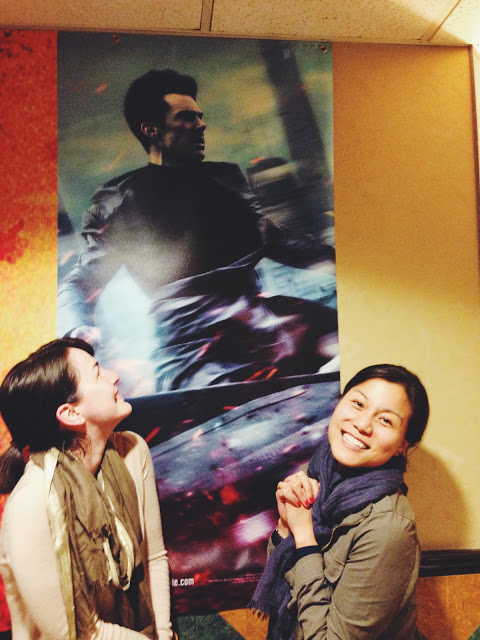
I watched a lot of movies with this girl, equally as obsessed with Benedict Cumberbatch as I was until we realized he was probably gay. But we still really like him. 

With cousin Michelle in Venice, aping an ape. 
At plate by plate with Enny, whose outfit was pretty much the talk of the town. 
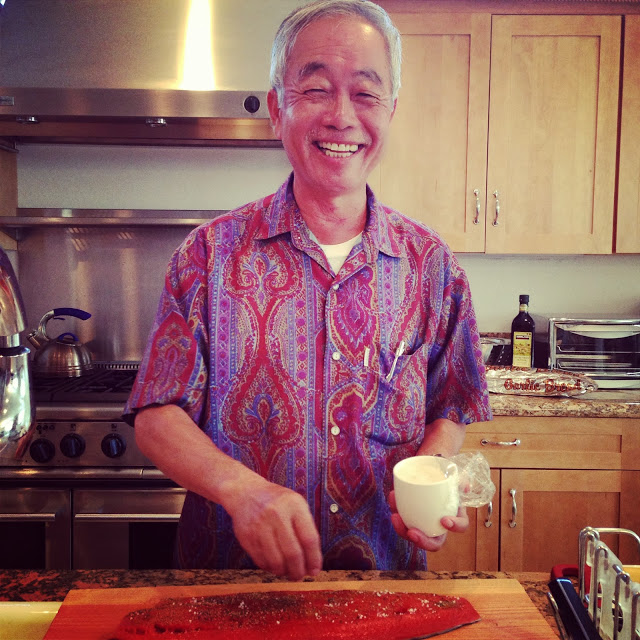
Billy’s dad salting seasoning their salmon during a random weekend at their mansion in Upland.  
With Angie and Lynn at a Phoenix International event. 
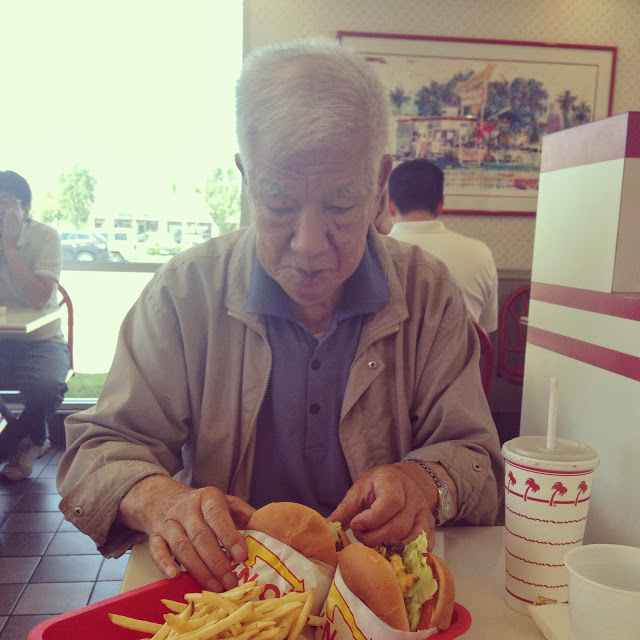
Getting In n’Out with Grandpa. 
With Auntie Linda, a few days before leaving. 
Pint-sized houseguests from Taipei. 
An impromptu mexican feast at Grace’s.  
Then, on August 17, 2013, I moved to New York. 
Well. Sort of. 
The early days. 
Grace and Charlene were there to help make things better. We went to HomeGoods and bought mirrors and lamps, you know, essential things. They helped me haul three giant boxes filled with Forever 21 crap up five flights, something the UPS guy failed to do. 
Best moving service ever 🙂 Way better than UPS. 
Then in my giant mess of an unfurnished room, we got ready for my first girls’ night out in New York. 
And it was never this messy again. 
Cleaned up and celebrating Charlene’s birthday belatedly, at Robert in Columbus Circle. 
And it was back to California for Jaime and Alvin’s beautiful wedding in San Clemente. I’ve known Jaime since middle school, when we met in science class and giggled together at the teacher’s giant armpit sweat stains. Four months later, she and her husband would fly through a snow storm and battle massive flight delays to visit me in New York. 
With bridesmaid Emy, also an old friend from high school and Jaime, one of the most low-maintenance brides in the history of brides. Emy and I always look like her bodyguards.  
I like to think that some of my photos were better than the wedding photographer’s. 
At the wedding, just as I was sitting down to dinner, Emily texted me. 
“Hey! I want to set you up with someone.” 
“I’m game,” I said, taking a bite of fish. 
A few minutes later POI texted, asking me to dinner sometime the following week. I’d let him know tomorrow, I said. First I had to eat cake and dance. I was at a wedding, after all. 
The next evening, I boarded a red-eye flight from Long Beach to JFK. And just like that, it was back to New York. For longer, for real. 

On Relationships: Home For Thanksgiving

Last Wednesday night before Thanksgiving, Grace called and asked if I knew about the storm. 
“What storm?” 
I pulled back my blinds and peered out from my fifth floor studio. The uppermost branches of the side walk trees swayed in the rain that hadn’t stopped all day, but there was nothing that could be labeled a storm. Three hours before I had come home from Magnolia Bakery at Rockefeller Center, shivering from rain. I had asked the frazzled girl behind the counter if she could saran wrap the cupcakes for me. 
“I’m sorry,” she said, leaning over, “Can you repeat that? I can’t really hear you over all this.” 
She made a sweeping motion behind me towards the crowd – hoards of people all trying to do the same thing: get cupcakes back home for Thanksgiving. Around me tourists and locals pondered Red Velvet Rockette Cupcakes or Banana Pudding; paperback or hardcover cookbook; T-shirt or onesie? Little girls huddled together, their hair but not their spirits slightly damp from the rain while their dazed parents stood behind them, holding dripping umbrellas. They seemed to be reading the menus but I could tell they were wondering what made them think that coming to New York for Thanksgiving would be a good idea. Despite the rain, the streets (at least around Rockefeller Center) were packed. Umbrellas poked you in the eye or scratched you on the neck. In New York City, Black Friday began on November 1st. 
“Can you saran-wrap them?” I said again, “I’m taking them home to California.” 
She looked at me as though I was the luckiest girl in the world. I certainly felt that way, minus the thought of lugging paper boxed cupcakes home and across country. First world problems, I get it. The weather report said California was somewhere in the seventies. Not a drop of rain in sight. 
Grace snorted into the phone, “Don’t you read the news, Betty?” 
“I looked at the New York Times just a few minutes ago. It didn’t say anything about a storm.” 
“Yeah you looked at the news, you didn’t read it.” 
I imagined her comfortably ensconced next to our best friend Amy on the squashy teal colored leather couch of her childhood home. They would be wearing sweatpants, t-shirts.  
I scrolled through the NYTimes website again, but didn’t see anything about a storm. Weather.com told a different story. Apparently the east coast was getting huge dumps of snow. But in New York City, it had only rained. All day. Still, major flight delays were anticipated. I looked at the cupcakes I had strategically stacked in my carry-on. I wasn’t bringing anything else home except a collection of James Baldwin’s Essays, on which I had a final paper due. 
“Shit,” I said, “Well. No point worrying about that now. Either I’ll make it home for Thanksgiving or -” I glanced at the cupcakes, and briefly a depressing image flashed in my mind: me alone in my apartment on Thanksgiving day surrounded by cupcakes with candy turkeys on them. I shuddered at how tight my pants would be – “I won’t.” 
“Yeah,” Grace said, “Make sure you bring a good book to the airport.” 
We hung up and I went back to staring at James Baldwin, who was in the middle of describing the Christmas he once spent locked up in a Paris prison. There were worse things than being stuck in New York over a major family holiday. But still, I had not missed home since arriving here at the end of August. I had not missed home until home was a day, a potentially delayed or cancelled flight away. 
——
On Thanksgiving Day, I woke up and lay still in bed, listening for sounds of a storm. But there were none, just some cheerful chatter on the sidewalks below. Sunlight poured in through my windows. The storm, if it had come at all, had passed. 
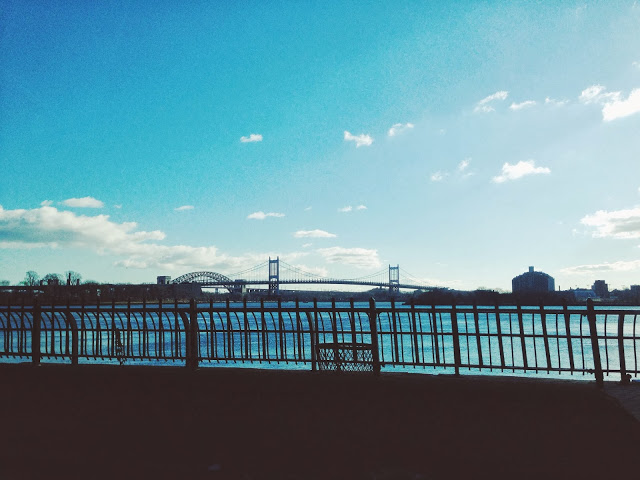
The view while leaving New York. 
The cab driver was from Kashmir. He arrived ten minutes before my requested time and groaned in mock protest when I asked him to wait ten minutes. 
“It’s Thanksgiving, lady! What you want to keep me from my family? You think you’re the only person who has to go home for the turkey?” 
I ran down the stairs, trying not to jostle the cupcakes or break my neck and apologized as I slammed the car door. He was smiling. 
“Oh you rush! No need!” he said, “I joking with you. But I guess you cannot tell over the phone. I ate my Thanksgiving dinner already.” 
He was in his mid sixties with curly once-brown hair and smiling, amiable eyes. Just an hour before, he’d left his house to begin his afternoon shift, mostly shuttling last minute stragglers like me out of town. His home had been quite lively when he left it: he had three grown children, all of whom were he said, “Doing good things, having good children.” 
“But still,” he said, “Even though they grown, when they come home, they are your children. They are always your baby children, no matter how old they are.” 
I nodded, knowing the feeling well. It is both a fear and a fallback and why I intend to stay in New York or move elsewhere – anywhere but back with my parents – after my program is finished. It sounds like the next logical step, but I know how comfortable life is back home and how well practiced I am to close chapters in cities far away only to reopen the doors of my parents’ home. 
“Just the other day,” the driver continued, “I went to see my mother and she told me to clean my plate like I was a five years old boy! I’m old man now, a grandfather! And still when I go home I become my mother’s baby. She told me to clean my plate just like she did when I was small boy, told me to clean it so the plate looked like there had never been food on it!” 
I laughed. He moved his hands with such emphasis and I could imagine his mother nagging him in Kashmiri, though I had no idea what the language sounded like. 
“My parents don’t nag me at all anymore,” I said, “And I don’t think they treat me like a child…” 
I revisited a long impromptu phone conversation I had with my father the week before. While browsing through West Elm I remembered to call him back regarding our Thanksgiving arrangements at Orange Hill Restaurant. I ended up wandering the two-story Broadway store for an hour and a half while we talked at length about school, writing, and POI. 
We discussed in detail the particulars of a possible thesis which I’d gone over with my professor the day before – a collection of essays with a spine, as she put it: a theme and tying them together, a story arc. Many essay collections lacked this, my professor warned, especially from new writers. I tended, she observed, to write largely about two things: family and relationships. I preferred to keep the two separate, but she didn’t see why I should.
“Your family is obviously a huge part of how you developed your view of relationships. They are very much at the back of your head when you write about relationships. I don’t think they ought to be kept separate at all,” she’d said. 
My professor and I discussed too, the market for someone with my particular “angle,” meaning, a twenty-seven year old woman with no prior history of having been in a serious relationship. 
“You’re far from the only one,” my professor said, “You might feel sometimes like a fish out of water but trust me, I’ve been listening to my friends, students, friends of friends… it’s a strange but increasingly common thing.” She thought for a moment, “Maybe not that strange.” 
“Market,” my father repeated, “Angle.” These were words he could wrap his head around. Publishing is after all a business and my father is a businessman. As I wandered through the recently discounted holiday bakeware and organic sheets, explaining the practical aspects of publishing: finding an agent, working with an editor, and marketing a book, I could feel him opening up, trying to view my mysterious world through his clear, practical lens. It made sense to him, he said, that the professor was telling us to keep our audience in mind and he set out to give me pointers. 
“Maybe you could organize your book by theme, or contrast the relationships people had back then, like your grandparents, your mother and I, versus the ones you’re seeing or aren’t seeing now among the people in your generation.”
I nodded, wondering if my father was watching TV at the same time, though it didn’t appear so. 
“If you think about it,” he continued, “You see so many types of relationships around you. Look at your mother’s parents versus my parents. Look at your different sets of aunts and uncles. Look at your brother and his wife, and now you and, what’s his name?” 
I reminded him, surprised that he brought POI up at all. My father is not one to talk about things like relationships and for the most part never refers to POI or when I do, says, “Who?” or calls him “That guy in London.” 
“Right,” my father said, “That guy.” 
We discussed my thesis for another half hour and I felt both in and outside the conversation, wondering at when the change, if there was indeed a change, occurred. I was never once frustrated and like creative partners discussing a new business venture, we batted around ideas. My father is a reader too. 
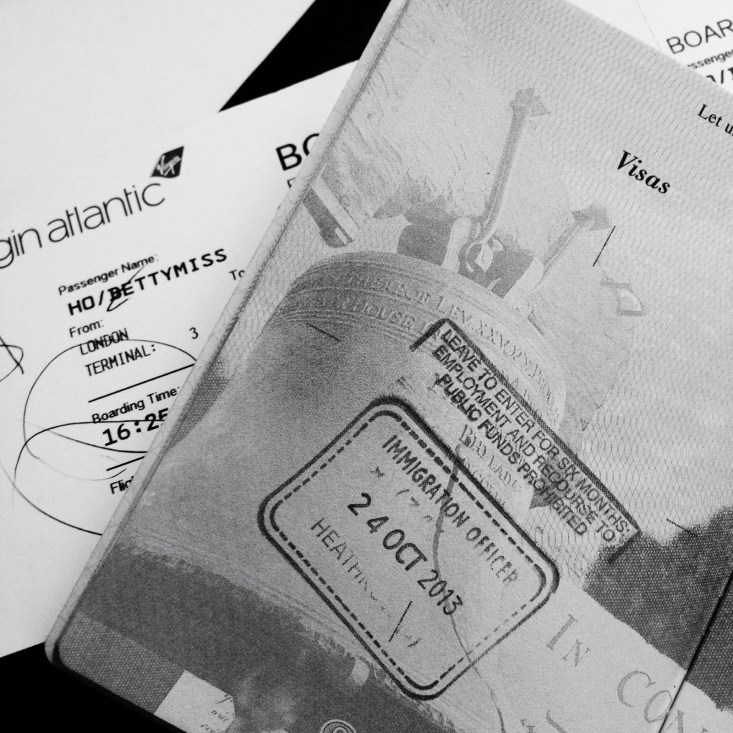
At some point I reminded my father that I was going back to London a week after Thanksgiving. 
“What are you doing that for?” 
“I told you,” I said, “To visit -“
“-that guy in London. Right, right.” 
“You’re okay with it?” 
“Am I okay with it?” my father snorted, “You’re going to go anyway. When did I ever – no, have I ever stopped you from going anywhere to see anyone?” 
“No, I guess not.” 
I squeezed past a young couple who were studying a stainless steel wall clock. I wondered if they were just dating, engaged, or married. They both still had their gloves on. 
“I do want to say though, Dad,” I lowered my voice even though I was speaking in Chinese, “I appreciate that you trust my judgment. And I wouldn’t be going if I didn’t trust him.” 
“Good,” my father said, “This is very important. You must be careful.” 
I nodded, murmuring assent and watched as the couple left the clock and split up, the woman heading towards a rather busy looking ornament display and the man towards bedding. Perhaps they’d meet at the register with items of vastly different purpose. One functional, one purely ornamental. One on sale, the other full price. One perennial, incapable of being broken, the other seasonal and fragile, needing to be wrapped in tissue paper and put away after the New Year.  
“What do you like about this guy in London?” 
Good question, Dad, I wanted to say, this is something I often ask myself. Not because I didn’t know but because more and more I was surprised by the answers. 
“We have good conversation,” I said. 
“You have good conversation with a lot of people.” 
True. I have good conversation with strangers on planes, trains and in hospital waiting rooms. This did not mean they were good relationship material. I remembered too a recent video chat I had with POI in which he fell asleep for five minutes while I left the screen for a few minutes to take banana bread out of the oven.  
“I guess it’s a bunch of things. Mostly,” I said, “He makes me laugh, makes me feel safe.” 
“Humor is important because you are a humorous girl,” my father said ‘humor’ in English, “Because your father is humorous.” 
“Actually,” I said, “In some ways he reminds me of you too.” 
“How so?”
“He says what’s on his mind, for one thing… doesn’t seem to care too much if he offends people.” 
“Ah yes,” my father said, “Beating around the bush is a waste of time.” 
“Yeah,” I said, “He’s not shy about making fun of me and can handle it too, when I make fun of him.” 
“Oh that’s important, especially for your kind of humor.” Again, ‘humor’ in English, “It’s no fun to be with someone too sensitive. If they can’t take a joke, it’s no fun.” 
“Yup.” 
 “But really,” my father said, “How can anyone compare to me? They don’t make them like me anymore.” 
I laughed, arriving at the very adult stage where your father’s cheesy jokes no longer aggravate and only endear. 
“So you think you are an adult now,” the driver said, as though reading my thoughts, “You think you are an adult going to visit your parents, but I know (he wagged his finger in the rearview mirror), I tell you now, you will feel just like a baby again when you’re home.”
I watched as the city rolled away and thought ahead to the drive from John Wayne Airport to The Park. I could see the streets: MacArthur followed by the curve of the 405 and the normally congested connection to the 55. I could anticipate the smell of my father’s car and the jerky way he braked and accelerated. If my mother went to the airport with him, I would sit tin the back and feel briefly, like a kid again. If my mother didn’t come and I sat in the passenger seat, I’d still feel like a kid. 
“This is the natural way,” the driver said, chuckling to himself and thinking perhaps of all the plates he’s cleaned in his mother’s presence, “Perhaps until your parents not there, this is the way it will always be.”

On Paying Attention

Last week, it happened twice. 

On Wednesday afternoon, I joined the masses of people who tune out the city by plugging their ears with headphones and boarded the uptown 1 train towards Columbia. At 96th street, I was listening to Ellie Goulding and through her thin, haunting voice heard the conductor make a strangled announcement, which I did not bother to decipher. The conductors (or “train operators?”) are always making strangled announcements in impatient voices thick with indifference. They hate their jobs. So they don’t bother to enunciate. Continue reading “On Paying Attention”

New York Photo: First Snow

I knew it would snow today because the forecast said it would, though I can’t say I would have been surprised if it didn’t. But I was surprised all the same. There’s something marked about waking up in the first place you’ve ever lived on your own and going to the window, as you always do, to raise the blinds and greet the morning and find, outside, a trillion frosty white particles waving at you. God’s confetti (I’m sure this simile has been used to exhaustion, but I could not help it).

Get used to seeing this view. It’s my best window. 

“There’s nothing great about snowy season in New York,” a friend said grimly, his face twisted from the thought of having to walk through snow, “You’ll see soon enough.”

And of course he’s partly right. I’m sure there are plenty of seasoned East Coasters grumbling as they’re tightening ties and double wrapping scarves, but I’m not yet (will I ever be?) a seasoned East Coaster and am still sitting in my pajamas, before me a bowl of apple, blueberry and cinnamon steel cut oatmeal. I am not grumbling at all, though am fully aware there’s a strong chance I’ll be writing a different line after walking through the snow day after day, my face, fingers and toes frozen stiff and my overall countenance looking quite corpselike but inside feeling quite uneasy, anxious to get somewhere warm. But at present I’m inside looking out which, when it snows, is a wonderful place to be.

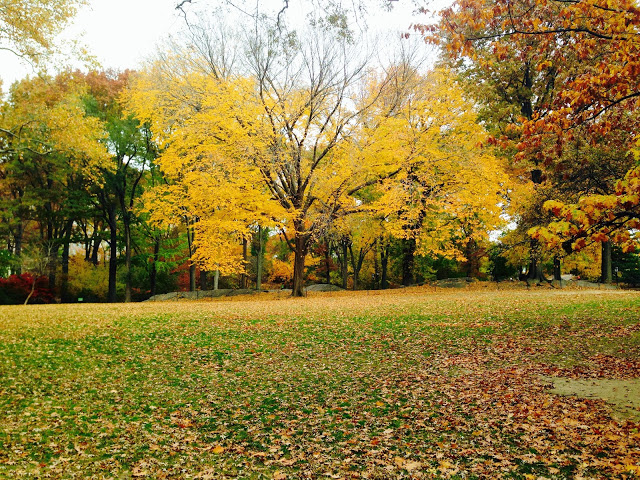
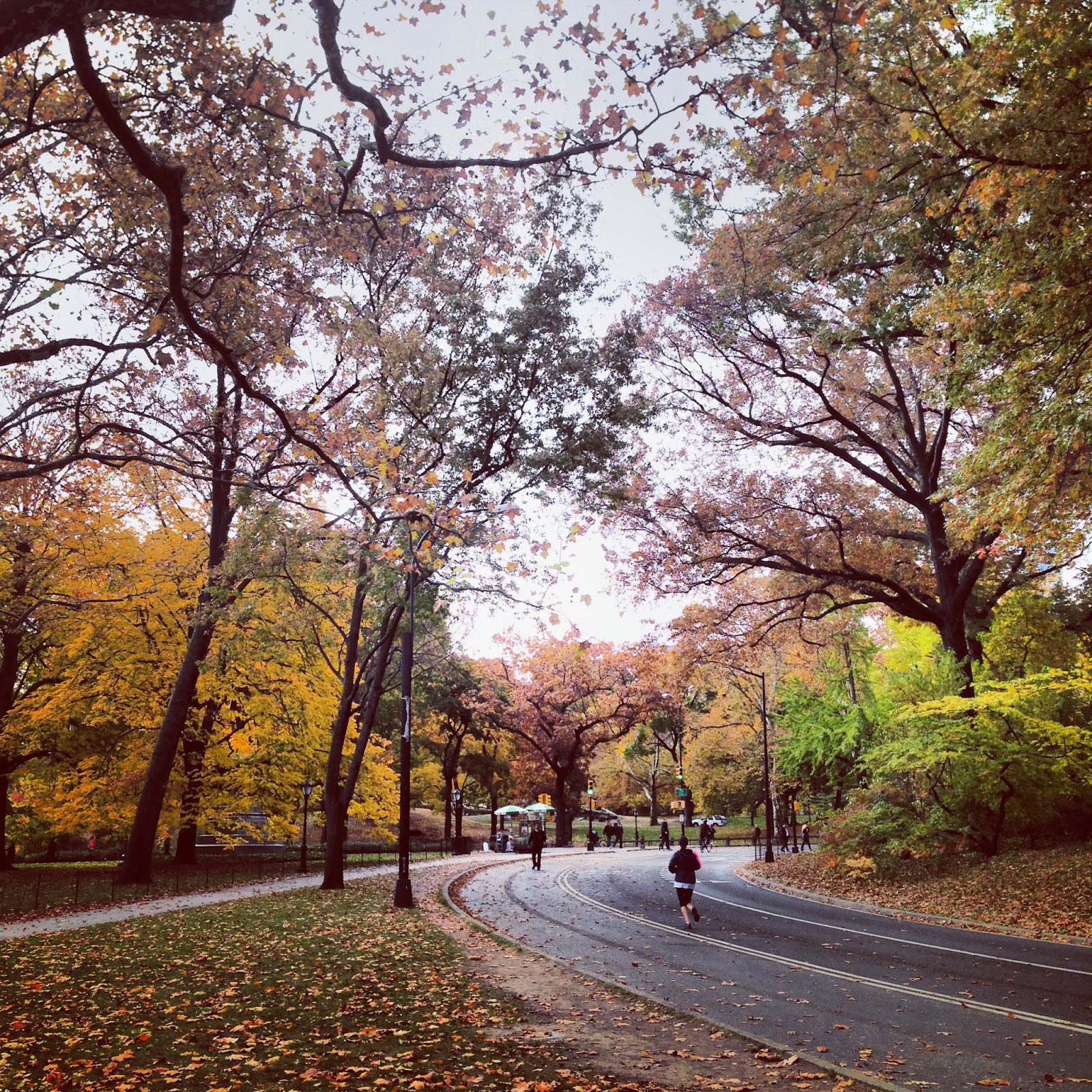
Though, I suppose I should take a moment to say goodbye to what was a gorgeous New York Fall, as seen on various walks through Central Park:

And just for fun: a completely random poem in Vanity Fair about New York’s first snow falling on Ryan Gosling’s birthday. 

New York Sounds

When it rained at home in California I purposefully kept the windows open because I liked the sound. There was no risk of rainwater coming in and soaking the carpet because there was an awning over all the edges of the house. In our straight-laced suburban neighborhood, the rain seemed to fall in straight lines save for when it hit the surface of our pool; then it seemed to bounce back up like a playful goldfish before falling back down to become part of something greater.

In New York this is not so. New York rain falls at a purposeful slant, the same way most people here walk: leaning forward, with something to do, someone to hit. I discovered one rainy afternoon about two weeks ago that to enjoy the romanticism of rain in New York, at least from my apartment, was to leave everything I’d placed near the window at risk of an unwanted shower. Had these items been hardy house plants placed atop a waterproof tarp (as my mother places alongside every window in our house, minus the tarp), this would be a nonissue. But rather than plants, I had near the window items that would fare poorly if rained upon.

In my genius I had the Comcast guy install the modem on the floor next to the window, thinking the slim black box would be more inconspicuous there, tucked behind the legs of my desk. Alongside it, I had placed a power-strip into which I plugged all of my essential electronics (lamp, computer, wireless router).

So the first rain came and it was very lovely and romantic and I felt for the first time since moving here that the breeze coming into my apartment was actually fresh. But as I stood a ways back from the window and admired the view, reveling in the fact that I was in and the rain was out, I noticed an odd sheen on the floor and holy-shit-everything-is-getting-wet and I couldn’t close the window fast enough.

It was very quiet in my apartment after that, except for the polite tap of rain two windowpanes away.

For a moment the modem seemed to blink listlessly, as though it were fading in a tragic electronic way, and I did the only thing I know how when attempting to rescue warm electronics that are either getting too hot or, in this case, wet: I blew on it.

The modem survived, along with the power strip which I wiped down with a towel though not without entertaining nightmarish thoughts of being electrocuted to death. It is likely my charred body would not be discovered until my parents called C, who has a spare set of keys but who lives in Jersey. And even so, she has trouble with the door. It was an awful, gruesome thought and I waited a while to dry the rest of the cords.

But I have heard, from the first day I set foot in New York, as one hears of an urban legend or local ghost story, of a character of New York weather even more fearful than the slanted rain. The winter and all its frosty accoutrements!

“Do you have a big coat? Boots? Gloves, scarves mittens, long johns?” People ask me, and I nod in wide-eyed fear except to the last item. Really? Long johns?

“Oh yes,” some of the skinnier girls nod, “Long johns are essential.”

But I don’t plan on spending too much time out of doors, and I do have a coat, purchased at Costco some winters ago before visiting the Great Wall of China. It’s puffy, with a fur-lined hood, and covers down to my shins. Naturally it makes me look like an eskimo and naturally everyone in New York will be wearing something similar. At least I hope so. What I will dread most about the winter, I think, is not so much the cold itself but what must accompany the cold: the silence of when I am alone at home. I was, even in the quiet suburbs of the Park, a person who liked the windows open. And on the sixth floor of my cousin’s house in Taipei, I was conditioned to wake up and fall asleep to the sounds of the street. My aunt firmly believed that air must constantly be circulated, no matter how cold, though it never got very cold in Taipei. At least not by East Coast winter standards. There were always at least four windows, one on each side of the house, even if just a crack, to keep the dialogue open between the inhabitants of the house and the happenings outside.But the day my modem was given a free shower, I noticed how very effective the windows were at blocking out the sounds of the street: the whoosh of car tires driving through wet asphalt, the blare of indignant horns, the laughter of children who live on and around my street, the jingle of keys followed by the unintended slamming of old apartment doors and the whisper of a New York breeze playing with the leaves of New York trees. And of course the harsh, intermittent whine of NYPD sirens, all were muted the moment the window closed.

I have within the past month become accustomed to these sounds, a cacophony at first but now a symphony. Together, they wake me up, especially the garbage truck that comes 7AM on Saturday mornings, a time undoubtedly scheduled by a petty, faceless imbecile who seeks revenge on Friday night revelers and put me to bed: these criminals running, cars chasing, dogs barking, homeless men foraging, people not-sleeping.

Come winter however, I will have to make a choice. Freeze to death but to the music of the city – or will it be quieter outdoors as well, since it will be too cold for most to venture out for long? – or stay warm and watch the snow fall in clichéd silence? The latter, certainly. I type better when the blood is not frozen in my veins. But I feel better, when I can hear the sounds of life outside.

What is Good Writing? Evan S. Connell’s "Mrs. Bridge"

This semester, I signed up for a class called “Thickening the Plot,” taught by a petite funny lady with short, grey-blonde hair and round glasses. When she smiles, her eyes get small and you can see her gums, which my mother tells me is a sign of a person not to be trusted. But I think for this professor, I’ll make an exception.

I heard her speak at orientation. She was one of three women who were assigned to speak to the non-fiction students, and she was the most humorous and open. She sat comfortably in her chair, leaning slightly back with her legs loosely crossed in comparison to the other two women, who were writers too, but I think less well known. They sat more primly, hands clasped in their laps and a nervous look on their faces as though they hoped they wouldn’t be called on. It’s always funny to me when professors act like elementary school students. Sometimes on campus I see a professor eating alone, or walking somewhere with their heads bent low or absorbed in something on their phones, hoping I think, not to be recognized or approached. In class, they come alive. They turn on. But this professor, of the short graying hair and the round glasses, is always on. She was not my professor then, but at orientation she strode to the podium to welcome us in a clear but slightly warbly voice, and cracked a few non-funded MFA jokes (something about Columbia being expensive, but worth it…she hopes). Those of us who were feeling awkward or on the verge of dozing off awoke, relieved to be laughing and charmed by this slight woman, dressed rather mannishly in slacks and sensible brown shoes, and whose voice and manner of speaking indicated that in fact, she had a steely writer’s core and strong opinions. 
I immediately thought: “I don’t know what she’s teaching but I want to be in her class.” I wasn’t the only one. I furtively pulled out my phone and emailed the course administrator while the professor spoke, noticing from my peripheral vision several other students doing the same thing. A while later I received an unsurprising response: “Her class has a pretty long waiting list, but I’ll see what I can do.” 
I took matters into my own hands and showed up on the first day of her class along with a half dozen of other hopefuls. We crowded into the small, sparsely furnished seminar classroom, with tables arranged to sit fifteen comfortably but were now meant for twenty, and waited as she called roll of the lucky twenty students that had the good sense to sign up early. Then she turned to those of us who weren’t on the roll.
“I can’t promise anything,” she said, “But it looks like we’ll fit.”
I looked around the room. There were about eight of us seated alongside the walls, removed from tables which could only seat twenty. It was a fire hazard, but yes, we did fit. 
A week later I was on the roll, and already immersed in the reading list.  
The professor it turns out, is much stricter than her easy manner suggests. She dislikes it when we leave the room to use the restroom, which for me and my unfortunate pea-sized bladder, is an issue. There is a possibility I will end the semester with a kidney infection. She also dislikes it when we eat because most of the packaged foods (granola bars, chips, sandwich wrappers) students prefer are wrapped in a noisy materials like that hybrid aluminum cellophane. It is too noisy and disruptive. This is also a problem because I like eating. Especially in class. But her ears are quite sensitive, and she’s asked me twice now, to put my granola bar away (I forget because we only have class once a week, so it hasn’t been ingrained yet. My almost Pavlovian response to sitting down in class is to take out a granola bar). But I am working on being sensitive to that.

She has an iphone, an unexpected gadget for a woman who put her phone number down on the syllabus. 

“I really prefer you call me,” she said, “anytime between nine and nine. It’s just so much faster.” 
Her students, raised on email, instant and text messaging, looked at her curiously. 
I’m not saying the class is a disappointment. I didn’t sign up for a comedy show, after all, but nor did I sign up to hear my classmates expound on the novels we are reading. But that’s a seminar for you. The takeaway, I suppose, is the professor’s taste, revealed in her carefully curated reading list. I can’t quantify the monetary value of a good reading list because there is none, or if there is, it won’t become apparent until many years down the line, when I sell some ten thousand words for a few hundred dollars, (if I’m lucky), or recall it during a thoughtful afternoon lull, contemplating the profundity of the life I’m living and how near or far it is to/from the life I thought I would live, et cetera, et cetera. That sort of thing. It is, if I were to label generously, a foundation of sorts – a slow, cooking type of education that just happens to cost as much as an MBA. 
Apart from Ian McEwan, I did not recognize any of the other authors on the list. The subjects range from homeless people to farming to Lyndon Johnson to lesbianism (a graphic novel!). Each book represents a different approach/technique to plot development, something non-fiction writers struggle with because much of the time, we don’t know how things are going to unfold or end. Now, three weeks in, we’ve arrived at Evan S. Connell’s Mrs. Bridge, a novel about a lonely woman and her family, which despite its dull cover directed at prim, repressed women of a certain age, will probably be one of my favorites this year. 
Anyway. Other people do it better, and I am lucky to be learning, both in person and on paper, from such people: 
From the first vignette of Mrs. Bridge by Evan S. Connell: 
1. Love and Marriage 

Her first name was India – she was never able to get used to it. It seemed to her that her parents must have been thinking of someone else when they named her. Or were they hoping for another sort of daughter? As a child she was often on the point of inquiring, but time passed, and she never did. 

Now and then while she was growing up the idea came to her that she could get along very nicely without a husband, and, to the distress of her mother and father, this idea prevailed for a number of years after her education had been completed. But there came a summer evening and a young lawyer named Walter Bridge: very tall and dignified, red-haired, with a grimly determined, intelligent face, and rather stoop-shouldered so that even when he stood erect his coat hung lower in the front than in the back. She had known him for several years without finding him remarkable in any way, but on this summer evening, on the front porch of her parents’ home, she toyed with a sprig of mint and looked at him attentively while pretending to listen to what he said. He was telling her that he intended to become rich and successful, and that one day he would take his wife -“whenever I finally decide to marry” he said, for he was not yet ready to commit himself – one day he would take his wife on a tour of Europe. 

Edward Hopper Summer Evening  1947 Oil on Canvas, Private Collection

A few months after her father died she married Walter Bridge and moved with him to Kansas City, where he had decided to establish a practice. 
All seemed well. The days passed, and the weeks, and the months, more swiftly than in childhood, and she felt no trepidation, except for certain moments in the depth of the night when, as she and her new husband lay drowsily clutching each other for reassurance, anticipating the dawn, the day, and another night which might prove them both immortal, Mrs. Bridge found herself wide awake. During this moments, resting in her husband’s arms, she would stare at the ceiling, or at his face, which sleep robbed of strength, with an uneasy expression, as though she saw or heard some intimation of the great years ahead. 

She was not certain what she wanted from life, or what to expect from it, for she had seen so little of it, but she was sure that in some way – because she willed it to be so – her wants and her expectations were the same. 

For a while after their marriage she was in such demand that it was not unpleasant when he fell asleep. Presently, however, he began sleeping all night, and it was when she awoke more frequently, and looked into the darkness, wondering about the nature of men, doubtful of the future, until at last there came a night when she shook her husband awake and spoke of her own desire. Affably he placed one of his long white arms around her waist; she turned to him then, contentedly, expectantly, and secure. However nothing else occurred, and in a few minutes he had gone back to sleep. 

This was the night Mrs. Bridge concluded that while marriage might be an equitable affair, love itself was not.