
People can’t seem to agree on how long it takes to become a New Yorker.
 |
| The view from my window, taken during New York’s first snow. |
I set out to make new friends, but was met at the airport with old chums from middle school. Among the best feelings in the world: being greeted by familiar faces outside an unfamiliar airport. Continue reading “Photo Diary of a Year: Scenes from 2013, Part 3 (The Last Part)”
At the beginning of April, I left the bustle of Asia and came home to this:
 |
| The road. |
I flew to New York to attend Columbia’s admitted student’s night and stayed with Albert, an architectural student from Taiwan whom I’d met many years ago through my cousin. He never slept and smoked like a chimney and was constantly complaining about his monumental workload, but ask him if he’d prefer to be studying anywhere else and he’d shake his head. “New York is where I want to be.” His apartment was my temporary home and despite it being dark, with critical windows facing brick walls, I could see how when life is full and you’re doing what you love (and hardly ever come home because you’re at studio), things like that matter just a little less.
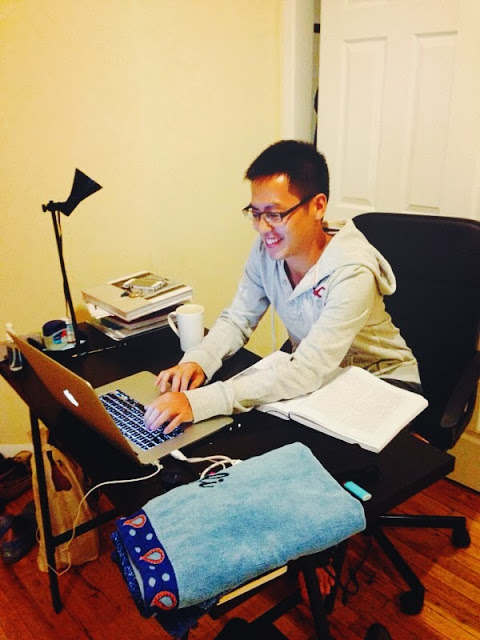 |
| “I haven’t slept in three days,” says Albert, “But I’ll sleep when I’m dead (or when I run out of cigarettes).” |
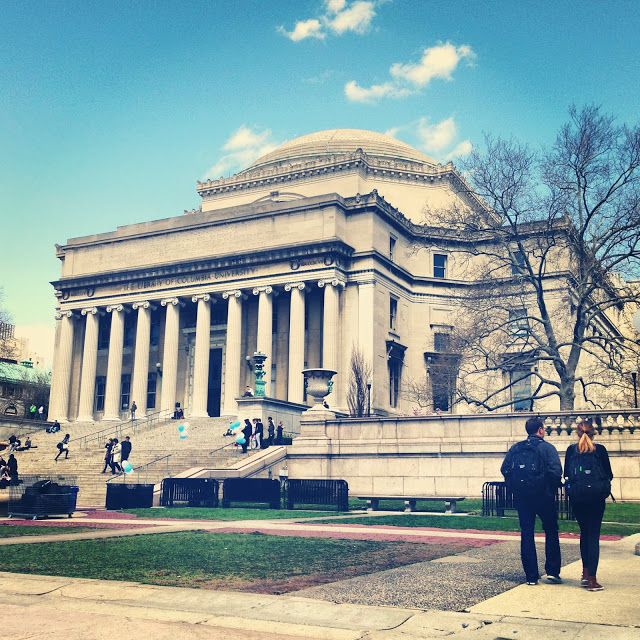 |
| I have yet to set foot inside that building. |
 |
| Because sometimes glasses just don’t cut it. |
 |
| Coworkers who turned into great friends, Grace and Enny. |
…family….
 |
| Babies galore at Lucas’s (on the right!) One Month Celebration held, where else? At Sam Woo’s in Irvine. |
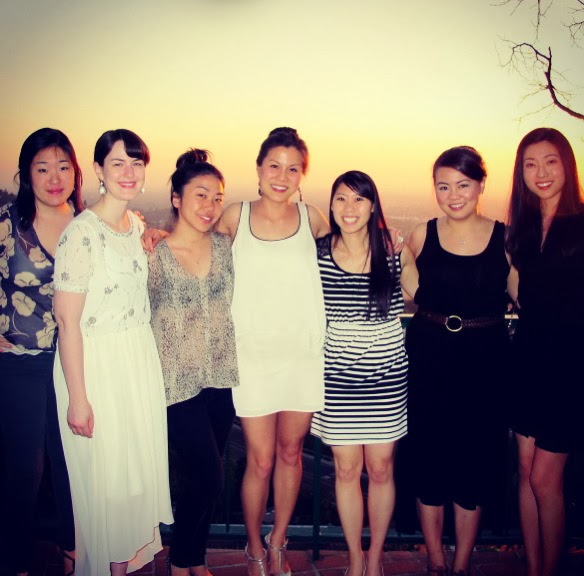
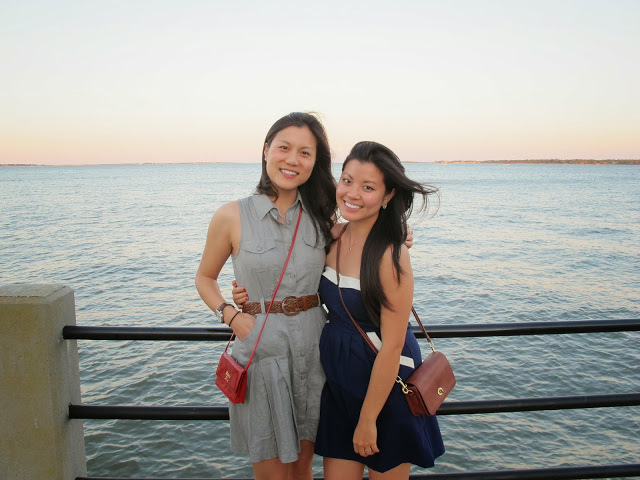
I took a trip to Charleston to see Grace, a cellist who was playing in the Spoleto Orchestra (longer post to come). I fell in love with the south and southern food, but that was expected. I went to my first southern beach and wondered what the hell southern Californians were so proud of. We wore summer dresses. I let my hair down and played bingo and drank with classical musicians who were surprisingly raunchy when they weren’t playing classical music. We walked a lot, ate a ton, and I pretended to understand the opera she got me tickets to.
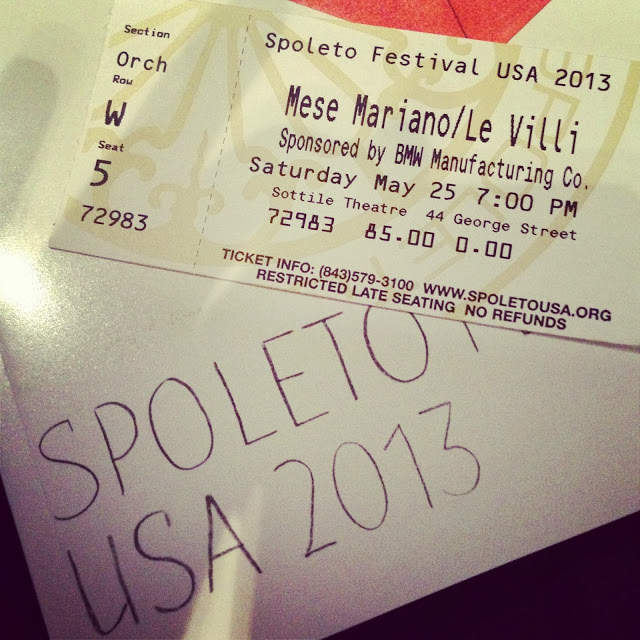 |
| Woohoo, culture! |
 |
| Grace walking at Sullivan’s Beach. |
 |
| When we weren’t stuffing our faces with fried everything we were trying to walk it off. |
 |
| Like that one ride at Disneyland. |
And immediately after that, my mother suggested an impromptu trip to Kauai. She popped into my room one evening and asked, “How much are tickets to Kauai at the end of May?”
I looked for her, then asked, “Who are you thinking about going with?”
She seemed surprised, “Oh, you! Do you want to go?”
This is what’s called a no-brainer. So we went, just the two of us.
 |
| My mother thinks about her mother. |
On our last day there, we went swimming in the hotel pool, then my mother took a nap while I wrote a letter to my brother. When she woke, I asked her how she felt about barbecue. She said fine. I ordered it by phone and drove to pick it up. My mother stayed in the kitchen, peeling papaya and when I returned, I saw that she’d been crying.
“Mom, what’s wrong?”
She started crying again.
“I was just thinking about grandma.”
“What were you thinking about that made you think of grandma?”
In hindsight, it was a stupid and insensitive question, but I think my mother understood what I meant.
“I am so lucky that my daughter can travel with me and we can spend time like this, but I can’t do that anymore with grandma.”
I hugged her, because you can’t really do anything or say anything but hug a person who misses their dead mother.
“Let’s eat outside on the balcony,” I said, and she agreed.
I poured us each half of the small bottle of wine we’d gotten from the airline and when everything was served, she raised her glass to me, something I’ve never seen her do. My mother is not a big drinker.
“I wish you a good happy life in New York,” she said. Her voice broke and her face crumpled and I choked up too, but did not cry. I said thank you. I said, “I already have a good and happy life.”
 |
| My mother thinks about me. |
At the end of June, it was time to return to Taipei. This trip was much shorter than the first, but no less fun. For starters, my cousin Karen and I returned to Hong Kong:
 |
| Traveling for business, obviously. |
 |
| Before our feet started to hurt. |
 |
| Do this panorama some justice and click on it. |
 |
| Bubbles and my brother’s tears. |
 |
| Some Ho’s and then some. |
 |
| My uncle at the office. He looks at numbers, then reads Buddhist scripture, and is in bed by 9PM. Every. Single. Day. |
 |
| My cousin Melody was also home from Boston over the summer, taking a break from breaking hearts. Over Din Tai Fung, we talked about the elusive Mr. Right and the ubiquitous Mr. Wrongs. |
 |
| I ate Chinese food as though my life depended on it, unsure of what awaited me in New York. Pasta, it turns out. |
 |
| And a lot of the time, marveled at the fact that this guy was in a relationship with a girl who really really likes him. “I don’t know why either,” he says. |
I returned to California in the middle of July, hoping to return to a somewhat normal schedule, but it was crunch time. There was another trip to Vegas with the girls I go most often and have the best time with:
 |
| Elevator selfie. |
A short trip to SF. First stop, two nights at Erica and Carson’s:
 |
| TPE – HKG – SF! Taxicab selfies are now a thing. |
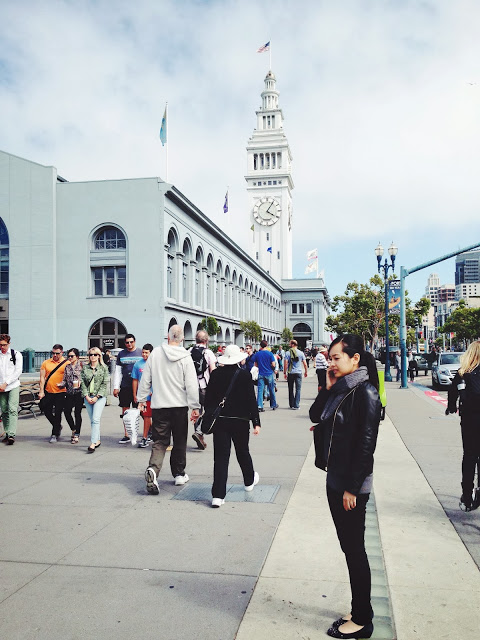 |
| “What about POI? He’s offensive and so is Betty.” |
And the main event: Jaime’s Bachelorette party, which was supposed to be tame but ended up like this:
 |
| The bachelorette and a very drunk man who liked very much to “back it up.” |
My cousin Wendy’s baby shower:
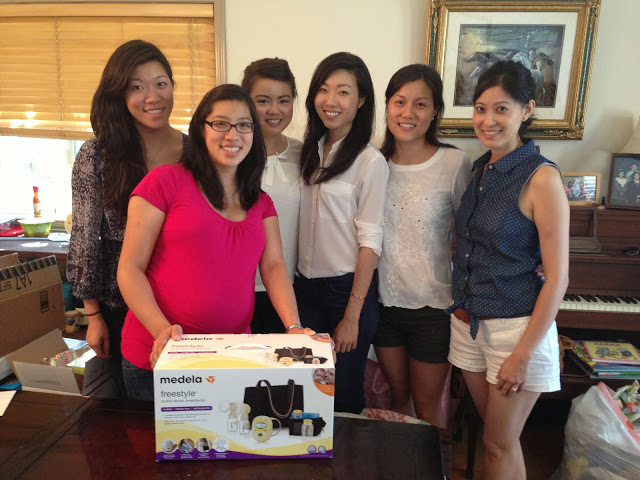 |
| Remember earlier in the year she was in Vegas! |
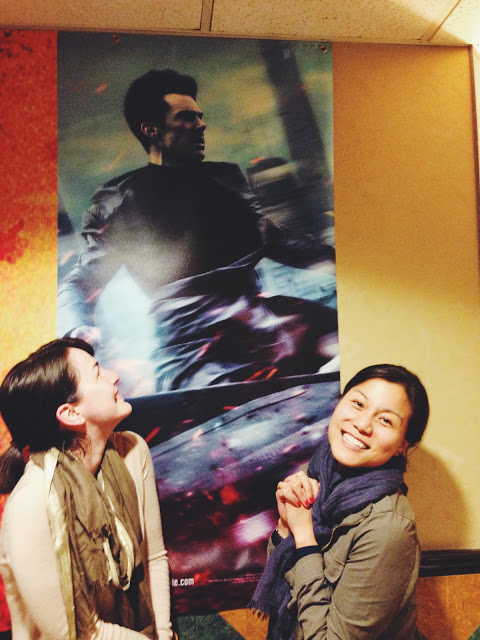 |
| I watched a lot of movies with this girl, equally as obsessed with Benedict Cumberbatch as I was until we realized he was probably gay. But we still really like him. |
 |
| With cousin Michelle in Venice, aping an ape. |
 |
| At plate by plate with Enny, whose outfit was pretty much the talk of the town. |
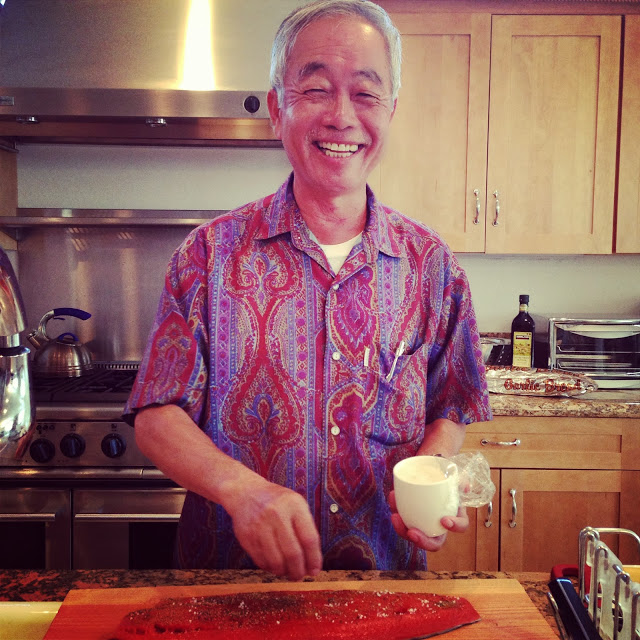 |
| Billy’s dad salting seasoning their salmon during a random weekend at their mansion in Upland. |
 |
| With Angie and Lynn at a Phoenix International event. |
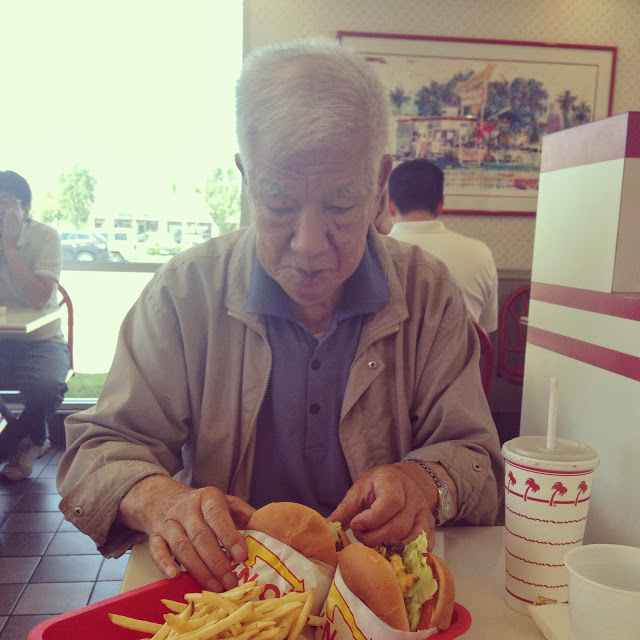 |
| Getting In n’Out with Grandpa. |
 |
| With Auntie Linda, a few days before leaving. |
 |
| Pint-sized houseguests from Taipei. |
 |
| An impromptu mexican feast at Grace’s. |
 |
| The early days. |
 |
| Best moving service ever 🙂 Way better than UPS. |
 |
| And it was never this messy again. |
 |
| Cleaned up and celebrating Charlene’s birthday belatedly, at Robert in Columbus Circle. |
 |
| With bridesmaid Emy, also an old friend from high school and Jaime, one of the most low-maintenance brides in the history of brides. Emy and I always look like her bodyguards. |
 |
| I like to think that some of my photos were better than the wedding photographer’s. |

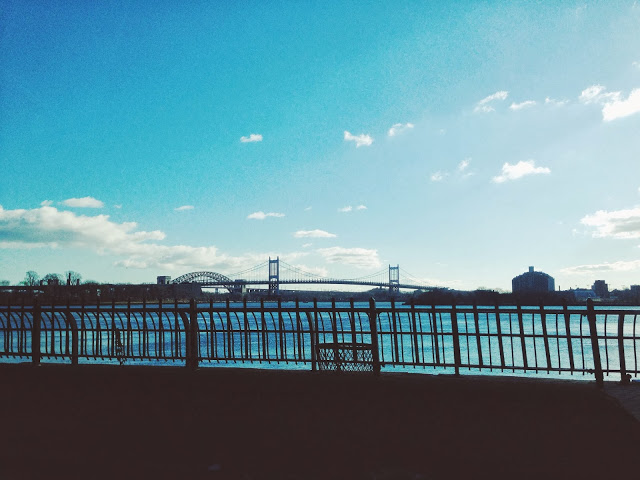 |
| The view while leaving New York. |
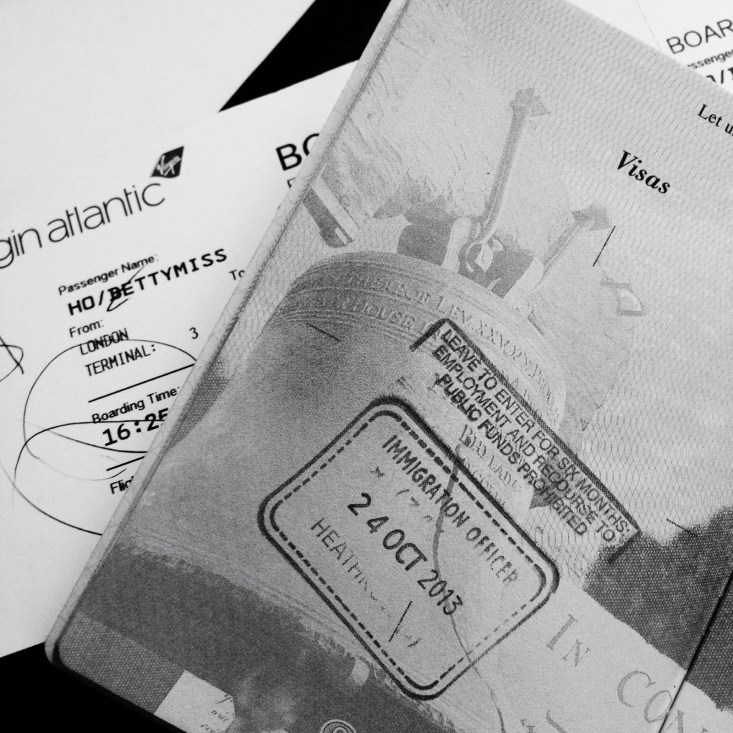
Two weeks before I moved to New York, my new passport arrived in the mail. Continue reading “The First Stamp”
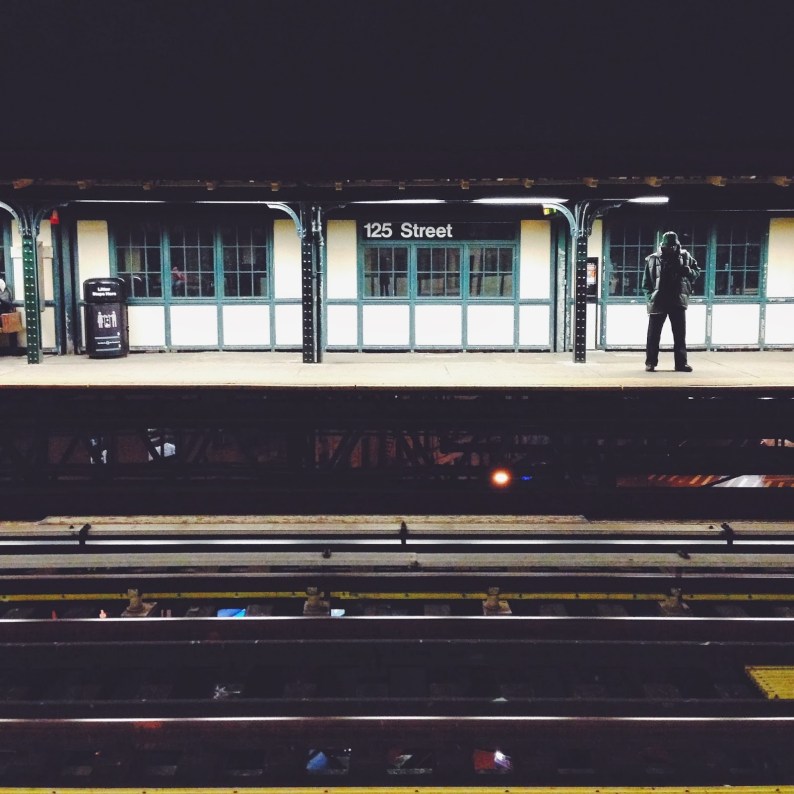
Last week, it happened twice.
On Wednesday afternoon, I joined the masses of people who tune out the city by plugging their ears with headphones and boarded the uptown 1 train towards Columbia. At 96th street, I was listening to Ellie Goulding and through her thin, haunting voice heard the conductor make a strangled announcement, which I did not bother to decipher. The conductors (or “train operators?”) are always making strangled announcements in impatient voices thick with indifference. They hate their jobs. So they don’t bother to enunciate. Continue reading “On Paying Attention”
I knew it would snow today because the forecast said it would, though I can’t say I would have been surprised if it didn’t. But I was surprised all the same. There’s something marked about waking up in the first place you’ve ever lived on your own and going to the window, as you always do, to raise the blinds and greet the morning and find, outside, a trillion frosty white particles waving at you. God’s confetti (I’m sure this simile has been used to exhaustion, but I could not help it).
 |
| Get used to seeing this view. It’s my best window. |
“There’s nothing great about snowy season in New York,” a friend said grimly, his face twisted from the thought of having to walk through snow, “You’ll see soon enough.”
And of course he’s partly right. I’m sure there are plenty of seasoned East Coasters grumbling as they’re tightening ties and double wrapping scarves, but I’m not yet (will I ever be?) a seasoned East Coaster and am still sitting in my pajamas, before me a bowl of apple, blueberry and cinnamon steel cut oatmeal. I am not grumbling at all, though am fully aware there’s a strong chance I’ll be writing a different line after walking through the snow day after day, my face, fingers and toes frozen stiff and my overall countenance looking quite corpselike but inside feeling quite uneasy, anxious to get somewhere warm. But at present I’m inside looking out which, when it snows, is a wonderful place to be.
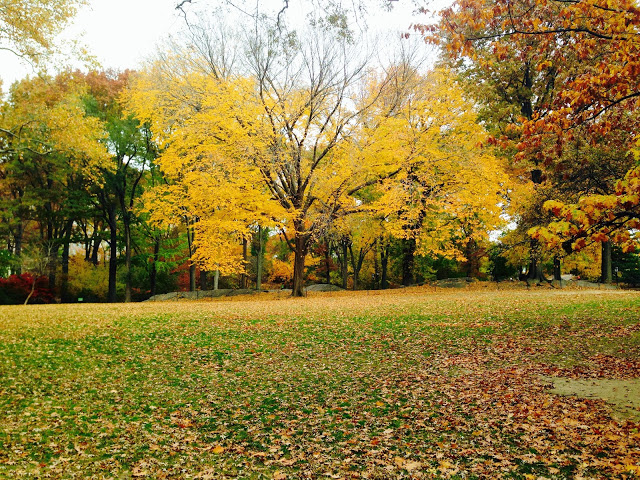
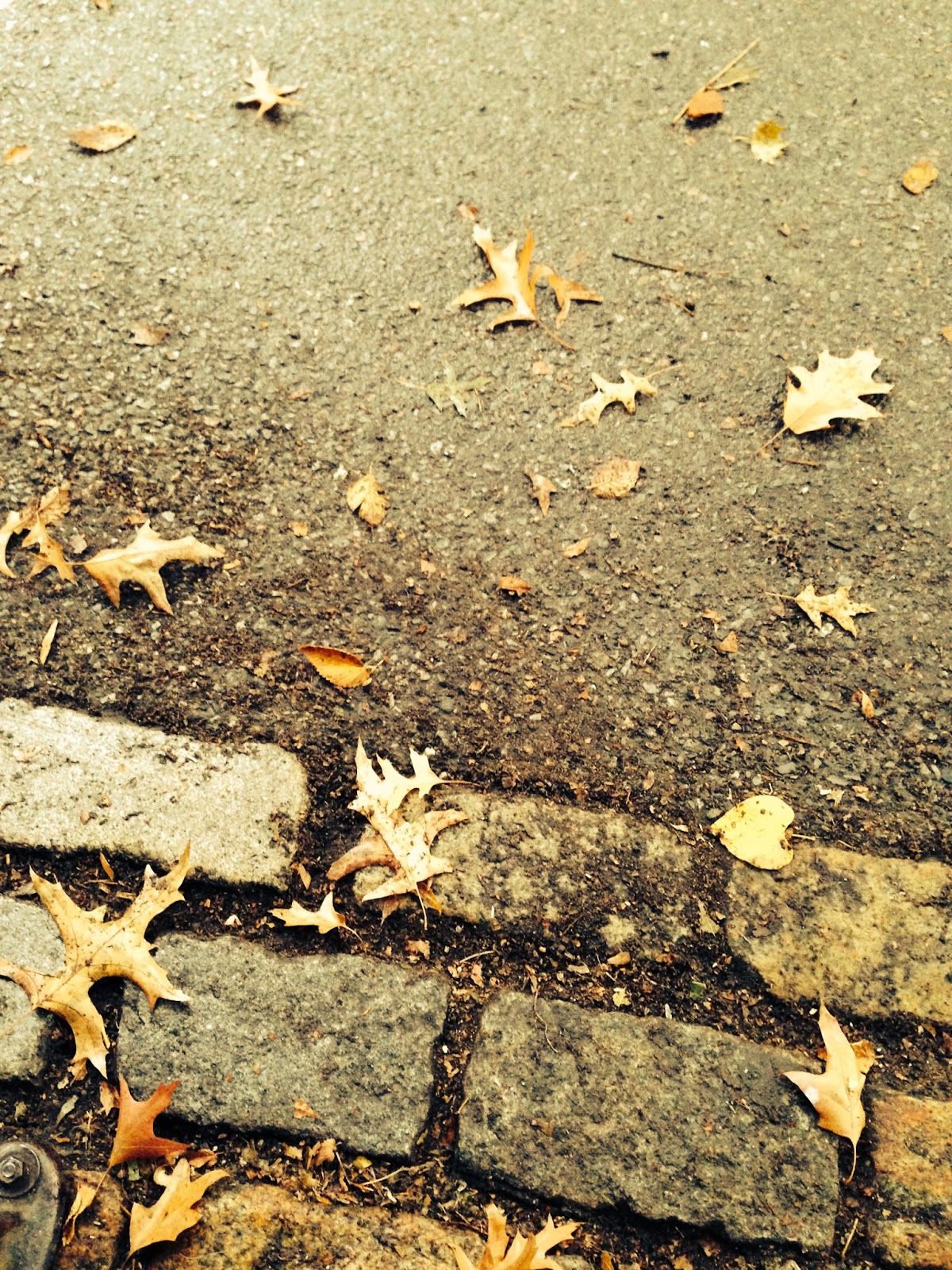
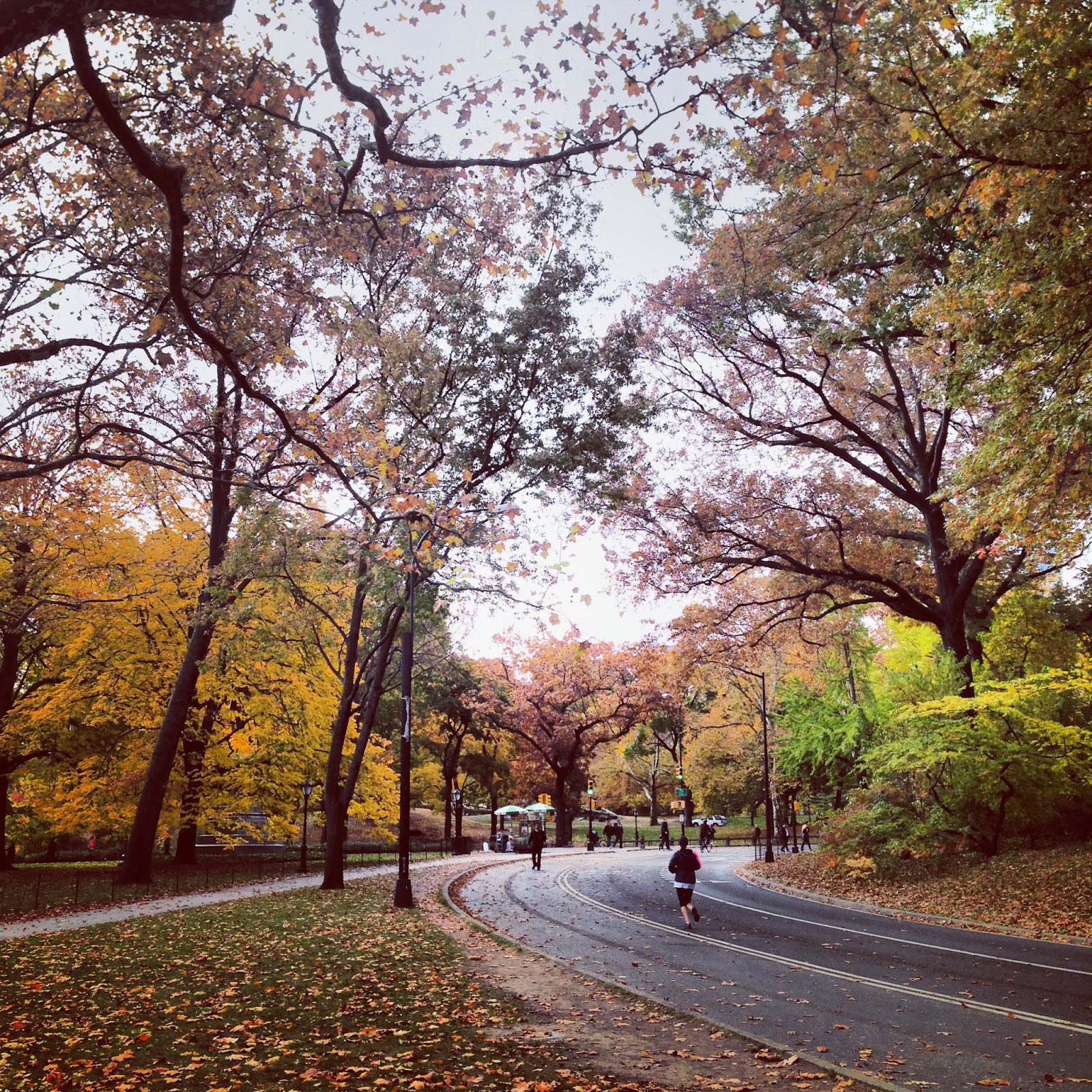
Though, I suppose I should take a moment to say goodbye to what was a gorgeous New York Fall, as seen on various walks through Central Park:

When it rained at home in California I purposefully kept the windows open because I liked the sound. There was no risk of rainwater coming in and soaking the carpet because there was an awning over all the edges of the house. In our straight-laced suburban neighborhood, the rain seemed to fall in straight lines save for when it hit the surface of our pool; then it seemed to bounce back up like a playful goldfish before falling back down to become part of something greater.

In New York this is not so. New York rain falls at a purposeful slant, the same way most people here walk: leaning forward, with something to do, someone to hit. I discovered one rainy afternoon about two weeks ago that to enjoy the romanticism of rain in New York, at least from my apartment, was to leave everything I’d placed near the window at risk of an unwanted shower. Had these items been hardy house plants placed atop a waterproof tarp (as my mother places alongside every window in our house, minus the tarp), this would be a nonissue. But rather than plants, I had near the window items that would fare poorly if rained upon.
In my genius I had the Comcast guy install the modem on the floor next to the window, thinking the slim black box would be more inconspicuous there, tucked behind the legs of my desk. Alongside it, I had placed a power-strip into which I plugged all of my essential electronics (lamp, computer, wireless router).
So the first rain came and it was very lovely and romantic and I felt for the first time since moving here that the breeze coming into my apartment was actually fresh. But as I stood a ways back from the window and admired the view, reveling in the fact that I was in and the rain was out, I noticed an odd sheen on the floor and holy-shit-everything-is-getting-wet and I couldn’t close the window fast enough.
It was very quiet in my apartment after that, except for the polite tap of rain two windowpanes away.
For a moment the modem seemed to blink listlessly, as though it were fading in a tragic electronic way, and I did the only thing I know how when attempting to rescue warm electronics that are either getting too hot or, in this case, wet: I blew on it.
The modem survived, along with the power strip which I wiped down with a towel though not without entertaining nightmarish thoughts of being electrocuted to death. It is likely my charred body would not be discovered until my parents called C, who has a spare set of keys but who lives in Jersey. And even so, she has trouble with the door. It was an awful, gruesome thought and I waited a while to dry the rest of the cords.
But I have heard, from the first day I set foot in New York, as one hears of an urban legend or local ghost story, of a character of New York weather even more fearful than the slanted rain. The winter and all its frosty accoutrements!
“Do you have a big coat? Boots? Gloves, scarves mittens, long johns?” People ask me, and I nod in wide-eyed fear except to the last item. Really? Long johns?
“Oh yes,” some of the skinnier girls nod, “Long johns are essential.”
But I don’t plan on spending too much time out of doors, and I do have a coat, purchased at Costco some winters ago before visiting the Great Wall of China. It’s puffy, with a fur-lined hood, and covers down to my shins. Naturally it makes me look like an eskimo and naturally everyone in New York will be wearing something similar. At least I hope so. What I will dread most about the winter, I think, is not so much the cold itself but what must accompany the cold: the silence of when I am alone at home. I was, even in the quiet suburbs of the Park, a person who liked the windows open. And on the sixth floor of my cousin’s house in Taipei, I was conditioned to wake up and fall asleep to the sounds of the street. My aunt firmly believed that air must constantly be circulated, no matter how cold, though it never got very cold in Taipei. At least not by East Coast winter standards. There were always at least four windows, one on each side of the house, even if just a crack, to keep the dialogue open between the inhabitants of the house and the happenings outside.But the day my modem was given a free shower, I noticed how very effective the windows were at blocking out the sounds of the street: the whoosh of car tires driving through wet asphalt, the blare of indignant horns, the laughter of children who live on and around my street, the jingle of keys followed by the unintended slamming of old apartment doors and the whisper of a New York breeze playing with the leaves of New York trees. And of course the harsh, intermittent whine of NYPD sirens, all were muted the moment the window closed.
I have within the past month become accustomed to these sounds, a cacophony at first but now a symphony. Together, they wake me up, especially the garbage truck that comes 7AM on Saturday mornings, a time undoubtedly scheduled by a petty, faceless imbecile who seeks revenge on Friday night revelers and put me to bed: these criminals running, cars chasing, dogs barking, homeless men foraging, people not-sleeping.
Come winter however, I will have to make a choice. Freeze to death but to the music of the city – or will it be quieter outdoors as well, since it will be too cold for most to venture out for long? – or stay warm and watch the snow fall in clichéd silence? The latter, certainly. I type better when the blood is not frozen in my veins. But I feel better, when I can hear the sounds of life outside.
How easy it is to get side-tracked in this city. A year ago, I visited New York with my cousin from Taiwan. We stayed at the upper west side apartment of her friend (and now my friend too), a Columbia architecture student named Albert who was, like my cousin, is also from Taiwan. One evening after dinner, we were walking back to Albert’s place and someone – it may have been Albert, it may have been my cousin – suggested something obvious which had already, from the moment my plane touched down onto the tarmac, been taking shadowy shape in my subconscious:
“Why don’t you apply to Columbia’s writing program?”
At that point, I had applied to zero programs, but was shuffling six or so schools in the back of my mind, mostly because those six schools were the only ones I knew who offered non-fiction programs. They were also in unfamiliar states with more farm and/or wild animals than people. I had never considered Columbia. NYU, yes, because of my “familiarity” with it, but not Columbia. It didn’t seem out of reach as just hugely expensive and ivy-league and serious. I didn’t exactly associate it with the arts so much as business, law and medicine. But then I considered Albert, who was studying architecture, considered the fabulous if not liver-ruining time he was having in the city, and our trip thus far, which was filled with shopping, good food, and leisurely strolls through pretty parks and neighborhoods. It was, aside from the money spent doing the aforementioned things, a great city for a writer. The city teemed with “subjects” because it teemed with life. Though it seemed entirely possible that not a thing would be written. I nodded thoughtfully and said to both of them, “Yes, I should consider it.”
I didn’t actually look into Columbia until I went home to California, though New York was certainly still fresh on my mind. I was uneasy, however. In the city, we spent days strolling through the High Line, Central Park, and the West Village. Everywhere I looked, I saw young people like myself (though dressed in way more plaid and corduroy) sitting, writing and thinking. And writing. In Moleskins. It was apparent New York was already filled with writers and/or writing students (some people make the distinction. I am undecided). I remembered a conversation with a friend about his burgeoning family Christmas parties and how inevitably, in the near future because cousins were having kids left and right and the walls of his parent’s house remained inflexible, they would have to disassemble and branch off into smaller families parties.
“We’re reaching critical mass,” he had said drily, and I nodded to myself now thinking about the writer situation in New York. That was exactly it, minus the critical. Just writers en masse.
As was precisely my feeling, when I was walking through these famed New York areas, where tourists and unemployed artists/writers/creative thinkers like to congregate. The former to take photos every few feet and the latter to sit and write a line or two, every few feet.
I remember stopping on the High Line to buy a sour cup of coffee (Blue Bottle, if you’re wondering), and feeling slightly chilled by the brisk fall breeze. The feeling and the smell were familiar to me from my first fall in New York, back in 2004, but this time I felt far from alone. I looked around me on either side of the coffee bar and saw two bearded young men sitting opposite each other on two small tables, both with notebooks open before them, both touching their beards in thoughtful ways and staring out across the High Line. Their journals, diaries, whatever name they gave to their paper darlings, looked loved. The lines were filled with small, scratchy words in inky black pen: genius works in progress.
Were they writing about their respective lovers? Men or women? I couldn’t quite tell, so wonky is my gaydar – but from the way their legs were crossed and their brows furrowed, I discerned that they were very serious about their “craft.” And really it wasn’t just those two men, but also all the writers they knew and the writers those writers knew and all the writers thinking about moving to the city and all the writing students thinking about applying and all the writers already living and writing and kind of working but not really and the writers already filling up the classrooms at Columbia, NYU, the New School, and really, the list goes on.
I rolled my eyes, paid for the coffee, and wondered if I wanted to add myself to such a saturated pool.
I returned home some days later and turned the computer on. Into the box, I typed, “Columbia MFA Creative Non-fiction.” My search was fruitful – so Columbia did have a creative nonfiction writing program. It was simple then – I would apply, but I wouldn’t hold my breath. They don’t give very much aid, if any at all, and I wasn’t sure if I wanted to go back there anyway. As most people applying to MFA programs are wont to do, I had my sights set on Iowa – not the Writer’s Workshop, but the Nonfiction Writer’s Program, which I told myself was no less distinctive. I imagined wearing chunky sweaters and thick brown boots, woolen socks, and eating lots of…gruel. I imagined looking out the window and seeing nothing but rows and rows of tree trunks (I have no idea still, what Iowa’s topography looks like) and brilliant pink and yellows of a sky at dusk, because that’s normally when I look out the window. I imagined small classrooms with other serious writers like myself, talking and laughing and constructively criticizing each other’s latest pieces.
“You could use more dialogue here,” I would say, and they’d nod thoughtfully and appreciatively, and everyone would emerge a better, more well-rounded writer.
On the weekends, I would sit at one of two cafes on the main boulevard and maybe attend a reading given by one of my classmates. Maybe I would go hiking. Learn to hunt. Start making my own fur-lined caps with knitted chin straps.
I did not imagine crowding the subways with bums and businessmen, or being haunted by unaffordable goods in the city’s million windows, or being pulled, socially, left, right, up, down because there is just too much goddamn stuff to do in this city. I had imagined a quieter life, at a quieter school in a quieter city where no one would ever want to come and visit and I had imagined to be writing a lot more, because what else is there to do in a town where everything shuts down at 5PM?
Instead Iowa turned their noses down and Columbia and by extension, New York, welcomed me with open arms. (So did North Carolina and West Virginia, but common writerly sense told me better to grind it out in a thriving city to whom sleep is a stranger with tens of millions of other writers who want the same thing than in the woods with a mere handful of writers and grizzly bears). Which is how I ended up in a, if not the city that never sleeps, or more specifically, a city whose denizens prefer to start putting on their makeup at midnight for what is actually a very early morning on the town. Physically, I am not cut out for this city. I think few writers are. I’m not sure how my classmates get anything done. Between the school-sponsored social events and the hundreds of literary events happening elsewhere in the city (I have never seen SUCH a packed Barnes and Noble when Junot Diaz showed up… I ended up not being able to even see him because there was no room! Writers are true celebrities here, at least in certain bookstores) and the people who are open and kind and inclusive of me in their established New York lives and my own guests who have been coming non-stop (keep coming! This is not a un-invitation. The best cities are meant to be shared!) and the general housekeeping that comes with living on my own and moving into a place that had nothing and the time it takes to do simple things like buy yogurt at a three-story Trader Joe’s (you have not seen a line until you go to Trader Joe’s in Manhattan) and get places (I will, some day, figure out the subway system. Simple as it is), I’m finding it a bit hard to find time to read and most disconcertingly, to write.
But I manage. I try to read during those myriad pockets of time, mostly waiting for the subway, but of course it’s much more fascinating (and productive, I feel) to people watch. So naturally I don’t get much reading done on the subway, though I’ve intently watched other people read books whose subjects range from scientology to brain-imaging to my favorite novels, which always makes me wonder if the reader and I will get along. And I try to write on quiet afternoons like this, before the start of the weekend, which for me, begins on Thursday and ends Sunday morning when it dawns on me that I have two novels to finish before Tuesday.
Of my classmates, there are a few who’ve admitted to being slow readers and even slower writers and I sort of just want to pat them on the back in an sympathetic way and say, “Good luck with that.” But then I think better of it, look at my own schedule and the dark circles under my eyes and the hair that’s been falling out all over my apartment, and I decide to pat my own back and say, “Keep it together, Betty. Remember what Dad said: don’t forget your goddamn degree.”
Your readership means plenty if not everything because I don’t have other writing to show my dedication or seriousness. What you see here is what I write. On top of that, I’m a bit of a philosophical ham, which means if I write but no one reads it, it’s like that proverbial tree felled in the proverbial forest: is it really written if it’s not read? Didn’t think so. In short: thank you. A million thanks for taking the time.
And, lastly, for the nuts and bolts required to build the actual application, most painful of which is the Personal Statement, I’d like to thank Adam Gopnik.
It is not a stretch to say that Adam Gopnik helped me get into Columbia’s MFA program. I thought briefly about lifting entire passages from his book, Through the Children’s Gate and pawning them off as my own in my personal statement, but disgraced plagiarists told me that wouldn’t be a wise course of action. Instead, I used his book as a jumping off point, allowing his insightful paragraphs to act as muse:
What New York represents, perfectly and consistently, in literature and life alike, is the idea of Hope. Hope for a new life, for something big to happen, hope for a better life or a bigger apartment. When I leave Paris, I think, I was there. When I leave New York, I think: Where was I? I was there of course, and I still couldn’t grasp it all. I love Paris, but I believe in New York and in its trinity of values: plurality, verticality, possibility.
In the end, Gopnik gave me more than a leg up. This is what I submitted:
 VERY HIGHBROW