One Year

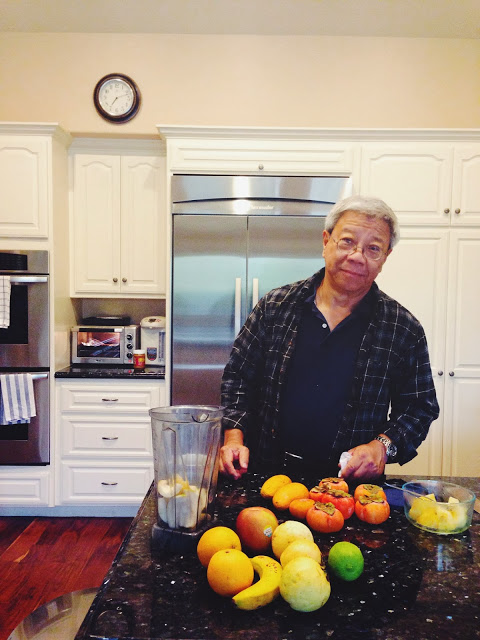
A year ago today, my grandmother passed away. The day would have gone by without my having given her or my grandfather a second thought had my mother not called me.

It was only 7:30AM back in California and I thought it strange to see my mother’s name flashing on the screen. She’s not one to wake too early, especially not on a Sunday, but I guess this isn’t like most Sundays. When the phone rang, I was standing in the kitchen, mid-sentence with a friend who had spent the night. We were talking about men and blogging. Things important to we the living. I picked up the phone and greeted my mother with the slightest impatience but became quiet when I could hardly hear her speak. She wasn’t crying and did not sound sad, but she seemed reluctant to let her voice rise above a certain octave. She was hesitant to remind me of something. She, along with everyone else, knows that in New York I’m having what is known as “a good time.”

I told my mother that my friend was visiting, hoping she would say, “Oh okay, I’ll call back later,” but instead she said a hollow, “Oh that’s nice,” and finally, after a soft “hmmm,” said, “You know, today marks one year since grandma’s passed away.”

“Oh my God,” I said, “It’s been a year.”

“Yes, so fast,” my mother said softly, “We’re going to her grave later, the family.”

I thought to my grandfather and asked after him, knowing that I would not under any circumstances call or speak to him today. Or tomorrow. Or the day after tomorrow.

“He’s…” my mother hesitated, “he didn’t feel well last night.”

“How so.”

“He felt last night he couldn’t breath and complained of a stomachache. Your aunt Joannie went to visit him and she found him lying huddled on the couch. It made her sad, your aunt said. Just an old man in a cold house, lying huddled on the couch. He told her he felt very cold and very ill.”

“It’s stress,” I said, not sure if I was using the right word in Chinese, “Today is a terrible day for him and it stressed him out last night. I would probably feel sick too.” But I knew exactly which couch and how cold. The house had been warm in theory when my grandmother was alive and well and it was filled with the smells of her cooking and lots of bodies coming in and out to eat with them. But in the winter, when the stove was off and it was just the two of them, when they were napping or quietly playing solitaire, the house could get incredibly cold. It was two stories, the second of which they never ventured to, and possessed an old heating system that struggled against the high ceilings and thin, drafty windows. I often walked in on winter evenings to find grandpa wearing a cap, hands stuffed into the deep, fleece-lined pockets of a black puffy down jacket my cousin Andrew had passed down to him. I would sit and chat, fully aware that my fingers and toes were turning purple.

“The heater…” I would say, and most of the time, grandpa would respond, “Such a waste. Just two people in a big house. We don’t need it.”

I didn’t know how to say ‘heartache’ in Chinese, or not the way I wanted to say it. I knew to say, “Heart hurt,” which was accurate, but for some reason, when applied to Grandpa, seemed just the opposite. It didn’t go with his tough-guy mien. But in any language it is apt, there is no better word for it. Still, I didn’t use it.

I could sense my mother nodding on the other end, looking off somewhere.

“He said he did not feel very good at all.”

“Are you guys going to take him to see the doctor?”

“I don’t know,” my mother said, “We’ll see.”

I looked over to my friend, who knew my family well and knew that my grandmother had passed away. She looked concerned, but I didn’t want her to be. There wasn’t much to be done from here, by either of us. I wanted to hang up and continue talking about men, about blogging, about the future.

“Well,” my mother said after a short silence, “Tell Angie we said hello.”

I said goodbye, almost adding, “I hope Grandpa feels better,” but stopped myself. It wasn’t a cold he had.

—————

Certain days in New York, when I’m walking down the street and see an elderly man or woman sitting alone on a park bench or shuffling slowly somewhere, I remind myself to call my grandfather to see how he’s doing. Mostly, I know. Or I think I know, in the general way you think you understand the feeling that comes with losing someone you’ve been married to for nearly seventy years. So I don’t know. I just know what he’ll say when I call to ask, “How are you doing?”

Ma ma hu hu,” he’ll say, the Chinese equivalent of “same old, same old,” or more accurately, “Whatever.”

Most days, he means this to be funny. My grandfather likes to play Negative Ned to my Positive Polly. It’s our special thing – he thinks I’m a ridiculous smart-ass ray of sunshine, mostly because he doesn’t read my blog and also because with him, I steer clear of certain topics that once broached would make me cry until I had no tears. I don’t always want to cry when I see him. Most of the afternoons we spent together were mild, happy affairs. I cooked a simple meal we would eat together, then I would ask him to split a dessert with me. He would say no. I would shrug and say, “Your loss.” He would chuckle, arms crossed over his chest and shake his head.

“You complain about gaining fat and you always always eat dessert.”

In between bites of chocolate ice cream or cookies or cake I would nod, “Very astute, Grandpa.”

And it went like that. I’d clear the dishes. He’d watch the Chinese news, read another article or two from the Chinese World Journal, and between 1 to 1:30PM, would stand up slowly, wincing as his bones creaked and say, “Nap time, nap time.”

I’d nod and say “Good night,” and he would roll his eyes because it wasn’t nighttime.

“It’s good afternoon,” he’d correct me.

“Good afternoon,” I would stand corrected.

He would nap for an hour. Sometimes, I slept too, lying on the couch in front of the TV with a book on my belly. Grandma used to nap here, and when she was here and I was here, she’d nap in the bedroom and let me have the couch. Now, Grandpa would wake before me and come back quietly to take his seat at the dining table. He would read like a literary phantom behind me until I woke and realized the time and turned to find him there, still and scholarly. An ancient man in a modern Chinese-American painting.

“I’ve been awake for a while,” he would say, and I would rub my eyes and yawn dramatically, kicking my legs out and stretching my arms past the edge of the sofa towards the garden my grandmother used to tend to but is now under grandpa’s care. I’d feeling comfortably childish like a granddaughter just risen from a warm delicious nap and who together with her grandpa, was waiting for grandma to wake too.

But it remained just the two of us for a good part of the afternoon. Grandpa would move to his favorite chair in front of the TV, turn it on in time for a travel-through-China show he liked to watch, and I’d read some more back at the kitchen table. Sometimes I would go to the garden and collect some snow peas, yam leaves or tomatoes and grandpa would be pleased, because he chose to keep watering the plants his wife had loved so much rather than let them wither. Sometimes I would vacuum and grandpa would lift the chairs even though it strained his back. Sometimes we’d talk, though hardly about grandma. And around two or three, I would get ready to go.

I’d stand up and start packing away my books and magazines. He would look up and say, “Going?”

“Going,” I said, “I’ll see you __,” whatever day I was scheduled to come next, though it was a self-imposed thing. I was unemployed and needed structure. Even more, I think, than Grandpa. I’d take my bag, wait a bit while grandpa rose from his chair to let me out, and I’d walk down the driveway towards my car, which was always parked across the street along the neighbor’s curb, beneath a shady tree.

He’d stand in front of the drafty old house, with its red brick and wrought iron front gate. The small, two door garage filled with old Chinese school textbooks and odds and ends from various points of their grown children’s and their children’s lives. Old Christmas gifts and filing cabinets. Large stock pots and steamers my grandmother had used during Chinese New Years’ past. There was a single rose bush near the living room window. There he would be, standing slightly stooped with his arms behind his back, a ballast of sorts, holding down this fort that was and was not his.

“See you later, Grandpa,” I always called out from my window. He’d smile and wave and, seeing my car wend around Sunshine Park and out of sight, he’d slowly turn and go back inside.

In those summer months before I left for school, I didn’t worry about whether he would feel cold. Alone, of course, but not cold.

The Long Game

96625-photo1

“You did it again, didn’t you,” my father said.

He called me this morning asking about the package they received from Amazon, with my name on it.

I slapped my forehead.

“Oh my god,” I groaned, “I did it again.” Continue reading “The Long Game”

New York Sounds

When it rained at home in California I purposefully kept the windows open because I liked the sound. There was no risk of rainwater coming in and soaking the carpet because there was an awning over all the edges of the house. In our straight-laced suburban neighborhood, the rain seemed to fall in straight lines save for when it hit the surface of our pool; then it seemed to bounce back up like a playful goldfish before falling back down to become part of something greater.

In New York this is not so. New York rain falls at a purposeful slant, the same way most people here walk: leaning forward, with something to do, someone to hit. I discovered one rainy afternoon about two weeks ago that to enjoy the romanticism of rain in New York, at least from my apartment, was to leave everything I’d placed near the window at risk of an unwanted shower. Had these items been hardy house plants placed atop a waterproof tarp (as my mother places alongside every window in our house, minus the tarp), this would be a nonissue. But rather than plants, I had near the window items that would fare poorly if rained upon.

In my genius I had the Comcast guy install the modem on the floor next to the window, thinking the slim black box would be more inconspicuous there, tucked behind the legs of my desk. Alongside it, I had placed a power-strip into which I plugged all of my essential electronics (lamp, computer, wireless router).

So the first rain came and it was very lovely and romantic and I felt for the first time since moving here that the breeze coming into my apartment was actually fresh. But as I stood a ways back from the window and admired the view, reveling in the fact that I was in and the rain was out, I noticed an odd sheen on the floor and holy-shit-everything-is-getting-wet and I couldn’t close the window fast enough.

It was very quiet in my apartment after that, except for the polite tap of rain two windowpanes away.

For a moment the modem seemed to blink listlessly, as though it were fading in a tragic electronic way, and I did the only thing I know how when attempting to rescue warm electronics that are either getting too hot or, in this case, wet: I blew on it.

The modem survived, along with the power strip which I wiped down with a towel though not without entertaining nightmarish thoughts of being electrocuted to death. It is likely my charred body would not be discovered until my parents called C, who has a spare set of keys but who lives in Jersey. And even so, she has trouble with the door. It was an awful, gruesome thought and I waited a while to dry the rest of the cords.

But I have heard, from the first day I set foot in New York, as one hears of an urban legend or local ghost story, of a character of New York weather even more fearful than the slanted rain. The winter and all its frosty accoutrements!

“Do you have a big coat? Boots? Gloves, scarves mittens, long johns?” People ask me, and I nod in wide-eyed fear except to the last item. Really? Long johns?

“Oh yes,” some of the skinnier girls nod, “Long johns are essential.”

But I don’t plan on spending too much time out of doors, and I do have a coat, purchased at Costco some winters ago before visiting the Great Wall of China. It’s puffy, with a fur-lined hood, and covers down to my shins. Naturally it makes me look like an eskimo and naturally everyone in New York will be wearing something similar. At least I hope so. What I will dread most about the winter, I think, is not so much the cold itself but what must accompany the cold: the silence of when I am alone at home. I was, even in the quiet suburbs of the Park, a person who liked the windows open. And on the sixth floor of my cousin’s house in Taipei, I was conditioned to wake up and fall asleep to the sounds of the street. My aunt firmly believed that air must constantly be circulated, no matter how cold, though it never got very cold in Taipei. At least not by East Coast winter standards. There were always at least four windows, one on each side of the house, even if just a crack, to keep the dialogue open between the inhabitants of the house and the happenings outside.But the day my modem was given a free shower, I noticed how very effective the windows were at blocking out the sounds of the street: the whoosh of car tires driving through wet asphalt, the blare of indignant horns, the laughter of children who live on and around my street, the jingle of keys followed by the unintended slamming of old apartment doors and the whisper of a New York breeze playing with the leaves of New York trees. And of course the harsh, intermittent whine of NYPD sirens, all were muted the moment the window closed.

I have within the past month become accustomed to these sounds, a cacophony at first but now a symphony. Together, they wake me up, especially the garbage truck that comes 7AM on Saturday mornings, a time undoubtedly scheduled by a petty, faceless imbecile who seeks revenge on Friday night revelers and put me to bed: these criminals running, cars chasing, dogs barking, homeless men foraging, people not-sleeping.

Come winter however, I will have to make a choice. Freeze to death but to the music of the city – or will it be quieter outdoors as well, since it will be too cold for most to venture out for long? – or stay warm and watch the snow fall in clichéd silence? The latter, certainly. I type better when the blood is not frozen in my veins. But I feel better, when I can hear the sounds of life outside.

What is Good Writing? Evan S. Connell’s "Mrs. Bridge"

This semester, I signed up for a class called “Thickening the Plot,” taught by a petite funny lady with short, grey-blonde hair and round glasses. When she smiles, her eyes get small and you can see her gums, which my mother tells me is a sign of a person not to be trusted. But I think for this professor, I’ll make an exception.

I heard her speak at orientation. She was one of three women who were assigned to speak to the non-fiction students, and she was the most humorous and open. She sat comfortably in her chair, leaning slightly back with her legs loosely crossed in comparison to the other two women, who were writers too, but I think less well known. They sat more primly, hands clasped in their laps and a nervous look on their faces as though they hoped they wouldn’t be called on. It’s always funny to me when professors act like elementary school students. Sometimes on campus I see a professor eating alone, or walking somewhere with their heads bent low or absorbed in something on their phones, hoping I think, not to be recognized or approached. In class, they come alive. They turn on. But this professor, of the short graying hair and the round glasses, is always on. She was not my professor then, but at orientation she strode to the podium to welcome us in a clear but slightly warbly voice, and cracked a few non-funded MFA jokes (something about Columbia being expensive, but worth it…she hopes). Those of us who were feeling awkward or on the verge of dozing off awoke, relieved to be laughing and charmed by this slight woman, dressed rather mannishly in slacks and sensible brown shoes, and whose voice and manner of speaking indicated that in fact, she had a steely writer’s core and strong opinions. 
I immediately thought: “I don’t know what she’s teaching but I want to be in her class.” I wasn’t the only one. I furtively pulled out my phone and emailed the course administrator while the professor spoke, noticing from my peripheral vision several other students doing the same thing. A while later I received an unsurprising response: “Her class has a pretty long waiting list, but I’ll see what I can do.” 
I took matters into my own hands and showed up on the first day of her class along with a half dozen of other hopefuls. We crowded into the small, sparsely furnished seminar classroom, with tables arranged to sit fifteen comfortably but were now meant for twenty, and waited as she called roll of the lucky twenty students that had the good sense to sign up early. Then she turned to those of us who weren’t on the roll.
“I can’t promise anything,” she said, “But it looks like we’ll fit.”
I looked around the room. There were about eight of us seated alongside the walls, removed from tables which could only seat twenty. It was a fire hazard, but yes, we did fit. 
A week later I was on the roll, and already immersed in the reading list.  
The professor it turns out, is much stricter than her easy manner suggests. She dislikes it when we leave the room to use the restroom, which for me and my unfortunate pea-sized bladder, is an issue. There is a possibility I will end the semester with a kidney infection. She also dislikes it when we eat because most of the packaged foods (granola bars, chips, sandwich wrappers) students prefer are wrapped in a noisy materials like that hybrid aluminum cellophane. It is too noisy and disruptive. This is also a problem because I like eating. Especially in class. But her ears are quite sensitive, and she’s asked me twice now, to put my granola bar away (I forget because we only have class once a week, so it hasn’t been ingrained yet. My almost Pavlovian response to sitting down in class is to take out a granola bar). But I am working on being sensitive to that.

She has an iphone, an unexpected gadget for a woman who put her phone number down on the syllabus. 

“I really prefer you call me,” she said, “anytime between nine and nine. It’s just so much faster.” 
Her students, raised on email, instant and text messaging, looked at her curiously. 
I’m not saying the class is a disappointment. I didn’t sign up for a comedy show, after all, but nor did I sign up to hear my classmates expound on the novels we are reading. But that’s a seminar for you. The takeaway, I suppose, is the professor’s taste, revealed in her carefully curated reading list. I can’t quantify the monetary value of a good reading list because there is none, or if there is, it won’t become apparent until many years down the line, when I sell some ten thousand words for a few hundred dollars, (if I’m lucky), or recall it during a thoughtful afternoon lull, contemplating the profundity of the life I’m living and how near or far it is to/from the life I thought I would live, et cetera, et cetera. That sort of thing. It is, if I were to label generously, a foundation of sorts – a slow, cooking type of education that just happens to cost as much as an MBA. 
Apart from Ian McEwan, I did not recognize any of the other authors on the list. The subjects range from homeless people to farming to Lyndon Johnson to lesbianism (a graphic novel!). Each book represents a different approach/technique to plot development, something non-fiction writers struggle with because much of the time, we don’t know how things are going to unfold or end. Now, three weeks in, we’ve arrived at Evan S. Connell’s Mrs. Bridge, a novel about a lonely woman and her family, which despite its dull cover directed at prim, repressed women of a certain age, will probably be one of my favorites this year. 
Anyway. Other people do it better, and I am lucky to be learning, both in person and on paper, from such people: 
From the first vignette of Mrs. Bridge by Evan S. Connell: 
1. Love and Marriage 

Her first name was India – she was never able to get used to it. It seemed to her that her parents must have been thinking of someone else when they named her. Or were they hoping for another sort of daughter? As a child she was often on the point of inquiring, but time passed, and she never did. 

Now and then while she was growing up the idea came to her that she could get along very nicely without a husband, and, to the distress of her mother and father, this idea prevailed for a number of years after her education had been completed. But there came a summer evening and a young lawyer named Walter Bridge: very tall and dignified, red-haired, with a grimly determined, intelligent face, and rather stoop-shouldered so that even when he stood erect his coat hung lower in the front than in the back. She had known him for several years without finding him remarkable in any way, but on this summer evening, on the front porch of her parents’ home, she toyed with a sprig of mint and looked at him attentively while pretending to listen to what he said. He was telling her that he intended to become rich and successful, and that one day he would take his wife -“whenever I finally decide to marry” he said, for he was not yet ready to commit himself – one day he would take his wife on a tour of Europe. 

Edward Hopper Summer Evening  1947 Oil on Canvas, Private Collection

A few months after her father died she married Walter Bridge and moved with him to Kansas City, where he had decided to establish a practice. 
All seemed well. The days passed, and the weeks, and the months, more swiftly than in childhood, and she felt no trepidation, except for certain moments in the depth of the night when, as she and her new husband lay drowsily clutching each other for reassurance, anticipating the dawn, the day, and another night which might prove them both immortal, Mrs. Bridge found herself wide awake. During this moments, resting in her husband’s arms, she would stare at the ceiling, or at his face, which sleep robbed of strength, with an uneasy expression, as though she saw or heard some intimation of the great years ahead. 

She was not certain what she wanted from life, or what to expect from it, for she had seen so little of it, but she was sure that in some way – because she willed it to be so – her wants and her expectations were the same. 

For a while after their marriage she was in such demand that it was not unpleasant when he fell asleep. Presently, however, he began sleeping all night, and it was when she awoke more frequently, and looked into the darkness, wondering about the nature of men, doubtful of the future, until at last there came a night when she shook her husband awake and spoke of her own desire. Affably he placed one of his long white arms around her waist; she turned to him then, contentedly, expectantly, and secure. However nothing else occurred, and in a few minutes he had gone back to sleep. 

This was the night Mrs. Bridge concluded that while marriage might be an equitable affair, love itself was not. 

This Is Not A Relationship

My cousin Melody is not dating a guy named Jim.

She’s not dating Jim, so he pretty much follows her around everywhere they, or mostly Melody, wants to go.

She’s not dating Jim, so he drives her to these places in his BMW.

She’s not dating Jim, so when she found an unpaid internship about a 15-minute drive away, she decided that rather than spend money she wasn’t earning on cab fare, Jim would work around his class schedule and find the time to drop her off and pick her up. Sometimes, on the way home, she’ll ask him to get her something to eat. He always does. He complains about this “abuse” she inflicts upon him but really (and everyone knows this) he does it to himself. He’s in love with her. Otherwise, he wouldn’t do it.

They take trips together, to New York, Montreal and Mexico. They eat at nice restaurants, go sightseeing, probably hold hands and kiss.

If there was a drug that made him feel the way Melody does, he would take it. I should tell Jim about Xanax.

But she’s not dating him. According to Melody, they’re just friends.

“Jim knows too,” she tells me, “I told him.”

And I nod, though as the words leave her mouth I am certain I can hear the sound of Jim’s heart tearing.

A few weeks ago Melody called to say she was coming to New York for a career fair. She’s a student in Boston, studying business something-or-other and sometimes the school suggests they go to career fairs in New York, where they’re supposed to network with potential future employers. But the networking events are dull, awkward and futile affairs and most of the students go with the fair as an afterthought. They mostly just end up meeting up with friends or, in Melody’s case, a cousin in the city.

I suggested afternoon tea at Bergdorf Goodman. It’s a girly thing to do. We’re both girls, Melody a considerably more accomplished one than I.

“Sure!” she said, “And I’ll be bringing my friend. You know, the boy.”

I did know, remembering a conversation we had during the summer, when we were both back in Taipei for my brother’s wedding. Melody had just finished her first year of graduate school and had not, as she put it, “met Mr. Right.”

I was doubtful. From her Facebook photos it seemed like she was constantly being swarmed by guys, most of whom I was sure harbored not-so-secret crushes on her. And then there were the photos she posted of her many excursions outside Boston in which she was the only one photographed, smiling sweetly into the camera from across the table at a fancy restaurant or in front of some tourist attraction. In my experience, girls traveling together usually take photos together. Couples traveling together even more so. It’s weird not to. But when you’re traveling with a guy you’re not exactly dating or even considering dating, taking a photo together is weird. So Melody’s photos were snapped by some adoring fanboy who didn’t mind taking multiple shots from multiple angles and who, at least in theory, didn’t mind not being in the photos.

Click. And the heart tears a little more.

“Really?” I pressed, “You’re not dating anyone?”

“Not really,” she said, shrugging.

“Melody. C’mon.”

“Well, there’s a boy,” she said, using the Chinese term for “younger boy” or “little brother.”

“A boy?”

“Yeah, he drives me around. Nice guy, but just a boy. Seriously, it’s not serious. We’re not dating.”

I laughed, unsurprised and already getting the gist of things. The photographer was the boy was Jim. But still, I wanted specifics. Melody is sometimes a treasure trove of feminine mystique.

“He drives you around?”

“Yeah. He has a car. He’s nice, comes from a good family who does real estate like ours, but I’m almost two years older than he is…” she shrugged and twisted her hair, jutting her chin out in the half-pout she has when she’s mildly dissatisfied with some person or situation, “…I just don’t date boys.”

“So you’re not dating.”

“No no. Not at all.”

“So you’re just friends with this ‘boy.'”

“Yeah.”

“Is this the guy you went to Canada with?”

“And a few other places, yeah.”

“Just you two?”

“Yeah.”

“He’s in love with you.”

She shrugged again, “I told him we’re just friends.”

“And still he just drives you around.”

She nodded blandly, “He doesn’t seem to mind.”

“Amazing.”

René Magritte,  La Trahison des Images, 1929  Oil on Canvas    Los Angeles County Museum of Art

Melody, despite her euphonic name and sweet nature, is a hammer head attached to a scalpel. She hits these poor fellows with her long limbs, pretty face, and care-free nature then slices their hearts open with the deft hands of a gifted neurosurgeon. But imagine a neurosurgeon who doesn’t know she’s a neurosurgeon. She’s a particular breed of female who always, wherever they go, leaves behind them a river of tears, like that Justin Timberlake song, except less spiteful. The tears are not Melody’s but rather those of young, ideal-driven men who’ve been dumped and told to stop calling but who still follow her around like crack addicts with empty pipes.

Girls like Melody don’t merely break hearts. Love is never simple, and neither is lust. Melody’s MO, blithe as she is to it, is thus: she fills these hearts with promises she never makes but subconsciously hints at by merely glancing, smiling, chatting benignly with these guys – all these little, meaningless interactions point, in the lust-struck brain, towards more substantial promise: the promise of Melody’s undivided attention, of requited love and adoration and somewhere down the line, of a relationship.

It feels like love, it feels like attention, it feels like affection, but the hitch of course – and isn’t there always a hitch? – is that the feeling is always one sided. It’s a dense, heady mist upon which the love story the guy wants to see is projected. But at some point the film stops rolling, the mist dissipates, and he’s standing alone in the cemetery holding a can of soda she wanted but didn’t drink, amidst the remains of other deflated hearts that crackle like empty Doritos bags.

But being objective, I see, as I’m sure you do, that the guys do it to themselves (as does everyone else who’s dumb in love). Melody is loved and in return, she mildly likes, with no particular ill-intent. It’s always, if you ask these girls, kind of an accident.

It’s like taking a walk after a spring rain and coming across a snail or worm on the sidewalk. They don’t really noticing and step down lightly though not lightly enough. Melody always hears the crunch beneath the soles of her Havianas sandals (her footwear of choice as she’s nearly 5’10) and she’ll look down and say, “Oh shoot.” But like the rain, the moment passes and she shrugs. “Nothing to do about it now.” She wipes her feet in the grass a bit and walks on.

So Jim, whom she is not dating.

They’re not dating, so Jim drove Melody all the way from Boston to New York for a career fair only she signed up for. He told himself he could visit friends while Melody (and the two other people whom Jim also drove from Boston at Melody’s behest) went to the career fair.

They’re not dating, so when Melody told him he was going to afternoon tea with her and her cousin, he nodded sure even though he hates tea, hates sandwiches, and hates sweets. He hates those things doubly when he’s hungover, as Jim is when I meet him.

They’ve arrived at Bergdorf’s a few minutes before me, and are sitting across from each other. Melody has her back to the window that faces Central Park and a full view of the dining room. Jim faces Melody, so that she’s the only thing he sees, her pretty face glowing by the light of the window. Seeing me, Melody calls out, “Hi!” and Jim turns around. He looks as though he’s just woken up.

“I’m Betty,” I say.

“Jim,” he says.

“The boy,” I think, and take a seat next to Melody, but not before raising my eyebrows at her in a knowing way. She smiles at me. She knows what I’m thinking, but mostly I’m feeling sorry for Jim and marveling, as I do, at Melody. Another girl would have thought the situation awkward and avoided inviting Jim altogether – why bother with the explaining? – but Melody, and this is part of her charm, tells it like it is. We are not dating, her eyes tell me, this is just afternoon tea with my friend and my cousin.

So this is Jim. The boy. Dressed like a boy. He’s wearing a striped Abercrombie polo, the polo shirt of choice of guys from Taiwan his age and of a certain mindset, which is, “what everyone else is wearing/doing/dating.” He’s more tan than most Taiwanese boys, though this could have more to do with his heritage than actually spending time out in the sun. His head and all the features on it are round. Round eyes, nose, mouth. I can’t decide if he’s cute in a homely way or homely in a cute way. He’s certainly no Adonis, but there’s something comfortable and non-judgmental about his open face. Still, he’s obviously scored a trophy in not dating Melody. And, a few additional points for Jim: he’s more sturdily built (though far from built) than most Taiwanese guys, who all seem, at least when I visit the island, to be on some culturally induced famine.

Despite being only twenty-four and still a graduate student however, Jim seems to have already sunk one foot into middle age. It’s an affliction of young, wealthy Asian men who have too much money and as a result, too little motivation to do anything but get away from overbearing, nagging mothers and find respite in girls like Melody, who don’t nag, not really, unless you’re late picking her up. In which case, you’re in for it. But for the most part, Jim is never late. Jim’s going soft around the middle and probably, in the brain. I guess his main ambition in life at present is to keep Melody happy.

I look at Melody, who despite her easy, languid smile, seems merely content in the specifics of the moment, still a few steps away from happiness.

We look at the menu, though really there’s nothing to think about since we’re here for the afternoon tea, which comes in a set. We just have to choose the tea.

“I’m not big on sweets,” says Jim, thrusting the menu towards Melody, “My secretary can choose for me.”

A comedic attempt to assert his dominance, which Melody quickly shuts down.

“It’s tea you’re choosing, my dear chauffeur,” the hammer says, “The sweets are set.”

Jim is hungover from karaokeing with friends the night before. Melody and their other friends stopped drinking early on and Jim felt it was his duty to block for Melody the alcohol that seemed to keep on coming. But apparently Jim wasn’t as drunk as one of his friends, who was smoking a cigarette and then when he turned to exchange some slurred words with Jim, stuck the cigarette in Jim’s face. Which explains the odd-looking birthmark right under Jim’s left eye.

“It’ll scar,” I said, showing him a cigar burn on my right forearm which I got from my freshman roommate at NYU. She wasn’t drunk. We were walking and she was smoking a cigar and she put it down rather carelessly right where my hand was swinging. I forgave her.

“I did it for her,” he said, pointing indignantly at Melody.

She shook her head, “You did it to yourself.”

He looks at me in mock-protest, “See how she abuses me?”

I laugh, shrug, then launch into the barrage of questions I ask everyone when I first meet them, especially when they’re not dating my cousin: Childhood, schooling, parents, siblings, professional aspirations, general philosophies.

Jim’s father passed away when he was in the fifth grade and his mother raised him and his older brother, though they have a huge family on either parent’s side, so his mom had a lot of help. She sounds like the typical over-bearing Taiwanese mother-in-law, every other word out of her mouth attached to a nag. The last time Jim went back to Taiwan, he changed his flight and returned to the States earlier than he’d planned. In the States, he’d gotten used to not having to hear his mother’s voice all the time.

Jim has an older brother also in the States. According to Jim, they have very different personalities. His brother is an introvert. Doesn’t like partying or drinking or, I’m guessing, chasing after pretty girls.

“My brother loves to say, ‘Please, not now. Please just do not bother me.'” Jim says puts his hands up and grimaces in an imitation of his brother, “We are very different.”

After high school, he moved to the US for college in Hartford, Connecticut. His English is pretty good, but could be better considering how long he’s been here, but then he’s made friends with pretty much every Asian person in Hartford and now Boston, and through a few key acquaintances, many more friends in Flushing, NY.

“He knows a lot of people,” Melody says almost proudly, then pauses, “Well, actually, he knows like this one really fat guy who knows all the Chinese people.”

Jim nods as a matter of factly, “Yeah. I do. That one fat guy.” Jim points to the cigarette burn, “He gave me this. But he’s a good guy. Good times.”

And grad school? He shrugs, assuming I already know the answer. I do. Kids like Jim (like Melody too and to some extent, myself) go to grad school because it’s a.) what everyone else is doing – like wearing Abercrombie polos, b.) supposed to bolster your job prospects c.) a safe haven or one last hurrah before you’re actually ready to start working in the real world. Jim has never worked before, and this is something Melody has an issue with. Even she has spent two years toiling away at a Taiwanese bank after graduating from college.

“I’m into real estate,” he says, “That’s my family business background, and I’d like to learn more, but honestly, trying to find a job or an internship here is so damn hard, and it’s really easy to lose motivation. That’s when I admit to myself that yeah, I’m just another spoiled kid without too much drive.” He chuckles as he says this, and I find myself nodding along to his honesty.

“But,” he continues, “I do want to learn more. It’s the one thing I’m pretty much consistently interested in.” (Besides Melody, I want to add).

“Why are you so good to her?” I say jokingly, when he’s listed all the things he does for her on a daily basis, most of them involving driving and waiting and driving some more.

“I’m good to him too!” Melody protests, “I do his homework for him!”

I look at Jim, so this guy’s getting something out of it too – if not a girlfriend, then perhaps better grades.

Jim nods like he can’t argue with that.

“I’m no good with numbers,” he says, “She definitely has a better grasp of all the projects and stuff we do.”

I stare at Melody, unable to hide my surprise. She’s not exactly known as the brainy one, but then again, when your older sister placed first in the nation for the grueling college entrance examination and then graduated as the top electrical engineering scholar at the nation’s best university (things like this are a huge deal in Taiwan where test scores pretty much predicate your success as a human being), it’s easy for the rest of the world (and to some extent, the family) to remember that you have a brain at all.

“So you do all his homework?”

“No,” Melody says, “But if we have a project, which is all the time, we divide up the assignments and I’ll just take on more of the work load because – (she waves dismissively at Jim, who shrugs like “What can I do?”) – he just takes forever and the quality of his work is not as good.”

Interesting. I look at Jim and think, “Well, you drive her around and she makes sure you don’t fail out of the program. Sounds like a fair-ish trade.”

He shrugs and rolls his eyes, but smiles, “Haha, I guess.”

Then I ask the cruelest question of all, but I feel like we’ve reached that point where it’s okay. It’s probably not okay, but something tells me Jim can take it.

“So,” I look at Jim, “You drive her around. And you,” I look at Melody, “Do his homework for him. You guys take a bunch of trips together, and spend most of your time together, studying, hanging out, whatever.”

They nod. Yes, yes, yes.

“But you’re not ‘together.'”

They shake their heads, Melody slowly, and Jim more jerkily.

“So you guys have some kind of agreement.”

“That’s right,” Melody says.

Jim is about to say something, then stops. He breaks out into a sheepish grin, having decided, I think, that he can be honest here. He’s in a safe place: the sunlight dining room of the Bergdorf Goodman restaurant, seven floors above the swarm of tourists, half of whom are congregating outside the Apple store, lining up for the new iPhone.

“She doesn’t love me, ah,” he says, “She doesn’t love me so that’s the agreement. What can I do about it?”

I am surprised and not surprised by this honest declaration, and my fondness for the boy grows. I look at Melody, who rolls her eyes but in an endeared way, if that’s possible.

“Oh shut up,” she says.

“She always complains that I’m ruining her game,” he says.

“You are! How am I supposed to meet Mr. Right if I’m sitting in your car all the time.”

“I’m driving you places!”

She laughs, “True, true.”

“Besides,” Jim says, “You’re ruining my game too.”

“But Jim,” I point out, “Melody is your game.”

He thinks about it for a millisecond then concedes, “She is, she is.”

He looks fondly at Melody, who can’t help but smile back.

Jim smiles a lot, a weird confident thing. He’s not afraid of losing her, I realized, at least not outwardly so. There’s nothing careful or uneasy about him. He doesn’t tiptoe around her nor does he shy away from my questions which can come off as prying because they are. But thus far, despite their ambiguous (unstated) relationship status, Jim takes them all in stride. None of them seem too personal for him to answer, and he does as a matter-of-factly, with a wry smile. His father’s death, his mother’s reaction to his father’s death, his odd brother, his vague career plans, the cigarette burn mark on his left cheek, and the fact that Melody doesn’t love him back. These are all facts of life.

But Jim is smarter than he looks and more self-assured than how I first imagined him. He’s playing solitaire for now, hoping she’ll one day see him in the light he wants her to see him in. And Melody too, is far from brainless. She likes Jim, I can tell. Despite her reservations about his age and the fact that they’re roughly the same height, she likes that he’s not a pushover, and that he’s open. She hasn’t met his family but from the sound of it, they’re not too different from ours. This sort of thing matters in the long run. And lodged somewhere in the chords her fine-tuned feminine intuition, she knows he’s a good guy with potential. She’s waiting for Mr. Right, but if she’s lucky and if Jim is smart, he’ll become Mr. Right. They’re both playing the long game, just using different investment techniques.

A server in a white coat comes by to replenish our tea, but they need to be heading back to their hotel soon, to pick up Jim’s car and the two other people they came with. Jim is feeling less hungover – he barely ate any of the sandwiches but already he’s wondering what he wants to eat for dinner. Something more substantial than tea and small sandwiches.

The check comes and Melody pays for Jim’s portion.

“I’ll figure it out with you later,” she says quickly, motioning for Jim to put his card away, though I know she won’t.

As we step out of the restaurant and wait for the elevator, I turn and realize Melody is also wearing a shirt from Abercrombie. And white cutoff shorts. And her Havianas sandals. Jim is wearing shorts and sandals. She’s tall and he’s not-so-tall, so they’re roughly the same height, and there’s something about their expressions, the two of them standing easily side by side that seems picturesque in the most stereotypical, young Taiwanese couple sort of way. But they’re not a couple. They’re not dating. The elevator comes. We step in, go down, step out. I hug Melody and, just for the hell of it, hug Jim. I may never see him again because Melody might decide to pull out of the game. She might meet Mr. Right at a gas station on her way home, or in her next class or at her next real job – a lot can happen. Jim could get tired of driving, though I think the former scenarios are more likely. But we hug and make vague plans for me to visit Boston.

“I’ll see you then,” Jim says, “We’ll go out with my friends.”

“Thanks,” I say and find myself wanting to add, “Hang in there, Jim. Because you never know.”

I wave them out and watch as they walk past racks of expensive handbags towards the revolving door. Watch a boy and a girl wearing Abercrombie shirts and sandals, holding hands and stepping out into the city. You never know. You never know.
Distractions

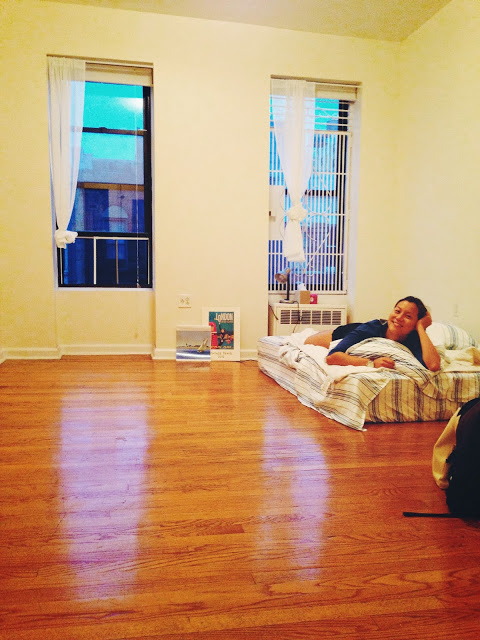
How easy it is to get side-tracked in this city. A year ago, I visited New York with my cousin from Taiwan. We stayed at the upper west side apartment of her friend (and now my friend too), a Columbia architecture student named Albert who was, like my cousin, is also from Taiwan. One evening after dinner, we were walking back to Albert’s place and someone – it may have been Albert, it may have been my cousin – suggested something obvious which had already, from the moment my plane touched down onto the tarmac, been taking shadowy shape in my subconscious:

“Why don’t you apply to Columbia’s writing program?”

At that point, I had applied to zero programs, but was shuffling six or so schools in the back of my mind, mostly because those six schools were the only ones I knew who offered non-fiction programs. They were also in unfamiliar states with more farm and/or wild animals than people. I had never considered Columbia. NYU, yes, because of my “familiarity” with it, but not Columbia. It didn’t seem out of reach as just hugely expensive and ivy-league and serious. I didn’t exactly associate it with the arts so much as business, law and medicine. But then I considered Albert, who was studying architecture, considered the fabulous if not liver-ruining time he was having in the city, and our trip thus far, which was filled with shopping, good food, and leisurely strolls through pretty parks and neighborhoods. It was, aside from the money spent doing the aforementioned things, a great city for a writer. The city teemed with “subjects” because it teemed with life. Though it seemed entirely possible that not a thing would be written. I nodded thoughtfully and said to both of them, “Yes, I should consider it.”

I didn’t actually look into Columbia until I went home to California, though New York was certainly still fresh on my mind. I was uneasy, however. In the city, we spent days strolling through the High Line, Central Park, and the West Village. Everywhere I looked, I saw young people like myself (though dressed in way more plaid and corduroy) sitting, writing and thinking. And writing. In Moleskins. It was apparent New York was already filled with writers and/or writing students (some people make the distinction. I am undecided). I remembered a conversation with a friend about his burgeoning family Christmas parties and how inevitably, in the near future because cousins were having kids left and right and the walls of his parent’s house remained inflexible, they would have to disassemble and branch off into smaller families parties.

“We’re reaching critical mass,” he had said drily, and I nodded to myself now thinking about the writer situation in New York. That was exactly it, minus the critical. Just writers en masse.

As was precisely my feeling, when I was walking through these famed New York areas, where tourists and unemployed artists/writers/creative thinkers like to congregate. The former to take photos every few feet and the latter to sit and write a line or two, every few feet.

I remember stopping on the High Line to buy a sour cup of coffee (Blue Bottle, if you’re wondering), and feeling slightly chilled by the brisk fall breeze. The feeling and the smell were familiar to me from my first fall in New York, back in 2004, but this time I felt far from alone. I looked around me on either side of the coffee bar and saw two bearded young men sitting opposite each other on two small tables, both with notebooks open before them, both touching their beards in thoughtful ways and staring out across the High Line. Their journals, diaries, whatever name they gave to their paper darlings, looked loved. The lines were filled with small, scratchy words in inky black pen: genius works in progress.

Were they writing about their respective lovers? Men or women? I couldn’t quite tell, so wonky is my gaydar – but from the way their legs were crossed and their brows furrowed, I discerned that they were very serious about their “craft.” And really it wasn’t just those two men, but also all the writers they knew and the writers those writers knew and all the writers thinking about moving to the city and all the writing students thinking about applying and all the writers already living and writing and kind of working but not really and the writers already filling up the classrooms at Columbia, NYU, the New School, and really, the list goes on.

I rolled my eyes, paid for the coffee, and wondered if I wanted to add myself to such a saturated pool.

I returned home some days later and turned the computer on. Into the box, I typed, “Columbia MFA Creative Non-fiction.” My search was fruitful – so Columbia did have a creative nonfiction writing program. It was simple then – I would apply, but I wouldn’t hold my breath. They don’t give very much aid, if any at all, and I wasn’t sure if I wanted to go back there anyway. As most people applying to MFA programs are wont to do, I had my sights set on Iowa – not the Writer’s Workshop, but the Nonfiction Writer’s Program, which I told myself was no less distinctive. I imagined wearing chunky sweaters and thick brown boots, woolen socks, and eating lots of…gruel. I imagined looking out the window and seeing nothing but rows and rows of tree trunks (I have no idea still, what Iowa’s topography looks like) and brilliant pink and yellows of a sky at dusk, because that’s normally when I look out the window. I imagined small classrooms with other serious writers like myself, talking and laughing and constructively criticizing each other’s latest pieces.

“You could use more dialogue here,” I would say, and they’d nod thoughtfully and appreciatively, and everyone would emerge a better, more well-rounded writer.

On the weekends, I would sit at one of two cafes on the main boulevard and maybe attend a reading given by one of my classmates. Maybe I would go hiking. Learn to hunt. Start making my own fur-lined caps with knitted chin straps.

I did not imagine crowding the subways with bums and businessmen, or being haunted by unaffordable goods in the city’s million windows, or being pulled, socially, left, right, up, down because there is just too much goddamn stuff to do in this city. I had imagined a quieter life, at a quieter school in a quieter city where no one would ever want to come and visit and I had imagined to be writing a lot more, because what else is there to do in a town where everything shuts down at 5PM?

Instead Iowa turned their noses down and Columbia and by extension, New York, welcomed me with open arms. (So did North Carolina and West Virginia, but common writerly sense told me better to grind it out in a thriving city to whom sleep is a stranger with tens of millions of other writers who want the same thing than in the woods with a mere handful of writers and grizzly bears). Which is how I ended up in a, if not the city that never sleeps, or more specifically, a city whose denizens prefer to start putting on their makeup at midnight for what is actually a very early morning on the town. Physically, I am not cut out for this city. I think few writers are. I’m not sure how my classmates get anything done. Between the school-sponsored social events and the hundreds of literary events happening elsewhere in the city (I have never seen SUCH a packed Barnes and Noble when Junot Diaz showed up… I ended up not being able to even see him because there was no room! Writers are true celebrities here, at least in certain bookstores) and the people who are open and kind and inclusive of me in their established New York lives and my own guests who have been coming non-stop (keep coming! This is not a un-invitation. The best cities are meant to be shared!) and the general housekeeping that comes with living on my own and moving into a place that had nothing and the time it takes to do simple things like buy yogurt at a three-story Trader Joe’s (you have not seen a line until you go to Trader Joe’s in Manhattan) and get places (I will, some day, figure out the subway system. Simple as it is), I’m finding it a bit hard to find time to read and most disconcertingly, to write.

But I manage. I try to read during those myriad pockets of time, mostly waiting for the subway, but of course it’s much more fascinating (and productive, I feel) to people watch. So naturally I don’t get much reading done on the subway, though I’ve intently watched other people read books whose subjects range from scientology to brain-imaging to my favorite novels, which always makes me wonder if the reader and I will get along. And I try to write on quiet afternoons like this, before the start of the weekend, which for me, begins on Thursday and ends Sunday morning when it dawns on me that I have two novels to finish before Tuesday.

Of my classmates, there are a few who’ve admitted to being slow readers and even slower writers and I sort of just want to pat them on the back in an sympathetic way and say, “Good luck with that.” But then I think better of it, look at my own schedule and the dark circles under my eyes and the hair that’s been falling out all over my apartment, and I decide to pat my own back and say, “Keep it together, Betty. Remember what Dad said: don’t forget your goddamn degree.”

Fat Cat Is Dead

On Sunday morning, my cousin Karen in Taiwan Whatsapped me a single line.

“Betty, Fat Cat is dead.” 
That was it. There were no emoticons or explanations, just a simple declarative sentence that conveyed a history that spanned some sixteen or seventeen years and a loss just short of devastating. The statement itself was something inevitable, but very hard to imagine. 
I typed back quickly, saying that I was sorry and that it would be okay because Fat Cat had had a good life. She didn’t respond. 
I thought back to a conversation we had on the sixth floor in my cousin’s room, probably around midnight some years ago.
“I will be very sad when Fat Cat passes away,” my cousin said, “I know it’s right around the corner.” 
At the time, Fat Cat was still fat, but not decrepit. He moved slowly if at all because he was lazy, and only sped up when one of my cousins walked into the kitchen, towards which he would suddenly charge, drawing upon the generous but seldom used reserves in his flabby belly. When I visited, which was often, Fat Cat followed me when I strolled into the kitchen, hours after my cousins had left for school or work.

“Meow,” it would say, and rub against my ankles, “Meow.”

In Cat-speak, this means, “I will love you for the next five seconds if you’ll take some canned cat food and put it in this here bowl.”

But I am not one to feed fat things, and so very rarely was Fat Cat ever nourished by me.

My cousins Karen and Larry, my aunt, and even, in a more removed, hands-off fashion, my uncle, had been very good to Fat Cat, a pale yellow and white tabby Larry had rescued many years ago when he was in high school. Fat Cat was such a hit amongst the members of that sixth floor nucleus that a few years later, Larry brought home a dark-furred stray that would aptly be named “Little Cat.”

With a master named Larry, one could hardly argue that his pets ought possess names with more flair.

Compared to Little Cat, Fat Cat was obviously much larger, less active, more blasé about life because he had a few years on Little Cat, was rescued first, had seen things Little Cat could only imagine. Little Cat was much scrappier than Fat Cat, who though born in the feline slums of Taipei, harbored an innate  and perplexing sense of entitlement. It was as though upon setting foot into the 6th floor apartment, he washed his paws of his past and developed almost instantly a taste for expensive canned foods. None of that pellet crap for him. Perhaps in a past life he had been the obese Queen of some weird tape worm tribe because Fat Cat definitely had something odd going on in the gut. He was never ever full and would have, had my cousins allowed it, eaten himself to death. A poster cat for the grossest sin of gluttony. But still, he had his moments.

I have a picture with Fat Cat when he wasn’t fat, and was just “Cat,” because he was the only one. I am about twelve or thirteen, wearing a worn-t-shirt and baggy athletic shorts and hair in a messy ponytail, strands framing my young, open face. During later summers, when I too was Fat, Fat Cat and I would pass each other in the cool hall of the 6th floor and I would think, turning to glare at his quivering haunches then down at my own, that “Fat Cat, you and I have both seen better days.”

But in the photograph, taken in the same summer of Fat Cat’s arrival, I am athletic, bright-eyed, an animal lover. I’m clutching Fat Cat close to my cheek, grinning at the camera while Fat Cat, in a slender and more awkward version of himself, looks unamused. His front legs are splayed out awkwardly and his legs are dangling uncomfortably above my crossed legs. His expression states quite plainly, “What the f***.” It was not his best photograph, but he needn’t have worried, for my cousin Karen made certain to photograph Fat Cat at least one thousand times a year, so that nearly his every non-movement is recorded for all eternity. Here is Fat Cat lounging on the chair. Here is Fat Cat lounging on the other chair. Here is Fat Cat sitting on Karen’s bed. On the other (my) bed. On Larry’s bed. Here is Fat Cat with Larry in college, who physically, is going the way of Fat Cat. Note the look of tenderness and adoration on Larry’s otherwise, at any other moment, dull and inexpressive face. If Larry loved any one thing more real than Star Trek, it was Fat Cat, upon whom he showered with slobbery, affectionate kisses that would make even his girlfriend cringe.

Here is Fat Cat in a mess of blankets because it is cold. On the floor, paws skyward, fleshy white belly undulating like a water bed because it is hot. Under the kitchen table, like a pervert. Peeking over the kitchen table, tiny pink tongue lashing out above the class, tasting about for my aunt’s broiled fish, which she inevitably, at meal times, will debone and put in a tidy little pile for him to lick up. Here he is looking up from the kitchen tiles, because he is expecting to be fed. And here, utterly full in gluttonous splendor, sunning himself on the balcony in the small woven basket he barely fits in but somehow still does, rolls of fur spilling over the basket’s edge.

Is he comfortable? Seems like it. Fat Cat Fat Cat Fat Cat. Click click click. And each year, he gets a little fatter, a little fatter, his eyes though, stay the same blank roundness. No questions, this cat. His hunger is literal. His philosophy is food. Sleep. Food. The occasional cockroach, killed with a sadistic remove, much to the delight of his cockroach fearing master, Larry. Click click. Fat. Cat. One need only to check my cousin’s Facebook or hack into her phone to realize not all cat ladies live in musty apartments and knit in their spare time.

But that is beside the point.

My own dismal track record with pets makes me an unlikely candidate to memorialize Fat Cat, even casually. On my watch, multiple generations of Russian Dwarf Hamsters, two chickens, a kitten who barely lived long enough to open its eyes, an insipid turtle, and a fish or two have perished. Most of these I buried or, as with the hamsters, when they became too numerous and their deaths too frequent, tossed in the trash with a simple prayer (I was always careful to wrap them in some sort of tissue or paper towel, but of course wearing rubbermaid gloves). The chickens were eaten by coyotes, the kitten dead before I came home from school. I found my mother sitting silently in the kitchen with the kitten still in her arms, her eyes rimmed with tears. She buried it the next day underneath an avocado tree on our back hill, and it seemed soon, the tree too was dead. If it did bear avocados they were usually small and withered and reminded me of the kitten itself.

These were technically my “pets” but in a way, they were never my pets. It was a polite label I assigned them because I did not understand what it meant, as a young child, what it meant to make something your pet. But can you blame me? Size matters. Just as I have trouble befriending people who are too short (midgets – oh I’m sorry, little people need not approach me) because I don’t like looking down so much, the little pets are hard to hold in high regard. Their needs, though quite real, seem small because they are small. I never cried when any of those animals died, only sighed and thought, “Again? Damnit where are the rubber gloves.”

But the larger animals that lived with my relatives and were, from the moment they arrived, treated like members of the family, I remember quite fondly, and it was from their interactions with these lucky animals that I learned what it means to be an honest-to-goodness pet owner. I should like to think the affection I saw doled out to these furry members of the family rubbed off on me too. At least, the lens through which they saw their pets, even if I only wanted ever to borrow their glasses for a minute. The warmth of their fur, the sound of their soft footsteps or their graceful movements bounding from chair to sofa to floor – those sounds and sights no less familiar to me than those my late grandfather made (indeed my grandfather spoke to me about as often as Fat Cat mewed to me).

Even before my cousins in Taiwan brought home Fat Cat, there had been Holly, my uncle Jimmy’s dog rescued some twenty years ago from the pound, a mix between a chow chow and something else, so that the violence of the chow was subdued and he had neither the lion’s mane nor any distinct attributes of the other breed and was simply, Holly. He had a tail that was shortened, so the length of his body ended abruptly in an adorable nub, and his coat was a dark, glossy ambery honey-wheat. If that is a color. Holly was just another member of the family and I said hello to him just as I did to my cousins, aunt and uncle each time I entered their house. Holly passed away while my cousin, the youngest in the family, was studying abroad in Beijing during her junior year of college, and her parents, wishing to spare her the pain, did not tell her until she moved back home and saw that Holly was gone. It was a strange feeling that day for me too, when I visited their house and realized a few minutes after walking in that Holly had not come bounding out the door to sniff around the door, making sure I was a member of the family and not some hood rat gangster from the neighboring city.

The sadness that comes is not overwhelming, but it is genuine. I’m never as close to the pets as their masters, but over the years I too, have become accustomed and on certain occasions, even fond, of their presence. It will be the same strangeness again, when I return to Taipei next year and am greeted only by Little Cat, who though more aesthetically pleasing (more cat-like, rather than walrus-like), has the odd, distasteful habit of pissing on dirty laundry and keeping quiet about it. I will, a perpetual student/unemployed person, wake up much later than my more productive, salary-earning cousins, my busy-body aunt and wander into the kitchen in search of breakfast. I will open the fridge and feel an unfamiliar chill about my ankles, hear only the sounds of the city entering late morning. No mews, no plaintive if feigned stares, no nips around my achilles tendon. Just me, alone in the kitchen, on the sixth floor, because Fat Cat is dead. 

Personal Statement – Other People Helped Me Do It Better

It seems appropriate today, on my first day of school (how quaint that phrase is!), to reflect upon how three years after graduating from college, I ended up in a small but airy classroom on the fourth floor of Columbia’s Dodge Hall. Let me, for a moment, pretend that this is an award acceptance speech (because you know, it’s so almost the same thing): I’d like to thank my friends for their undying support in my “craft” (even though I’d throw up before I referred to it that way without quotes), my family and especially my parents for acknowledging that hey, I’m probably not suitable for anything else, my professors for taking the time to write recommendations (or not – incidentally if you’re wondering how much weight Columbia’s MFA program places on letters of rec, one of my professors completely forgot to submit the letter, leaving me with two out of three required letters), and of course, I’d like to thank every darling who reads my blog.

Your readership means plenty if not everything because I don’t have other writing to show my dedication or seriousness. What you see here is what I write. On top of that, I’m a bit of a philosophical ham, which means if I write but no one reads it, it’s like that proverbial tree felled in the proverbial forest: is it really written if it’s not read? Didn’t think so. In short: thank you. A million thanks for taking the time.

And, lastly, for the nuts and bolts required to build the actual application, most painful of which is the Personal Statement, I’d like to thank Adam Gopnik.

It is not a stretch to say that Adam Gopnik helped me get into Columbia’s MFA program. I thought briefly about lifting entire passages from his book, Through the Children’s Gate and pawning them off as my own in my personal statement, but disgraced plagiarists told me that wouldn’t be a wise course of action. Instead, I used his book as a jumping off point, allowing his insightful paragraphs to act as muse:

What New York represents, perfectly and consistently, in literature and life alike, is the idea of Hope. Hope for a new life, for something big to happen, hope for a better life or a bigger apartment. When I leave Paris, I think, I was there. When I leave New York, I  think: Where was I? I was there of course, and I still couldn’t grasp it all. I love Paris, but I believe in New York and in its trinity of values: plurality, verticality, possibility. 

In the end, Gopnik gave me more than a leg up. This is what I submitted:

I did not start writing in New York, but in New York I began to see myself as a writer.
I was unhappy when I first started college eight years ago and blogging seemed to be a respectable way to broadcast it to friends back home and random web surfers who were interested to know how life was for a NYU freshman from SoCal. In New York, I learned the benefits of writing for oneself yet at the same time, discovered a small audience. Rather than attend class I began to explore nonfiction and often browsed independent bookstores around the city. I discovered Russell Baker and David Sedaris at the Strand; Adam Gopnik and Betsy Lerner at Shakespeare and Co., and heard chef Anthony Bourdain speak at Barnes and Noble in Union Square – a big chain store, but it stayed open late – before returning to the Strand to buy his books. Theirs was great stuff, much like the essays I aspired to write.
I ended up dropping out of NYU and six years later, graduated from UC Berkeley, where I was admitted to a creative nonfiction workshop taught by Bharati Mukherjee and Clark Blaise. In their workshop, I gained confidence practicing a well-worn cliché: writing what I know. It is the one thing I have done consistently, day after day, year after year. Some would say I know very little, but what I do know – my work history and its carnivalesque collection of colleagues; my family, divided amongst sprawling Orange County, the tiny island of Taiwan and the glitteriest of all glittering metropolises, Shanghai; and the myriad of tiny moments observed at home and abroad – I know quite well.
On a recent trip to New York I revisited the Strand, where Adam Gopnik’s Through the Children’s Gate lay on a display table. I had recently quit my job as Executive Assistant to focus on MFA applications, but visiting friends and eating cupcakes in New York was not particularly conducive to this. However, standing in the Strand and reading Gopnik’s descriptions of New York after having been away, I found myself immersed in his and his wife’s hilarious apartment hunt, their first Thanksgiving, and the beauty of New York’s “quiet places” of which Gopnik had lost sight until his children pointed them out again. He writes, “We fill our eyes and head with things already seen and known, and try to see them and know them again.” This, I think, is a writer’s – especially of nonfiction – ultimate goal. I was reminded of why I started writing in the first place, and why I want to do so at Columbia University. 

I’ve just been in the classroom for a day – not even, just a mere two hours – but I felt not-so-strangely (despite the presence of my strange-looking classmates – but that’s MFA superficiality for you) that it was a sort of homecoming. I’m not an academic (at least not yet?) but there’s something right about the classroom. A writer is always learning. Should always be learning. The classroom offers but a facet, but when it comes to writing and reading and talking about both, the classroom is probably a good place to start what I’ll never finish. So it was the right thing to do. A year ago, it was the right thing to write, and now I’m in the right place. 

Orientation

It goes without saying that New Yorkers work hard. I am not yet a New Yorker – I remember Carrie Bradshaw saying in an early episode of Sex and the City that it takes, on average, ten years to “become” a New Yorker. While I’m enjoying myself right now (saying this warily before the first day of class and before the frigid terrors of east coast winter) I doubt I’ll give the city this much time. To do so means, judging by the harried masses that pass me by in the street on their way to important meetings and such, is to work much harder than I intend to while personal history and unexplored geographic predilections tell me New York is but the first of many stops. But for now, I have stopped here. For now, I am in New York.

Photo by Very Highbrow, edited with VSCOcam App. 

I arrived in earnest at 5AM on Monday morning, sleep deprived, with hairspray still in my ponytail, leftover from the wedding I’d been a part of over the weekend. I had arranged a pickup (Carmel Car Service, for those of you wondering which car service is most reasonably priced and reliable when visiting New York) to fetch me from JFK and was met promptly at the curb by a tall, lanky Chinese man whose skin indicated that he lived in a room with very little natural light and drove the evening to early morning shifts. He spoke passable English, passable because he’d lived in the States for over ten years, having spent the first five years working at his auntie’s Chinese restaurant in Minnesota before moving to the city for a driving job that promised more freedom and more money. But once in the car he confirmed he was from China and I switched to Chinese. This made him relax back into his seat a little, perhaps to hear me better.

“How long has it been since you’ve been back to China?” I asked.

“Haven’t been back since I left ten year ago,” he said.

“Ten years!” partly due to the haze of jetlag and fatigue, I could not fathom the implications of being away from home for so long. Though unsentimentally in his version of things, there wasn’t much to fathom.

He shrugged as though it were nothing, “I didn’t have reason to go back.”

“What about your parents? Did they come to visit you?”

He chuckled, “No, why would they come visit me here? There’s nothing to see here, really.”

“You haven’t seen your parents in ten years?” 

My jaw dropped despite knowing that his was and is a common immigrant story – my grandfather didn’t see his daughters for over forty years after the Nationalists fled to Taiwan – they were grown, married women with children by the time they reconnected with their father in Hong Kong in the eighties. They knew grandpa through the letters he sent, but that was it. By then grandpa had remarried a fourth time and had three sons.

But times are different now, aren’t they? Writing this just a week into my life here, I have spoken with my parents at least once every day and am planning their visit this November. I imagined his parents waving goodbye to a sixteen year old boy and embracing, or in more typical Chinese fashion, patting the back of a twenty-six year old man, some ten years later. I couldn’t do it. I wanted right then to be sitting in the passenger seat so I could turn and search his face. The right side anyway. But instead I looked out the window and wondered if my parents would notice anything different about me the next time I arrived in Orange county.

He had been heading home from Long Island, where he’d just dropped off an “old foreigner” when he received the dispatch for my pick-up. It was technically the end of his shift, but it was an easy job and he took it.

“It was on the way,” he shrugged, “And I don’t mind driving early in the morning because there is no traffic.”

His Chinese name was printed on the back of his seat, alongside his photograph, but he told me his English named was Michael.

A good solid name, I said, and he shrugged again, tapping his fingers on the steering wheel.

I was tired but didn’t see the point in sleeping. In less than forty minutes (Michael drove very fast) I would have to shake myself awake and summon the energy to haul my suitcases up five flights of stairs. I watched dazedly as outskirts of the city whooshed by, slowly giving way to denser clusters of buildings that couldn’t seem to decide whether to reach for the sky or stay closer to the ground. Michael kept the windows down, to save on gas? I don’t know. Maybe he liked the fresh air. I did too, that morning.

He guessed that I was coming to the city for work, but I shook my head.

“School.”

“What are you studying?”

“Writing.”

“I’m terrible at school,” he said without regret, “And writing.”

“It’s not for everyone,” I said.

His parents had hoped, I’m sure, that Michael would fare better in American schools when they bid him goodbye at the age of sixteen, but he didn’t. He didn’t finish high school, didn’t even contemplate college or technical school, and before he realized, he had turned twenty-one and knew only restaurant English. He had an uncle in Chinatown, New York who knew a cheap place he could live (less than $500 a month for his own room!) and who could get him started as a cab driver. But first he needed to learn a bit more English.

Michael likes driving – when I asked him what he does in his free time, he said, “Driving” – so saying yes was the obvious answer. He didn’t exactly study English diligently, but picked up enough to chat politely and understand where people had to go. Most of the clientele was white, wealthy.

“All the old foreigners have money for this sort of thing,” he said, “Mostly business men whose companies pay for it. They all pay with their company cards.” He made held up his hand as though he were holding an invisible credit card, “You know the company card?”

I nodded. I did know the company card. At the Company I had one which I swiped prodigiously for executives and their transportation expenses.

“I don’t really get too many Chinese customers,” Michael continued, “But if I do, they’re mostly young like you. I would never spend money on a car service like this. I’d get a friend to drive me.”

I chuckled, thinking back to how my parents hadn’t had time to take me to the airport.

“Can’t you ask one of the car services you used to use for the Company?” My mother had suggested.

It occurred to him that perhaps what he said was a little thoughtless and he gave me a brief glance in the mirror. My face remained neutral with fatigue and he said quickly, “But you just moved here, so of course you don’t know anyone.”

“No one with a car,” I said.

He has now lived in Chinatown for the past six years. On the days he doesn’t work or has just one or two pickups, he watches movies, plays basketball, and eats Chinese food because he doesn’t cook. He likes Taiwanese food, he told me, but did not proceed to get specific about which dishes. When working, he prefers the super early or super late shifts because he hates, hates traffic.

“You hate driving in traffic but you drive in New York City?” I asked.

All around, the sky was beginning to lighten and I could see Michael’s face more clearly. He didn’t seem tired at all, and he had been driving for the past six to eight hours. Much longer than my flight.

“It’s not so bad if you know the times to avoid driving. I let the older guys with families have those shifts. I like the quiet.” He waved at the open road ahead, just a few cars – poor slobs who had to get up earlier than the rest of New York – heading to work. Or perhaps heading home from the airport’s night shift.

“So you like this job,” I said, “Driving.”

“I do. I like driving, and it’s pretty flexible, the hours,” he sped ahead of a slow moving truck, leaning forward to do so, and then settled back, “My brother is very jealous of my job.”

“He’s here?” I asked.

Michael nodded, “Just moved here, but lives in Minnesota with my aunt and uncle. Works at the Chinese restaurant. But I tell him about my life here and he sees I have so much freedom. I make more than he does.”

“Why can’t he come to New York and be a driver?”

Michael chuckled, “His English isn’t good enough.”

We crossed the Robert F. Kennedy bridge onto Ward’s Island and a few moments later the imposingly complex building that was the Manhattan Psychiatric Center came into view. On my last trip back from the airport I had asked the cabbie, also Chinese, if it was a prison.

“No,” he’d said, “It’s for the people with,” and he tapped his brain and made a scrambling motion with his fingers. 

“The crazies,” I said in Chinese.

The cabbie, much older than Michael nodded, “The crazies. Lots of crazies in this city.” 

Then, I had given the barred windows of the center a wary eye, replaying the scene from Batman Begins when all the crazies are released from Arkham Asylum

But now, coming back as a new resident, the pale cream building seemed almost familiar, not unlike the neon Toshiba sign I pass on my way home from the airport in Taipei, or the Boeing building one sees off the 105 freeway in Los Angeles. Things that have nothing to do with my everyday life, but somehow, in their eye catching way, become the first concrete, assuring signs that home is not far ahead.

On FDR drive, Michael turned his face slightly towards me. 

“You have a boyfriend?”

I smiled, how inevitable this question was, to a young woman traveling alone.

“No,” our eyes met briefly in the rear view mirror.

As I am wont to do I imagined myself bringing home a cab driver.

“Mom, dad, this is Michael. He picked me up at JFK and the rest is history.”

I shook my head, smiling. This wasn’t what my mother imagined when she expressed hope that I’d meet a nice Chinese boy.

“Do you have a girlfriend?”

Now it was his turn to shake his head.

“No girlfriend,” he said, “I don’t have the time.”

Then, reconsidering the verity of his response, “I don’t make time, I guess.”

“Why not? Having too much fun in the city?”

Again, the boyish shrug. The shrug of boys everywhere who are oblivious to the hours, days and years they are shrugging away.

“What’s the rush? I’m so young.”

He turned right on 96th street.

“Only twenty-six,” I sighed, looking back at my own twenty-sixth year as though it had blurred past like the dawn-lit buildings alongside us.

He seemed to think he was reading my mind. Maybe he was.

“It’s different for women, I know. I know you women all want to get married at this age.”

I laughed, feeling like a jaded aunt or older sister. “I do want to get married,” I said, “But not right now. I just got here for school. But yeah, it would be nice to meet someone.”

On Fifth Avenue, he glanced at me again then focused on the road, shifting a bit in his seat. 

“But you’re probably looking to date someone… more suitable.”

I looked at him, knowing exactly what he meant but surprised he said it.

“Suitable…” I echoed.

“Yeah,” Michael shrugged again, “Suitable as in some of those old foreigners I drive around, or the other young Chinese men who wear suits and ties and work in an office. The ones with a corporate card. Not a cab driver like me.”

I didn’t know what else to do but laugh, “Not necessarily, but…yeah, probably not a cab driver.”

He laughed too.

“But you’re easy to talk to, and you’re young. You want to drive cabs forever?”

We stopped at a red light and he tapped his fingers on the steering wheel as though he were playing a set of drums. He was thinking.

“I don’t know,” he said, “I like it. I don’t think too far ahead. I’m going back to China at the beginning of next year to see my parents and see what it’s like there. I know it’s changed a lot.”

“It has.”

“But I like it here too. And I do like driving.”

The light turned green, and soon, we were coasting through the cool, leafy darkness of Central Park. It seemed like night again, and for a few seconds I forgot that we were in a city until we emerged again on 86th. Broadway. Then my street. Home-ish.

“You live in a nice place,” he said, parking the car and leaning forward to look at the building, “It must be expensive.”

Now it was my turn to shrug. I dug around my backpack for cash as he fiddled with the meter, “It’s not cheap. But that’s New York.”

“You could get a room in Chinatown for less than a quarter of what you’re paying here.”

“It’s too far from school.”

He waved his hand, knowing that was not the only reason, “Ah what do you care about the price of rent. You have rich parents who are paying for everything.”

He said it good-naturedly, honestly, and I laughed.

“Well, I don’t have a corporate card,” I said.

I handed him the cash and he nodded as it touched his hand, then got out swiftly to retrieve my bags. He hauled them to the curb and strode back to the car.

“Thanks,” I said, “It was nice talking to you.”

“Good luck in school,” he said, and smiling, “I hope you find someone ‘suitable.'”

I dragged my bags up the front steps and searched for the keys to the front door. It was 6:30AM. I didn’t hear the car start behind me and when I finally opened the front door and looked back, he was still double parked in the street. His head was bent down towards his phone.

It wasn’t until I’d gotten into my studio, huffing and puffing from making two trips up the stairs that I saw his text:

hi I am MICHAEL, who just picked you up. In Chinese, he typed this.

I texted back, Hi.

I am waiting for an old foreigner now.

You went to pick someone else up! I thought you were going home.

One more done, he wrote in English.

Well, I hope he doesn’t want to go to Connecticut!

Yeah, if you need some thing call me.

Thanks Michael, that is really nice of you 🙂 

HAHA, he wrote, try to make Real friend. His capitalization.

I wasn’t sure if he was telling me to or referring to himself, but I wrote back that it was nice to meet him and that I’d tell him if I came across good Taiwanese food in the city.

That is cool, he wrote, then a few moments later, still waiting stupid American.

I smiled to myself in my dim apartment. A stupid but “suitable” American, most likely. Always anxious to unpack immediately, I put the phone down and went to unzip my suitcases, then thought better of it. Orientation for school was in a few hours, at 1:30PM. I had six hours to sleep away the dark circles and shower off the last of the hairspray, to make myself presentable to potential Real friends. Somewhere in the city, Michael waited for both my response and a stupid American – and when the latter arrived and was delivered to his destination, Michael too, went home to his Chinatown apartment and slept.

New York is always somewhere else, across the river or on the back of the front seat, some place else, while the wind of the city just beyond our reach rushes in the windows. We keep coming home to New York to try and look for it again.            – Adam Gopnik